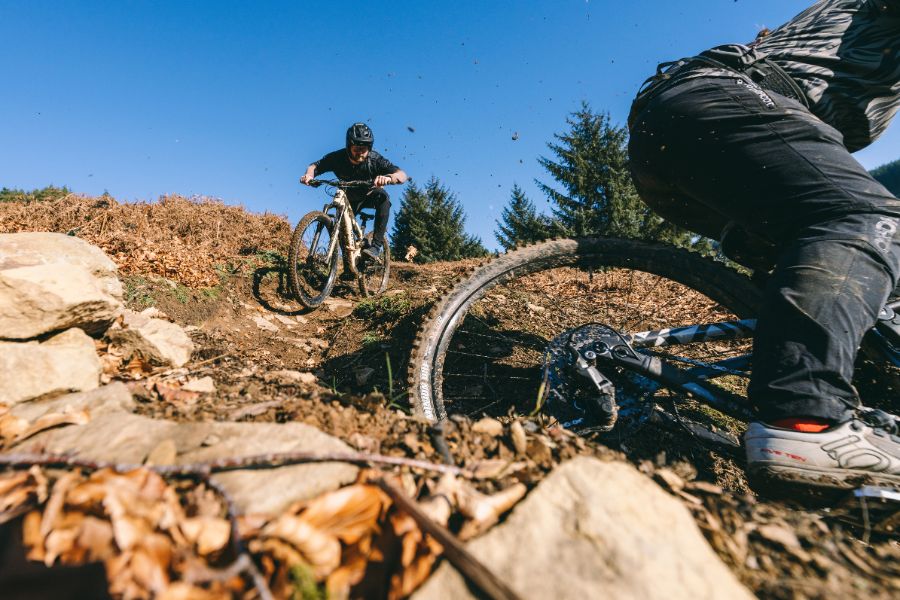
Electric mountain bikes have never offered more choice — and that’s exactly what makes buying one tricky. “Best eMTB 2026” can mean a trail-friendly hardtail for bridleways, a full-suspension bike for proper singletrack, a big-battery machine for all-day rides, or a lightweight option that rides more like a regular MTB. This master guide is designed to make that decision easier by breaking the market into the six ways most UK riders actually shop.
We’ve chosen three standout bikes in each category — hardtail, full-suspension, long-range, lightweight, trekking/SUV “adventure”, and women’s picks. Over time, this page becomes your front door: quick to skim, easy to navigate, and constantly updated as new models land.
Start here if you’re new to the category, read What is an e-MTB? and UK e-MTB law explained first, then come back to this shortlist.
Jump to
Best hardtail e-MTB 2026
Best full-suspension e-MTB 2026
Best long-range e-MTB 2026
Best lightweight e-MTB 2026
Best trekking/SUV (adventure) e-MTB 2026
Best women’s e-MTB 2026
The best electric mountain bikes shortlisted
Best hardtail e-MTB 2026
Hardtail e-MTB 2026 suit bridleways, trail centres that aren’t relentlessly rough, and riders who want simplicity and value without giving up the assisted-climbing benefits.
- Decathlon Rockrider E-EXPL 700 — best value trail-ready hardtail starting point
- Giant Talon E+ 29 — best big-brand entry hardtail for mixed off-road routes
- Merida eBIG.NINE 400 — best “mainstream hardtail” pick
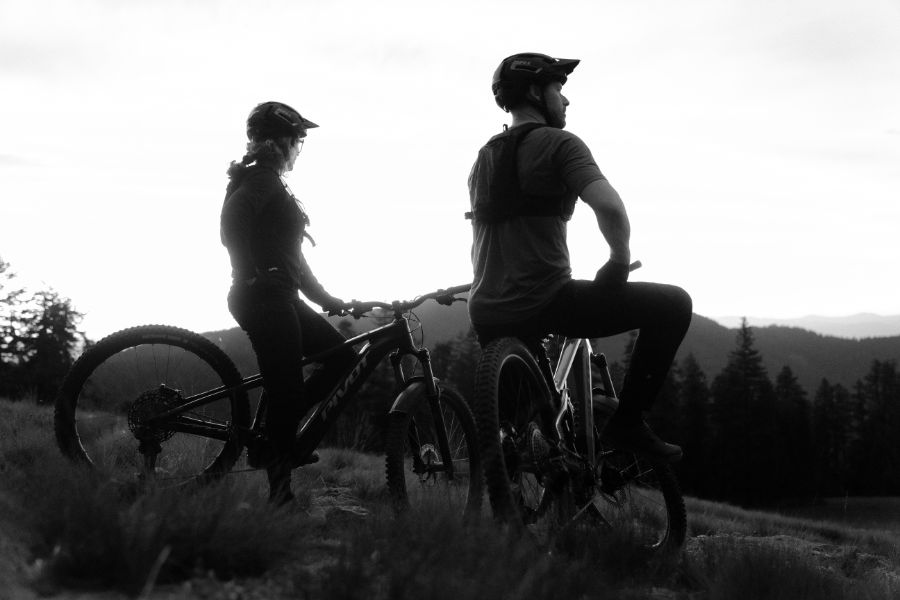
Read more: Best hardtail electric mountain bikes 2026
Best full-suspension e-MTB 2026
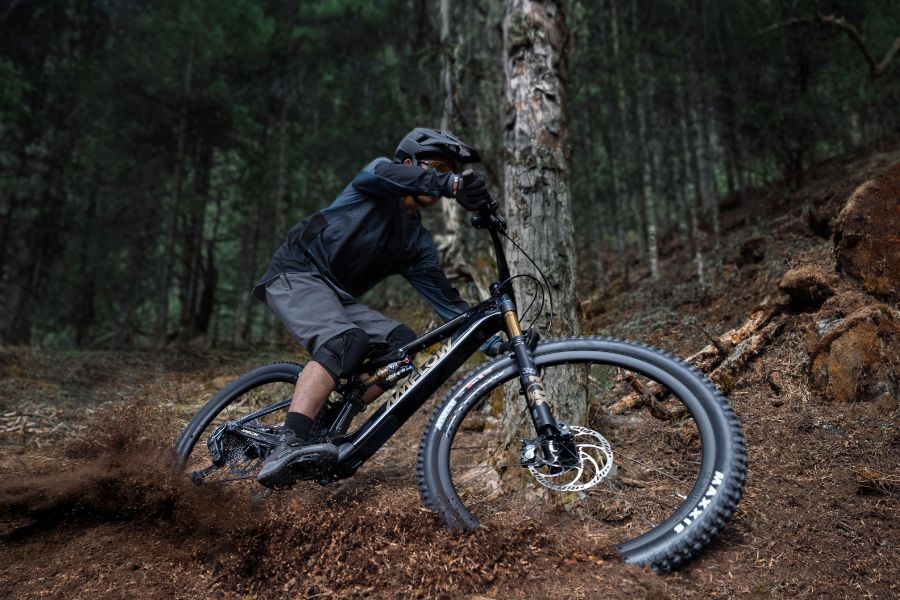
Full-suspension e-MTB 2026 are the better fit if your rides include rough descents, repeated hits, and technical singletrack where traction, comfort and control matter most.
- Amflow PL Carbon Pro (DJI Avinox) — best “new tech” wildcard pick
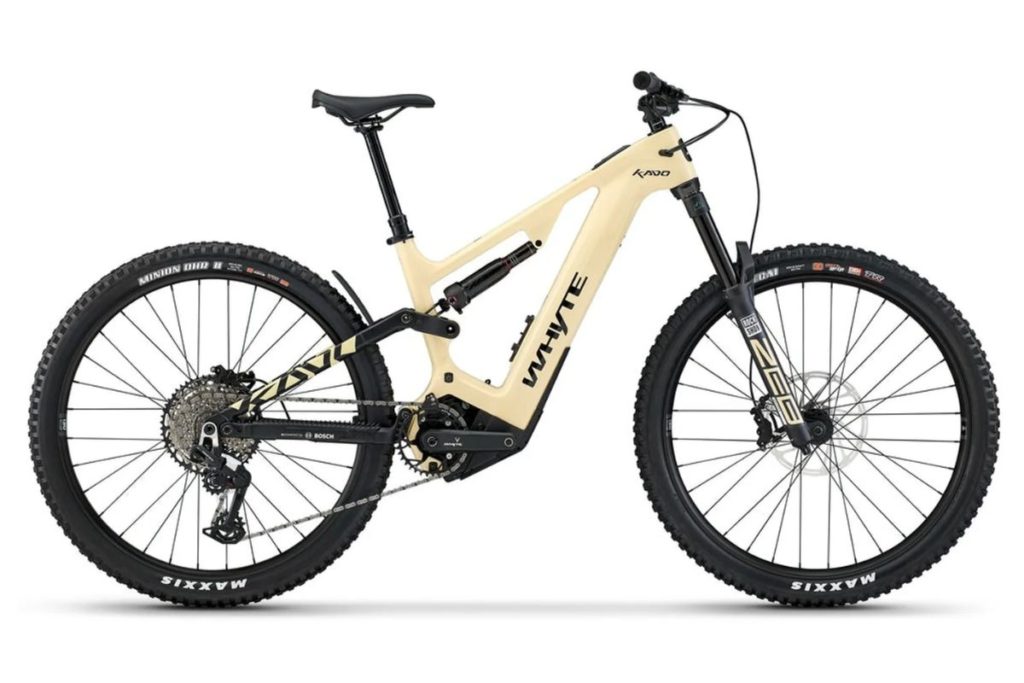
- Whyte Kado RSX — best UK-brand trail benchmark
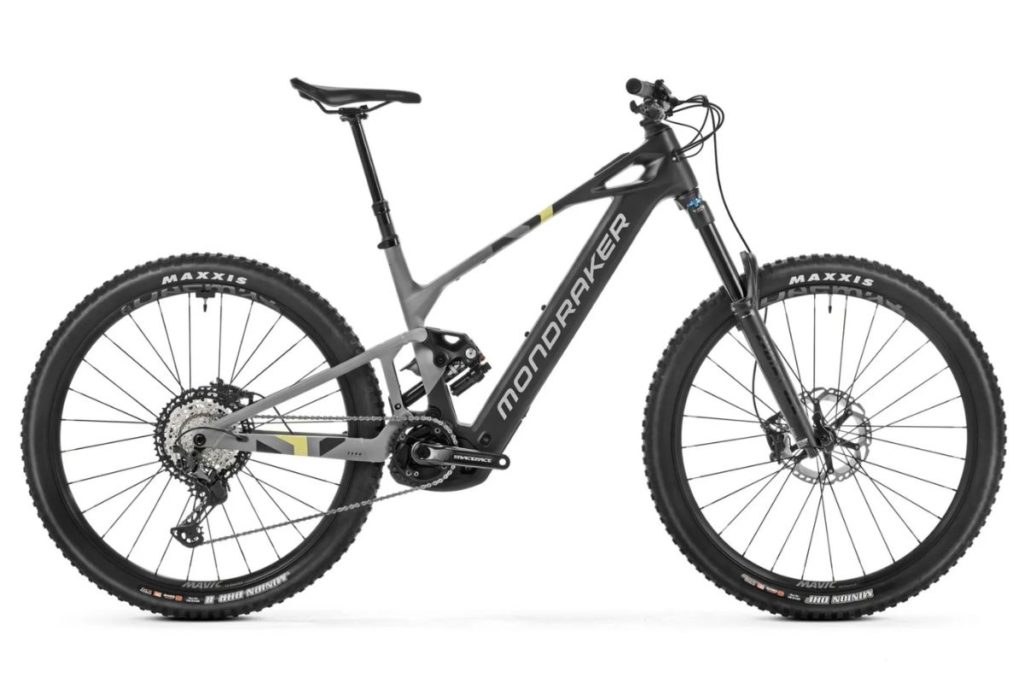
- Mondraker Crafty — best for riders who prioritise a planted, aggressive trail feel
Read more: Best full-suspension electric mountain bikes 2026
Best long-range e-MTB 2026
Long-range e-MTB 2026 make sense for big elevation days, winter riding, heavier riders, and anyone who wants to stop thinking about battery percentages mid-ride.
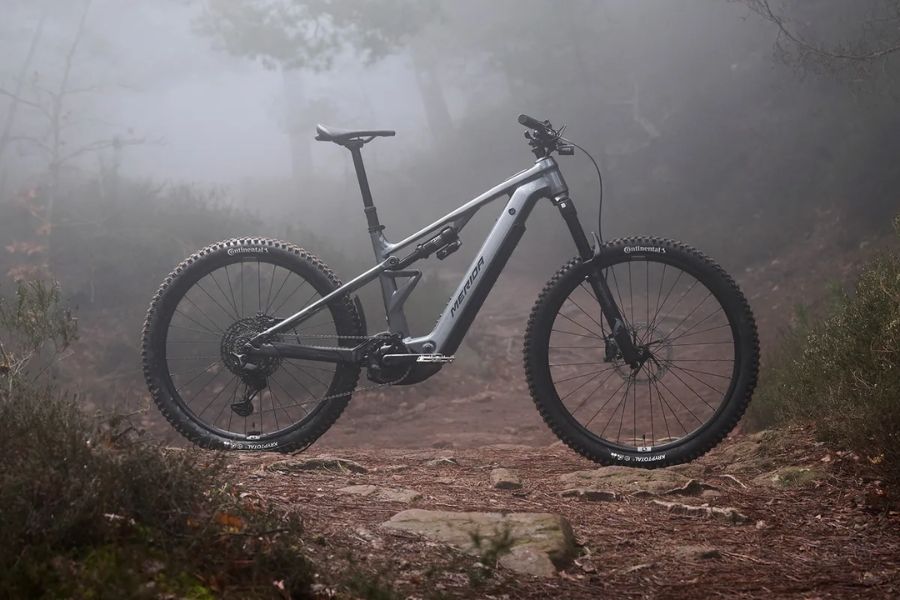
- Merida ETMO 500 Pro — best value long-range Bosch e-MTB for riders who want full-poremium money
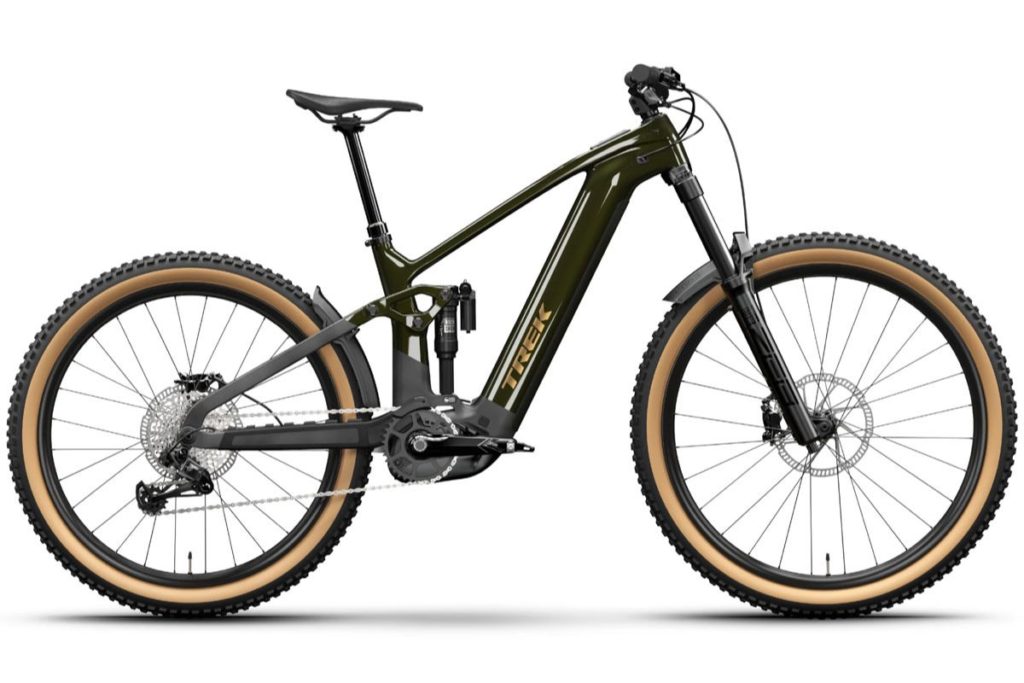
- Trek Rail+ — best long-distance trail bike for “do everything” riders
- Cannondale Moterra LT — best long-range bruiser for big days
Read more: Best long-range electric mountain bikes 2026
Also useful: How to get more range from your e-MTB battery
Best lightweight e-MTB 2026
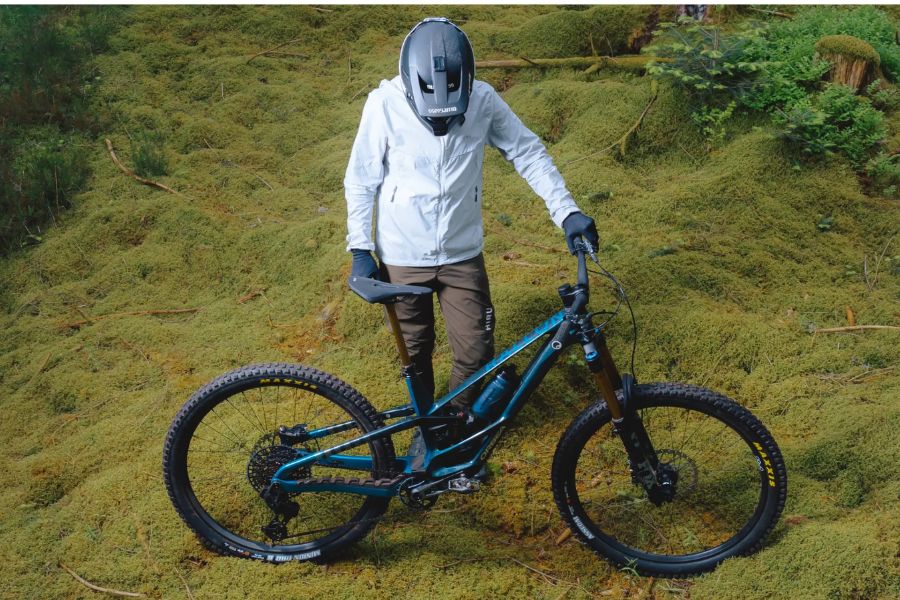
Lightweight (light-assist) e-MTB 2026 are about a more natural ride feel: less weight, subtler support, and handling that’s closer to a regular mountain bike.
- Cube Stereo Hybrid ONE77 HPC SLX 800 – best for riders who want full-power assistance, big-bike confidence and aggressive trail capability
- Giant Reign Advanced E+ 1 – best for riders who want a premium enduro e-MTB that balances descending ability with all-round use
- Orbea Rallon RS-Team Mullet – best for riders who want a more natural-feeling, new-generation enduro e-MTB with subtle assistance
Read more: Best lightweight electric mountain bikes 2026
Best trekking/SUV (adventure) e-MTB 2026
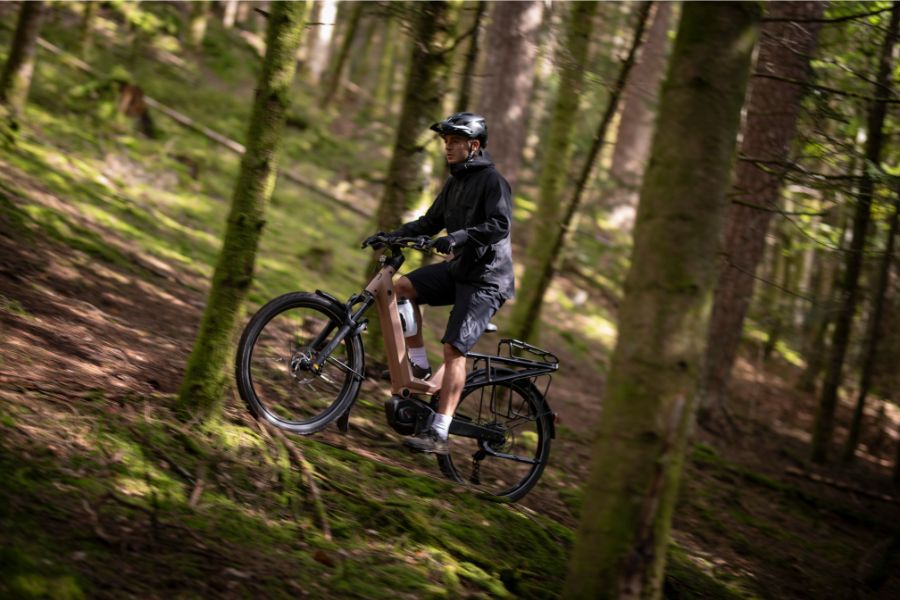
Trekking/SUV e-bikes suit bridleways, forest roads, towpaths and mixed-surface riding, especially if you value comfort and everyday practicality over aggressive trail geometry.
- Cube Kathmandu Hybrid — best comfort-led trekking choice for big days out
- FOCUS AVENTURA² 6.9 — best sporty trekking option for mixed terrain
- Riese & Müller Delite4 — best premium “ride anywhere” adventure e-bike
Read more: Best trekking / SUV electric mountain bikes 2026
Best women’s e-MTB 2026
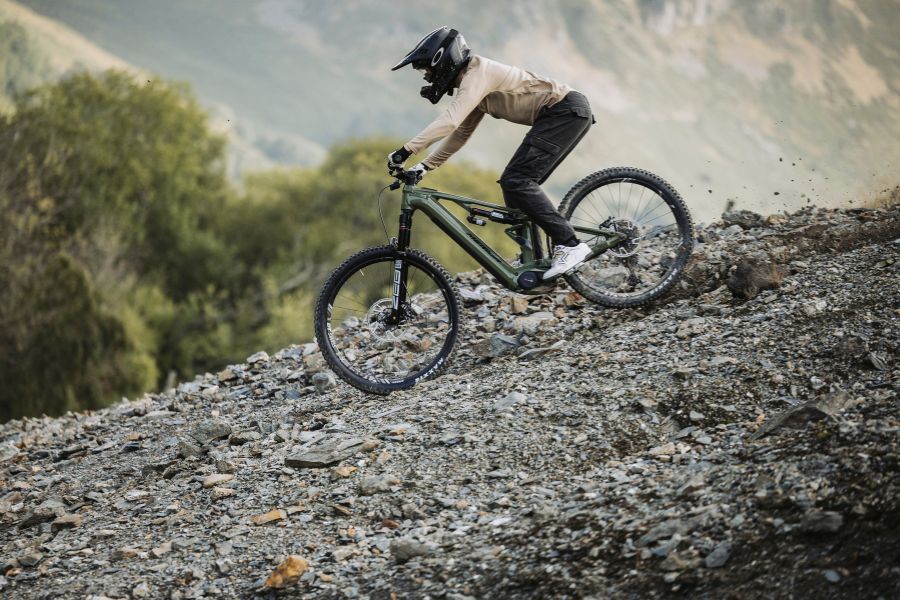
“Women’s e-MTB 2026” is increasingly about fit, sizing range, standover confidence, and tuneability, rather than a completely different category of bike.
- Scott Contessa Strike eRIDE — best women’s full-suspension shortlist pick
- Specialized Turbo Levo — best fit-led benchmark (not women-specific, but widely suits many riders)
- Liv Intrigue X E+ — best women-focused trail e-MTB for confidence and control
Read more: Best women’s electric mountain bikes (UK) 2026
Also useful: How to choose the right e-MTB size
We’ve prioritised bikes that make sense for UK ownership: widely available models, sensible dealer support, and builds that won’t feel outgunned once you start riding further and faster with assistance. Where a bike is especially strong in one niche (for example, long-range or lightweight), we’ve stated that clearly rather than pretending there’s one “perfect” choice for everyone.
Quick sizing & fit: if you’re between sizes, sizing down often gives a more manageable feel on tight UK woodland trails, while sizing up tends to add stability for faster trail-centre riding. Our e-MTB sizing guide explains the key geometry terms and how to choose confidently.
The best hardtail eMTB 2026
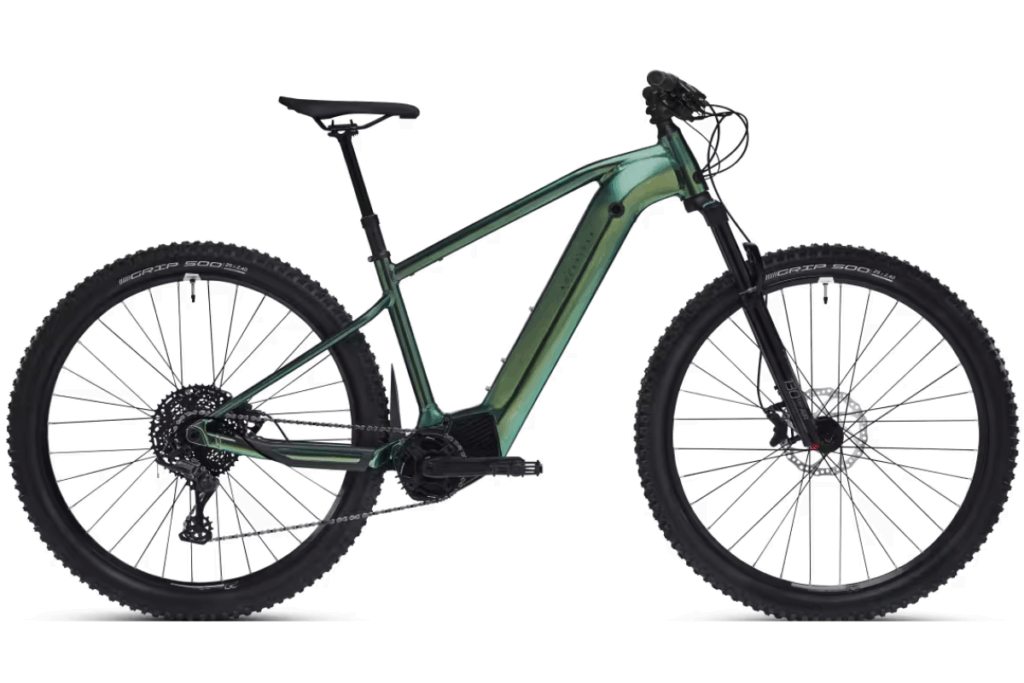
Decathlon Rockrider E-EXPL 700
£2,199.99 (RRP £2,499.99)
A hardtail like the E-EXPL 700 makes sense for UK riders who want an e-MTB that can handle genuine off-road use without pushing into full-suspension money. It’s the kind of bike that suits bridleways, trail-centre loops and big after-work rides, where the assisted climbing is the main benefit and the simplicity of a hardtail keeps maintenance and ownership fuss low. The key with hardtail e-MTBs is choosing something that doesn’t feel “leisure bike” the moment the trail gets rooty or steep; this sits closer to the trail end of the spectrum than many budget options.
As a base for a growing rider, it’s also a sensible platform: tailor tyres to UK conditions, add a dropper post if needed, and spend time on setup (sag/tyre pressures) to get comfort and grip. If your riding is regularly rough and fast downhill, you’ll still want full suspension — but for mixed UK use, this is a strong starting point.
Pros
Strong value entry into a trail-capable hardtail e-MTB
Suits bridleways, trail centres and mixed off-road use
Simple ownership and easy to tailor with tyres/contact points
Cons
Hardtail limits show on rough, repeated descents
Specifications
Frame: Aluminium hardtail
Motor: Brose T, 70Nm
Battery: 650Wh integrated
Wheels: 29″
Suspension: X-Fusion RC32, 130mm
Drivetrain: Microshift Advent X (1x)
Brakes: Tektro (203mm rotors listed)
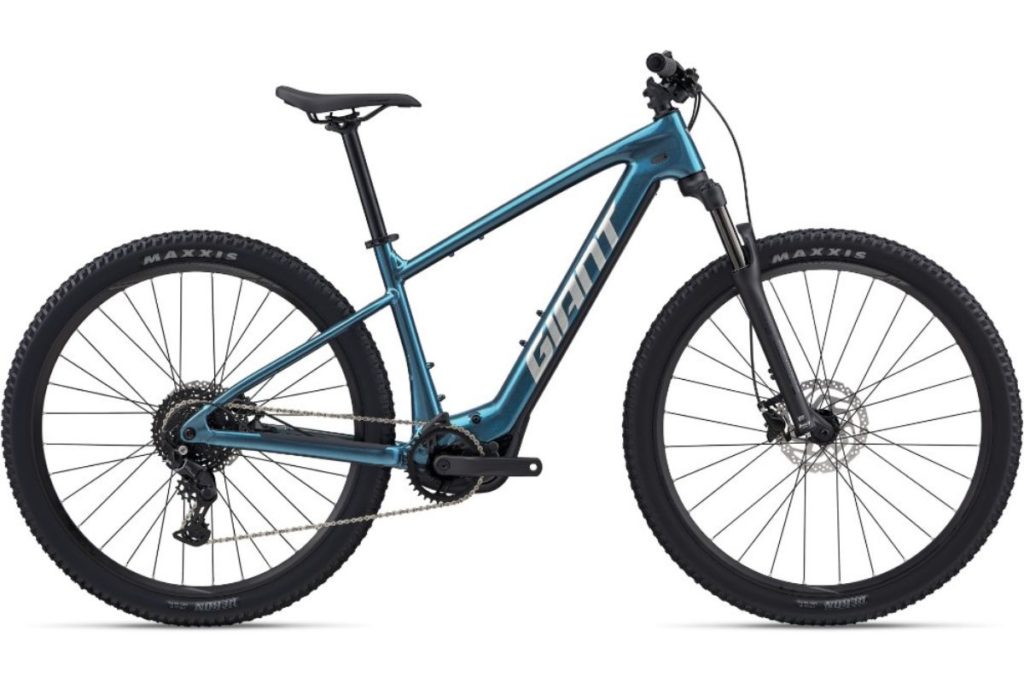
Giant Talon E+ 29
£2,299
The Talon E+ 29 is a straightforward big-brand hardtail e-MTB for riders who want something approachable and versatile. It works best as a mixed-terrain electric mountain bike: bridleways, forest tracks, towpaths, and mellow trail riding where stability and comfort matter more than outright aggression. That’s often exactly what many UK riders want from their first e-MTB — the ability to ride further, climb more easily, and explore new routes without wrestling a specialist enduro bike.
The reason a Talon-style hardtail makes sense in this hub guide is that it’s a realistic ownership choice. Riders can walk into a dealer, get sized properly, and have a clear route to servicing and support. If you’re a newer off-road rider or you like simple, predictable handling, it’s a sensible pick — just be honest about your terrain. If your local trails are steep, rough and full of repeated hits, you’ll want more suspension and more aggressive tyre/brake spec.
Pros
Big-brand accessible hardtail e-MTB concept
Great for bridleways, tracks and mixed off-road routes
Sensible “first e-MTB” ownership experience
Cons
Better for mixed terrain than aggressive technical descending
Specifications
Frame: Aluminium (integrated battery; internal routing)
Motor: Shimano EP6, 85Nm
Battery: 630Wh
Fork: SR Suntour XCM34 Boost, 100mm
Drivetrain: Shimano CUES 10-speed (11–48T)
Brakes: Shimano MT200, 180mm rotors
Tyres: Maxxis Ikon 29×2.2
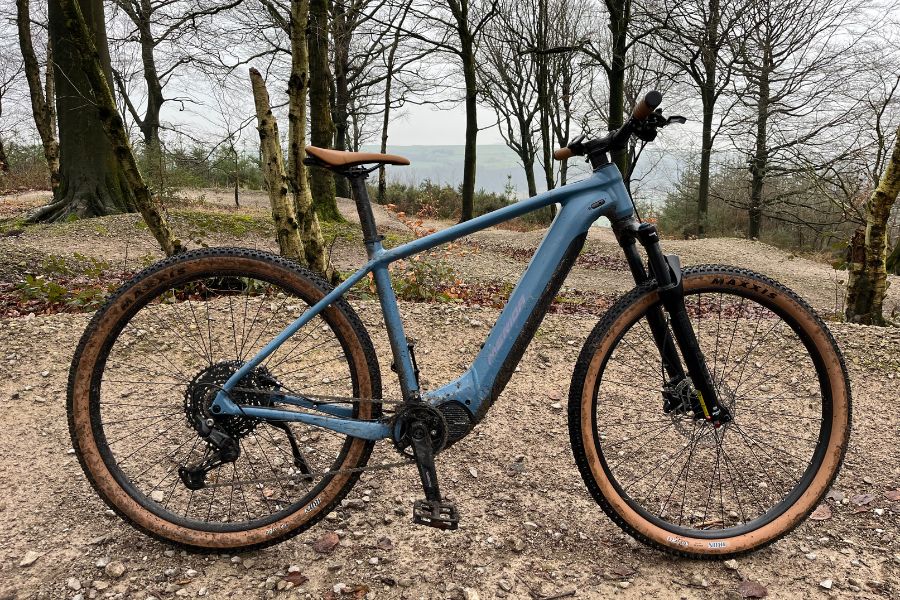
Merida eBIG.NINE 400
£2,750
If you want a hardtail electric mountain bike that feels like a “proper” e-MTB without turning into a full-suspension spend, the Merida eBIG.NINE 400 is a strong middle-ground pick — and it’s ideal if you’re planning to publish your own test impressions. It’s designed for the kind of riding many UK owners do most: bridleways, forest roads, towpaths, steady trail-centre loops and long, undulating routes where you want predictable assistance rather than a hyper-aggressive enduro setup.
As with any hardtail, the way you set it up matters. Tyre choice and pressures make a big difference in wet UK conditions, and a dropper post can be a worthwhile upgrade if you’re heading into steeper terrain. But as a reliable, mainstream hardtail e-MTB platform with sensible “ride often” intentions, it deserves a spot in this buyer’s guide.
Pros
“Mainstream trail hardtail” template that suits mixed UK riding
An excellent review-led recommendation once your test is published
Hardtail simplicity: lower maintenance and easy ownership
Cons
Like any hardtail, it asks more from the rider on rough, repeated descents
Specifications
Frame: Aluminium (integrated battery; internal routing)
Motor: Shimano EP6, 85Nm
Battery: 630Wh
Fork: SR Suntour XCM34 Boost, 100mm
Drivetrain: Shimano CUES 10-speed (11–48T)
Brakes: Shimano MT200, 180mm rotors
Tyres: Maxxis Ikon 29×2.2
Best full-suspension e-MTB 2026
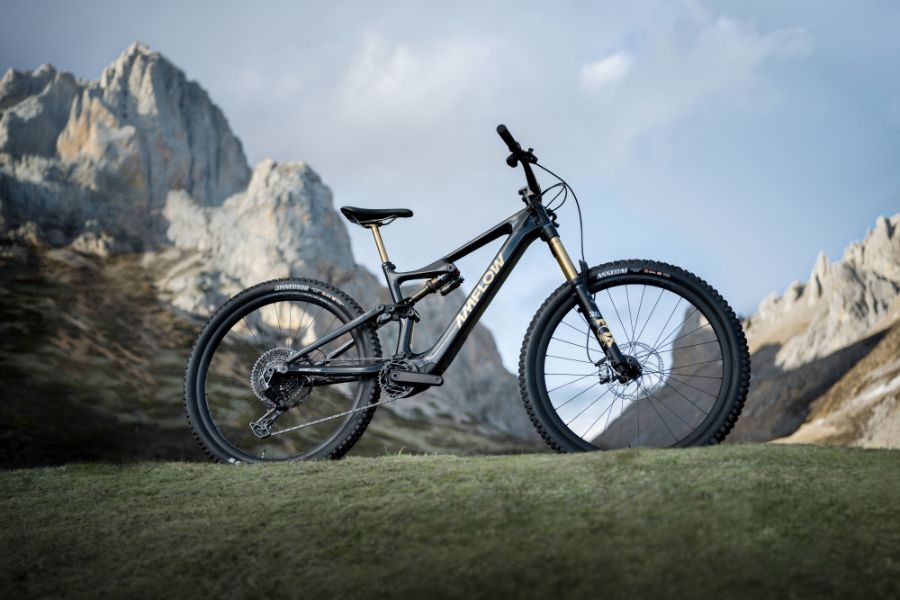
Amflow PL Carbon Pro (DJI Avinox)
£5,999
Not every “best e-MTB” list needs a wildcard, but the point of a Tier 1 hub is to reflect where the market is going as well as what’s already established. The Amflow PL Carbon Pro, built around DJI’s Avinox system, represents that “new school” moment: high interest, lots of discussion, and the promise (or at least the ambition) of doing something differently in motor behaviour and system integration.
For UK riders, the reason it earns a place here is simple: innovation tends to filter into mainstream bikes quickly. Even if you don’t buy an early-generation example, it’s useful to understand what new systems are trying to solve — noise, weight, delivery feel, efficiency, usability. This is the sort of bike you shortlist if you want cutting-edge tech and you’re comfortable being an early adopter.
Pros
Big battery in a platform chasing low overall weight and clean integration
High-end braking/drivetrain spec on the Pro build
Stands out for headline motor torque and claimed weight
Cons
Newer platform: long-term dealer network, spares and support are worth checking in your area
Specifications
Motor: Avinox drive system, 105Nm torque (as advertised)
Battery: 800Wh
Claimed complete bike weight: from 19.2kg (as advertised)
Fork (Pro): 2026 Fox 36 Factory (as listed)
Drivetrain (Pro): SRAM X0 Eagle (as listed)
Brakes (Pro): Magura MT7 Pro (as listed)
Whyte Kado RSX
£4,999 (RRP £5,999)
Whyte is a UK brand with a strong reputation for bikes that feel tuned for real British trail riding — wet roots, steep punchy climbs, and the kind of off-camber woodland singletrack where predictable handling matters. The Kado RSX makes sense as a full-suspension shortlist pick because it’s built around the idea of confidence rather than theatrics: a bike that stays calm when trails are messy, holds a line well, and doesn’t feel like it needs perfect conditions to make sense.
This is the category where an e-MTB starts to feel like an “uplift you can pedal”. You do more climbs, which means you do more descending, which means comfort and control suddenly become far more important than on a hardtail. A Kado-style bike suits riders who want to ride trail centres and natural trails year-round, and who want a bike that doesn’t get overwhelmed when terrain gets properly rough.
Pros
UK trail-centred ride feel and confident handling intent
Full-suspension comfort for longer, rougher rides
A strong benchmark for “British conditions” e-MTB riding
Cons
A lot of bike to hustle if your riding is mostly mellow trails
Specifications
Frame: Carbon (Whyte Shape.it Link V2)
Motor: Bosch Performance Line CX (Smart System; Gen 5 platform noted)
Battery: Bosch PowerTube 800Wh (PowerMore compatible)
Fork: Fox Float 38 Performance Elite, 160mm
Shock: Fox Float X Performance Elite, custom tuned, 230×57.5mm
Drivetrain: SRAM S1000 AXS Eagle (12-speed; 10–52T)
Brakes: Magura MT7, 203/203mm
Tyres: Maxxis Assegai 29×2.5 (front) / Minion DHR II 29×2.4 (rear)
Claimed weight: 24.2kg (size M, w/ tubes, no pedals)
Mondraker Crafty Carbon R
£6,799
The Crafty name is closely associated with a planted, aggressive trail feel — the kind of full-suspension e-MTB that’s designed to be ridden properly downhill as well as up. For UK riders who spend time on steeper, rougher trails or who ride trail centres hard, a bike like this makes sense because it’s built around composure. An e-MTB encourages you to repeat climbs and do more descending; that’s exactly where a supportive chassis and confident geometry matter most.
It’s not necessarily the “first e-MTB for everyone” pick — particularly if your riding is mostly bridleways and mellow tracks — but for riders who know they want a more committed ride character, this belongs on the shortlist. The trade-off is that aggressive trail bikes can feel big in tight, slow terrain, so it’s worth being honest about the type of riding you do most.
Pros
Bosch CX platform with a large 800Wh battery for long rides
Fox 38 fork and Float-X shock point it firmly at proper trail/enduro riding
Modern chassis details geared to hard use (Boost rear, stout linkage design)
Cons
Exact kit can vary by retailer/build, so double-check before you buy
Specifications
Frame: Carbon main frame (rear triangle varies by build listing)
Motor: Bosch Performance Line CX (Smart System)
Battery: Bosch PowerTube 800Wh
Fork: Fox 38 Float GRIP Performance, 160mm
Shock: Fox Float-X LV Performance, 185x55mm
Rear travel: 150mm
Wheels: 29in
Display/Controls: Bosch Purion 400 + mini remote/system controller (as listed)
Best long-range e-MTB 2026
Merida ETMO 500 Pro
£4,400
At the heart of the Merida ETMO 500 Pro is Bosch’s latest Performance Line CX system, paired with a large 800Wh battery, which makes this a very convincing long-range e-MTB for riders tackling bigger loops, winter rides and hilly all-day outings where range anxiety can creep in.
Just as importantly, the ETMO 500 Pro is not simply about battery size. Its aluminium full-suspension chassis, mixed-wheel setup and sensible trail geometry give it a broad appeal for riders who want a capable Bosch e-MTB that feels confident on proper off-road terrain without tipping into overbuilt enduro-bike territory. That makes it especially relevant for this page, where it can sit neatly as the value-focused long-range choice.
Pros
A full-power long-range e-MTB
Bosch CX motor and 800Wh battery suit big UK rides well
Mixed-wheel chassis should balance stability with agility suspension and drivetrain spec are sensible rather than standout compared with pricier rivals
Cons
Extra capacity can mean extra weight and a less lively feel
Specifications
Motor: Bosch Performance Line CX, 100Nm
Battery: 800Wh integrated battery
Fork: SR Suntour Zeron 36X, 140mm
Shock: SR Suntour Edge X R
Tyres: Maxxis Minion DHF 29 x 2.5 front, Maxxis Dissector 27.5 x 2.4 rear
Drivetrain: Shimano CUES 10-speed, 11-48T
Brakes: SRAM DB4 four-piston, 200mm rotors
Trek Rail+ 8 Gen 5 2026
£4,499 (RRP £5,000)
The Rail+ sits in the “proper e-MTB for proper riding” camp, but with a strong long-range slant for riders who want big days without compromise. For UK riders, that typically means a bike that climbs efficiently for hours, stays stable on rough descents, and doesn’t feel punishing by mid-ride. It’s the kind of bike you choose when you know you’ll ride often and you want your e-MTB to cover as many ride types as possible without constantly worrying about battery management.
As a long-range shortlist pick, it’s also an ownership play. Many riders value a predictable brand ecosystem, clear servicing routes and dealer support. If you’re planning long mixed-terrain rides and want a bike that feels like a true trail weapon rather than an adventure hybrid, this category is where bikes like the Rail+ make their case.
Pros
Big-battery, big-travel intent for long, tough rides
Mixed-wheel setup helps balance rollover speed and agility
Bosch platform is widely supported across the UK
Cons
Build kits vary a lot across trims—spec-check carefully before choosing
Specifications
Motor: Bosch Performance Line CX
Battery: Bosch PowerTube 800 Wh, smart system
Fork: RockShox ZEB Select, DebonAir spring, Charger RC damper, tapered steerer, 44 mm offset, Boost110, Maxle Stealth, 170 mm travel
Shock: RockShox Super Deluxe Select+ RT, 205mm x 65mm
Tyres: Bontrager Brevard Pro XR
Drivetrain: Shimano Deore M6100, 10-51, 12-speed
Brakes: SRAM DB 8 4-piston hydraulic disc
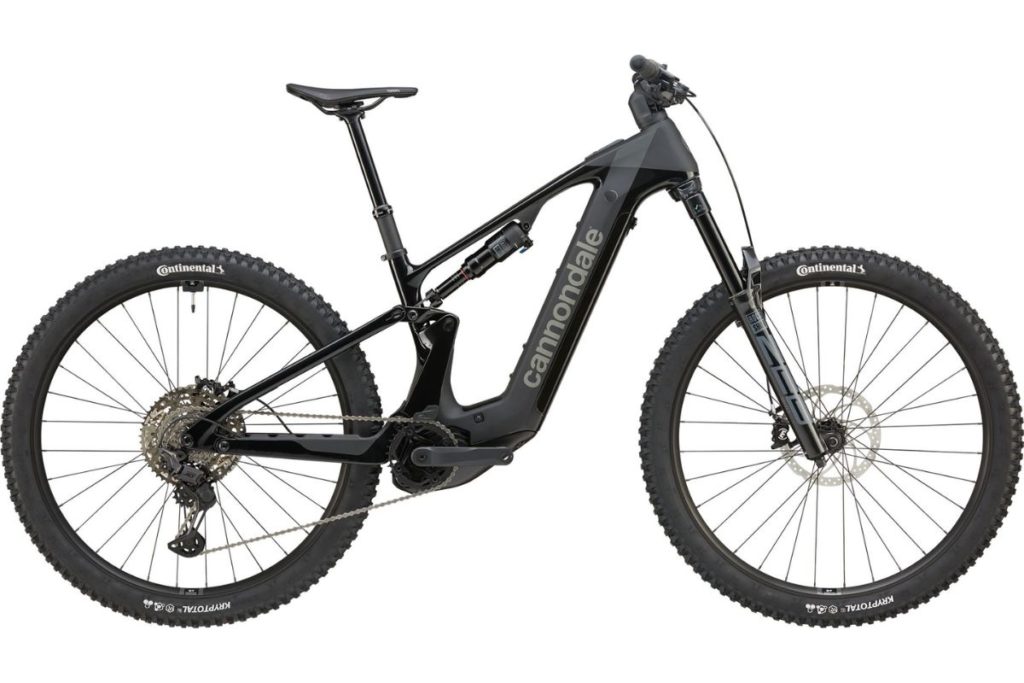
Cannondale Moterra LT
£5,999 (RRP £7,500)
Long-range e-MTBs are about freedom: big climb days, winter riding, longer distances, and fewer moments staring at a percentage display wondering whether you’ll make it back. The Moterra LT fits this “big day out” brief as a more bruiser-style e-MTB — a bike for riders who want to tackle demanding terrain and still have the confidence to keep the motor doing its job over a long ride.
These are the bikes that suit riders who ride high assistance modes often, who climb a lot, and who value getting home with battery in the tank. The trade-off is weight and liveliness: long-range priorities can make a bike feel less playful than a lightweight option. But if your goal is maximum ride potential across UK seasons, long-range is a very sensible category.
Pros
Premium chassis and comfort-first design suits long mixed-surface days
Bosch CX ecosystem is widely supported
Often configured with practical kit (lights/racks/guards) depending on build
Cons
More e-SUV than “trail shredder” in stock form
Specifications
Motor: Bosch Performance Line CX motor with 85Nm torque
Battery: Bosch PowerTube, 800Wh
Fork: RockShox ZEB Select, 160mm, Charger RC, DebonAir+, 15x110mm Maxle, 44mm offset
Shock: RockShox Deluxe Select+, DebonAir+, 2-Pos mode adjust, adjustable rebound, 230×62.5mm
Tyres: Continental Kryptotal-F, 29×2.4″, Enduro Soft Black Foldable
Drivetrain: Shimano CUES LG700, LinkGlide, 11-50, 11-speed
Brakes: Magura MT5 4-piston hydraulic disc, 203mm Storm rotors
Best lightweight e-MTB 2026
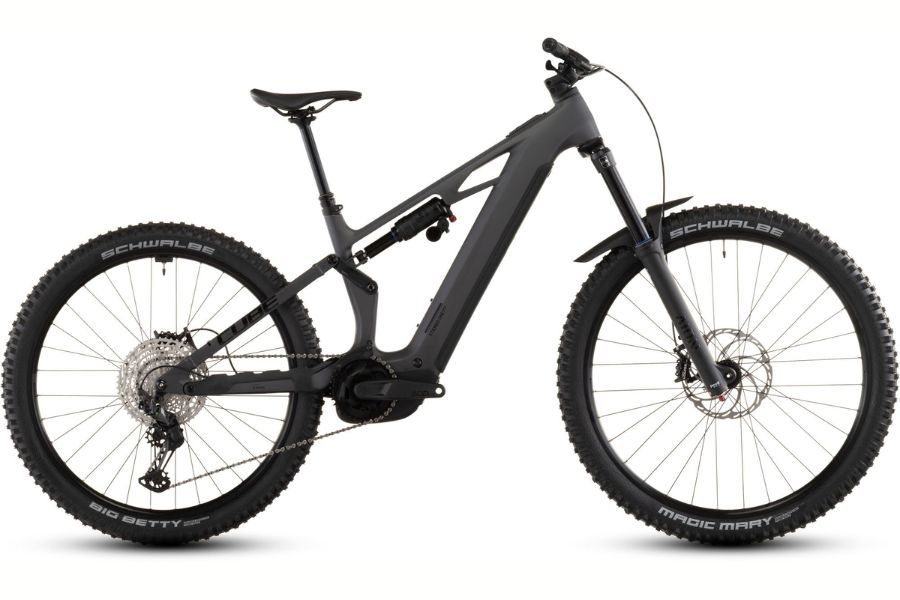
Cube Stereo Hybrid ONE77 HPC SLX 800
£4,499
The Cube Stereo Hybrid ONE77 HPC SLX 800 is the kind of e-MTB that suits riders who want their bike to feel planted, powerful and ready for harder terrain. This is not a lightweight, easy-going trail bike built around quick reactions and a playful feel. Instead, it is aimed at riders who want more support from the bike beneath them, especially when the trail gets steeper, rougher and more demanding. With big travel, a mullet wheel setup and Bosch power, it makes sense for riders who value confidence on descents and a strong, dependable feel on climbs.
For many UK riders, that makes a lot of sense. Wet roots, rough trail centres, winter mud and bigger natural descents all reward a bike that feels stable and composed rather than nervous and delicate. The Cube leans into that idea. It should suit riders who want a full-power e-MTB that can take harder riding in its stride, while still offering the reassurance of a large battery for longer days out. The trade-off is that bikes in this category tend to feel more substantial and less lively than lighter options, but for riders who want a modern, aggressive e-MTB with plenty of range and a reassuring ride feel, this looks like a very convincing choice.
Pros
Strong Bosch CX and 800Wh combination for high-intent buyers
Feels far more current than an old-school lightweight option
Very good value for a carbon-front, enduro-focused 2026 e-MTB
Cons
More of a gravity-leaning bike than a broad, easy-going trail all-rounder.
Specifications
Motor: Bosch Performance Line CX Gen 5, up to 100Nm
Battery: Bosch PowerTube 800
Fork: Fox 38 Float Rhythm GRIP, 170mm
Shock: Fox Float X Performance, 230x65mm
Tyres: Enduro-ready tubeless wheelset with Newmen Performance 30 rims
Drivetrain: Shimano XT rear mech with Shimano Deore 12-speed shifting
Brakes: Shimano XT BR-M8220, 203/203mm
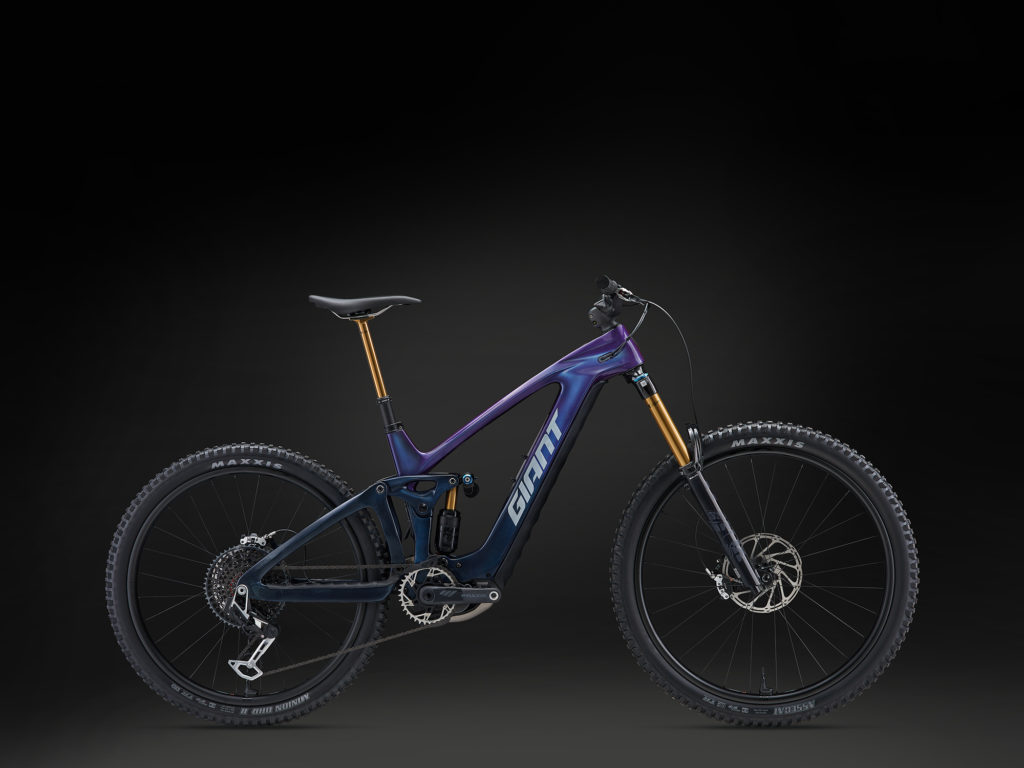
Giant Reign Advanced E+ 1
£7,499
The Giant Reign Advanced E+ 1 is a strong option for riders who want an e-MTB that feels serious about descending without giving up all-round usability. It sits in that appealing middle ground between outright bruiser and everyday trail bike, which makes it a good match for riders who want something capable enough for uplift-style terrain and harder mountain riding, but still refined enough to live with on regular rides. Giant’s Reign name already carries a gravity-focused reputation, and this electric version looks built to continue that theme with confidence.
What stands out here is the balance. This is a bike for riders who want a premium full-suspension e-MTB that climbs well, copes with big terrain and still feels current in the way it handles. The motor promises plenty of assistance for technical climbs, while the suspension and geometry point towards riders who enjoy descending fast and with commitment. The smaller battery compared with some long-range rivals means this is less of a pure range-first choice, but that is not really the point. The Reign Advanced E+ 1 makes more sense for riders who want a lively, capable enduro e-MTB with strong assistance and a quality ride feel, rather than a bike built mainly around covering the longest possible distance.
Pros
Lightweight-leaning feel without giving up proper trail capability
Battery options let you prioritise weight or range
One of the best platforms for “analogue bike, but fitter legs” riding
Cons
The best experience depends heavily on build choice (tyres and brakes matter a lot)
Specifications
Motor: Shimano EP801 RS Gen2 MC
Battery: Orbea Internal 630Wh
Fork: Fox 36 Float Factory 160 Grip X QR15x110 Kashima
Shock: Fox Float X Factory 2-Pos Adjust Evol LV Kashima custom tune 210x55mm
Tyres: Maxxis Assegai 2.50″ 60TPI 3CG/EXO+/TR MaxxGrip
Drivetrain: Shimano CS-M7100 10-51t 12-Speed
Brakes: Shimano XT M8120 Hydraulic Disc
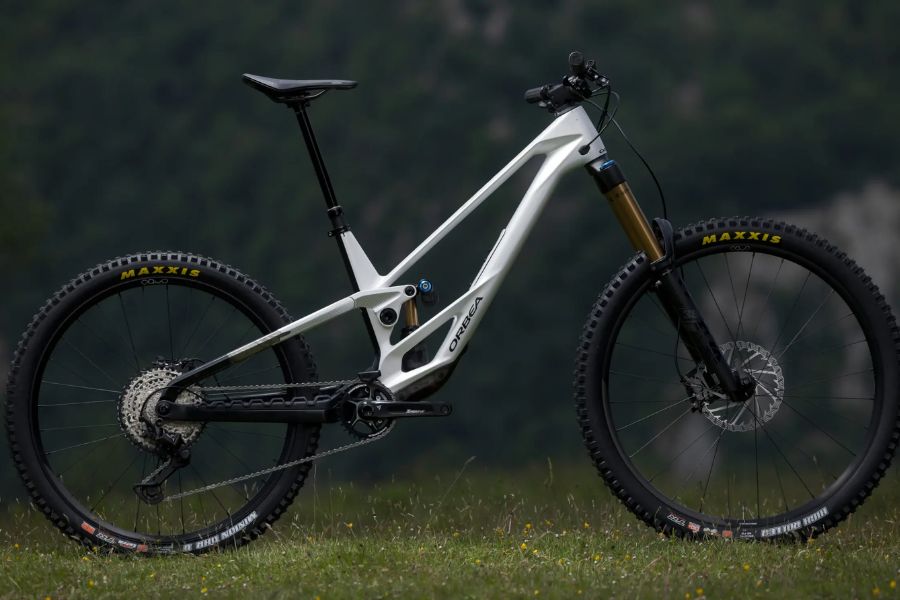
Orbea Rallon RS-Team Mullet
£9,999
The Orbea Rallon RS-Team Mullet is a very different type of e-MTB, and that is exactly why it will appeal to some riders. This is not a conventional full-power electric mountain bike focused on maximum assistance and maximum battery size. Instead, it is aimed at riders who want a bike that keeps much more of the character of an aggressive enduro bike, while adding subtle support to take the sting out of climbs and longer rides. For the right rider, that can be a very attractive idea.
This sort of bike suits experienced riders who still want to attack descents, pump terrain and move the bike around beneath them, but who also like the idea of a little help on the way back up. The smaller motor system and battery mean it will not offer the same effortless, high-assistance ride as a Bosch-equipped full-power bike, so it is less suited to riders who want the motor to do a lot of the work all day long. Instead, the Rallon RS looks more at home with riders who value handling, descending character and a more natural-feeling ride. In that sense, it feels less like a traditional e-MTB and more like a modern enduro bike with a discreet boost. That will not suit everyone, but for the right buyer it could be one of the most interesting options in the category.
Pros
Genuinely distinctive concept that makes the guide feel current
Big-travel enduro intent with a mullet chassis and Fox 38 Factory fork
Strong halo appeal
Cons
It is a specialist e-MTB, not the most straightforward recommendation for every buyer
Specifications (base model)
Motor: TQ-HPR40
Battery: TQ HPR 290Wh
Fork: Fox 38 Float Factory 180, Grip X2
Shock: Fox Float X2 Factory Trunnion, 205×62.5mm
Tyres: Maxxis High Roller III front / Maxxis Minion rear
Drivetrain: Shimano XT M8250 / M8260 SGS, 12-speed
Brakes: Shimano XT 8220 hydraulic disc brakes
Best trekking/SUV (adventure) e-MTB 2026
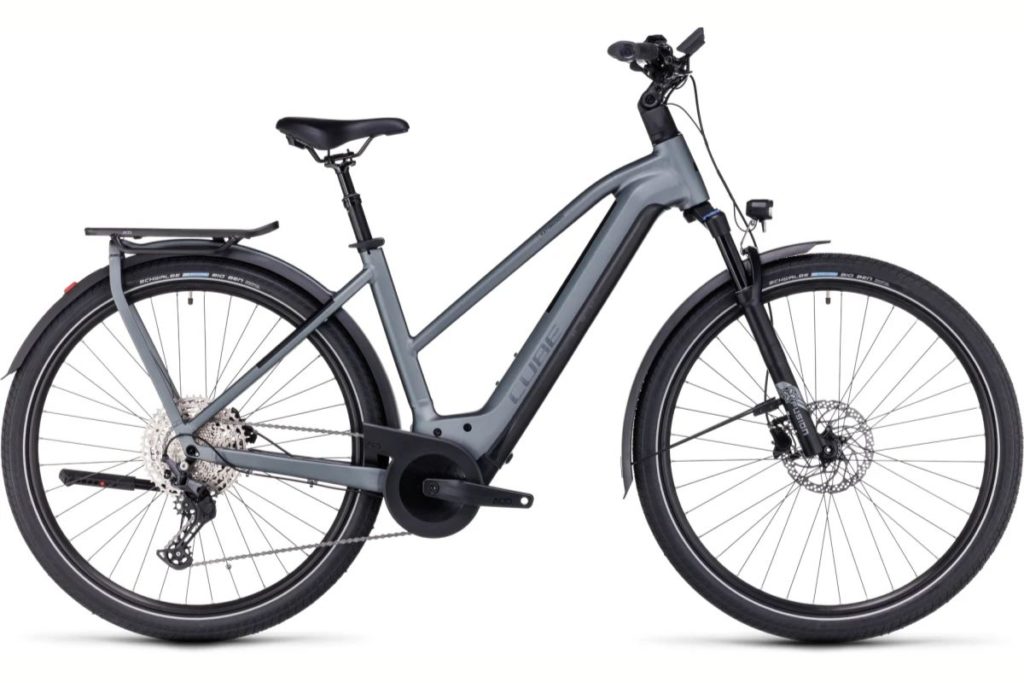
Cube Kathmandu Hybrid
£2,299 (RRP £3,699)
The Kathmandu Hybrid is a classic trekking template: comfort-focused, stable, and designed for long distances with the ability to handle rougher tracks when your route demands it. In the context of Electric MTB UK, bikes like this are for riders whose “mountain biking” is really about exploring — bridleways, forest roads, long loops and mixed-surface riding where comfort and practicality matter as much as climbing support.
It’s also one of the more sensible categories if you’re buying your first electric bike and you’re not sure how off-road you’ll really go. Trekking bikes tend to be forgiving and easy to ride, and they can be set up for year-round UK life. The trade-off is that they don’t have the geometric intent of a trail e-MTB. But if your riding is mostly routes rather than “lines”, this is often exactly the right tool.
Pros
Comfortable, stable “long distance” trekking concept
Great for bridleways, tracks and mixed-surface routes
Practical, year-round usability for UK riding
Cons
Less suited to technical singletrack and rough descending
Specifications
Motor: Bosch Drive Unit Performance CX Generation 4 (85Nm) Cruise (250W), Smart System
Battery: Bosch PowerTube 750Wh
Fork: X-Fusion MIG32 Air, Tapered, 15x110mm, 100mm, Lockout
Shock: N/A
Tyres: Schwalbe Big Ben, Performance, K-Guard, 55-622
Drivetrain: Shimano Deore CS-M5100, 11-51T
Brakes: Shimano BR-MT200, Hydr. Disc Brake (180/180)
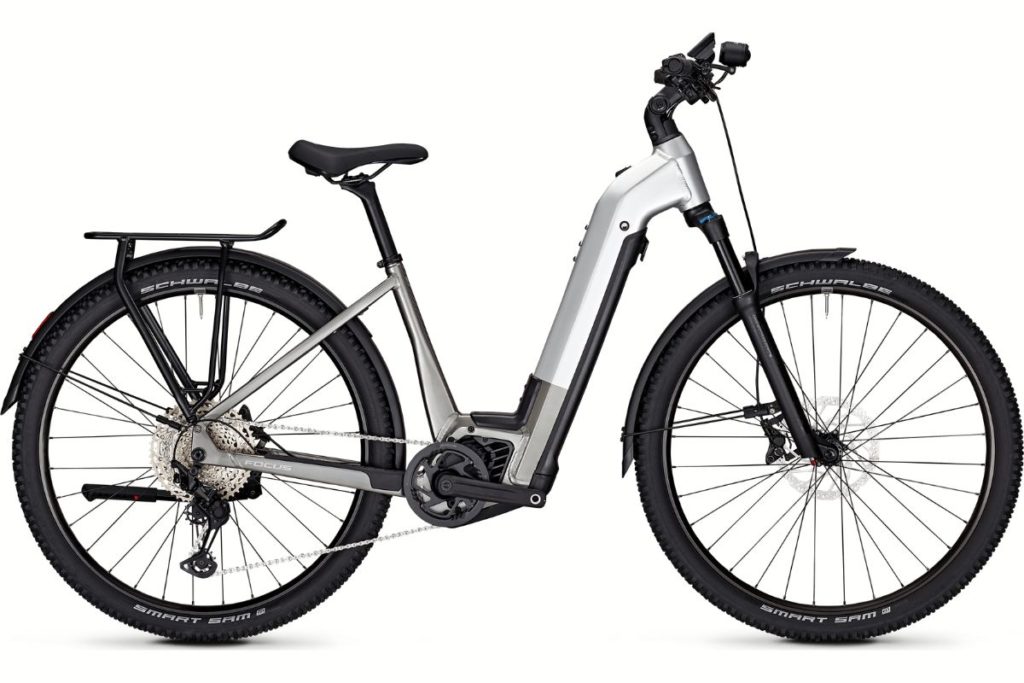
FOCUS AVENTURA² 6.9
£5,299
If you want an “adventure” e-bike that’s happier doing bridleways, forest roads and long distance exploring than lap-after-lap trail-centre riding, the AVENTURA² 6.9 is a strong fit. It’s built around the Bosch Performance CX Smart System (85Nm) and a 750Wh PowerTube battery on most sizes (size S uses 625Wh), with a 100mm SR Suntour Raidon 34 air fork adding comfort on rougher tracks.
It’s also properly set up for practical UK mileage with rack, mudguards, kickstand and lights, plus a Kiox 300 display and even a USB-C port for charging devices on the go.
Pros
Bosch Performance CX Smart System (85Nm) for hilly UK routes
Big battery: 750Wh (625Wh on size S)
Ready-to-ride “adventure” equipment: rack, guards, lights, kickstand
Cons
It’s an adventure/trekking bike first, not a trail-centre e-MTB
Specifications
Motor: Bosch Performance CX Smart, 85Nm
Battery: Bosch PowerTube 750Wh (size S: 625Wh)
Fork: SR Suntour Raidon 34 LOR AIR, 100mm
Shock: N/A
Tyres: Schwalbe Smart Sam 29 x 2.25in
Drivetrain: Shimano Deore CS-M6100, 12-speed
Brakes: Shimano MT420, 200mm front / 180mm rear
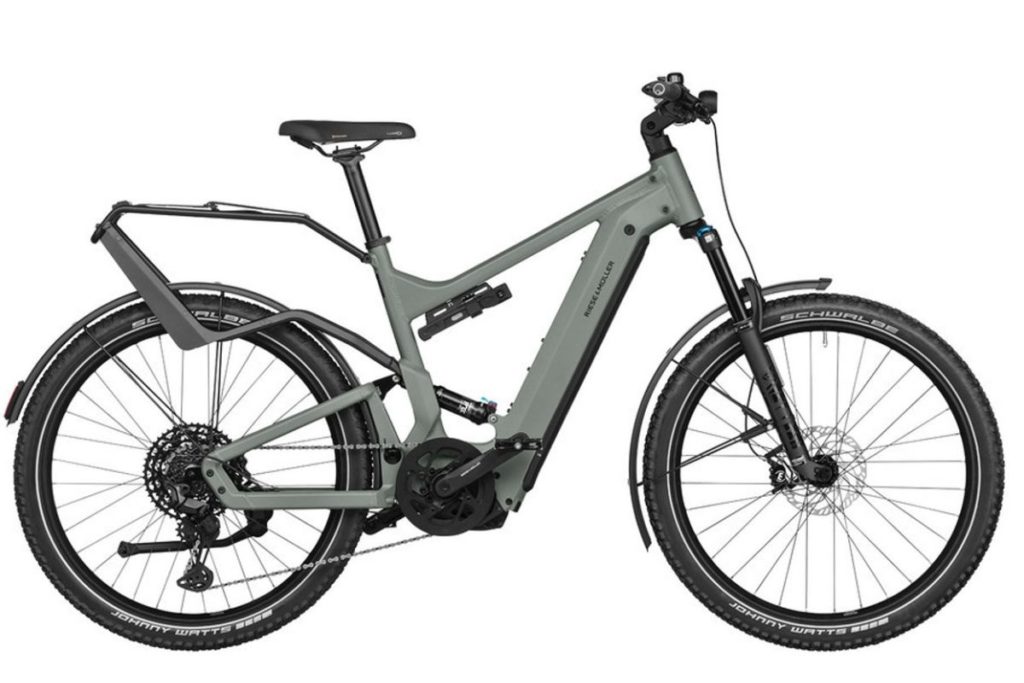
Riese & Müller Delite4
£6,399
If you want a truly premium “adventure e-bike” that can handle mixed surfaces and real-world riding year-round, Riese & Müller is often where the conversation ends up. The Delite4 is built around comfort, refinement and long-distance usability, and for UK riders who want one machine that can cope with everything from rural lanes to rough tracks and bridleway links, that’s a compelling brief. This isn’t an e-MTB in the trail-centre sense — it’s an “all conditions, all journeys” e-bike with the strength and stability to handle rough surfaces confidently.
This choice is also about ownership and finish. Premium trekking/adventure bikes tend to feel exceptionally well thought through: ride position, comfort, reliability and integration. If your “off-road” riding is mixed terrain and you value practicality alongside performance, this is the top end of that category.
Pros
Premium chassis and comfort-first design suits long mixed-surface days
Bosch CX ecosystem is widely supported
Often configured with practical kit (lights/racks/guards) depending on build
Cons
More e-SUV than “trail shredder” in stock form
Specifications
Motor: Bosch Performance Line CX (smart system)
Battery: Akku Bosch PowerTube 750 Vertical; Bosch PowerMore 250
Fork: SR Suntour Mobie 34, Air, tapered, 120mm; Fox Float Rhythm, Air, 140mm, Boost; SR Suntour Aion 35, Air, tapered, 140mm, Boost
Shock: Suntour RS-19 190×40; Fox Float DPS Performance 210×50; Suntour RS-19 210×50
Tyres: Schwalbe Super Moto-X 62-584 Reflex
Drivetrain: Shimano CUES CS-LG700-11,11-50 or 55T, Gates drive belt CDX
Brakes: Magura MT4
Best women’s e-MTB 2026
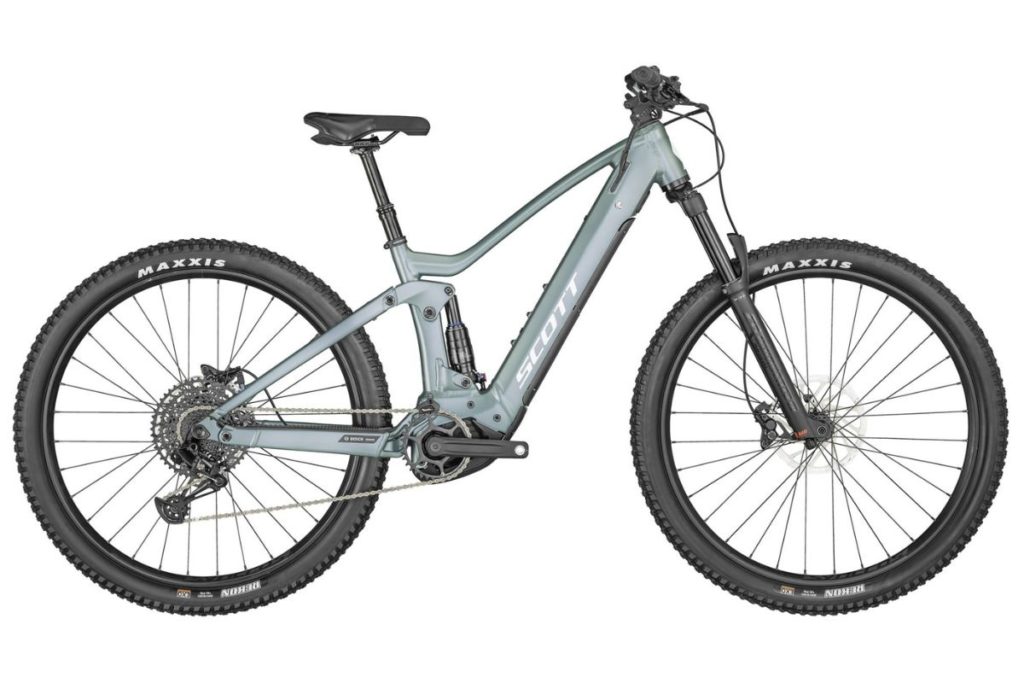
Scott Contessa Strike eRIDE
£3,249 (RRP £4,999)
The Contessa Strike eRIDE is another women’s-specific route into a full-suspension e-MTB, and it makes sense for riders who want comfort and confidence on real trails. Electric mountain bikes encourage longer rides and more repeated climbs, which naturally means more descending. A full-suspension platform can reduce fatigue and help maintain grip, especially on typical UK trails where wet roots and churned surfaces reward a calmer, more forgiving setup.
In the women’s category, what matters is that the bike offers a sizing run and overall fit that genuinely works, and that the handling feels manageable rather than intimidating. Bikes like this can be a strong choice if you’re building confidence and want a trail-ready platform that doesn’t feel overly aggressive. As ever, setup is key: getting sag and tyre pressures right transforms how any e-MTB rides, but especially a full-suspension bike aimed at long, mixed UK rides.
Pros
Women’s full-suspension e-MTB concept aimed at trail confidence
Comfortable for longer rides and repeated descending
Strong fit-led shortlist option for many women riders
Cons
Full-suspension ownership means more servicing and setup considerations
Specifications
Motor: Bosch Performance CX
Battery: PowerTube 625Wh
Fork: Marzocchi Z2 Air / eMTB+
Rail 3 / 3-Modes / 15x110mm QR axle / tapered steerer
44mm offset / Reb. Adj. / Lockout / 140mm travel
Shock: X-Fusion NUDE Trunnion
SCOTT custom w. travel / geo adj.
3 modes: Lockout-Traction Control-Descend
Reb. Adj.
Travel 140-90-Lockout / 185x50mm
Tyres: Maxxis Rekon / 29×2.6″ / 60TPI Wire Bead EXO Dual
Drivetrain: SRAM PG1210 / 11-50 T
Brakes: SRAM DB8 4 Piston Disc
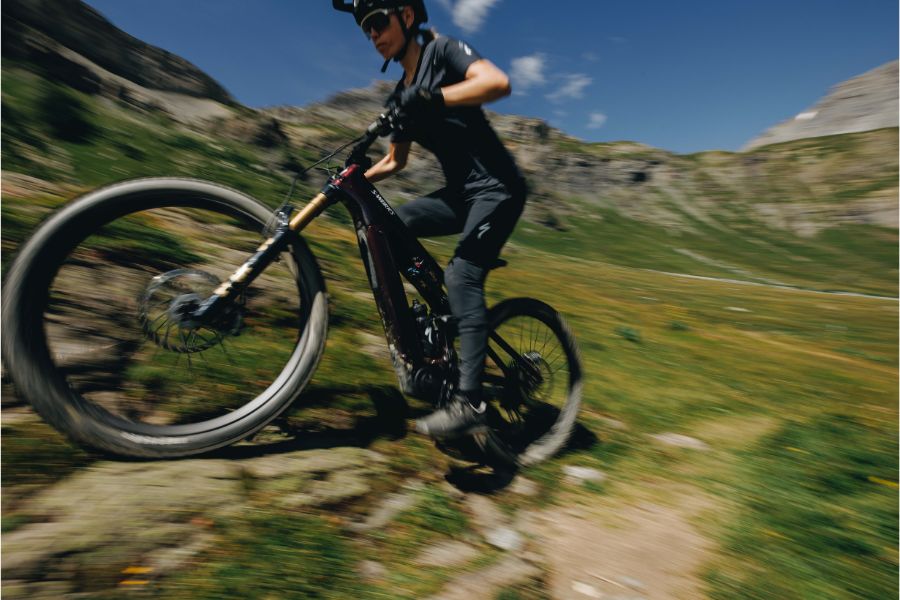
Specialized Turbo Levo 4
From £5,199
Not every great women’s e-MTB is women-specific. For many riders, the more useful question is: does the bike have a sizing run that genuinely works, a cockpit you can adapt easily, and handling that feels confidence-inspiring across real UK terrain? The Turbo Levo fits that brief well as a women’s pick because it’s widely available, has broad sizing, and tends to feel cohesive and predictable once set up properly.
If you’re shopping specifically for a women’s e-MTB, it’s worth approaching it as a fit-first exercise: look at standover, reach, stack, bar width, brake lever reach, and suspension setup. A bike that’s “right” on those details will feel dramatically better than one that’s theoretically the right category but doesn’t suit your body. As a shortlist anchor, this is a proven reference point — and a useful benchmark against which to compare more niche women-focused options.
Pros
Fit-led appeal: wide availability and adaptable setup potential
Confidence-inspiring trail feel once dialled
A useful benchmark model for comparing other women’s picks
Cons
You’ll still want to prioritise fit and setup rather than assuming it will suit automatically
Specifications (Alloy model)
Motor: Specialized 3.1 Motor, 101Nm torque, 666Nm power
Battery: 840Wh battery
Fork: Marzocchi Bomber Z1, 29″, S2-S6: 160mm, S1: 150mm, sweep adjust compression
Shock: Marzocchi Bomber Inline, EVOL LV air sleeve, rebound adjust, 210x55mm
Tyres: Butcher, GRID GRAVITY casing, GRIPTON® T9 compound, TLR, 29×2.4″
Drivetrain: XS-1270, 12-speed, 10-52t
Brakes: SRAM DB8 Stealth, 4-piston caliper, hydraulic disc, 220mm Centerline rotor
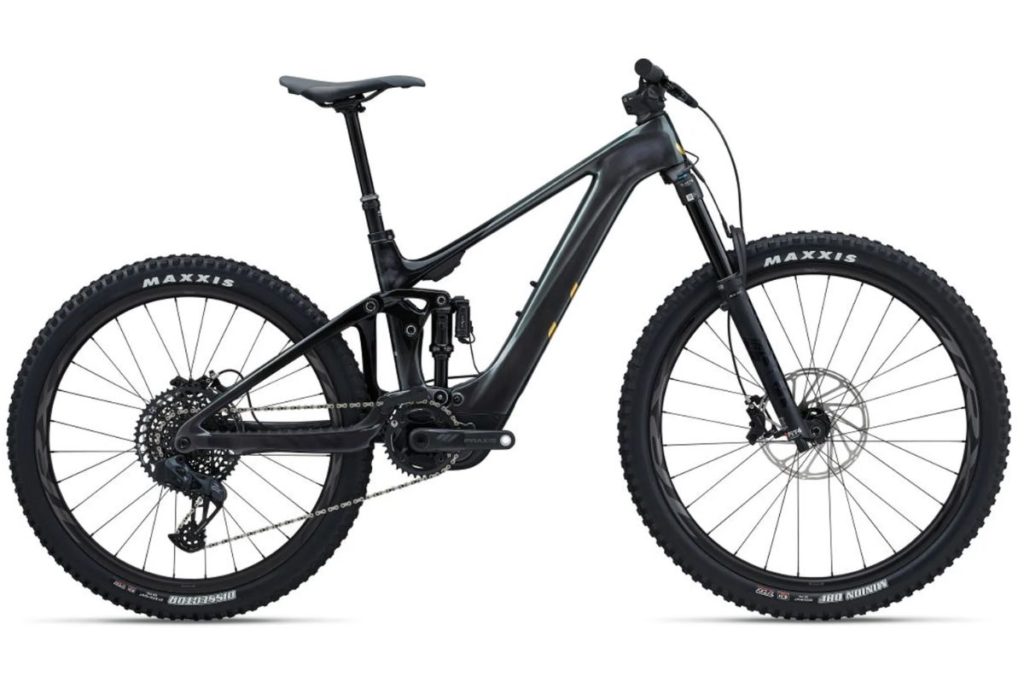
Liv Intrigue X E+
£5,399 (RRP £8,999)
Liv’s Intrigue X E+ is a women-focused trail e-bike with genuine off-road intent. In practical terms, that usually means a package that’s easy to get comfortable on, confidence-inspiring at speed, and controllable on typical UK surfaces like wet roots and muddy climbs. For many women, the “best e-MTB” question is less about chasing a particular motor number and more about finding a bike that fits properly, feels manageable, and doesn’t demand constant wrestling to stay on line.
As a shortlist pick, it also represents a fit-first approach. A women-focused design can make it easier to find a comfortable cockpit and a frame shape that suits smaller riders, while still delivering the stability you want on descents. It’s still worth applying the same buying priorities as any other e-MTB — tyres, braking performance and setup matter hugely — but if your priority is a women-focused trail bike that can do proper off-road riding, this deserves a place in your early comparisons.
Pros
Women-focused trail e-MTB concept with real off-road capability
Confidence-inspiring approach for varied UK trails
Strong fit-led appeal for many riders
Cons
Still worth checking sizing/fit carefully if you’re between sizes
Specifications
Motor: SyncDrive Pro2 85Nm, powered by Yamaha, PedalPlus 6-Sensor technology
Battery: GiantEnergyPak 400Wh
Fork: Fox 36 Performance Elite Live Valve, 150mm travel, 44mm offset, Grip2 damper, Boost 110x15QR, electronic adaptive suspension, e-bike integrated
Shock:
Fox Float X Live Valve, 185×52.5mm Trunnion mount, electronic suspension, e-bike integrated
Tyres: Maxxis Minion DHF 29X2.50″ Foldable, TLR, EXO /
Maxxis Dissector 27.5×2.4″ Foldable, TLR, EXO
Drivetrain: SRAM XG-1275, 10-52T, 12-speed
Brakes: SRAM Code R, hydraulic disc, 220mm[F] /200mm[R]
Frequently Asked Questions
What’s the best electric mountain bike in the UK for 2026?
There isn’t one best for everyone. The best e-MTB 2026 depends on whether you prioritise hardtail simplicity, full-suspension comfort, long-range battery confidence, lightweight handling, trekking/SUV practicality, or a fit-led women’s choice. Use the category shortlist above to self-select the right type first.
Hardtail or full-suspension e-MTB 2026: which should I choose?
Hardtails suit smoother trails, bridleways and riders who value simplicity and value. Full-suspension e-MTB 2026 suit rougher terrain, more technical riding, and longer rides where comfort and traction make a big difference.
How much battery capacity do I need for UK trail riding?
It depends on elevation, assist mode, temperature and tyre choice. If you do big elevation days, ride in winter, or want less stress on longer loops, a long-range-focused bike gives you more flexibility. Our range guide explains practical steps that extend range whatever you ride.
Are lightweight e-MTBs worth it?
If you value handling feel and want something closer to an analogue trail bike, yes. Lightweight e-MTB 2026 tend to feel more natural and easier to manoeuvre, but they usually offer less “endless” support than full-power bikes, so range and climbing expectations need to be realistic.
What makes an e-MTB legal in the UK?
A UK-legal e-bike (EAPC) is pedal-assist with assistance cutting out at 15.5mph. Anything with off-road speed modes or motor-powered riding above that limit can move the bike into motor-vehicle territory. If you’re unsure, read our UK e-MTB law explainer before buying.