Riding through a UK winter is rarely a case of “a quick lap after work”. Short days, wet surfaces, spray and mud all conspire to make visibility and confidence a genuine limiting factor—particularly on an eMTB, where higher average speeds and longer rides can expose weak beam patterns and short runtimes very quickly. The best eMTB lights for night riding are not just about headline lumens; you need the right beam shape for trail speeds, stable mounting that will not shake loose on rough ground, sensible battery management in the cold, and a system that is easy to operate with winter gloves. If you commute to the trails, you also need to be seen clearly on the road without relying on an overly narrow “spot” beam that disappears the moment you turn.
This guide focuses on the best eMTB lights for night riding across four practical setups: a handlebar light for primary trail illumination, a helmet light to follow your line of sight, a rear light for road approaches and visibility in poor weather, and wired e-bike lights that draw power from your eMTB (ideal if your bike supports them and you want consistent runtime without charging separate batteries). The products below are chosen to cover different budgets and riding styles, while keeping the emphasis on what matters most for eMTB night riding in the UK: usable light on real trails, reliable mounts, and predictable runtime.
The best eMTB lights for night riding shortlisted
Cateye Rapid X — £33.74 (RRP £44.99)
Magicshine SEEMEE 300 — £43.99 (RRP £49.99)
Cateye AMPP 800 — £48.99 (RRP £64.99)
Magicshine ALLTY 1200 — £53.18 (RRP £79.99)
Lezyne Lite Drive 1200+ — £61.99 (RRP £85.00)
Garmin Varia RTL515 — £129.99 (RRP £169.99)
Lezyne Mega Drive 2400+ Loaded Kit — £141.00 (RRP £180.00)
Exposure Diablo MK15 — £216.00 (RRP £240)
Magicshine Monteer 12000 — £355.00 (RRP £490.00)
We’ve prioritised…
For the best eMTB lights for night riding, we prioritised beam quality and stability over “paper specs”. A well-shaped beam with a strong centre and usable spill is typically more confidence-inspiring than a higher claimed output that scatters light. We also prioritised mounting systems that cope with off-road vibration, straightforward charging (USB-C is still the most practical), and features that make sense for UK winter riding: glove-friendly controls, reliable battery indicators, and modes that work for both trail and road transitions.
Quick sizing & fit
Most riders get the most consistent results with a two-light setup: a handlebar light mounted centrally (or slightly forward on an out-front mount) and a helmet light mounted as low as possible to reduce wobble. For rear lights, check seatpost shape and available clearance if you use a dropper post; a low-profile mount can matter if you regularly slam the saddle down for descents. For wired eMTB lights, confirm your bike and motor system support a light output and that your chosen light matches the correct voltage and connector standard—many “e-bike” lights are not universal plug-and-play, even if they are compatible in principle.
The best eMTB lights
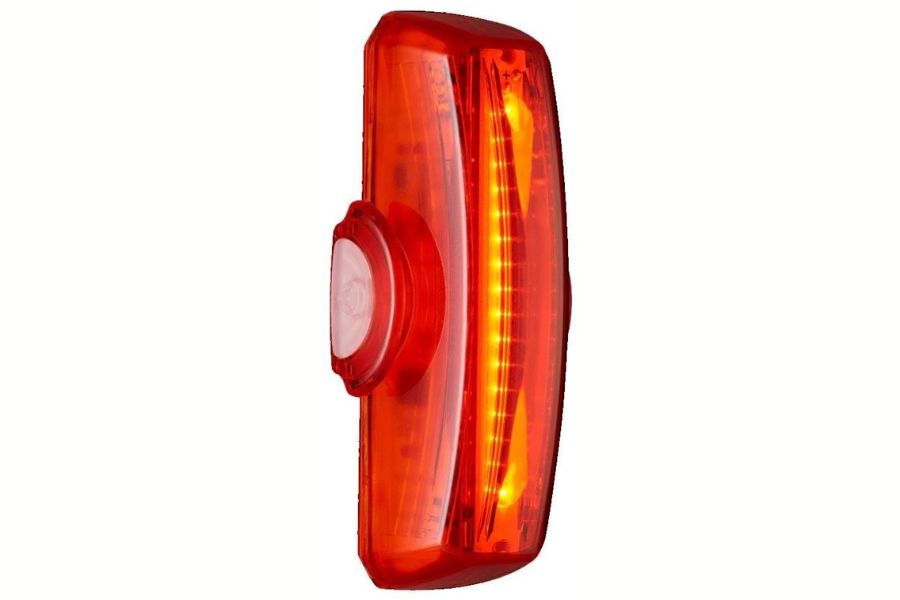
Cateye Rapid X
The Rapid X is a sensible “always carry” rear light for eMTB riders who want a low-cost but capable solution for visibility on the road and in poor weather.
For best results, treat it as a visibility tool rather than a “see the trail” tool: it is about being noticed when you are riding to the trails at dawn, returning on lanes after dark, or dealing with spray and mist on mixed routes. Its low profile makes it easy to mount on a seatpost without getting in the way of a dropper post routine, and it is the kind of light you can leave on the bike without too much worry.
As with many compact rear lights, the key is placement: keep it clean, keep it pointed squarely rearward, and avoid mounting it so low that your rear tyre spray covers it within minutes.
Pros
Affordable and practical for UK winter road approaches
Compact shape suits dropper-post bikes
Useful “always on the bike” option
Cons
Compact size means it works best as a visibility light, not a long-distance beacon
Specifications
Claimed output: class-leading visibility for a compact rear light (varies by mode)
Runtime: mode dependent
Power source: internal rechargeable battery
Charging: USB (check version)
Mounting: seatpost mount
Best for: commuting to trails, lanes, winter visibility and everyday backup use
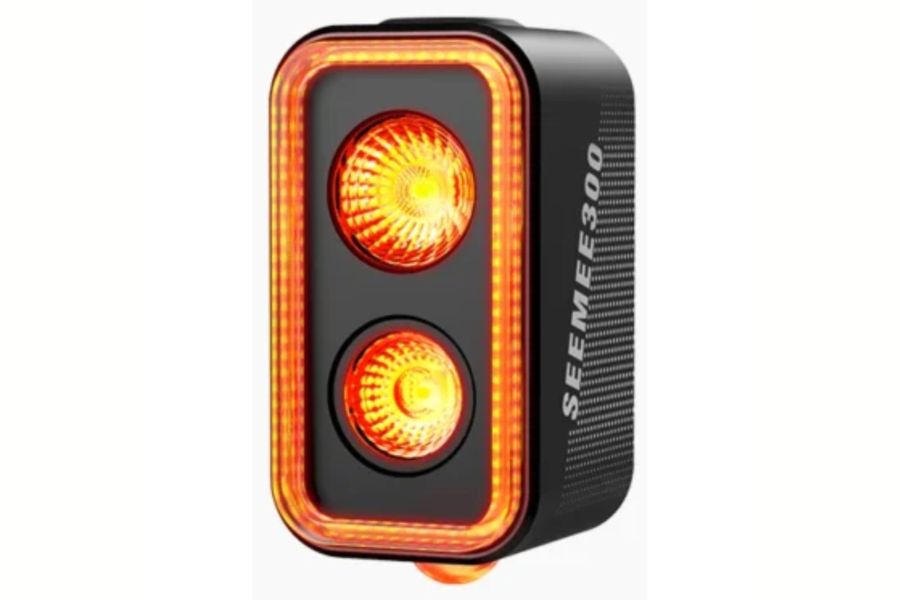
Magicshine SEEMEE 300
£43.99 (RRP £49.99)
The SEEMEE 300 is a strong pick for riders who want a more modern rear light with higher output and a focus on visibility in mixed conditions. For eMTB use, this is the kind of rear light that suits riders who regularly link trails with road sections and want to remain conspicuous in traffic and poor weather.
The practical benefit is that it is bright enough to stand out against the visual noise of cars, streetlights and winter haze, while still being manageable to charge and mount. If you ride with a backpack, or your bike gets heavily spray-coated, position becomes critical—higher tends to stay cleaner and more visible.
While no rear light replaces good road positioning, a properly used rear light can reduce close passes by increasing how early drivers notice you, particularly on damp evenings when contrast is reduced.
Pros
High visibility for winter roads and poor weather
Strong output for riders who regularly link trails by road
Practical charging and everyday usability
Cons
Bright modes need mindful use in group rides to avoid dazzling riders behind
Specifications
Claimed output: 300 lumens class
Runtime: mode dependent
Power source: internal rechargeable battery
Charging: USB (often USB-C on modern units)
Mounting: seatpost mount
Best for: winter commuting to trails, foggy conditions and higher-visibility rear lighting
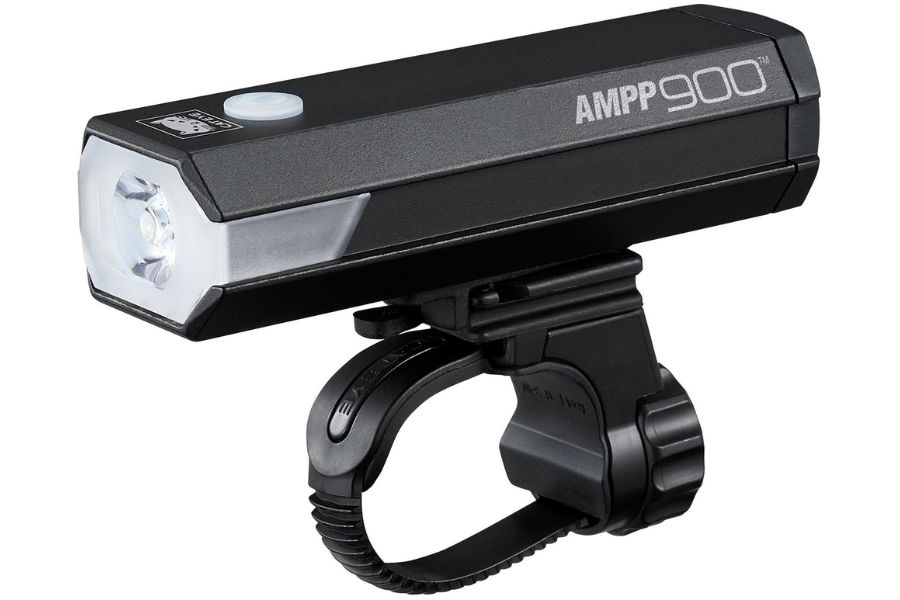
Cateye AMPP 800
£48.99 (RRP £64.99)
The AMPP 800 is a practical entry-level helmet light for riders who want the advantages of a head-mounted beam without spending heavily. In the context of the best eMTB lights for night riding, it is not a replacement for a powerful handlebar light; it is an enhancer.
Used as a secondary light, it helps you look through corners, spot signage, pick out trail features, and reduce the “flatness” that can occur when your only light is bar-mounted. It also suits riders who occasionally ride at night rather than every week: compact, easy to charge, and generally straightforward.
The main limitation is output at speed—on genuinely fast, technical descents you will want more power and a more robust mount. But paired with a decent handlebar light, it delivers a noticeable improvement in confidence for a relatively modest outlay.
Pros
Excellent value as a secondary helmet light
Compact and simple for occasional night riding
Helps cornering vision and line choice when paired with a bar light
Cons
Not powerful enough to be a standalone solution for faster technical trails
Specifications
Claimed output: 800 lumens
Runtime: mode dependent; best treated as a support light
Power source: internal rechargeable battery
Charging: USB (check version)
Mounting: helmet mount/strap options
Best for: supporting a handlebar light on UK trail centres and bridleways
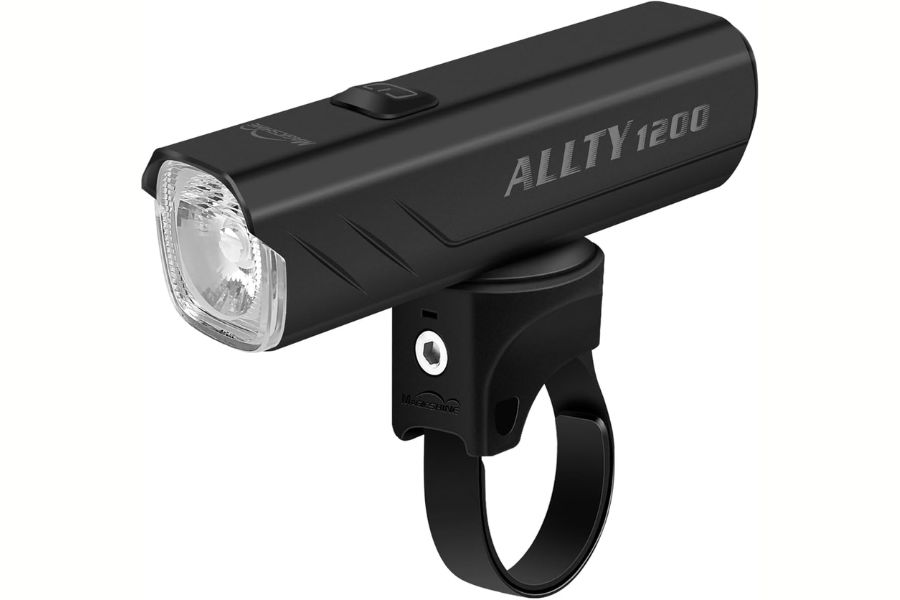
Magicshine ALLTY 1200
£53.18 (RRP £79.99)
If you want an affordable entry point into the best eMTB lights for night riding, the ALLTY 1200 is a sensible place to start for mixed riding—commutes to the trails, towpaths, bridleways and easier singletrack at moderate speeds.
The key is to treat it as a “primary light for mellow trails” rather than a full-power enduro solution. In real use, it works best when you keep it in a mid mode to preserve runtime and thermal stability, then reserve the top output for short, faster sections. For eMTB riders, the practical benefit is its simplicity: compact body, USB-C charging, and an everyday beam that does not demand a separate battery pack or complex cabling.
If your night riding is more trail-centre loops than steep, technical chutes, it can be enough as a handlebar light—especially when paired with a small helmet light later.
Pros
Compact, easy to live with and quick to remove for charging
Strong mid-mode usability for UK winter riding
Good value route into a proper night-riding setup
Cons
Maximum output is best used in short bursts rather than as a constant “full send” trail mode
Specifications
Claimed output: 1200 lumens
Runtime: varies by mode; plan mid-mode for longer rides
Power source: internal rechargeable battery
Charging: USB-C
Mounting: strap / compatible mount options depending on setup
Best for: towpaths, lanes, bridleways and easier singletrack at moderate speed
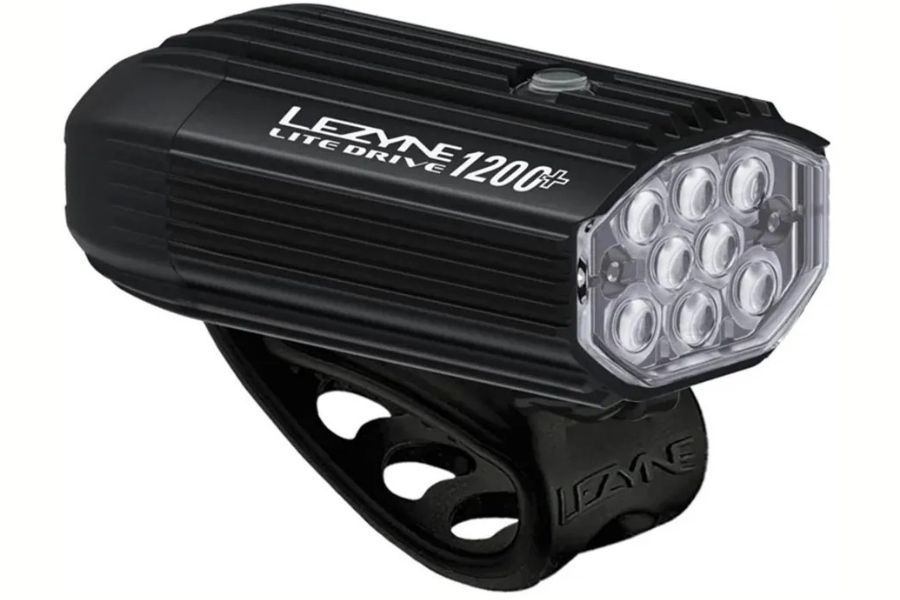
Lezyne Lite Drive 1200+
£61.99 (RRP £85.00)
As a helmet light, the Lite Drive 1200+ sits in a useful middle ground: more output and versatility than entry-level units, but still compact enough to feel reasonable on a helmet.
For eMTB night riding, this class of light works well because it can run a genuinely useful medium mode for the bulk of the ride, then step up for short technical moments—tight corners, drops, or unfamiliar trail features.
The real benefit is how it complements a handlebar beam. Your bar light does the heavy lifting; this helmet light gives you the ability to “aim” light into the next turn or down the next line choice. It is also a sensible choice for riders who ride in groups, because you can tune it to a support role without constantly dazzling other riders.
If you want to build towards the best eMTB lights for night riding as a system rather than a single purchase, this is a strong second buy after a handlebar light.
Pros
Strong support light for faster and more technical trails
Compact enough for helmet use while still delivering meaningful output
Useful mode range for long winter rides
Cons
Helmet mounting needs care to avoid wobble on rough trails
Specifications
Claimed output: 1200 lumens
Runtime: mode dependent
Power source: internal rechargeable battery
Charging: USB (check port type on your specific model)
Mounting: helmet/strap compatible
Best for: pairing with a bar light for confident UK winter night riding
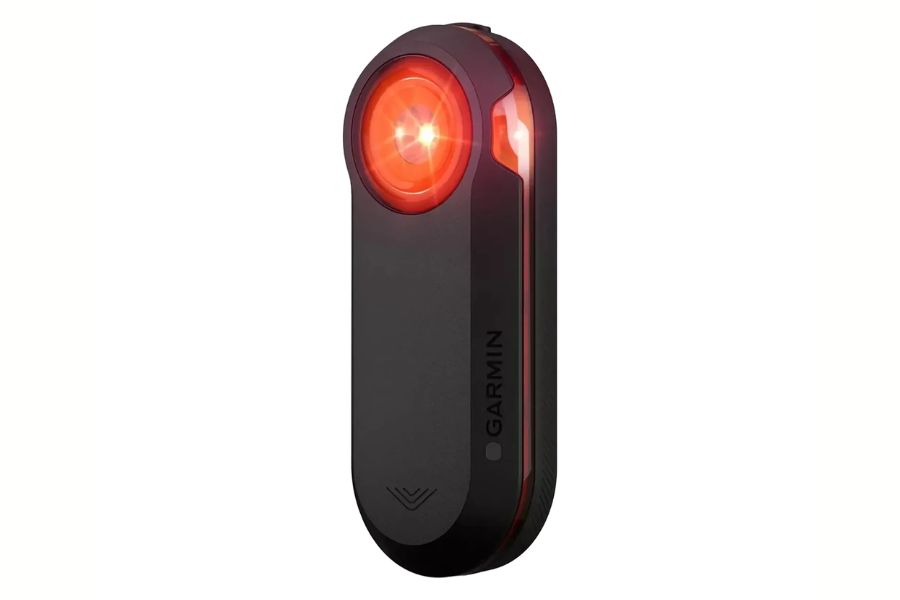
Garmin Varia RTL515
£129.99 (RRP £169.99)
The Varia RTL515 is a rear light with radar, and it targets a very specific need: awareness of approaching traffic. For eMTB riders, it is most valuable if your night riding includes meaningful time on roads—either as a commute to the trails or as part of longer mixed-terrain routes.
The radar element can provide earlier warning of vehicles behind you, which is useful on dark, narrow lanes where you might otherwise only realise a car is close when it is already alongside. In the context of the best eMTB lights for night riding, it is not a “trail” product, but it can materially improve the safety of getting to the trailhead and back again.
The main consideration is that you will get the best experience when paired with a compatible head unit or app setup, so it makes most sense for riders already invested in a Garmin-style ecosystem or who are comfortable running a phone setup.
Pros
Radar adds genuine situational awareness on dark UK lanes
Strong rear light visibility for road transfers
Especially useful for commuting to trails or mixed routes
Cons
Best experience depends on compatible devices and a setup you will actually use every ride
Specifications
Key feature: rear radar plus rear light
Runtime: mode dependent
Power source: internal rechargeable battery
Charging: USB
Mounting: seatpost mount system
Best for: riders who regularly use roads to access trails, especially in winter darkness
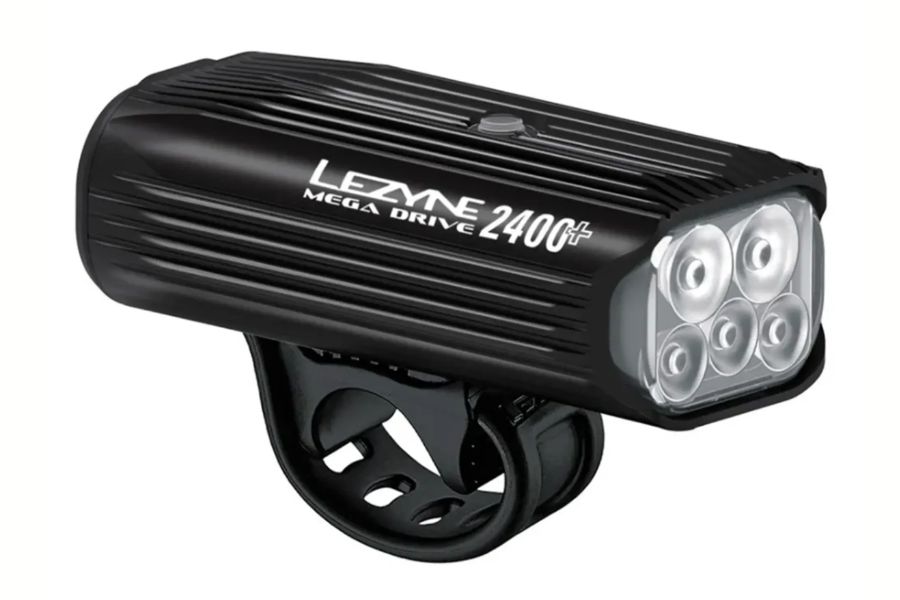
Lezyne Mega Drive 2400+ Loaded Kit
£141.00 (RRP £180.00)
The Mega Drive 2400+ Loaded Kit is a strong “step up” handlebar option for riders who are serious about night riding, but who still want the convenience of a self-contained light rather than an external battery pack.
For eMTB use, the sweet spot is combining its higher output with disciplined mode selection: run a medium setting for climbs and linking tracks, then move up a level for descents or unfamiliar trail sections. Where it tends to outperform cheaper lights is the overall impression of brightness at speed—partly due to optics and partly because it can hold a higher usable output for longer before you start thinking about battery anxiety.
In UK winter conditions, this matters: wet ground absorbs light and reduces contrast, so a stronger handlebar beam can help you read texture, ruts and roots earlier. It is also a good “single light” for riders who prefer helmet-free setups, though pairing it with a modest helmet light still delivers the best results.
Pros
High-output headroom for faster trail speeds
Practical for eMTB rides where you want strong light without a battery pack
Versatile modes for long winter loops
Cons
Larger unit than budget lights, so careful positioning helps avoid cable clutter and bar crowding
Specifications
Claimed output: 2400 lumens (class)
Runtime: varies by mode; designed for extended use with sensible mode choices
Power source: internal rechargeable battery
Charging: USB (varies by model generation; check port type)
Mounting: handlebar mount system
Best for: regular night riding, trail centres, faster bridleways and winter endurance laps
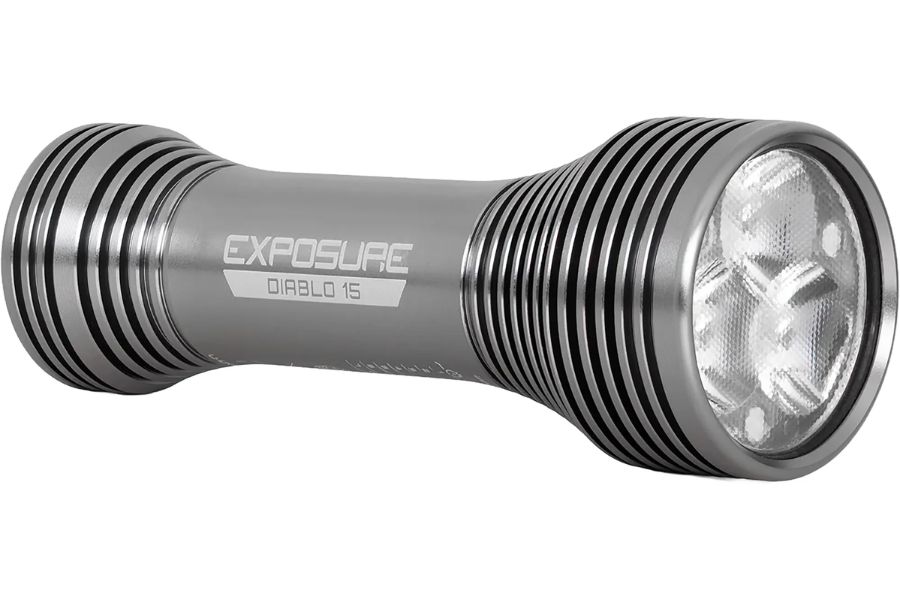
Exposure Diablo MK15
£216.00 (RRP £240)
Exposure’s Diablo line is popular among riders who want a premium, UK-built helmet light with strong real-world usability rather than spec-sheet theatre. As part of the best eMTB lights for night riding, the Diablo MK15 makes sense for riders who ride at night frequently and want a helmet light that feels “set and forget”: robust build, predictable output, and a beam that helps you ride with confidence rather than simply adding a spot of light.
Its main advantage on an eMTB is how it reduces the mental load of night riding. Instead of constantly thinking about where the light is aimed or whether the mount is shifting, you can focus on the trail. It is particularly effective on tighter, more technical UK terrain where you need to scan for roots, edges and slick off-camber patches.
The trade-off is that it is an investment, and it makes the most sense when used as part of a two-light setup alongside a capable handlebar light.
Pros
High-quality, reliable helmet light for frequent night riding
Strong real-world beam and confidence at speed
Built for off-road abuse and winter conditions
Cons
Premium approach is best justified if you ride at night regularly rather than occasionally
Specifications
Claimed output: varies by mode; performance-focused trail light category
Runtime: mode dependent; designed for off-road sessions
Power source: internal rechargeable battery
Charging: manufacturer system (check current port/charger method)
Mounting: helmet mount compatible
Best for: committed night riders who want a premium helmet light for technical trails
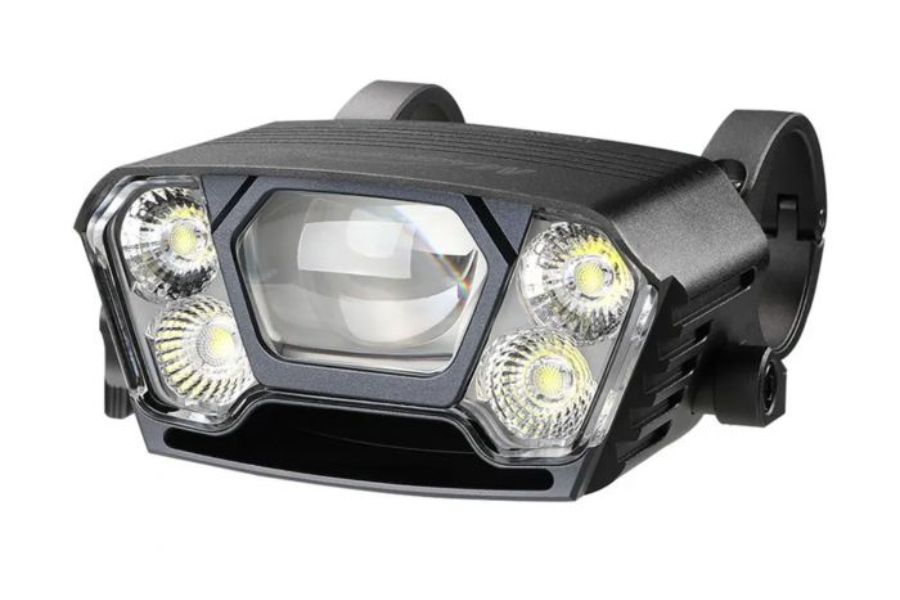
Magicshine Monteer 12000
£355.00 (RRP £490.00)
If you ride technical trails at night and want a “proper” off-road lighting system, the Monteer 12000 is built for that job: high output, serious coverage, and the kind of beam that makes faster descents feel less like you are riding into a tunnel.
This is the style of handlebar light that can transform eMTB night riding because it creates both distance and peripheral illumination—important when you are dealing with tight trees, compressions, and wet roots that need earlier identification. The trade-off is complexity: you are moving into external battery territory, which means cable routing, battery mounting (frame or top tube), and the need to keep connectors clean in winter grime.
For UK riders, it also pays to think about etiquette: high-output systems can dazzle other trail users, so having a genuinely usable lower mode matters as much as the maximum. Used thoughtfully, it is one of the strongest “primary beam” solutions in this guide.
Pros
Serious trail coverage for technical riding and higher speeds
Strong beam width helps with peripheral awareness in tight wooded sections
External battery format supports longer sessions when managed well
Cons
Battery and cable management adds setup time and can be fiddly in winter conditions
Specifications
Claimed output: 12,000 lumens
Runtime: wide range depending on mode; designed for long rides with external battery
Power source: external battery pack
Charging: USB-C (battery pack dependent)
Mounting: handlebar mount plus battery mounting solution
Best for: technical night riding, enduro-style trails, faster descents and long winter sessions
Frequently Asked Questions
How many lumens do I need for the best eMTB lights for night riding?
For easier off-road routes and bridleways, a quality 1000–1500-lumen-class handlebar light can be sufficient if the beam pattern is good. For faster trail-centre riding and technical terrain, many riders prefer a higher-output handlebar light plus a helmet light, because the combined beams improve depth and corner visibility. Lumens are not everything—beam shape and stability often matter more.
Is a helmet light necessary for eMTB night riding?
Not strictly, but it is often the biggest “confidence upgrade” after a decent handlebar light. A helmet light lets you aim light into corners and down your intended line, which is especially helpful on tight, technical UK trails and in wooded sections where your bar light may not follow your gaze.
Are wired eMTB lights better than battery lights?
They can be, if your bike supports them and you want an always-ready system with fewer charging routines. The downside is compatibility and installation complexity. Many riders still choose battery lights for technical trail riding because they can offer very wide beams and flexible placement, while wired lights are often optimised for controlled, road-style beams.
What’s the best setup for UK winter night rides?
A two-light setup is the most reliable: a handlebar light as your primary beam and a helmet light as your directional beam. Add a rear light for road transfers and poor weather visibility. This system approach is why many riders searching for the best eMTB lights for night riding end up buying in stages rather than trying to solve everything with one purchase.
How do cold and wet conditions affect bike light runtime?
Cold temperatures can reduce battery performance, and wet, muddy rides can make it harder to manage charging ports and connectors. To protect runtime, use medium modes for climbs and linking tracks, keep spare charging cables in a dry bag, and avoid leaving lights charging in freezing conditions. For very long winter rides, a wired eMTB light (if compatible) can remove much of the runtime uncertainty.