
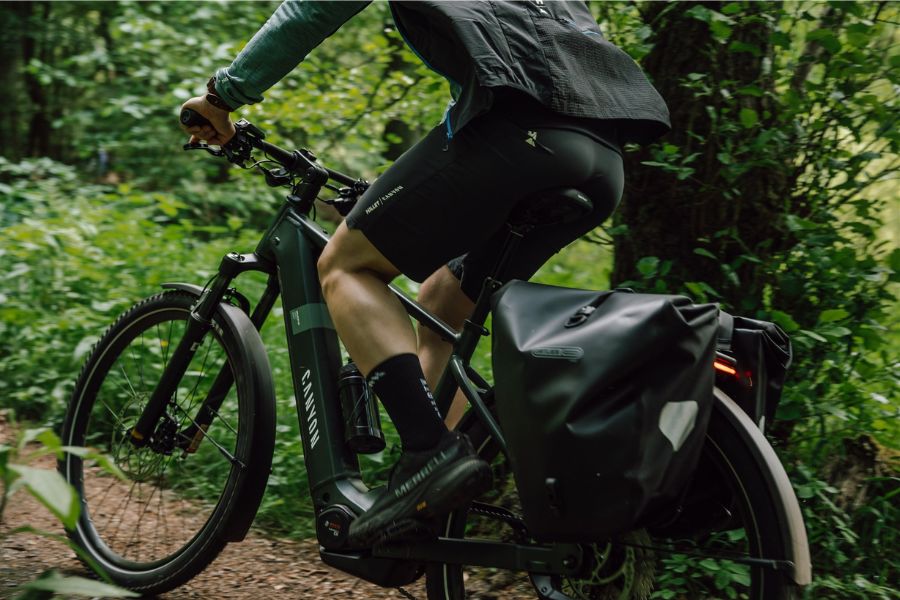
If you ride an eMTB, you already know the awkward truth about security: the bike is heavy, expensive, and often left in exactly the places thieves like to work—trailhead car parks, café rails, apartment bike stores, garages, and vans. The “best eMTB security products” aren’t one magic lock; they’re a layered system that matches where you actually park, how long you leave the bike, and what you can realistically carry. A serious D-lock (or two) is still the backbone, but trackers and alarms add the early-warning and recovery layer, chains solve the awkward anchoring problems that full-suspension frames create, and lighter “bike park” locks cover those short stops where you want a deterrent without hauling 3kg in your pack.
This tier 1 buyer’s guide is split into four clear sections—D-locks, trackers, chain locks and low-security bike-park locks—with three picks in each. The idea is simple: pick one “primary” security product for your highest-risk use (usually a top-tier D-lock or chain at home/work), then add one or two supporting layers (tracker/alarm and component/cable deterrent). You will never make an eMTB theft-proof, but you can make it time-consuming, noisy, and far less attractive than the bike next to it—often the only realistic goal.
The best eMTB security products 2026 shortlisted
D-locks (highest security)
LITELOK X1 — £149.99
LITELOK X3 — £249.99
Hiplok DX1000 — £299.99
Trackers (and alarm tracking)
Knog Scout Bike Alarm & Finder — £49.99
BikeFinder GPS Tracker — £175.00 (+ subscription)
PowUnity BikeTrax (motor-integrated GPS) — £199.90 (+ subscription)
Chain locks (high security, flexible anchoring)
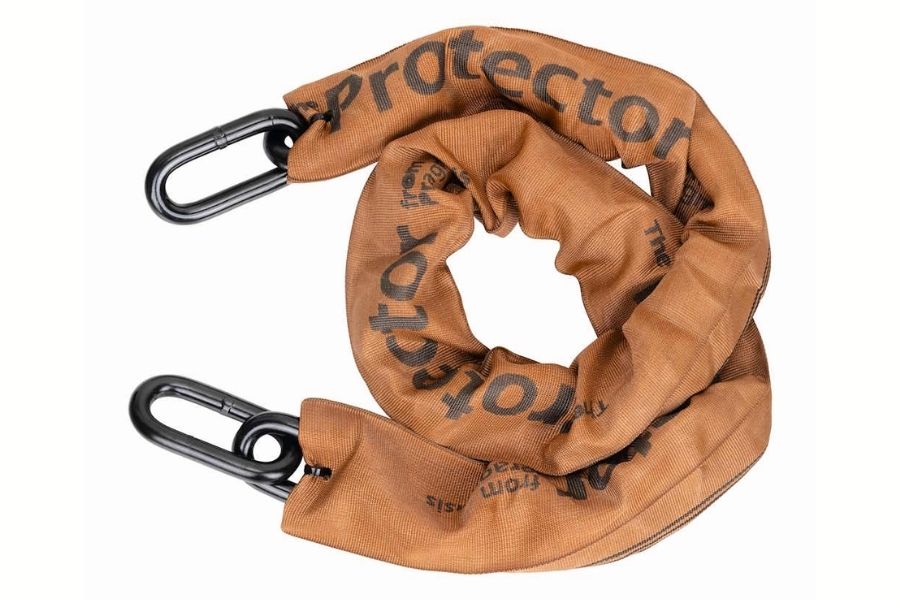
Pragmasis Protector 13mm Chain — £64.95
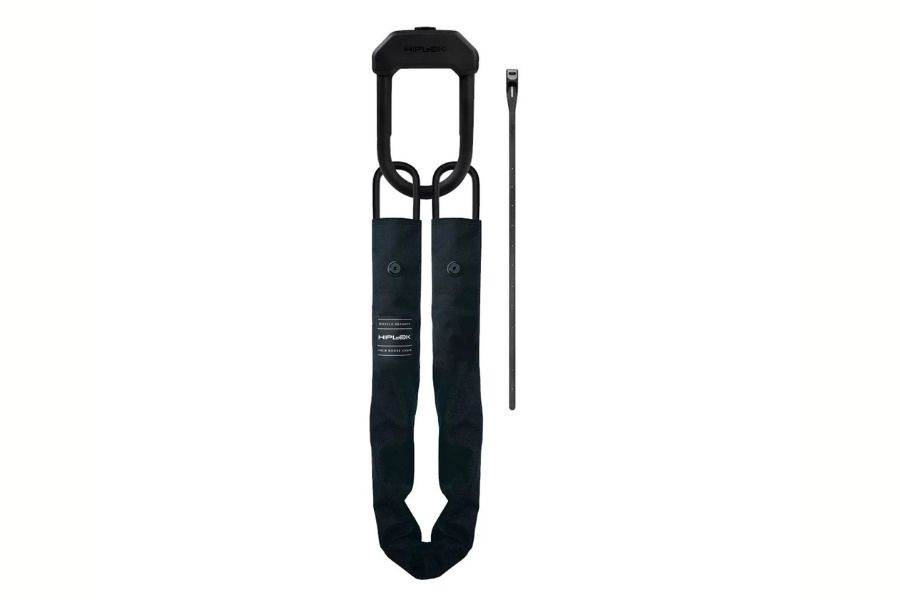
Hiplok E-DX Chain & U-lock Combo — £104 (RRP £130)
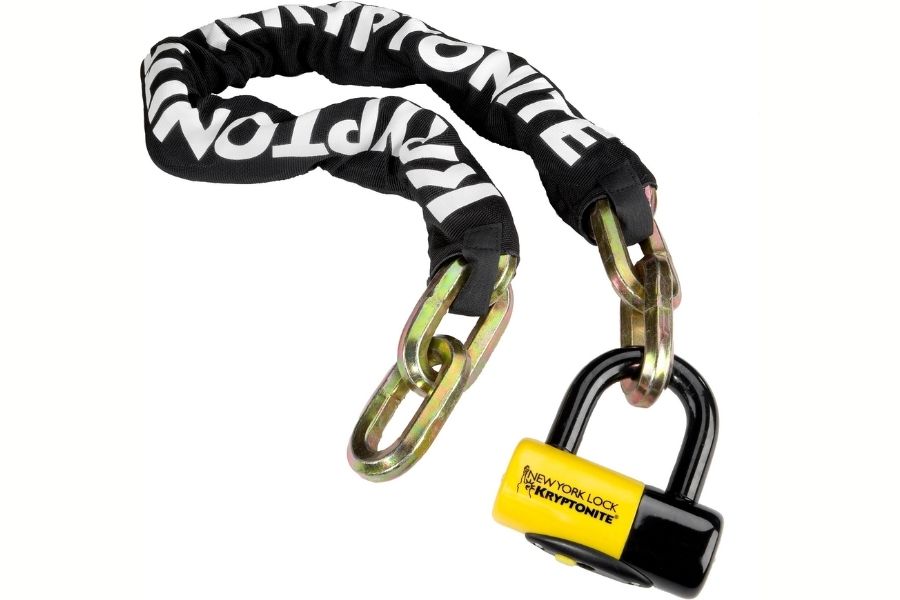
Kryptonite New York Fahgettaboudit 1410 (14mm x 100cm + disc lock) — £94.91 (RRP £164.99)
Low-security (bike park / café stop deterrents)
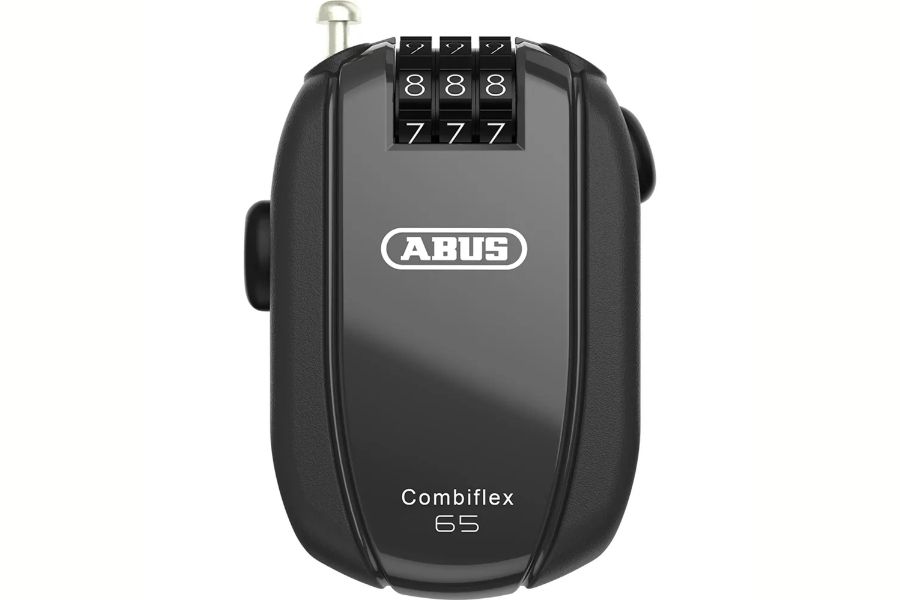
ABUS Combiflex StopOver 65 — £16.00 (RRP £20.00)
Hiplok Z LOK Combo V2 — £22.49 (RRP £24.99)
Kryptonite Kryptoflex 1018 Combo Cable (10mm x 180cm) — £16.99 (RRP £21.99)
The best eMTB security products 2026
D-locks: the core of serious eMTB security
LITELOK X1
£149.99
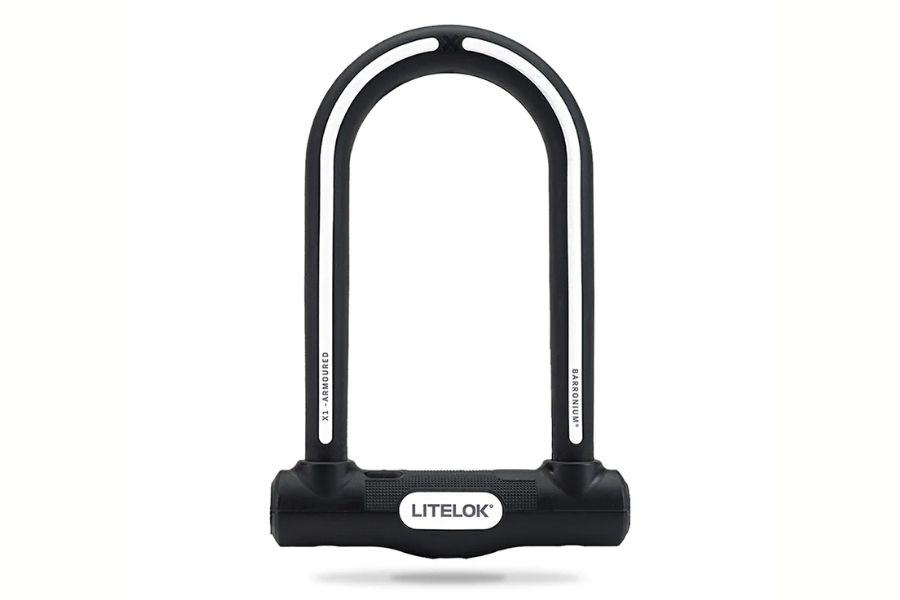
If you want one purchase that immediately upgrades “best eMTB security products” credibility, a modern anti-angle-grinder focused D-lock is it—and the LITELOK X1 sits in a sweet spot for riders who need real deterrence without going straight to the heaviest, priciest options. For typical UK eMTB use—trailhead stops, commuting, locking outside cafés—the X1 makes sense because it’s built to force time and noise, not just defeat basic hand tools. That matters because many eMTB thefts are tool-led and fast: if your lock looks like a quick win, it’s a quick win.
The practical angle for an electric mountain bike is fit and routine. Full-suspension frames and crowded racks can make locking awkward; the X1 is a size and weight that many riders will actually carry, which is a bigger deal than it sounds. A lock left at home offers zero protection. Use it as your primary lock for public parking and pair it with either a tracker (for recovery) or a lightweight cable (to discourage quick wheel/helmet grabs) and you’ve built a sensible, layered baseline.
Pros
Strong “primary lock” option for everyday eMTB theft prevention
Designed to increase attack time compared with standard D-locks
Carryable enough that most riders will actually use it consistently
Cons
Internal dimensions may be tight on some anchors and racks
Specifications
Type: D-lock (anti-angle-grinder focused)
Best use: Public locking, commuting, trailhead stops
Locking method: Key
Carry: Frame mount options and pack carry
Weight: ~1.7kg
What secures it best: Frame to fixed object; add a cable/second lock for wheels
LITELOK X3
£249.99
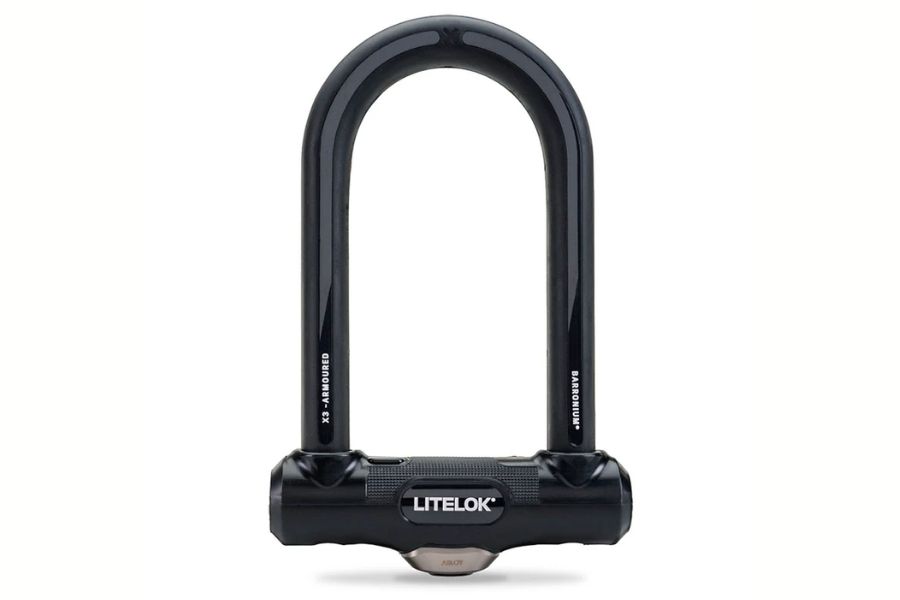
The X3 is the “step up” within the same family—aimed at riders who are genuinely high-risk targets or who routinely leave an eMTB locked in public for longer periods. If your use case includes city-centre parking, repeat exposure outside a workplace, or living in a known theft hotspot, the X3 is a credible centrepiece for a best eMTB security products setup because it pushes harder on grinder resistance and overall robustness. Put bluntly: it’s designed to be a hassle to cut, and hassle is what you’re buying.
For eMTB owners, the real-world advantage is confidence and routine. You stop thinking “will this lock be enough?” and start thinking “how do I lock it best?” That shift matters because you’ll be more likely to take the extra 20 seconds to capture the frame properly, minimise slack, and choose a better anchor point. The X3 is not small-money, and it’s not featherlight, but compared with the cost of a modern full-suspension eMTB, it’s a rational spend if you’re exposed regularly. Many riders run the X3 as the public lock and keep a heavy chain at home for overnight storage.
Pros
High-end deterrent for expensive eMTBs in higher-risk areas
Strong anchor layer for a two-lock strategy (D-lock + chain/cable)
Premium build aimed at resisting the most common modern attacks
Cons
Bulk and carrying method need planning on longer rides
Specifications
Type: D-lock (premium anti-angle-grinder focused)
Best use: Higher-risk public locking and repeat exposure locations
Locking method: Key
Carry: Mount/pack carry depending on frame space
Weight: ~2.2kg
What secures it best: Frame to fixed object; pair with a second lock for wheels
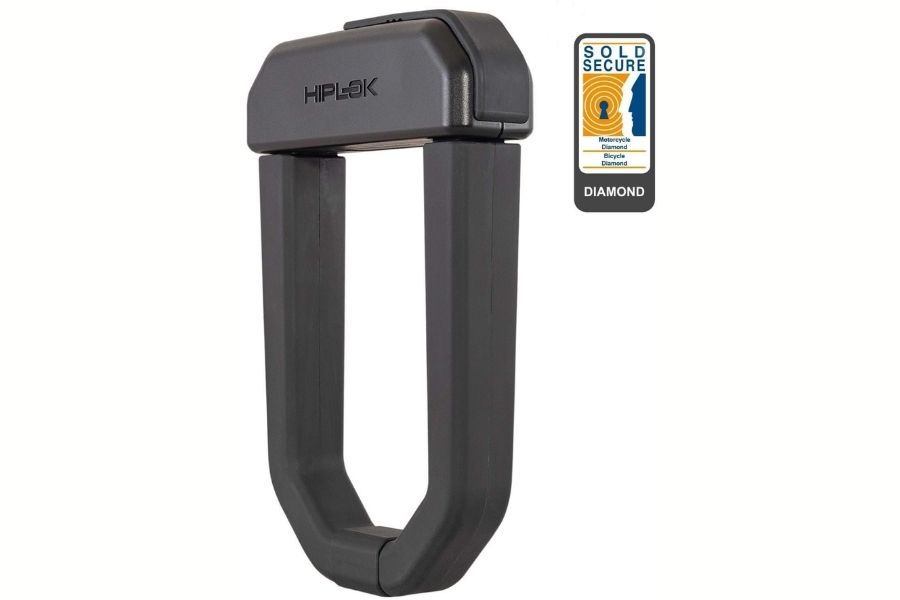
Hiplok DX1000
£299.99
If your goal is maximum deterrence in a portable format, the DX1000 is one of the clearest “top tier” answers. It’s a big, serious D-lock designed to resist the kind of attacks that standard locks lose to quickly. In a best eMTB security products context, it suits riders with expensive bikes, urban exposure, or storage situations where thieves have time—communal bike rooms, carports, or regular street locking. The DX1000’s size is also part of its value: many ultra-compact high-security locks are excellent in theory but frustrating in real life because they won’t fit around the anchor you’re offered. A lock that doesn’t fit is a lock you compromise with.
For an eMTB, the most effective way to run the DX1000 is as the “primary” lock that always captures the frame to something immovable, then add a supporting layer that protects what the D-lock doesn’t—usually a chain/cable for wheels or a tracker for recovery. You do not buy this lock for convenience; you buy it to change the risk equation. If you want one lock that clearly signals “move on to the next bike”, this is the category.
Pros
Elite-level deterrent for high-value eMTBs and high-risk locations
Generous locking area compared with many ultra-high-security locks
Excellent as the main layer in a two-lock setup
Cons
Heavy, so it’s best used for commuting, fixed locations, or carried intentionally
Specifications
Type: D-lock (anti-angle-grinder focused)
Best use: High-risk public locking; communal storage; work locking
Locking method: Key
Carry: Pack carry or leave at a regular locking point
Weight: ~2.6kg
What secures it best: Frame to fixed object; add secondary wheel/component security
Trackers: recovery and alerts for eMTB theft prevention
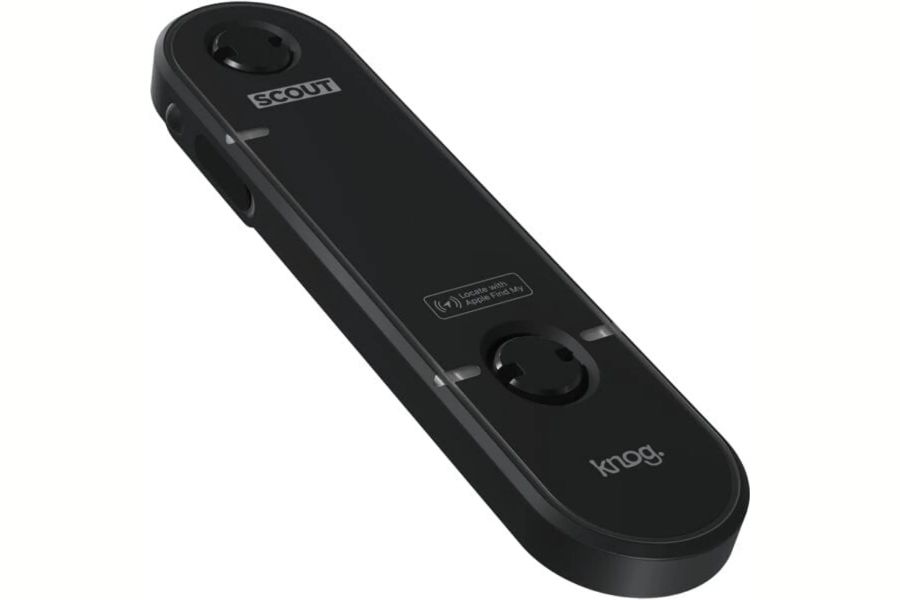
Knog Scout Bike Alarm & Finder
£49.99
A tracker-alarm hybrid is one of the smartest “second layers” you can add because it covers the moment locks don’t: when someone starts handling your bike. Knog Scout combines a loud motion alarm with Apple Find My network location support, which makes it particularly attractive as an entry point into “best eMTB security products” thinking. On an eMTB, it’s also easy to justify because the device is small, discreet, and doesn’t turn every ride into a security logistics problem.
The correct way to think about Scout is deterrence plus awareness. The alarm can be enough to stop a casual attempt—especially at a café rail or bike park rack—because attention is a thief’s enemy. The Find My element adds a “what happened and where did it go?” layer if the bike is moved. It is not the same as dedicated GPS recovery, but it can be very effective in busy areas where Apple devices are common. For many riders, Scout is the ideal complement to a high-security D-lock: the lock prevents the easy exit, and the alarm makes the attempt messier, louder, and harder to continue.
Pros
Adds a strong deterrent layer (noise + attention) to your lock setup
Useful “find my bike” support if the eMTB is moved
Small, discreet and realistic for everyday use
Cons
Location functionality is strongest if you’re in Apple’s ecosystem
Specifications
Type: Alarm + Apple Find My accessory
Best use: Public locking, trailhead stops, café rails
Power: Rechargeable battery
Mounting: Discreet frame mounting
What it pairs well with: Any D-lock or chain as the primary security layer
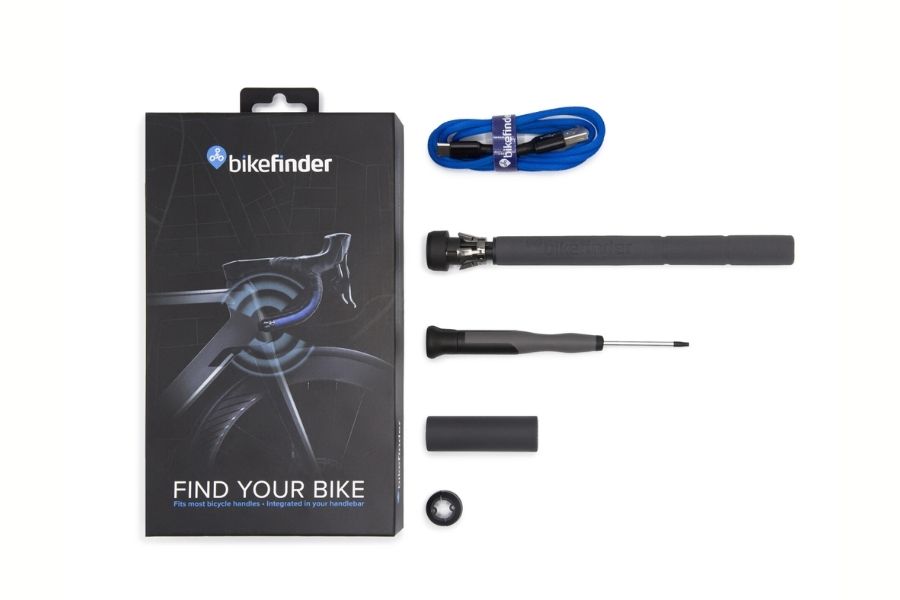
BikeFinder GPS Tracker
£175.00 (+ subscription)
BikeFinder is the tracker pick for riders who want a dedicated recovery layer that’s built specifically for bikes, rather than a generic tag. Its biggest advantage for eMTB security is concealment: it’s designed to fit inside the handlebar, which makes it harder to spot and remove quickly. That matters because many stolen-bike tracking stories fail at the same point—thieves find the tracker early and discard it. With an eMTB, where you may already be dealing with bulky batteries and limited hiding places, a bar-integrated tracker format is genuinely practical.
In a best eMTB security products stack, BikeFinder sits behind a serious lock, not instead of one. Think of it as the “if it happens, what then?” plan. The value is in movement alerts and location tracking, especially if your bike is stored in a garage, van, communal space, or locked outside regularly. If you’re the kind of rider who travels to trail centres, leaves the bike on racks, or stores it out of sight, BikeFinder becomes a sensible insurance policy. Subscription costs are part of the deal, but you’re paying for an active service—arguably the entire point of choosing GPS-based tracking.
Pros
Discreet handlebar installation improves chances of staying hidden
Adds meaningful recovery capability to a lock-based setup
Particularly good for out-of-sight storage and travel scenarios
Cons
Ongoing subscription cost needs to be treated as part of ownership
Specifications
Type: GPS/GSM/Bluetooth bike tracker
Best use: Recovery layer; storage security; travel security
Power: Rechargeable; charge interval depends on settings and use
Mounting: Inside handlebar (check internal diameter compatibility)
Subscription: Required for tracking service
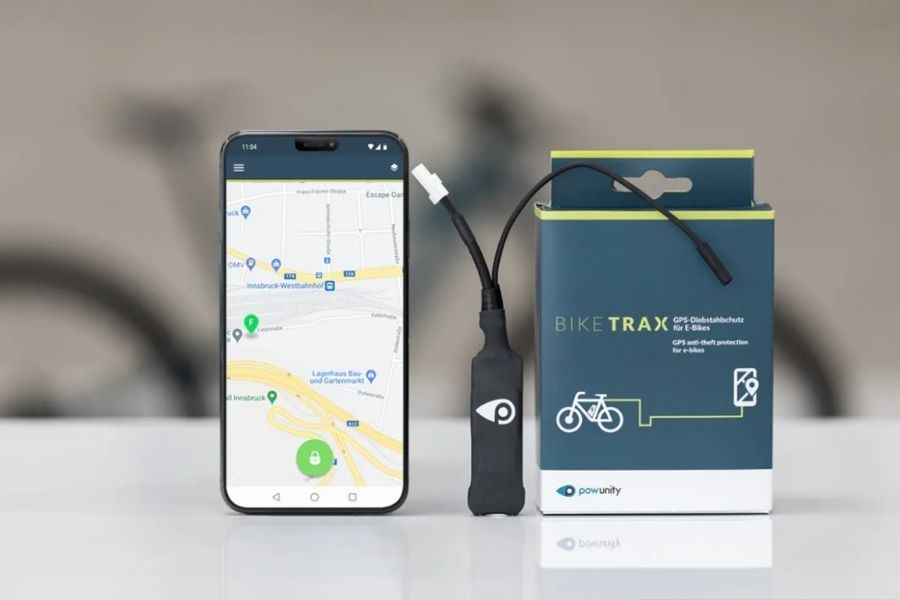
PowUnity BikeTrax (motor-integrated GPS)
£199.90 (+ subscription)
If you want a tracker that’s harder to locate and more “integrated” than a tag-style device, PowUnity BikeTrax is one of the most compelling options—because it is designed to sit within the e-bike system rather than on the outside of the frame. For eMTB owners, that’s attractive for two reasons: it’s inherently discreet, and it’s more difficult for a thief to strip quickly without knowing exactly what they’re looking for. In a best eMTB security products guide, this is the tracker that makes most sense if your bike is a long-term investment and you want the cleanest installation.
The key point is compatibility: BikeTrax is typically system-specific (for example, versions for certain motor ecosystems), so it’s not a universal “buy and fit to anything” product. But if it fits your eMTB, it can be an excellent recovery tool because it’s less obvious and less likely to be removed early. As part of a layered theft prevention plan, it pairs best with a premium D-lock for public use and a heavy chain/anchor at home. If you’re building a serious setup for an expensive eMTB, this kind of integrated tracker is the logical “tier 1” choice.
Pros
Integrated, discreet installation improves survivability if stolen
Strong recovery layer for high-value eMTBs
Clean setup for riders who want a “fit once, monitor always” solution
Cons
Compatibility varies by motor ecosystem, so you must match it to your bike
Specifications
Type: Motor/system-integrated GPS tracker
Best use: Recovery layer for high-value eMTB ownership
Power: Draws from the e-bike system (installation dependent)
Mounting: Internal/system installation (often dealer fit recommended)
Subscription: Required for tracking service
Chain locks: high security with real-world anchoring flexibility
Pragmasis Protector 13mm Chain
£64.95
Chains solve one of the biggest practical problems in eMTB security: locking geometry. Full-suspension frames, awkward trailhead rails, and crowded racks often make D-lock positioning frustrating, and frustration is where bad locking decisions happen. The Pragmasis Protector 13mm is a strong pick because it sits in the “serious but still usable” category—substantial enough to be a meaningful deterrent, but not so monstrous that it only ever lives on a garage floor. For riders building a best eMTB security products setup, this is a classic supporting layer: you might run a D-lock as your primary in public, then use a chain like this to capture a wheel, reduce leverage, or lock to a less-than-perfect anchor.
The smartest way to use it is intentionally. If you can leave it at a fixed point (home, work, van), you get the security benefit without carrying the weight on every ride. If you do carry it, keep the length realistic—long chains add options, but they also add slack and weight. Used correctly, a mid-weight chain is one of the most versatile security products you can own, because it adapts to the environment rather than forcing you to hunt for a “perfect” rack.
Pros
Flexible locking options suit awkward anchors and eMTB frame shapes
Excellent secondary layer to complement a premium D-lock
Strong value for riders building a layered security system
Cons
Carry weight climbs quickly if you choose longer lengths
Specifications
Type: Security chain (13mm class)
Best use: Secondary lock; home/work locking; awkward anchors
Locking method: Pair with a high-quality padlock (sold separately depending on kit)
Carry: Best left at fixed locations; pack carry if needed
What secures it best: Frame + wheel to a fixed object
Hiplok E-DX Chain & U-lock Combo
£104 (RRP £130)
The E-DX is a practical “one purchase, two formats” solution, which is exactly what many eMTB riders need. You get the structure of a D-lock for strong, compact frame security, plus a noose-style chain for reach when the anchor point isn’t ideal. For an electric mountain bike, that flexibility matters because the bike is heavier and often parked in places where stands and rails were designed around lighter commuter bikes. In a best eMTB security products line-up, E-DX works well as your primary public lock if you don’t want to juggle multiple separate locks.
In use, the chain lets you secure to thicker posts or awkward railings where a D-lock alone would be a compromise. The D-lock element keeps the core security high when you do have a good anchor. It’s also a strong choice for riders who lock at trail centres, events, or city racks where you cannot predict what you’re dealing with. The trade-off is weight—combo systems are heavier than a single lock—but many eMTB owners accept that because they’re already carrying more kit, and because the security benefit is tangible.
Pros
Very adaptable for eMTB frames and unpredictable locking points
Strong all-in-one option for riders who want one “do most things” solution
Ideal for locking the frame properly when racks are awkward
Cons
Heavier than a single D-lock, so you’ll want a carry plan
Specifications
Type: D-lock + noose chain combo
Best use: Public locking; commuting; trailhead and event parking
Locking method: Key
Carry: Pack carry or leave at regular locations
What secures it best: Frame to anchor, with chain reach for wheel/positioning
Kryptonite New York Fahgettaboudit 1410 (14mm x 100cm + disc lock)
£94.91 (RRP £164.99)
A heavy, high-quality chain remains one of the most credible theft deterrents for high-value bikes, and the Fahgettaboudit 1410 earns its place in a best eMTB security products guide because it’s designed to be uncompromising: thick links, serious lock hardware, and the kind of presence that makes thieves reassess whether this is worth their time. For an eMTB, a chain like this is especially useful when you’re locking to awkward objects—thick posts, fences, railings—or when you want to secure multiple bikes together at a home base.
The main decision is how you’ll use it. Many riders do not carry a chain like this on trail rides, and that’s sensible. Instead, treat it as your “home/work” lock—paired with a ground anchor in a garage or used at a workplace bike store. If you must use it out and about, keep slack minimal and avoid leaving the chain on the ground where leverage and cutting become easier. As part of a layered plan, it pairs perfectly with a tracker: the chain makes theft harder and slower; the tracker improves your odds if it still happens.
Pros
Strong deterrent value and excellent anchoring flexibility
Ideal for home/work security where weight is less of an issue
Useful for securing the frame and reducing lifting/carry theft risk
Cons
Too heavy for many riders to carry routinely on trail rides
Specifications
Type: High-security chain (14mm class) + disc lock
Best use: Home base, garage/shed, work locking
Locking method: Key (disc lock)
Carry: Best stored at a fixed location
What secures it best: Frame (and potentially wheels) to a solid anchor
Low-security “bike park” locks: short-stop deterrents only
ABUS Combiflex StopOver 65
£16.00 (RRP £20.00)
A café lock is not a theft-prevention solution for a high-value eMTB, but it is a very useful deterrent for the moments riders actually face: quick toilets stops, grabbing food, leaving a helmet on the bike, or adding a “do not touch” layer when you’re sat close by. The Combiflex StopOver 65 is the archetypal low-security option—small, light, and designed for convenience rather than resisting serious tools. In a best eMTB security products framework, it belongs in the “bike park / short stop” category: you use it when you’re nearby and you want to stop opportunistic, low-effort grab attempts.
Where it fits particularly well is securing accessories—helmet through straps, backpack loops, pads—or adding a nuisance factor to wheel removal when combined with a proper D-lock on the frame. The reality is simple: if you leave an eMTB outside with only a café lock, you’re gambling. But if you treat it as a portable add-on that reduces temptation during short stops, it’s a sensible purchase and an easy habit.
Pros
Extremely portable, ideal for short stops and accessories
Useful extra layer when combined with a proper main lock
Quick, simple deterrent for café and bike park scenarios
Cons
Not suitable as the only security product for an eMTB
Specifications
Type: Compact retractable cable lock (combination)
Best use: Short stops; helmets and accessories
Locking method: Combination
Carry: Pocket/pack
What secures it best: Helmet, accessories, light deterrent applications
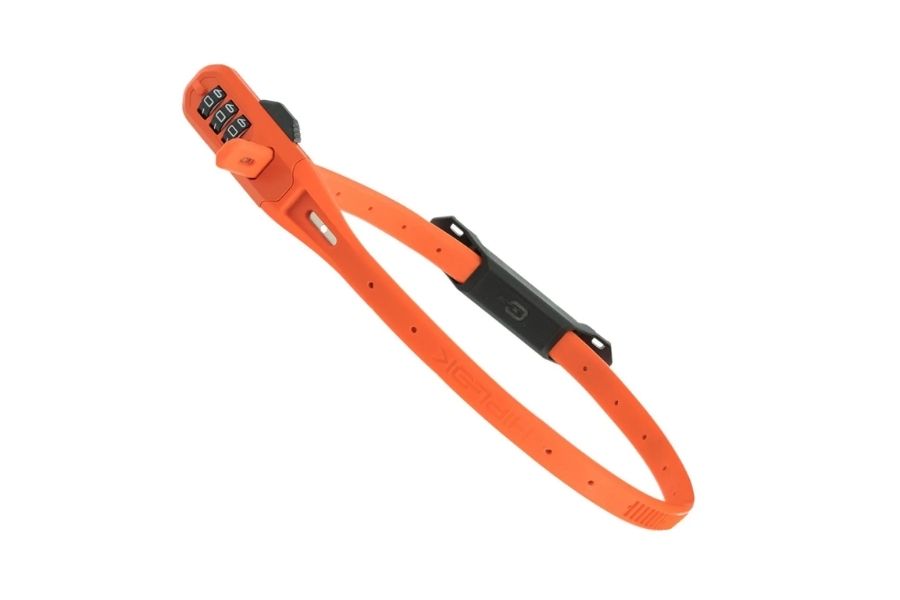
Hiplok Z LOK Combo V2
£22.49 (RRP £24.99)
Think of the Z LOK Combo V2 as a reusable, tougher “security tie” rather than a true lock. It’s a bike-park-friendly deterrent that’s easy to throw in a pocket and useful in real riding life—securing a helmet, discouraging someone from walking off with a jacket, or adding a quick layer around a wheel when your main lock is already doing the serious work on the frame. For an eMTB rider, it’s the kind of product you actually carry because it barely affects your loadout, which is why it sits comfortably in a best eMTB security products guide as a low-security supporting tool.
Its real strength is versatility. At trail centres, bikes are often left clustered together; thieves love low-effort opportunities. A Z LOK won’t stop a determined attack, but it can deter the “easy grab” behaviour and buy time by forcing an extra step. Used properly, it’s an accessory security product—something that complements your main D-lock or chain, not something you rely on alone.
Pros
Very easy to carry, so it’s realistic for every ride
Great for helmet/accessory security and quick deterrence
Useful supporting layer alongside a primary lock
Cons
Deterrent-only: it is not a replacement for a serious eMTB lock
Specifications
Type: Steel-core security tie with combination lock
Best use: Bike park stops; accessories; quick deterrence
Locking method: Combination
Carry: Pocket/pack
What secures it best: Helmet/accessories; light wheel deterrence
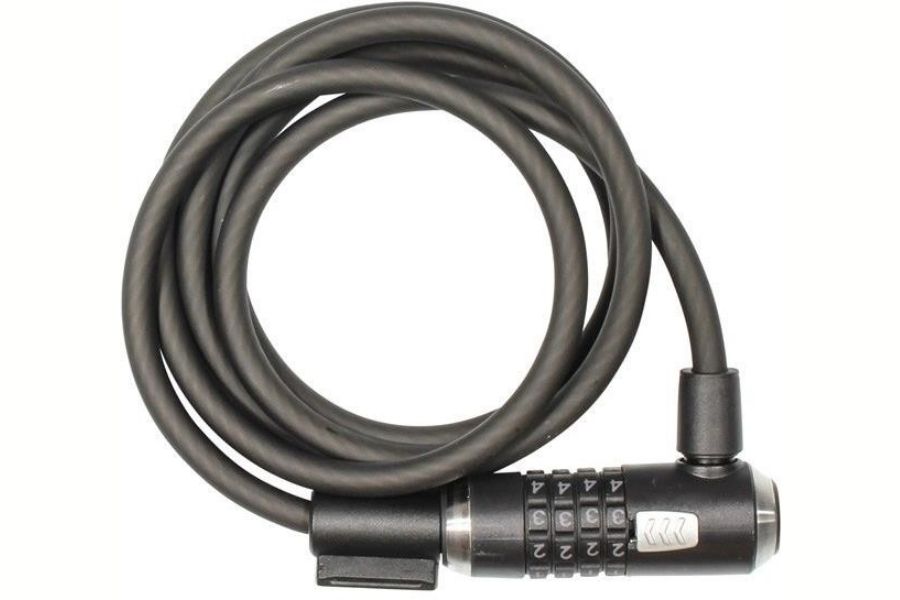
Kryptonite Kryptoflex 1018 Combo Cable (10mm x 180cm)
£16.99 (RRP £21.99)
A long cable is a classic “bike park” security product: it’s light, flexible, and gives you options when you need to loop through a front wheel, helmet, or multiple bikes quickly. The Kryptoflex 1018 is in that category—useful and convenient, but not something you’d ever treat as your primary security for an eMTB. In a best eMTB security products system, its job is to stop opportunistic behaviour: the person who’d happily grab a helmet, roll a wheel away, or lift an unsecured bike into a van if it’s not attached to anything.
The best way to run a cable lock is as an add-on. Lock the eMTB frame with your serious D-lock or chain, then thread the cable through the front wheel and/or helmet to reduce the obvious weak points. This is also a good travel tool—use it on a car rack to discourage quick grabs while you’re fuelling up or paying. Again, the rule is non-negotiable: cables are supporting layers only. If you keep that straight, they’re a genuinely useful part of a layered approach.
Pros
Cheap, light and flexible for bike park and travel use
Helpful add-on to secure wheels, helmets and accessories
Long length makes it practical in messy real-world situations
Cons
Not appropriate as a standalone lock for an eMTB
Specifications
Type: Braided steel cable lock (combination)
Best use: Wheels, helmets, accessories; secondary security
Locking method: Combination
Carry: Pocket/pack
What secures it best: Wheel/helmet to a primary lock or anchor point
Frequently Asked Questions
What are the best eMTB security products for everyday UK riding?
For most riders, the “best eMTB security products” are a layered setup rather than a single lock. Start with a high-security D-lock as your primary defence because it’s the most reliable way to secure the frame to an immovable object in public. Add a second layer depending on your routine: an eMTB tracker (for alerts and recovery) if you lock up regularly, or a chain lock if you often deal with awkward rails, thick posts, or crowded trail-centre racks. If you’re stopping briefly at a bike park café, a low-security lock can be useful, but only as a deterrent layer alongside a proper lock, not instead of one. The aim is electric mountain bike theft prevention through time, noise, and inconvenience: lock the frame first, reduce slack, and make your eMTB harder to steal than the next one.
D-lock vs chain lock: which is better for an electric mountain bike?
A D-lock is usually the best “core” option for eMTB security because it’s compact, robust and effective when you can position it properly. The downside is fit: full-suspension eMTB frames can be awkward, and many public anchors (railings, thick posts, wide stands) don’t work well with a rigid shape. That’s where an eMTB chain lock earns its place—chains are more adaptable, easier to route through the rear triangle, and better when the anchor isn’t ideal. In practice, many riders use both: a high-security D-lock for the frame, plus a chain as the flexible second layer to capture a wheel or reduce leverage. If you can only buy one, choose based on where you lock most often: predictable racks suit a D-lock; unpredictable anchors favour a chain.
Are GPS trackers like BikeFinder worth it for eMTB security?
An eMTB tracker is worth considering if your bike is high value, locked up regularly, stored out of sight (garage, communal area, van), or used in theft-prone areas. A tracker doesn’t stop theft on its own, but it can improve your chances after the event by providing movement alerts and location data—especially if you respond quickly. BikeFinder-style solutions that are designed to be hidden (for example, inside the handlebar) have a key advantage: they’re harder for a thief to spot and remove early. If you’re choosing between a “tag” approach and a dedicated GPS tracker, think in terms of risk: tags can help with location support, but dedicated trackers are typically a stronger recovery layer. The best results come when tracking is paired with a serious lock, not used as a substitute.
What’s a “bike park” lock, and when is low security acceptable?
A “bike park” lock is a low-security product designed for short stops where you’re nearby and want a quick deterrent—think grabbing a coffee at the trail centre, popping into the toilets, or leaving a helmet on the bike while you can still see it. These locks (compact cables, security ties, small combo solutions) are not suitable as your only protection for an eMTB, especially not if the bike is out of sight or left for more than a few minutes. Where they do help is reducing opportunistic theft: stopping someone rolling the bike away, quickly removing a wheel, or walking off with accessories. The sensible rule is simple: use a proper D-lock or chain to secure the frame whenever the eMTB is unattended; use a bike park lock as an additional layer when you want convenience and you’re staying close.
How do I secure an eMTB at home in a shed, garage, or van?
Home storage is where a lot of eMTB theft happens, so the best eMTB security products for the job focus on anchoring and layering. The first upgrade is a properly installed ground anchor or heavy-duty fixed point, because locking to shelving, wooden beams, or removable fixtures is a common mistake. Next, use a serious chain lock (or high-security D-lock) to secure the frame to that anchor, keeping slack to a minimum and positioning the lock so it’s hard to access with tools. Add a tracker for alerts and recovery support, and consider component security if you store multiple bikes or expensive parts. For vans, aim to lock the bike to a fixed internal anchor point rather than relying on the van’s locks alone. The goal is the same as public locking: increase time, noise and risk for the thief—because that’s what prevents most thefts in practice.