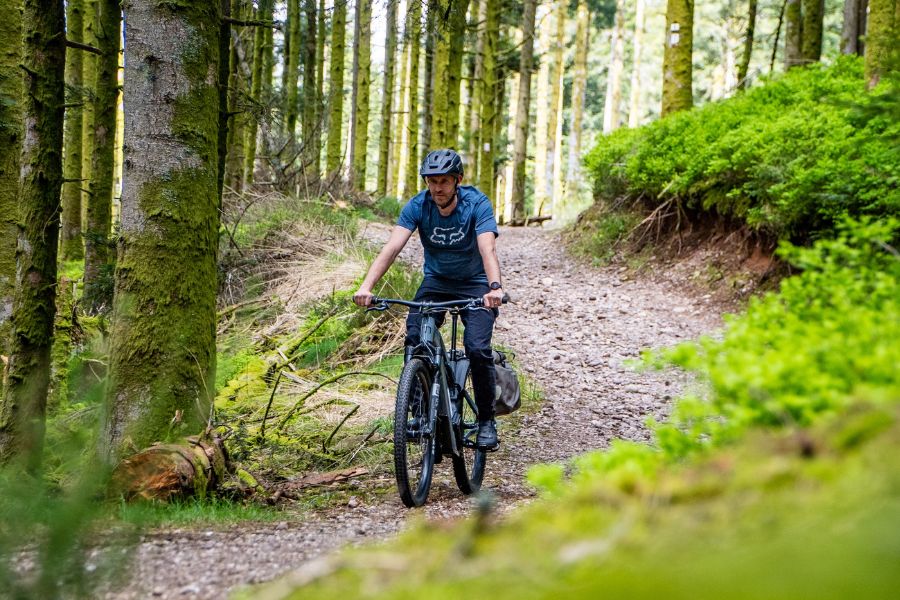
Hardtail eMTBs don’t get as much hype as full-suspension rigs, but for a lot of riders they’re the smarter, more rewarding way to ride an electric mountain bike — especially in the UK. A good hardtail electric mountain bike gives you the motor-assisted climbing and mileage-busting range you want from an eMTB, while keeping the direct trail feel that helps you actually improve your riding. You’ll feel what the rear tyre is doing, you’ll learn line choice instead of monster-trucking through everything, and you’ll still have the extra shove to session climbs, link bridleways, and squeeze in more laps at the trail centre.
They also make loads of sense when the weather turns. UK winter riding is brutal on pivots, bearings and rear shocks — mud, grit, pressure washing and neglect can turn a full-sus into a creaky money-pit pretty quickly. Hardtail eMTBs are simpler to live with, simpler to maintain, and they often deliver better value at the same budget because the money goes into the motor system, battery size and braking rather than suspension hardware. If you’re building fitness, getting back into MTB, or you’re a rider who enjoys a playful bike you can pump, pop and flick around, a hardtail eMTB can be more fun than a heavier, more muted full-suspension bike.
If you’re still deciding what type of eMTB suits you best, start with our hub guide to the current landscape of motors, categories and riding styles: Best eMTB 2026. If you already know you want a hardtail, this guide focuses on the bikes that feel most “mountain bike” on UK singletrack — stable geometry, sensible fork travel, proper brakes, and tyres you can trust when the roots are shiny.
The best hardtail eMTBs 2026 shortlisted
Trek Marlin+ – From £2,100
Decathlon Rockrider E-EXPL 700 – £2,199.99 (RRP £2,499.99)
Cube Reaction Hybrid – £2,299
Canyon Grand Canyon:ON – From £2,349 (RRP £3,299)
Merida eBIG.NINE – £2,750
Trek Powerfly – From £3,000
Haibike AllTrack – £3,149
Orbea Urrun – £3,299 (RRP £3,699)
What to look for in a hardtail eMTB
A hardtail eMTB lives or dies by its front end and contact points. Fork quality matters because you don’t have a rear shock to take the sting out of repeated hits. For most UK riding, 120–140mm is the sweet spot: enough travel for trail centres, natural singletrack and rough bridleway descents, without turning into a wallowy barge on climbs. Tyres matter even more. If you’re riding wet roots, loose grit, winter mud and greasy chalk, you want a front tyre with proper bite, and you want to run pressures that give you traction without feeling like you’re pinging off every rock. Tubeless isn’t “nice to have” on an eMTB — it’s a near-essential if you want fewer punctures and more control.
Motor choice is less about headline torque and more about how you ride. If your rides are steep, technical climbs and repeated punchy efforts, you’ll appreciate a full-power system that stays supportive at low cadence. If your ride is longer, on rolling terrain, and you want a more natural feel, a lighter-duty drive can be enough. Either way, battery size shapes the riding you can do: 500–600Wh is a good baseline for UK loops; 700–800Wh becomes a weapon in winter when the ground is slow, and you’re using higher assistance. For more on squeezing range without riding like you’re in Eco prison, see eMTB range and battery guide.
Finally, don’t ignore brakes. eMTBs carry more speed and more mass. If you’re riding trail centres or steeper natural lines, look for 4-piston callipers and rotors that won’t cook on long descents. More confidence = more speed = more fun.
The best hardtail eMTBs 2026
Trek Marlin+
From £2,100
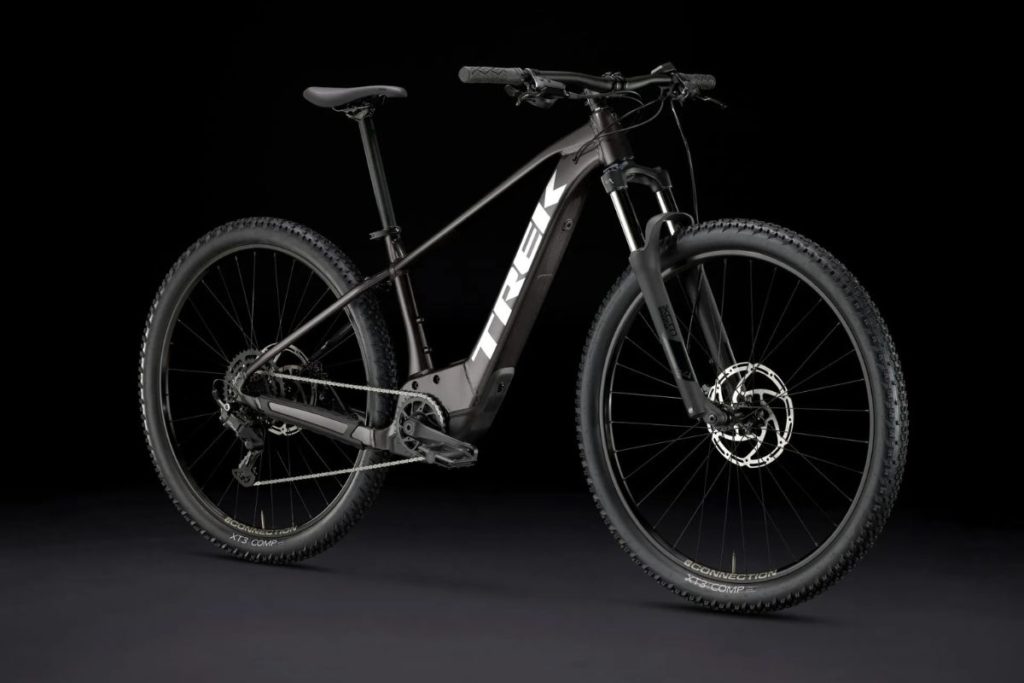
The Marlin+ is a great shout if you want a hardtail eMTB that feels familiar to mountain bikers — not an e-bike trying to impersonate an MTB. Think of it as a confidence builder: stable enough that new riders don’t feel perched over the front axle, but not so aggressive that it becomes a slog on flatter routes or mellow woodland loops. This is the kind of bike that makes you ride more often. It turns the “can’t be bothered” days into quick, satisfying spins, and those miles add up fast when you’re improving fitness and technique.
Because it’s a hardtail, it rewards good riding habits. On climbs, you’ll learn to keep weight balanced and traction consistent instead of relying on the rear suspension to stop the rear wheel from skipping. On descents, you’ll get better at unweighting over roots and staying loose through chatter. That’s why hardtail eMTBs can be brilliant for progression: you get more laps because of the motor, and you get feedback because of the Hardtail. If you want to dial fit and setup, see the eMTB sizing and setup guide.
Pros
Very approachable ride feel; ideal for newer or returning MTB riders
Encourages skill development (line choice, traction management)
Great for mixed UK riding: trail centre + bridleways + day-to-day miles
Cons
Not the best choice if your local riding is constant rock gardens and high-speed chop
Specifications (Base model)
Frame: Alpha Gold Aluminium, curved top tube, tapered head tube, internal routing, rack, mudguard and kickstand mount, UDH, Boost148, 12 mm thru axle
Motor: Bosch Active Line Plus
Battery: Bosch CompactTube 400 Wh
Fork: SR Suntour XCM 34, coil spring, preload, lockout, tapered steerer, 44 mm offset, Boost110, 15 mm thru axle, 120 mm travel
Shock: N/A
Tyres: Bontrager XT3 Comp, wire bead, 30 tpi, 29×2.40″
Drivetrain: Shimano LINKGLIDE LG300, 11-46, 9-speed
Brakes: Tektro HD-M275 hydraulic disc
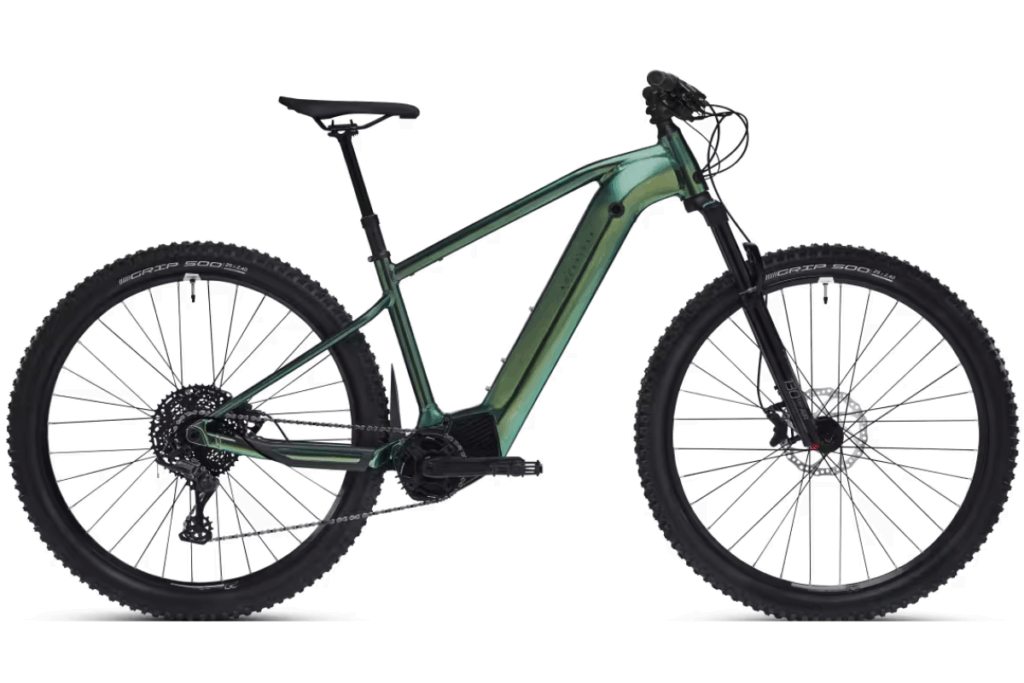
Decathlon Rockrider E-EXPL 700
£2,199.99 (RRP £2,499.99)
Decathlon’s Rockrider trail hardtails keep getting recommended because they tend to focus on the stuff that actually matters when you ride off-road: sensible geometry, a fork with enough travel for proper singletrack, and a build kit that isn’t instantly out of its depth on a descent. The E-EXPL 700 suits riders who want to ride trail centres regularly, push into more challenging terrain over time, and still have an eMTB that can handle big bridleway loops without turning the ride into an accounting exercise.
On typical UK trails — root mats, slick clay, rocky drainage lines and rough braking bumps — this bike makes sense because it’s trying to be a mountain bike first. The rear end is direct and lively, so it’s easy to pop over trail features and carry speed on smoother sections. The upside is that it feels engaging. The downside is you’ll notice it more when the trail turns into high-speed rock chatter. If your riding is mostly natural singletrack, trail centres, and “adventure MTB” routes, it’s a great fit. If you’re constantly hunting the roughest, fastest lines, you’ll eventually want full suspension (see Best full-suspension eMTBs 2026 when that’s live).
Pros
Trail-ready feel for UK singletrack and trail centres
Strong value in the “proper eMTB hardtail” category
An excellent choice for riders levelling up from casual off-road riding
Cons
On very rough, fast descents, a hardtail will always feel harsher than a full-suspension
Specifications
Frame: Aluminium
Motor: Brose T aluminium 70Nm
Battery: 630Wh Internal
Fork: X-Fusion RC32 130mm
Shock: N/A
Tyres: Rockrider Grip 500
Drivetrain: Microshift ADVENT X
Brakes: Tektro M530 Hydraulic disc
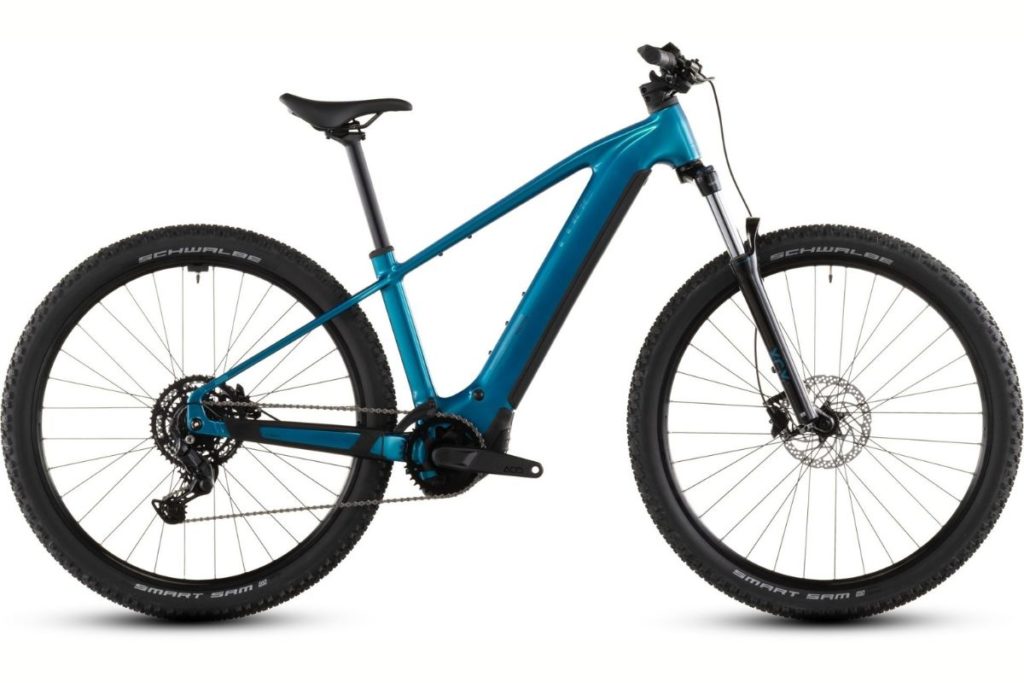
Cube Reaction Hybrid
£2,299
A big-battery hardtail eMTB is an underrated weapon for UK riding, and Cube’s Reaction Hybrid range is a classic example of why. When the trails are slow, the tyres are digging in, and you’re using more assistance to stay warm and keep momentum, battery capacity stops being a luxury and becomes the difference between “one loop and home” and “another lap”. This type of bike is ideal for riders who like long routes, bigger days out, or who want to stop thinking about range altogether.
On the trail, a bike like this hits a sweet spot: the motor helps you winch up climbs you’d otherwise avoid, while the hardtail rear keeps the ride lively and responsive when you’re weaving through trees or pumping rollers. With the right tyre choice and setup, it’s a brilliant year-round hardtail electric mountain bike — especially if you’re the sort of rider who wants to ride often rather than only when conditions are perfect.
Pros
Big-battery potential makes it ideal for winter and long UK rides
Great “one-bike garage” option for riders who mix trail centres and exploring
Substantial value in the motor/battery-for-money sense
Cons
Weight can creep up with bigger batteries, which some riders feel in tighter, slower trails
Specifications
Frame: Aluminium Superlite frame, Agile Ride Geometry, integrated battery, internal cable routing
Motor: Bosch Performance Line, 75Nm
Battery: Bosch PowerTube 600Wh integrated
Fork: SR Suntour XCM34 coil fork, 120mm travel (100mm smaller sizes)
Shock: N/A
Tyres: Schwalbe Smart Sam 2.6in tyres for grip and versatility
Drivetrain: Shimano Cues 9-speed drivetrain with 11–46T cassette
Brakes: Shimano MT200 hydraulic disc brakes, 180mm rotors
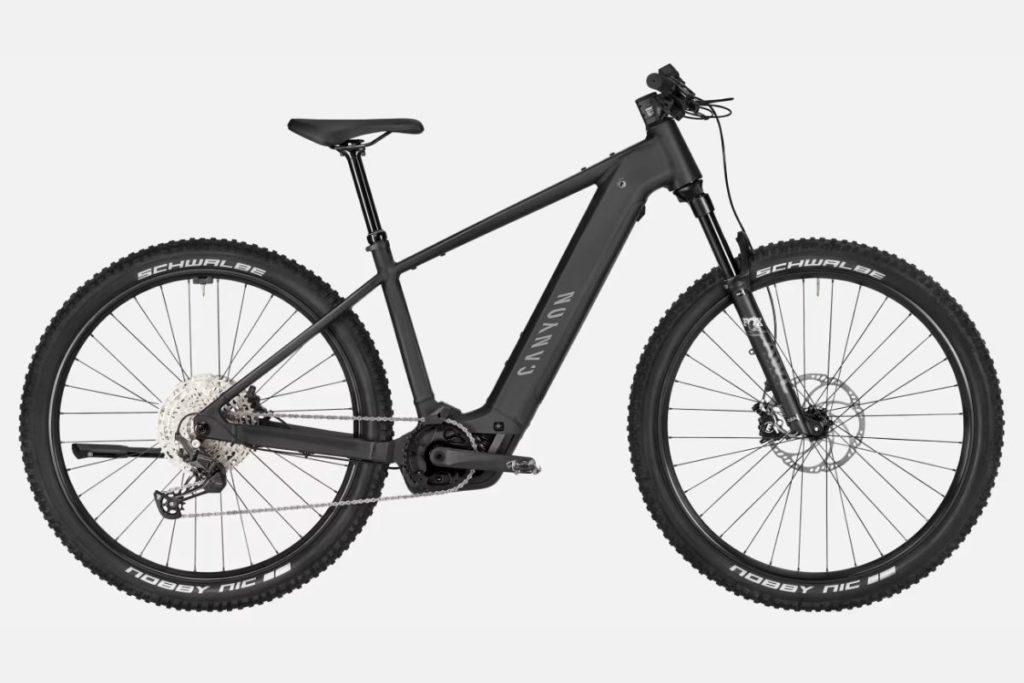
Canyon Grand Canyon:ON
From £2,349 (RRP £3,299)
If you want a hardtail electric mountain bike that you can ride hard, upgrade sensibly and not stress about, the Grand Canyon:ON is the blueprint. It’s the sort of eMTB hardtail that suits real UK riding: quick midweek loops, trail centre blues and reds, and bridleway adventures where you’re linking climbs and descents for hours. The best thing about this style of bike is that it doesn’t try to cosplay as an enduro rig — it stays light enough to feel like a mountain bike, and it rewards an active riding style. You’ll pump trails, carry speed through compressions, and learn to keep traction rather than relying on rear suspension to cover mistakes.
For riders stepping up from non-assisted MTB, the hardtail format also makes the motor feel like a genuine multiplier. You still have to pick lines and stay smooth, but the assistance buys you more attempts and more time on the good bits. It’s an intense match for riders who want to get fitter, ride further and progress technique without jumping straight into the cost and complexity of full suspension. If you’re cross-shopping Hardtail vs full-sus, it’s worth reading Hardtail vs full-suspension eMTB: which is best?
Pros
Strong “first proper eMTB” platform that encourages skill progression
Hardtail simplicity: lower maintenance and less to go wrong through winter
Great base for smart upgrades (tyres, tubeless, brake pads/rotors)
Cons
Like many value-focused builds, tyres are often the first thing riders upgrade for UK slop
Specifications (Grand Cayon:ON AL8)
Frame: Aluminium
Motor: Bosch Performance Line CX GEN.5
Battery: Bosch PowerTube 600Wh
Fork: FOX 34 AWL 120 mm
Shock: N/A
Tyres: Schwalbe Nobby Nic Performance 29″
Drivetrain: Shimano Deore M6100
Brakes: Magura MT Thirty
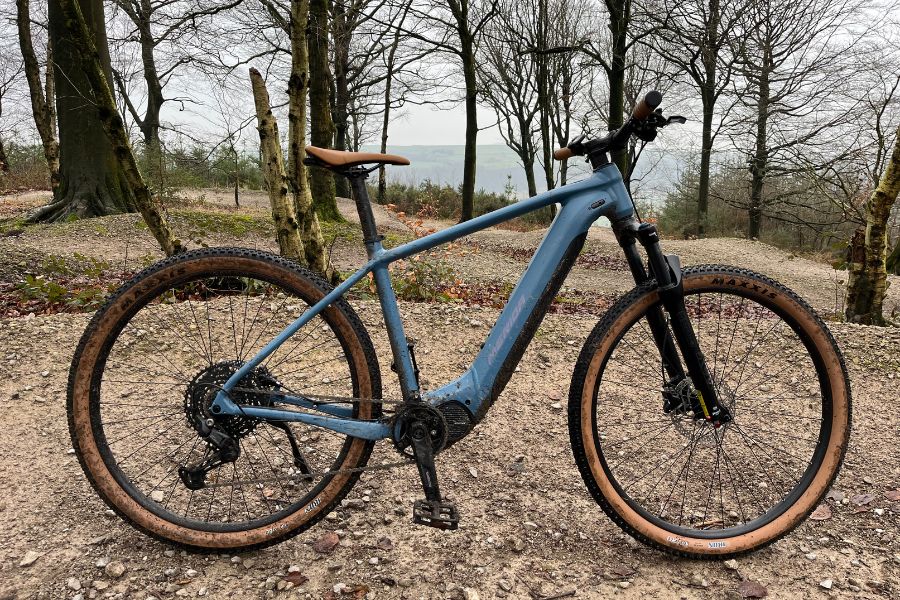
Merida eBIG.NINE
£2,750
If your idea of a great ride is a long route with loads of climbing, links between woods, and a steady rhythm rather than constant smashing, the Merida eBIG. NINE’s hardtail eMTB style makes a ton of sense. It’s very much in the “fast hardtail” lane — efficient, stable and well-suited to riders who want to rack up distance across mixed off-road terrain. That doesn’t mean it can’t handle proper trails; it means it tends to feel happier when you’re pedalling and covering ground rather than constantly dropping into the roughest lines.
This is often the best type of hardtail electric mountain bike for riders who do bridleway epics, forest routes, and trail centre days, where you want to do three loops instead of one. The motor support helps you manage effort across a long ride, while the simpler rear end stays quieter and easier to maintain in UK grime. If you’re planning longer routes, it’s worth reading “How much eMTB range do you really need?“
Pros
Efficient, mileage-friendly hardtail eMTB feel
Great for bridleway loops and “all-day” UK riding
Simpler maintenance than a full-suspension eMTB
Cons
Riders focused purely on steep, rough descents may prefer a more aggressive trail hardtail
Specifications
Frame: Aluminium eBIG.NINE LITE III
Motor: Shimano EP08
Battery: Shimano EN806 (630Wh)
Fork: SR Suntour XCM34-Boost LOR DS
Shock: N/A
Tyres: MAXXIS Ikon 29×2.2
Drivetrain: Shimano LG300 11-48 teeth 10 speed
Brakes: Shimano MT-200
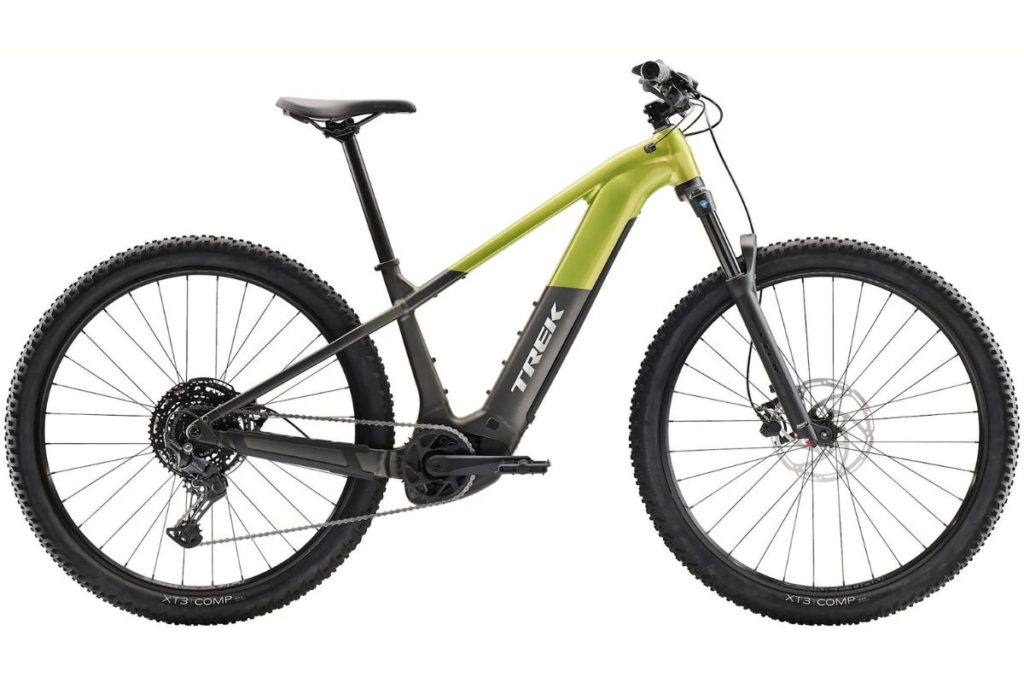
Trek Powerfly
From £3,000
If you want your hardtail eMTB to lean more “trail bike” than “XC bike”, the Powerfly is a sensible place to look. The riding feel is typically calmer and more planted, which helps when the trail gets steeper or rougher — precisely the moment where hardtails can feel sketchy if the geometry is too short or too steep. For UK riders who want to ride harder trail centre lines or natural descents where traction is patchy, and consequences are higher, stability matters.
This is also the kind of hardtail electric mountain bike that suits riders who want to grow into it. You can start out riding blues and reds, then, as confidence builds, you’ll begin pushing your speed and tackling more technical lines. With a hardtail, you’ll still want to be realistic about limits — but a more capable platform gives you more headroom before you hit the bike’s ceiling.
Pros
More stable, confidence-inspiring feel for more challenging trails
Great option for riders progressing into steeper terrain
Suits trail centres and natural singletrack
Cons
Bigger, more capable hardtails can feel less “zippy” on mellow routes
Specifications
Frame: Alpha Platinum Aluminium, Removable Integrated Battery (RIB 2.0), tapered head tube, guided internal routing, Control Freak internal routing, Motor Armour, Boost148, 12 mm thru axle
Motor: Bosch Performance Line CX
Battery: Bosch PowerTube 600 Wh
Fork: SR Suntour XCR 34, air spring, 2CR damper, hydraulic lockout, tapered steerer, 44 mm offset, Boost 110, 15 mm bolt-on thru axle, 120 mm travel
Shock: N/A
Tyres: Bontrager XT3 Comp, wire bead, 30 tpi, 29×2.40″
Drivetrain: Shimano CUES LG300, LINKGLIDE, 11-48, 10-speed
Brakes: Tektro HD-M275 hydraulic disc
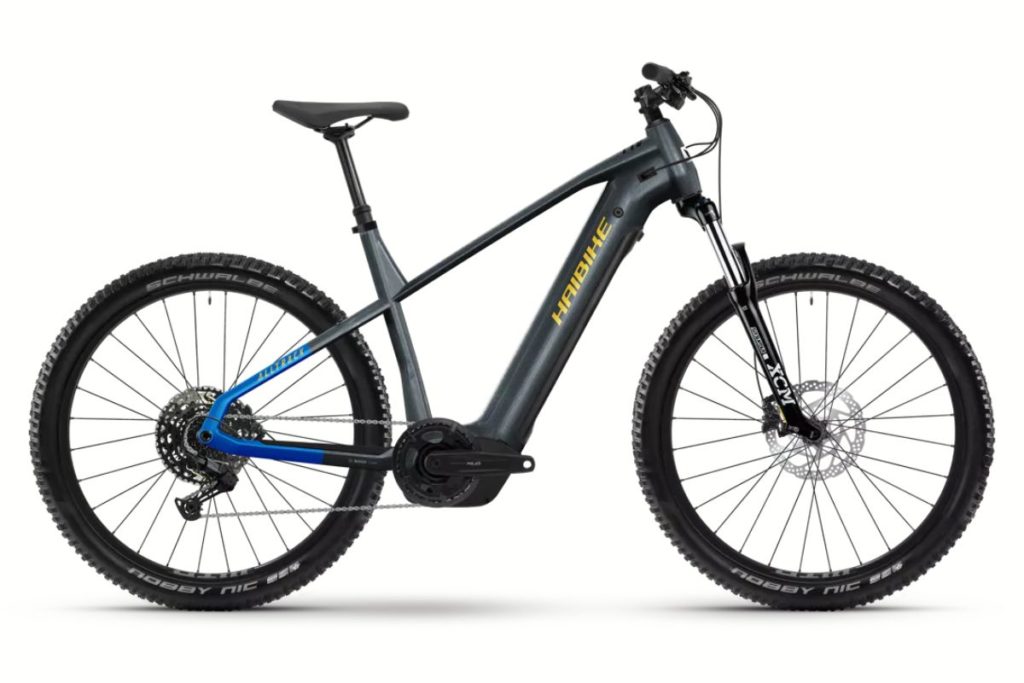
Haibike AllTrack
£3,149
The AllTrack name tells you what you need to know: this is aimed at riders who want an eMTB that can handle a bit of everything without fuss. That makes it a strong UK option, since most riders don’t live near a bike park. Real riding is a mix of climbs, linking sections, muddy woods, trail centre loops, bridleways, and the occasional “this looked like a shortcut” moment that turns into a steep mess. A rigid, confidence-inspiring hardtail eMTB suits that reality.
On trail centre terrain, it’s the kind of bike that helps you build speed and confidence without feeling like you’re wrestling it. On natural trails, it keeps things honest: you’ll get grip if you ride smoothly, and you’ll get bounced if you’re lazy. That’s not a criticism — it’s what makes hardtail electric mountain bikes so good for progression. If you want to keep improving, bookmark eMTB skills: how to ride an eMTB faster on technical trails.
Pros
Great fit for typical UK “mixed off-road” riding
Confidence-inspiring platform for progression
Hardtail simplicity for year-round use
Cons
If you regularly ride very rough descents at speed, a complete suspension will be more comfortable
Specifications
Frame: High Aluminium Uni
Motor: Bosch Performance Line CX
Battery: Bosch InTube 600Wh
Fork: Suntour XCM34-Boost NLO DS 15AH2-110 120 mm
Shock: N/A
Tyres: Schwalbe Nobby Nic Performance, ADDIX, 67EPI 65-584
Drivetrain: Shimano CUES CS-LG400-11, HG
Brakes: Shimano Hydraulic Disc brake Deore BR-MT410
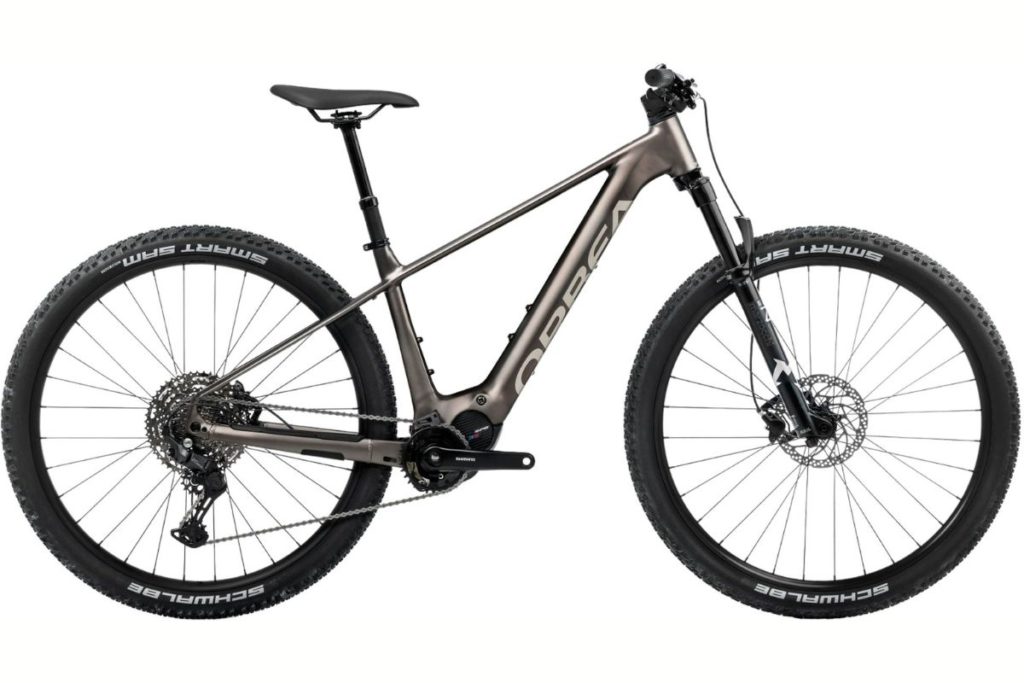
Orbea Urrun
£3,299 (RRP £3,699)
Some riders want a hardtail eMTB that does big rides first and challenging trails second — and that’s where bikes like the Orbea Urrun make sense. Think long mixed routes, bridleways, forestry tracks, natural singletrack, and the riding where you’re exploring rather than chasing KOMs. For that use, an eMTB hardtail can be the ultimate “ride more” machine: it makes big routes feel achievable, it reduces fatigue, and it smooths out the sting of repeated climbs.
The reason this category is worth highlighting is that not everyone needs a super-aggressive trail hardtail. If your local riding is more distance than descending, comfort, efficiency, and stability matter more than maximum fork travel. You’ll still want grippy tyres and brakes that inspire confidence, but the overall vibe is: cover ground, find new trails, and come home with enough energy left to do it again tomorrow.
Pros
Great for bridleways, long routes and mixed-terrain UK riding
Encourages “ride further and more often” consistency
Hardtail simplicity with real off-road intent
Cons
Riders focused on rough descents may prefer a more aggressive trail hardtail format
Specifications
Frame: Brand new frame based off Laufey geometry
Motor: Shimano EP600
Battery: Orbea Internal 630Wh
Fork: Marzocchi Bomber Z2 120 QR15x110 E-Bike Optimized fork
Shock: N/A
Tyres: Schwalbe Smart Sam Performance, 29×2.35, Addix, Black
Drivetrain: Shimano CS-LG400 11-50t 11-Speed
Brakes: Shimano MT201 Hydraulic Disc
Frequently Asked Questions
Are hardtail eMTBs suitable for trail centres?
Yes — for UK trail centres, a hardtail eMTB can be a brilliant choice, especially on blues and reds where line choice and pumping terrain matter. You’ll get more climbing laps thanks to the motor, and the hardtail rear keeps the bike lively on flowy trails. If your local centre is very rocky and fast, a full-suspension bike will usually be more comfortable and forgiving.
What fork travel is best on a hardtail electric mountain bike?
For most riders, 120–140mm is the sweet spot. 120mm suits smoother singletrack and mixed terrain; 130–140mm gives you more confidence on steeper, rougher trails. Beyond that, the bike starts to feel less efficient, and you’re often better off switching to full suspension.
Do I need a dropper post on a hardtail eMTB?
If you ride proper off-road terrain, a dropper post is close to essential. It lets you lower and move your weight further back on steeper descents, making technical riding safer and easier. It’s one of the most significant upgrades you can make to a hardtail.
What tyres should I run on a UK hardtail eMTB?
For UK conditions, prioritise a grippy, confidence-inspiring front tyre with proper edge knobs, and pair it with a rear tyre that balances traction and rolling speed. In winter, many riders go for a more aggressive rear as well, because eMTB torque can overwhelm a fast-rolling tyre on slick climbs.
Is a hardtail eMTB better than a full-suspension eMTB?
It depends on your riding. Hardtail eMTBs are simpler, often better value, and can feel more playful and efficient — brilliant for bridleways, trail centres and progression. Full suspension is better for high-speed rough terrain, repeated hits, and riders who prioritise comfort and maximum control on descents. If you’re still deciding, start at Best eMTB 2026.