The “best MTB helmets 2026” question is bigger than it looks. Helmet choice isn’t just about protection levels on paper — it’s about what you actually ride, how hot you run on climbs, whether you wear goggles in winter, and whether your local trails are mellow bridleway links or steep trail-centre lines where you’re regularly pushing your luck. The right helmet is the one that fits properly, stays put when the trail gets rough, and feels comfortable enough that you never consider riding without it.
For Electric MTB UK, this is also where we keep things sensible: helmets aren’t “eMTB-only” kit. The same trail helmet that suits an analogue MTB rider will usually suit an eMTB rider too. The difference is how often and how long you ride. Assistance can mean more laps, more descending, and longer sessions — so stability, coverage, ventilation and goggle compatibility start to matter more than you might expect. That’s why this Tier 1 guide is split into the four ways most riders actually shop.
We’ve chosen three helmets in each category — full-face, trail (open-face), enduro (high-coverage open-face), and convertible — and we’ve ranked each category low to high by price so the shortlist is quick to skim and easy to build around.
The best MTB helmets 2026 shortlisted
Full-face MTB helmets 2026
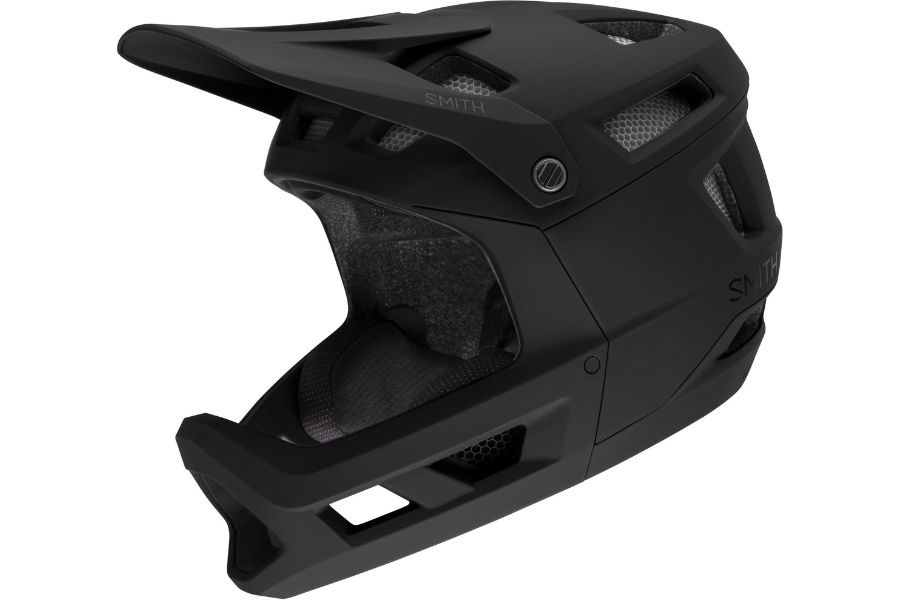
Smith Mainline MIPS — £199.99 (RRP £285)
Specialized Gambit — £225
Fox Proframe RS — £229.99 (RRP £309.99)
Trail MTB helmets 2026 (open-face)
Specialized Tactic 4 — £40 (RRP £80)
Giro Source MIPS — £89.99 (RRP £134.99)
Fox Speedframe Pro — £119.99 (RRP £164.99)
Enduro MTB helmets 2026 (high-coverage open-face)
Troy Lee Designs A3 — £199.99
Smith Forefront 2 — £129.99 (RRP £260.99)
POC Kortal Race MIPS — £139.99 (RRP £250)
Convertible MTB helmets 2026 (removable chin bar)
Bell Super Air R MIPS — £199.99 (RRP £299.99)
Giro Switchblade MIPS — £205.99 (RRP £274.99)
MET Parachute MCR — £224.99 (RRP £300)
We’ve prioritised helmets that make sense for real UK riding: secure fit systems, reputable rotational-impact tech (or equivalent), usable ventilation, and trail-friendly details like visor stability and goggle compatibility. Prices move constantly, so treat the order as a guide — but keep the principle: buy the helmet that fits properly and suits the way you ride.
Quick sizing & fit: measure your head circumference, but don’t stop there. A helmet should sit level, low enough to protect the forehead, and feel snug without creating pressure points. If it rocks when you shake your head, it isn’t right — adjust the retention system first, then try a different size or a different brand shape.
The best MTB helmets 2026
Full-face MTB helmets 2026
Smith Mainline MIPS
£199.99 (RRP £285)
Best for riders who want a modern enduro-style full-face that still feels wearable on climbs and long rides.
The Mainline makes sense if you’ve reached the point where you want the extra confidence of a chin bar, but you don’t want a downhill-only lid that feels stifling the moment you start pedalling. It’s the kind of helmet you choose for steeper trail-centre days, rough natural descents, and winter riding when traction is sketchy and crashes can happen at lower speeds.
What matters with any full-face is comfort and stability. A helmet can look “proper”, but if it shifts around when you’re tired or sweaty, it won’t get used. The Mainline’s appeal is that it’s built to be ridden in — not just worn on uplift days — so it’s a realistic first full-face for riders who do big mixed rides and want extra protection on the downs.
Pros
Full-face confidence without feeling purely park-focused
A strong choice for steeper UK trails and faster descending
More wearable for long rides than many DH-only lids
Cons
Warmer than an open-face helmet on slow, humid climbs
Specifications
Type: Full-face MTB helmet
Rotational protection: MIPS
Fit system: Adjustable retention + cheek pad fit
Ventilation: High-vent enduro-style shell
Visor: Adjustable peak
Goggle compatibility: Yes
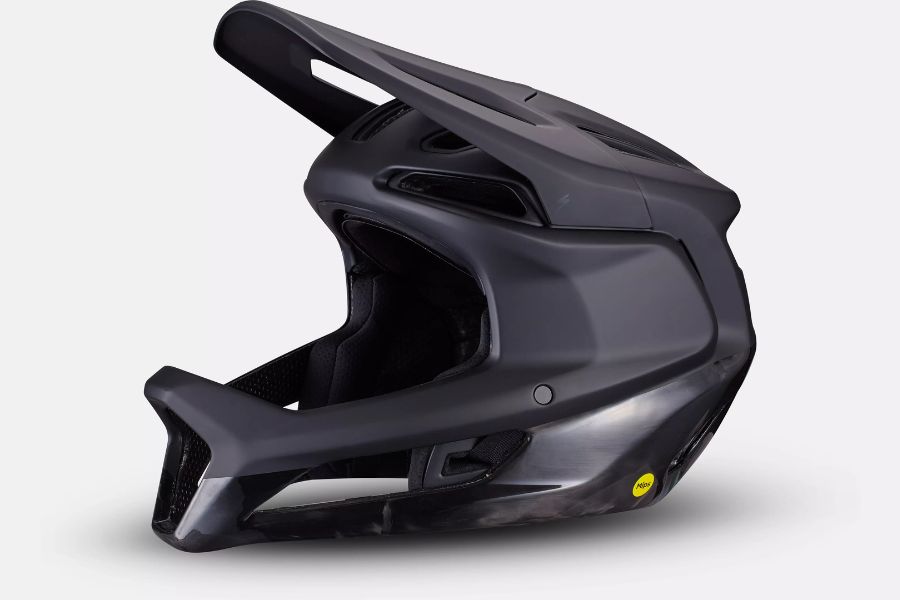
Specialized Gambit
£225
Best for riders who want a lightweight-feeling full-face for long trail days rather than a heavyweight downhill lid.
The Gambit suits the rider who pedals to the top, then wants the reassurance of a chin bar for the descents — without feeling like they’ve committed to a bulky park helmet. It’s a particularly good match for “ride everything” days: trail centre laps, natural steep bits, and the sort of UK terrain where the consequences are often a wet, awkward slide rather than a clean crash.
The key advantage of this style of full-face is that it removes the “will I actually wear it?” barrier. If you’ve tried a DH lid and found it too hot or too much hassle, a lighter enduro full-face can be the compromise that actually sticks. If your riding includes regular steep descents or you simply want more facial protection without going full downhill, it’s one of the most practical routes in.
Pros
Lightweight-feeling full-face option for pedalled trail riding
A strong fit for enduro-style UK riding
Confidence boost on steeper, rougher descents
Cons
Not as “bombproof” in feel as a pure downhill helmet
Specifications
Type: Full-face MTB helmet
Rotational protection: Yes (version dependent)
Fit system: Adjustable retention
Ventilation: Enduro-focused airflow design
Visor: Adjustable peak
Goggle compatibility: Yes
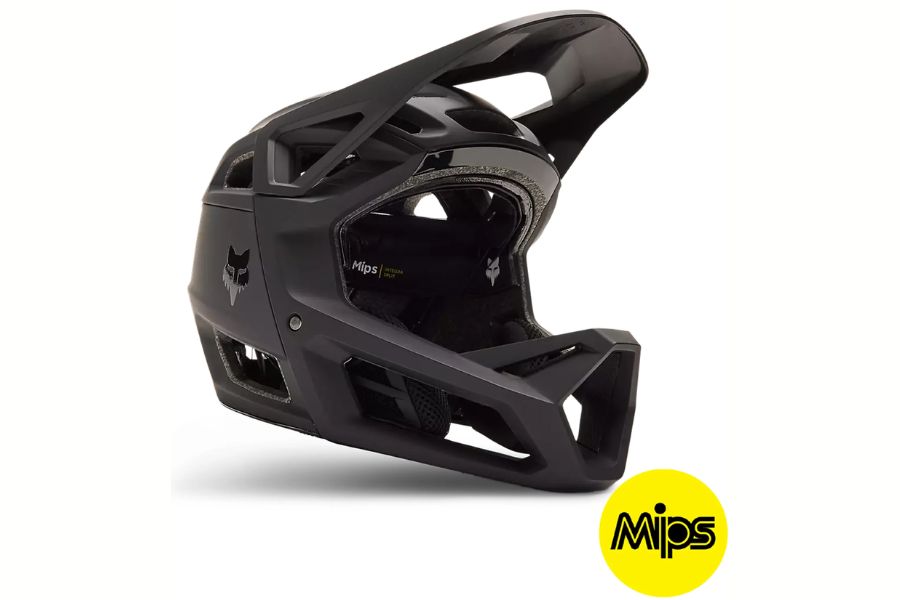
Fox Proframe RS
£229.99 (RRP £309.99)
Best for riders who want a premium enduro full-face for frequent, hard riding rather than occasional “big day” use.
The Proframe RS is the sort of helmet you buy when you already know you like riding in a full-face and you want something that feels stable, well-finished and confidence-inspiring for the long haul. It makes sense for riders doing regular steep trail-centre days, faster natural descents, or anyone who simply wants a full-face that doesn’t feel like an overreaction the moment you start pedalling.
The reason it earns a place in a Tier 1 guide is that it represents the top end of the “pedal-friendly full-face” idea. You’re paying for refinement: how it sits, how it feels after hours, and whether it stays comfortable through the kind of sweaty, stop-start UK riding that can make helmets annoying. If you’re buying one full-face and you plan to use it a lot, this is the sort of purchase that can feel justified.
Pros
Premium “wear it all ride” enduro full-face feel
Stable, confidence-inspiring fit for hard descending
A strong choice for frequent full-face riders
Cons
High price compared with more occasional-use full-face options
Specifications
Type: Full-face MTB helmet
Rotational protection: Yes (version dependent)
Fit system: Adjustable retention + cheek pad fit
Ventilation: High-vent enduro shell
Visor: Adjustable peak
Goggle compatibility: Yes
Trail MTB helmets 2026(open-face)
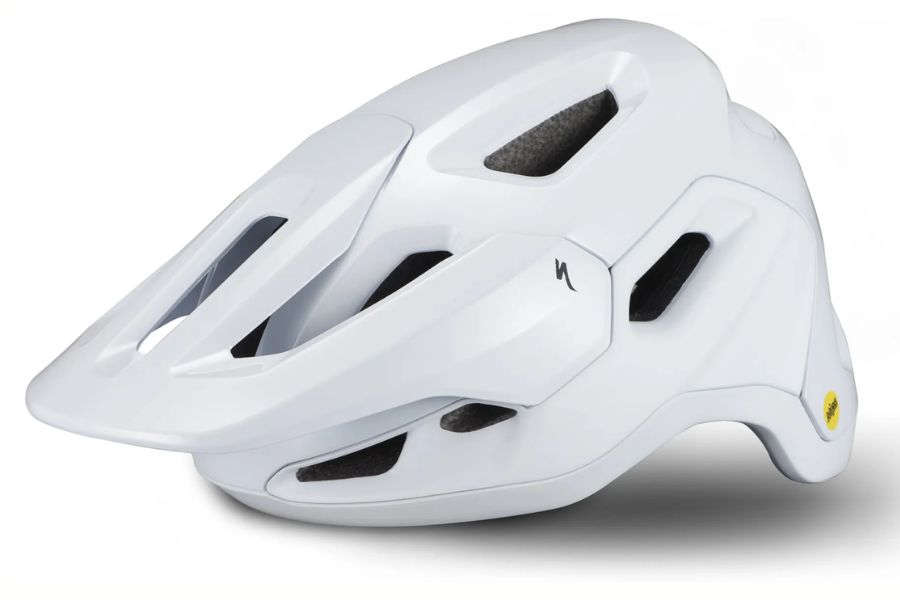
Specialized Tactic 4
£40 (RRP £80)
Best for riders who want an affordable, modern trail helmet that still feels properly off-road ready.
The Tactic 4 is the kind of helmet that makes sense as a default choice: bridleways, trail centres, mixed woodland singletrack, and all the everyday off-road riding most people actually do. It’s not trying to be extreme; it’s trying to be comfortable, stable and easy to live with — which is exactly why it’s a strong budget-friendly pick.
For UK use, the important bit is that it doesn’t feel like a flimsy “starter helmet”. A good trail lid should sit securely when you’re moving around on the bike, cope with sweat and winter layers, and work cleanly with goggles if you ride that way in colder months. If you’re building your kit from scratch or you want a sensible helmet you’ll happily wear every ride, this is the kind of option that gets the job done without drama.
Pros
Excellent value trail helmet that still feels confidence-inspiring
Comfortable for long rides and everyday use
A sensible pick for bridleways and trail centres
Cons
Not the most premium-feeling option in hot-weather ventilation and finishes
Specifications
Type: Open-face trail helmet
Rotational protection: Yes (version dependent)
Fit system: Adjustable dial retention
Ventilation: Trail-focused venting
Visor: Adjustable peak
Goggle compatibility: Yes
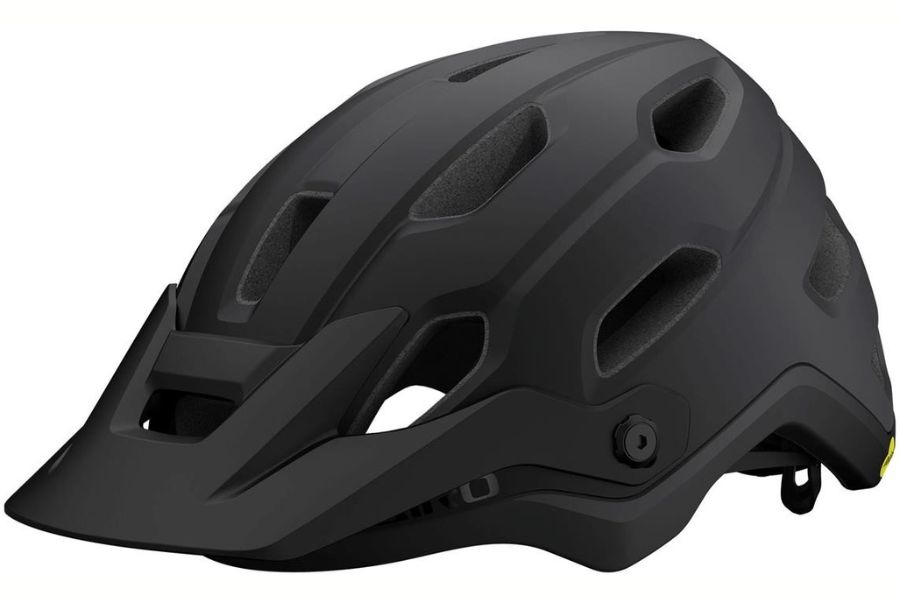
Giro Source MIPS
£89.99 (RRP £134.99)
Best for riders who want a well-ventilated trail helmet for longer rides and steady climbing.
The Source sits in the sweet spot for most UK riders: comfortable enough for long loops, breathable enough that you don’t feel boiled on climbs, and stable enough that you trust it once the trail gets rougher. It’s a strong choice if you ride frequently and want a “set and forget” helmet that you don’t constantly adjust mid-ride.
It’s also an easy recommendation for riders who do a bit of everything — towpath links, woodland trails, trail centres and the occasional rougher descent — without needing the extra bulk of an enduro-style high-coverage lid. If your riding is mostly trail riding in the classic sense, this is exactly the sort of helmet that disappears on your head, which is the point.
Pros
Strong ventilation for longer rides and climbing
Comfort-led fit that suits frequent use
Solid all-rounder for UK trail riding
Cons
If you want deeper coverage for harder descending, move up to an enduro-style open-face lid
Specifications
Type: Open-face trail helmet
Rotational protection: MIPS
Fit system: Adjustable dial retention
Ventilation: High airflow trail design
Visor: Adjustable peak
Goggle compatibility: Yes
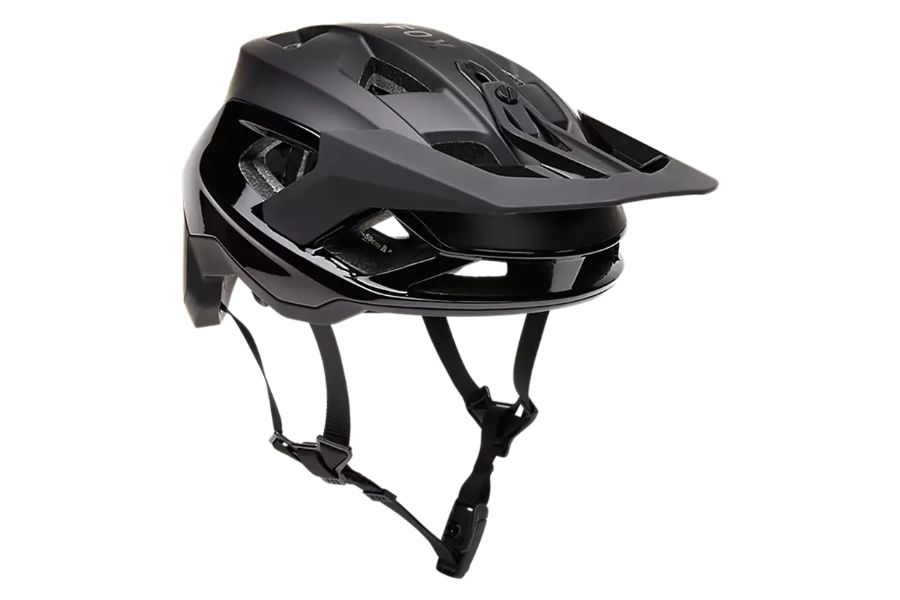
Fox Speedframe Pro
£119.99 (RRP £164.99)
Best for riders who want a more premium trail helmet with a locked-in feel for faster riding.
The Speedframe Pro is popular because it hits the modern trail brief: secure fit, decent coverage, and a shape that works well with goggles for winter riding. It suits riders who ride trail centres regularly or who tend to push the pace a bit more, where helmet stability matters as much as comfort.
In UK conditions, the “Pro” style helmets often justify themselves by being easier to live with. Padding quality, how well the helmet manages sweat, and how securely it stays planted when the trail gets choppy are the things you notice after a month of riding — not just on day one. If you want a trail helmet that feels like a step up without forcing you into a bulkier enduro shell, this is a sensible place to land.
Pros
Secure, confidence-inspiring fit for faster trail riding
A premium-feeling trail lid for frequent riders
Good goggle compatibility for UK winter use
Cons
Not as airy as the lightest trail helmets on slow climbs in mild weather
Specifications
Type: Open-face trail helmet
Rotational protection: Yes (version dependent)
Fit system: Adjustable dial retention
Ventilation: Trail-focused airflow
Visor: Adjustable peak
Goggle compatibility: Yes
Enduro MTB helmets 2026 (high-coverage open-face)
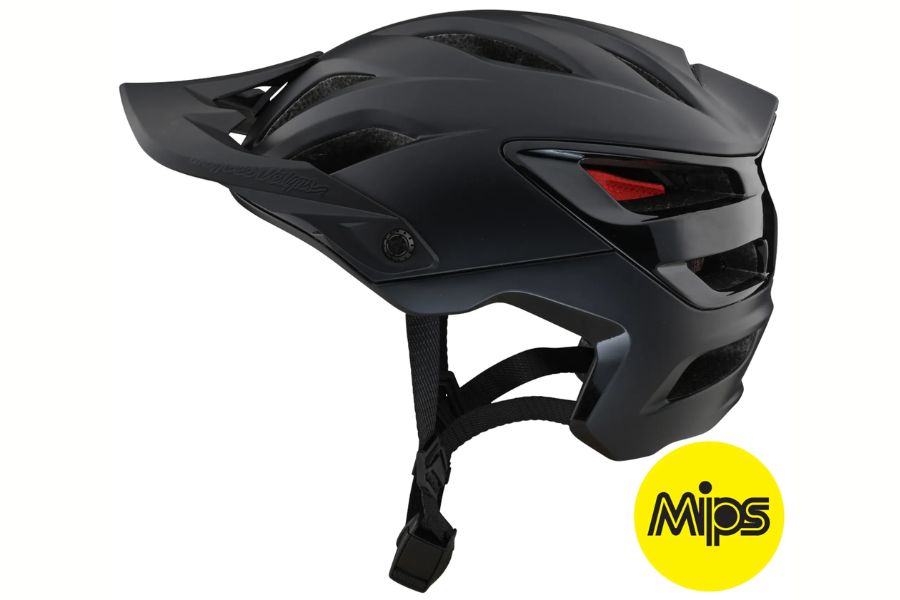
Troy Lee Designs A3
£199.99
Best for riders who want a high-end open-face helmet that feels plush and stable for long, rough rides.
The A3 is a strong option if you ride harder trails but still want the convenience and airflow of an open-face lid. This category exists for a reason: some riders don’t want a full-face every ride, but they do want a helmet that feels more substantial than a lightweight trail lid when the descents get steeper and the terrain gets messier.
The A3-style helmets tend to reward you if you ride a lot. The comfort and stability become the selling point, especially when you’re doing repeated descents or big days where little annoyances turn into big ones. If your riding is trail centres plus rough natural descents — and you want an open-face that feels “serious” — this is the kind of helmet that fits the brief.
Pros
Premium comfort for long, rough rides
Very stable feel when properly fitted
A strong open-face option for harder trail riding
Cons
Pricey if you only ride occasionally
Specifications
Type: High-coverage open-face (enduro-style)
Rotational protection: Yes (version dependent)
Fit system: Adjustable retention
Ventilation: Enduro-focused venting
Visor: Adjustable peak
Goggle compatibility: Yes
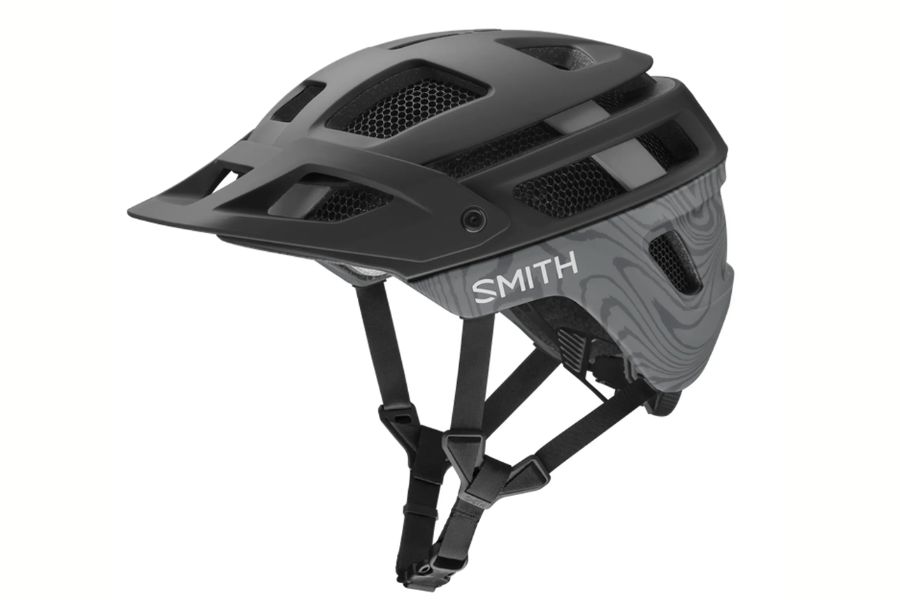
Smith Forefront 2
£129.99 (RRP £260.99)
Best for riders who want deeper coverage and a “confidence-first” feel without committing to a full-face.
The Forefront 2 suits riders who regularly ride in rough conditions — wet roots, rutted descents, winter mud — where control isn’t always perfect and you want your kit to feel dependable. It’s an excellent fit for UK trail riding that leans more “enduro day out” than “easy cruise”, but still includes plenty of climbing and pedalling.
It also makes sense if you’re a frequent goggle rider. Helmet and goggle compatibility sounds minor until it isn’t: visor position, strap placement and how the helmet sits at the back of the head can decide whether you actually enjoy wearing goggles. If you want a high-coverage open-face for harder riding that still feels wearable on long climbs, it’s a strong option.
Pros
Confidence-inspiring coverage for rougher trail riding
Good compatibility for goggle use
Stable feel when riding faster descents
Cons
Can feel warmer than lighter trail helmets on slow climbs
Specifications
Type: High-coverage open-face (enduro-style)
Rotational protection: Yes (version dependent)
Fit system: Adjustable dial retention
Ventilation: High-coverage airflow design
Visor: Adjustable peak
Goggle compatibility: Yes
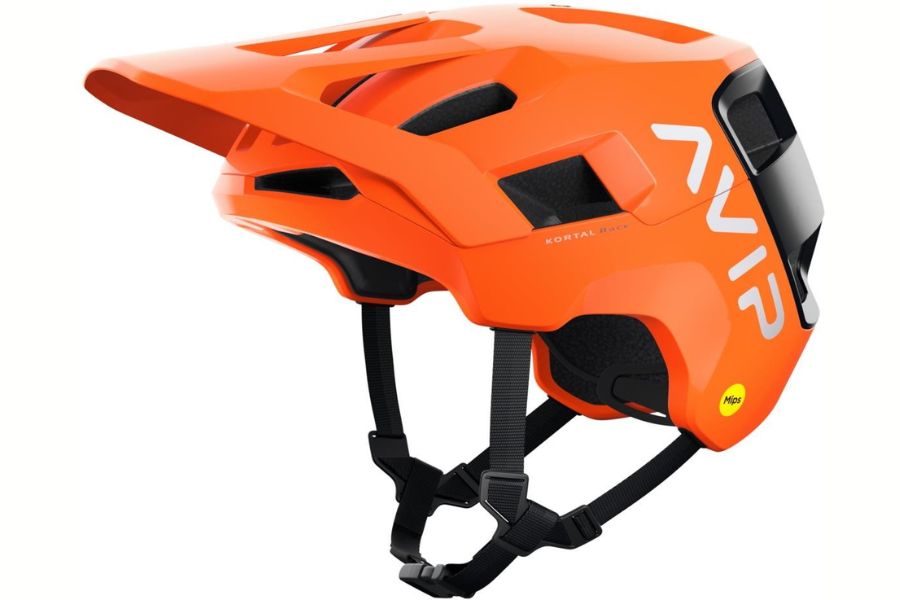
POC Kortal Race MIPS
£139.99 (RRP £250)
Best for riders who want maximum open-face coverage for aggressive trail riding.
The Kortal Race MIPS is the “most helmet” open-face option here: deep coverage, a very planted feel, and a design that’s aimed at riders who push harder downhill but still want an open-face lid for climbing comfort. If your riding includes steeper trail-centre lines, faster woodland descents, or you simply prefer extra reassurance, it’s exactly the sort of helmet that makes sense.
For UK riding, this category is particularly relevant in winter. When the ground is unpredictable and traction is limited, crashes can be awkward and messy rather than dramatic. A high-coverage open-face can be a very sensible compromise: more confidence than a minimal trail lid, less heat and hassle than a full-face.
Pros
High-coverage open-face design for harder trail riding
Very secure feel when descending fast
Ideal for riders who want extra reassurance without a chin bar
Cons
Can feel warmer than lighter trail helmets on long climbs
Specifications
Type: High-coverage open-face (enduro-style)
Rotational protection: MIPS
Fit system: Adjustable retention
Ventilation: High-coverage venting
Visor: Adjustable peak
Goggle compatibility: Yes
Convertible MTB helmets 2026 (removable chin bar)
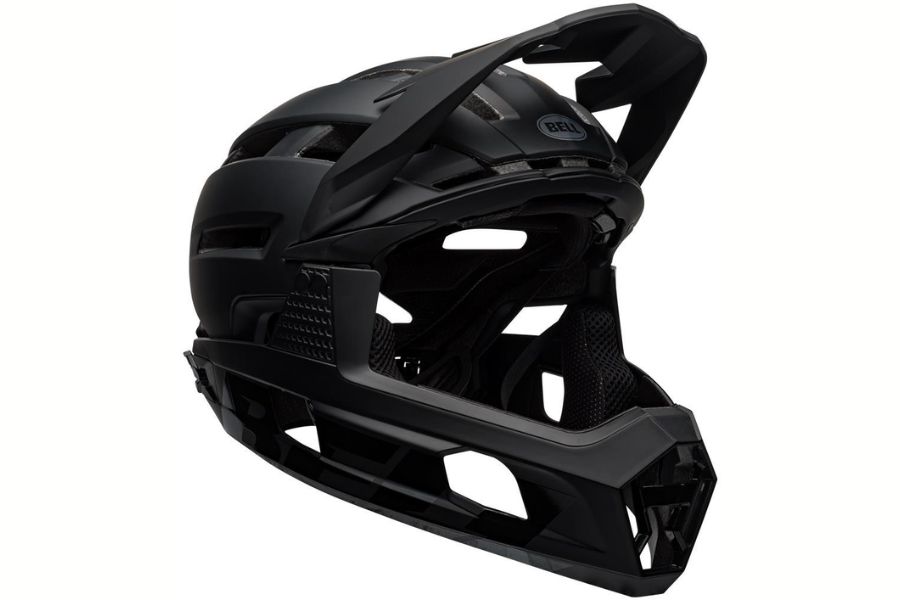
Bell Super Air R MIPS
£199.99 (RRP £299.99)
Best for riders who want one helmet to cover most rides, from trail loops to occasional harder descending.
Convertible helmets exist because lots of riders don’t want to own two helmets — but they do want the option of a chin bar on days when the descents are steeper or the speed is higher. The Super Air R-style setup is ideal for UK riders who mix trail centres, bridleways and occasional big days where extra confidence is welcome.
The real value is flexibility. You can ride in open-face mode most of the time, then add the chin bar when you’re heading somewhere more serious. It’s also a practical choice for riders who travel to trail centres or trips where ride style changes day to day. The compromise is that convertible helmets rarely feel as airy as a pure trail lid or as solid as a dedicated full-face — but for many riders, that middle ground is exactly the point.
Pros
Two-in-one flexibility for mixed riding styles
Great “own one helmet” option for varied UK riding
Extra confidence available without buying a second lid
Cons
Heavier and less ventilated than a pure open-face trail helmet
Specifications
Type: Convertible (removable chin bar)
Rotational protection: MIPS
Fit system: Adjustable retention
Ventilation: Convertible-focused airflow
Visor: Adjustable peak
Goggle compatibility: Yes
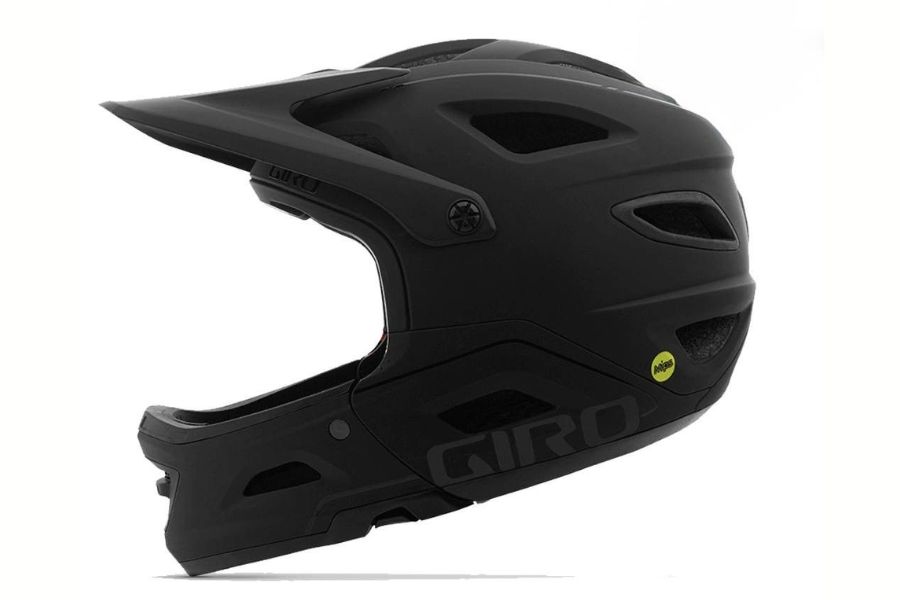
Giro Switchblade MIPS
£205.99 (RRP £274.99)
Best for riders who want a sturdier-feeling convertible helmet for regular use rather than occasional “just in case” days.
The Switchblade concept suits riders who genuinely use the chin bar, not just carry it. If your rides often include proper descending — but you still want the convenience of an open-face for mellow loops or warmer days — a more substantial convertible can be a good compromise.
It’s also a good fit for riders who like the idea of “full-face confidence, open-face practicality” without owning two helmets. The trade-off is obvious: convertible helmets add weight and complexity. But if you ride a wide variety of terrain, or you’re the kind of rider who does one mellow ride and one big ride most weeks, it can be a genuinely practical solution.
Pros
A more confidence-inspiring convertible option for frequent use
Versatile for riders mixing trail and harder descending
A strong one-helmet approach if you use the chin bar often
Cons
Bulkier feel than a dedicated trail open-face helmet
Specifications
Type: Convertible (removable chin bar)
Rotational protection: MIPS
Fit system: Adjustable retention
Ventilation: Convertible airflow design
Visor: Adjustable peak
Goggle compatibility: Yes
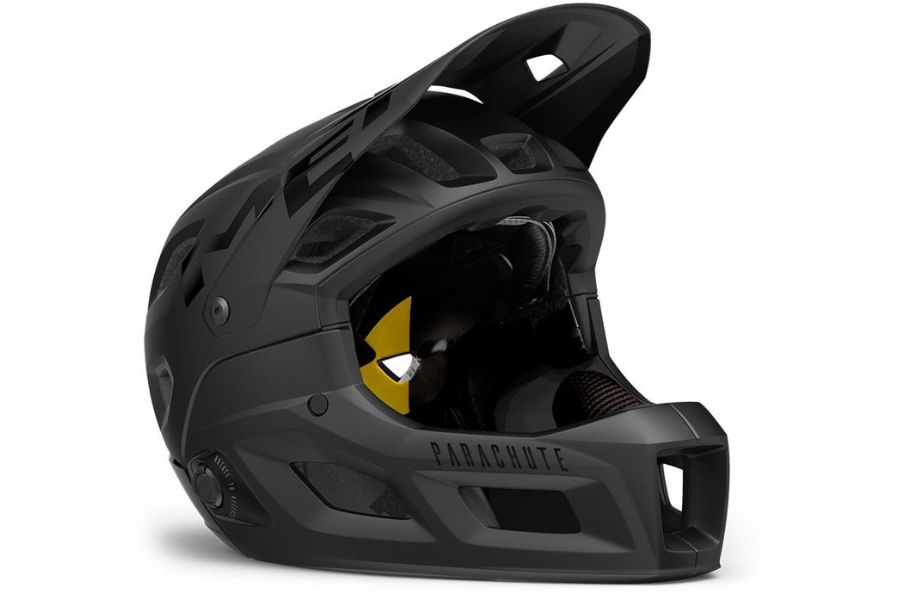
MET Parachute MCR
£224.99 (RRP £300)
Best for riders who want a premium convertible helmet with a fast, practical chin-bar system.
The Parachute MCR makes sense if you like the convertible idea but want it to feel as close as possible to “proper helmet for each mode”. It suits riders who change ride styles often — a mellow local loop one day, a harder trail-centre day the next — and who value a helmet that’s easy to live with rather than a compromise you tolerate.
Premium convertible helmets tend to win on the details: how securely the helmet fits, whether the chin bar feels confidence-inspiring, and whether the whole system is quick enough that you actually use it. If you’re spending this kind of money, the aim is simple: you want one helmet that genuinely replaces two, without feeling like you’ve settled for a halfway option.
Pros
Premium convertible concept that suits genuinely varied riding
Fast, practical “swap modes” appeal
A strong option if you want one helmet to cover most MTB riding
Cons
High price compared with buying a simple trail helmet alone
Specifications
Type: Convertible (chin-bar system)
Rotational protection: Yes (version dependent)
Fit system: Adjustable retention
Ventilation: Convertible-focused airflow
Visor: Adjustable peak
Goggle compatibility: Yes
Frequently Asked Questions
What’s the best MTB helmet in 2026?
There isn’t one best MTB helmet for everyone. Start by choosing the right category: trail open-face for most riding, enduro open-face for more coverage, full-face for steeper/faster descending, or convertible if you want one helmet to cover multiple ride styles.
Do I need a different helmet for eMTB riding?
Not necessarily. Most riders can use the same helmet for MTB and eMTB. The difference is that eMTB riding often means longer rides and more descending, so comfort, stability and coverage become more important in day-to-day use.
Full-face vs open-face: which should I choose?
Open-face helmets are the default for most UK trail riding. Full-face makes sense if you ride steeper trail-centre lines regularly, do uplift days, or you simply want extra facial protection. Convertible helmets are the middle ground if you want both options without owning two lids.
What helmet safety features matter most?
Fit is number one. After that, look for reputable rotational-impact protection (MIPS or equivalent), stable coverage, and a retention system that keeps the helmet planted when you move your head. A helmet that stays comfortable gets worn more — and that’s what matters.
How should an MTB helmet fit?
It should sit level, low enough to protect your forehead, and feel snug without pressure points. It shouldn’t rock when you shake your head. If it moves, adjust the retention system — and if it still shifts, try a different size or a different brand shape.