

The best MTB pedals are the ones that keep your feet exactly where you want them, through wet roots, square-edge hits, awkward eMTB climbs and the kind of sloppy winter mud the UK does so well. Pedals are also one of the few upgrades that can completely change how your mountain bike feels in a single ride. Swap from cheap, vague platforms to a proper set of MTB flat pedals and you’ll often notice more control straight away: better stability when you’re weighting the bike, more confidence when you’re drifting your heels down, and fewer mid-corner foot readjustments. Move from flats to MTB clipless pedals and you usually gain consistency—your foot returns to the same place every time, and your pedalling becomes a little cleaner on long climbs and punchy efforts.
For Electric MTB UK riders, there’s an extra layer. eMTBs carry more mass and generate more drive, so “good enough” pedals can start feeling like a liability when the trail gets rough or your cadence drops on a technical climb. The best mountain bike pedals for eMTB use tend to share a few traits: secure grip (or positive engagement), robust axles and seals, and a platform shape that reduces unwanted foot movement without creating constant pedal strikes. This guide covers a spread of the best MTB pedals across flat pedals, SPD-style clipless pedals, hybrid pedals and enduro-focused clip-ins—priced from entry-level to premium—so you can choose the right interface for your riding, shoes and terrain.
The best MTB pedals shortlisted
Shimano PD-M520 SPD pedals — £26.99 (RRP £44.99)
OneUp Composite pedals — £31.99 (RRP £49.99)
DMR V11 flat pedals — £34.99 (RRP £44.00)
Race Face Chester MTB pedals — £40.99 (RRP £49.95)
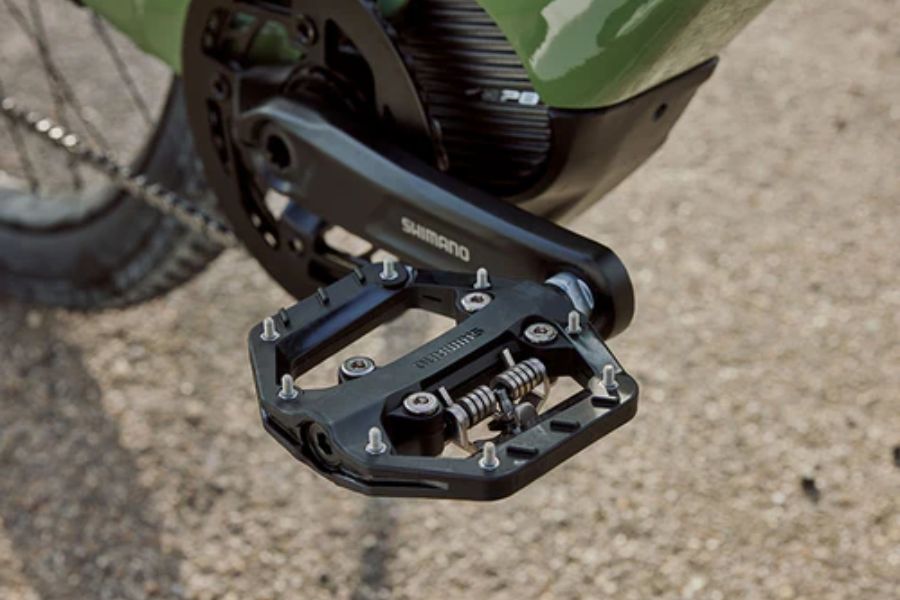
Shimano PD-EH500 hybrid pedals — £69.99
Shimano XT PD-M8120 trail SPD pedals — £77.99 (RRP £119.99)
DMR Vault pedals — £90 (RRP £120)
Shimano XTR M9100 SPD XC pedals — £132.00 (RRP £139.99)
Hope F22 flat pedals — £132.00 (RRP £155.00)
Crank Brothers Mallet E pedals — £133.00 (RRP £189.99)
Crankbrothers Stamp 7 pedals — £136.00 (RRP £159.99)
Time Speciale 8 enduro pedals — £144.00 (RRP £180.00)
We’ve prioritised pedals that make sense for UK mountain biking and eMTB riding: predictable grip, secure engagement, decent sealing, and designs that hold up when you’re riding in wet grit for months. You’ll see both composites and alloys here, plus SPD-style and ATAC-style options, because “best MTB pedals” depends on whether you want freedom to dab and move your feet (flats) or repeatable foot placement and efficient pedalling (clipless).
Quick sizing & fit: every pedal here uses the standard 9/16in thread most mountain bike cranks expect. The bigger decision is shoe and platform match. For MTB flat pedals, look for a pedal that suits your shoe size (some models come in two sizes) and pair it with sticky-rubber flat shoes. For MTB clipless pedals, match your pedal to your shoe’s cleat system (SPD for Shimano-style, ATAC for Time), then take a few minutes to set release tension and cleat position—small adjustments can make a big difference to comfort and knee tracking.
The best MTB pedals
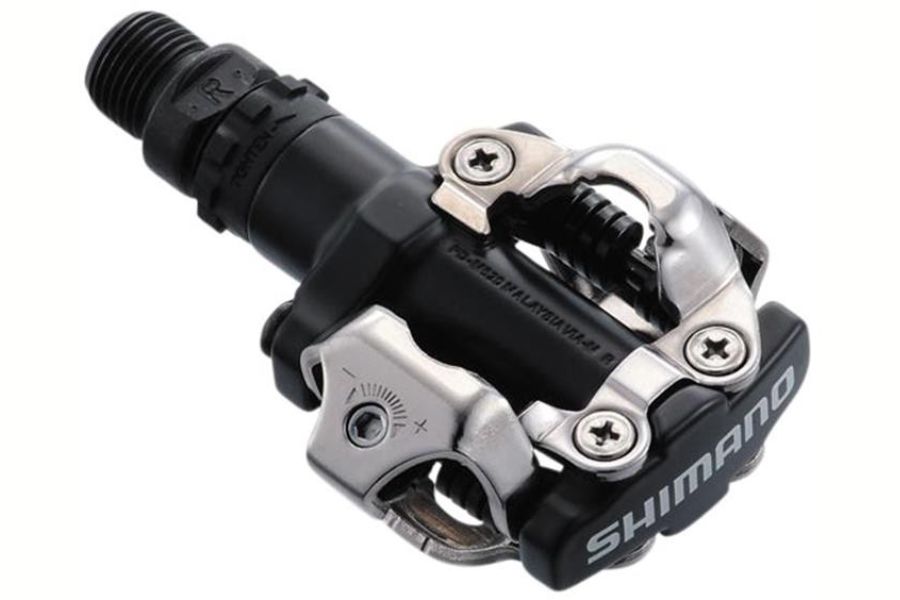
Shimano PD-M520 SPD pedals
£26.99 (RRP £44.99)
If you want a straightforward entry into MTB clipless pedals, the Shimano PD-M520 remains one of the most common starting points—and it’s still a sensible choice for trail riding, winter mileage and day-to-day eMTB use where you value consistency more than a big supportive cage.
The appeal is simple: you clip in, your foot returns to the same place every time, and you can keep spinning through messy conditions with less chance of your shoe skating off the pedal body. For riders coming from flats, the M520 is also a relatively forgiving way to learn clipless technique because it’s predictable and widely supported with setup advice and spare parts.
It’s not the most “gravity” option in this guide—if your riding is enduro-heavy or you want a platform to lean on when you’re not perfectly clipped, a trail-style pedal with a cage will usually feel calmer. But for XC, trail loops and eMTB climbing, it’s a dependable, no-drama way to get the benefits of MTB clipless pedals.
Pros
Positive, repeatable foot position for consistent pedalling
Works well for wet UK riding when paired with suitable SPD shoes
Easy to set up and widely supported for spares and servicing
A sensible first step into MTB clipless pedals
Cons
Minimal platform support compared with trail/enduro clipless pedals
Specifications
Type: Clipless (double-sided)
Cleat system: SPD-compatible
Platform: Minimal (no cage)
Body material: Not stated
Axle: Not stated
Pins: None
Bearings: Not stated
Stated weight: Not stated
Serviceability: Serviceable design
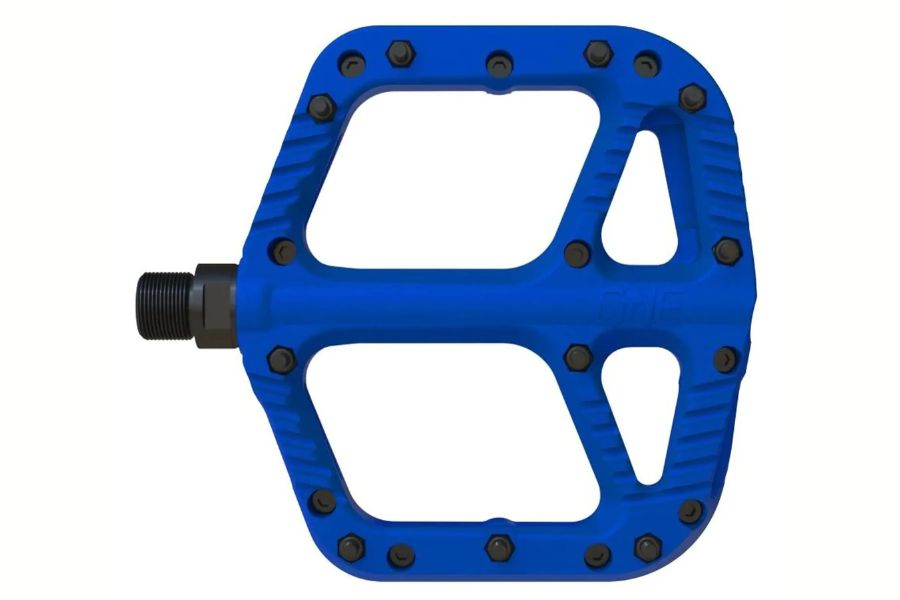
OneUp Composite pedals
£31.99 (RRP £49.99)
OneUp’s Composite pedals sit in the sweet spot where MTB flat pedals start to feel genuinely “performance” rather than simply functional. The platform is generous, the profile is deliberately thin to reduce pedal strikes, and the overall feel is aimed at keeping your foot calm and centred when the trail is trying to shake it loose.
For Electric MTB UK readers, this is a strong match for eMTB riding because you’ll often find yourself climbing technical ground at slower speeds (where stability matters) and then descending with more momentum than you would on a lighter bike. A flat pedal that holds your foot without feeling unpredictable is exactly what you want.
The OneUp composite approach is also appealing because you get a lot of the shape and grip philosophy of higher-end pedals without paying alloy money. It’s a very credible “buy once, fit to multiple bikes” pedal—good enough for serious trail riding, bike-park days, and long eMTB loops—provided you’re happy with the pin feel and the platform shape.
Pros
Thin profile helps reduce pedal strikes on technical trails
Large platform suits aggressive trail and eMTB riding
Strong grip for a composite MTB flat pedal
Good long-term value if you ride year-round
Cons
Platform feel is quite specific; not everyone likes the “locked” stance
Specifications
Type: Flat/platform
Cleat system: N/A
Platform: 115mm x 105mm
Body material: Nylon composite
Axle: Chromoly steel
Pins: 10 per side
Bearings: Not stated
Stated weight: 355g
Serviceability: Replaceable pins; service guides available
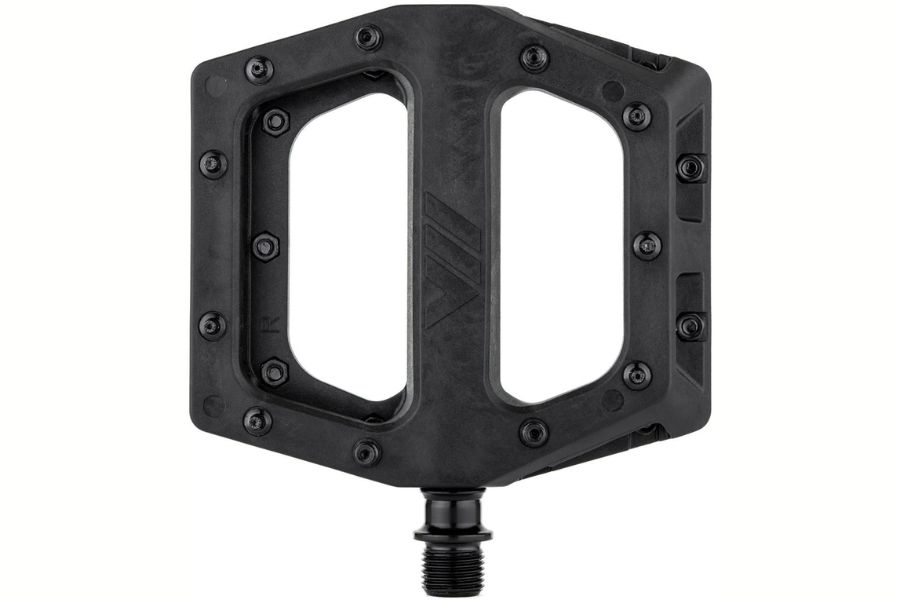
DMR V11 flat pedals
£34.99 (RRP £44.00)
The DMR V11 is a classic “first serious flat pedal” for mountain biking: a composite body, a proper pin layout, and enough platform stability to make cheap OEM pedals feel immediately vague by comparison. For Electric MTB UK riders who want to stay on MTB flat pedals—especially beginners building confidence on trail centres, or riders who prioritise fast dabs and easy foot movement—the V11 hits a practical sweet spot.
Composite pedals also tend to be kinder when you inevitably clip a rock, and they’re usually a sensible match for UK conditions because you’re not constantly worrying about cosmetic damage. The V11’s main job is simple: give your flat-pedal shoes a stable platform and let the pins do their work so your feet stop wandering around on rough ground.
If you’re riding steeper terrain or pushing into enduro speed, you may eventually want a thinner profile or a more premium seal system. But as an affordable set of MTB platform pedals that can live on an eMTB without feeling out of place, the V11 is an easy recommendation.
Pros
Solid upgrade over basic stock pedals for MTB and eMTB riding
Composite body suits year-round UK trail use
Pinned platform helps reduce unwanted foot movement
Good choice for learning skills on MTB flat pedals
Cons
Not as thin or as “locked-in” feeling as premium flat pedals
Specifications
Type: Flat/platform
Cleat system: N/A
Platform: Full-size composite
Body material: Composite (nylon-style)
Axle: Not stated
Pins: Replaceable pins
Bearings: Not stated
Stated weight: Not stated
Serviceability: Pins replaceable; internals not stated
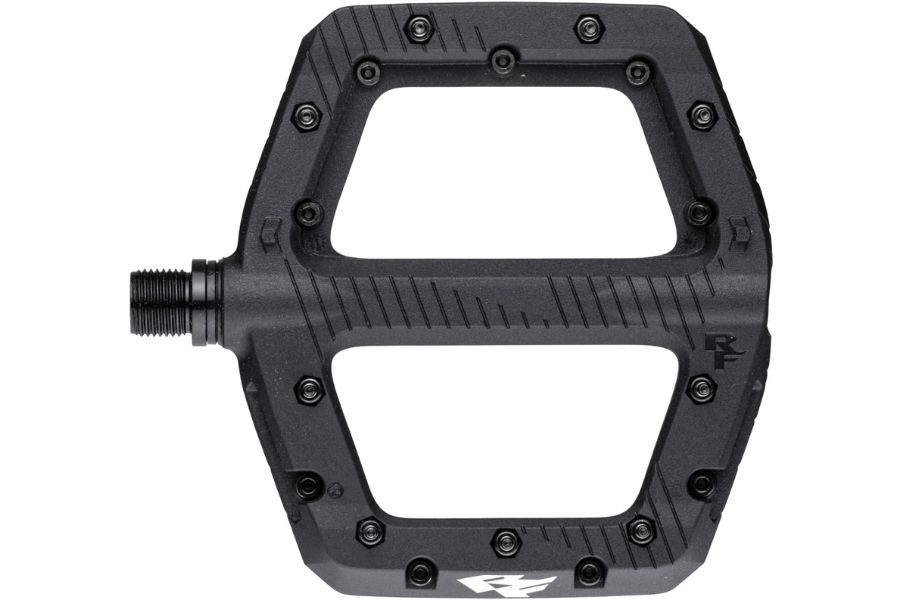
Race Face Chester MTB pedals
£40.99 (RRP £49.95)
The Race Face Chester is one of the best-value MTB flat pedals when you want real grip without committing to a high-end alloy pedal. Its composite body keeps things affordable and practical, while the pin layout and platform shape are designed for exactly what most riders need: a stable place to stand that doesn’t feel sketchy when the trail gets choppy.
For eMTB riders, that matters because extra bike mass and traction can encourage you to push harder, sooner—so a predictable platform helps you stay centred rather than constantly correcting your feet. The Chester is also a good “do everything” flat pedal if you ride a mix of trail centres, natural singletrack and bike-park days but still want the freedom to dab quickly. It won’t feel as razor-sharp and planted as a top-tier pedal with more tunability and a thinner body, but it nails the fundamentals.
If you’re building a sensible setup around MTB flat pedals—good shoes, good technique, and a pedal you don’t need to overthink—the Chester remains a strong pick.
Pros
Strong grip-to-cost ratio for MTB flat pedals
Composite body is practical for year-round riding
Stable platform for trail and eMTB use
Easy, low-fuss option for most riders
Cons
Less fine-tuning than premium flat pedals (feel is more “set”)
Specifications
Type: Flat/platform
Cleat system: N/A
Platform: 110mm x 101mm
Body material: Nylon composite
Axle: Chromoly steel
Pins: 8 per side (replaceable)
Bearings: Cartridge bearings and DU bushings
Stated weight: 360g
Serviceability: Serviceable bearing/bushing system
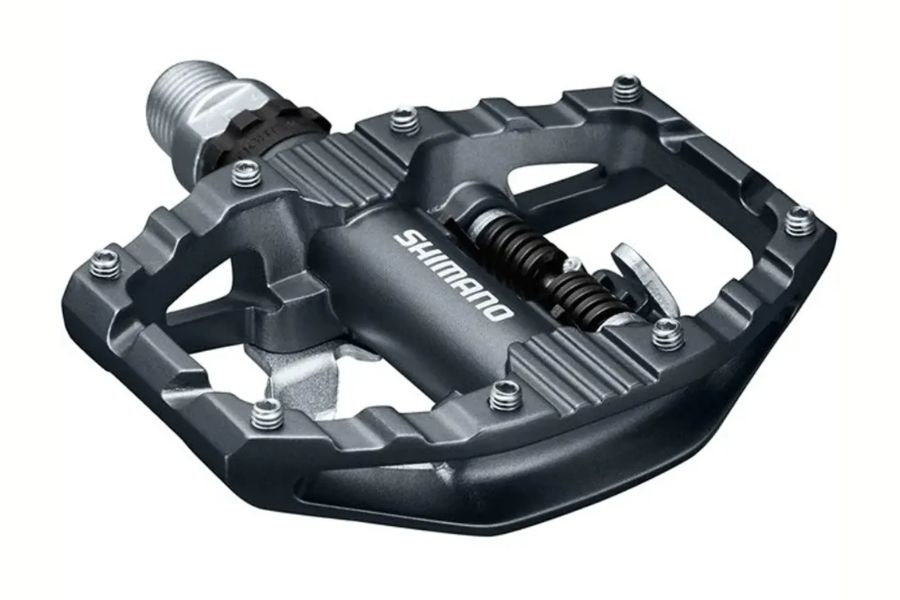
Shimano PD-EH500 hybrid pedals
£69.99
Hybrid pedals are often overlooked in “best MTB pedals” round-ups, but they make a lot of sense if your riding life is mixed—especially with an eMTB that does double duty.
The Shimano PD-EH500 gives you an SPD-style clipless mechanism on one side and a flat platform on the other. That means you can clip in for longer rides, structured training, or consistent climbing, then jump on in normal shoes for short rides, errands, or casual spins without feeling like you’re skating on a tiny clipless body.
For UK riding, they also suit riders who are still deciding whether MTB clipless pedals are for them: you can clip in when the terrain is predictable and use the flat side when you know you’ll be dabbing a lot.
The compromise is obvious—you don’t get the full locked-in support of a dedicated flat pedal, and you don’t get the full stability of a trail cage clipless pedal either. But as a genuinely useful, real-world option for riders who want one pedal set to cover multiple scenarios, the EH500 earns its place.
Pros
Useful “one bike, multiple uses” solution
Clipless side supports consistent pedalling and climbing
Flat side works for casual rides and everyday shoes
Good stepping-stone into MTB clipless pedals
Cons
Flat side grip and support won’t match true MTB flat pedals
Specifications
Type: Hybrid (flat + clipless)
Cleat system: SPD-compatible
Platform: Single-sided flat + single-sided SPD
Body material: Aluminium (pedal body)
Axle: Chromoly (spindle)
Pins: Flat side traction features (pins not stated)
Bearings: Sealed mechanism (not fully stated)
Stated weight: Not stated
Serviceability: Not stated
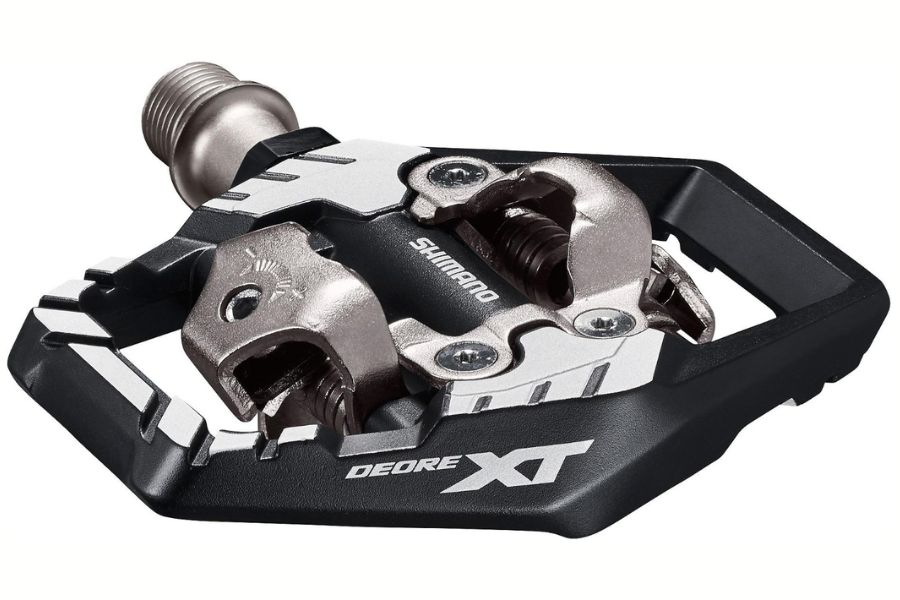
Shimano XT PD-M8120 trail SPD pedals
£77.99 (RRP £119.99)
If you like the idea of MTB clipless pedals but want more stability than a minimal XC-style design, the Shimano XT PD-M8120 is the kind of trail pedal that makes immediate sense.
The cage around the mechanism gives you a platform to brace against, which helps when you’re riding rough terrain, clipping in mid-trail, or putting power down on an eMTB where the bike’s weight can amplify any foot movement. In practice, trail SPD pedals tend to feel calmer underfoot than basic clipless designs because your shoe has something to lean on even when you’re not perfectly centred.
That’s useful on UK trails where you’re constantly transitioning between wet roots, soft mud and gritty hardpack. The M8120 also suits riders who use clipless but still want a “flat pedal feel” when descending—less of that perched-on-a-mechanism sensation. If your riding is trail, enduro-lite, technical eMTB climbing and general UK singletrack, this is one of the most sensible MTB clipless pedals to shortlist.
Pros
Cage adds stability for rough trails and eMTB riding
SPD-style engagement is consistent and predictable
Helps when clipping in/out on technical terrain
Good all-rounder between XC and enduro extremes
Cons
Bulkier design can be more exposed to rock strikes
Specifications
Type: Clipless (trail/platform)
Cleat system: SPD-compatible
Platform: Trail cage around mechanism
Body material: Not stated
Axle: Not stated
Pins: None
Bearings: Not stated
Stated weight: Not stated
Serviceability: Not stated
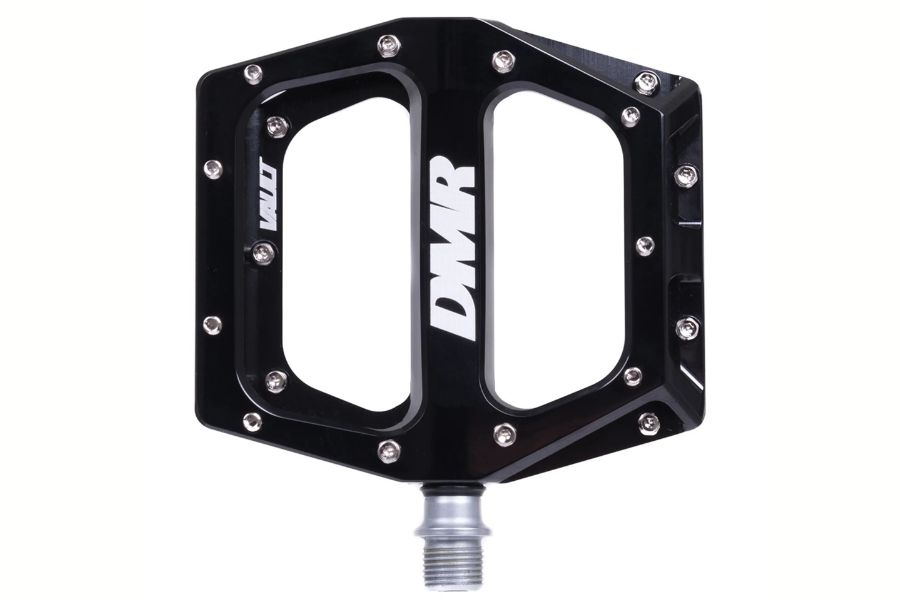
DMR Vault pedals
£90 (RRP £120)
The DMR Vault is one of those MTB flat pedals that has become a reference point: when riders talk about “proper” platform grip, this is often the feel they mean. The shape is aimed at holding your shoe in place without needing constant micro-adjustments, and the pin layout is designed to bite into flat pedal rubber when the trail gets messy.
For Electric MTB UK readers riding eMTBs, the Vault style of pedal makes sense because the bike encourages you to push harder into climbs and carry more speed through chunder—exactly where vague foot placement can become a problem. The Vault is also the kind of pedal you fit and forget: once you’ve found pin tension you like and you’re running suitable shoes, it becomes a consistent interface across different bikes and different conditions.
The main reason not to choose a Vault-style pedal is if you prefer a more “mobile” flat pedal feel where you can easily reposition your foot mid-trail. If you want maximum grip and a planted stance from MTB flat pedals, this is a safe shortlist option.
Pros
High-grip feel for aggressive trail and enduro riding
Stable platform suits eMTB speed and weight
Strong choice for wet UK conditions with proper flat shoes
Well-known benchmark in MTB flat pedals
Cons
Very locked-in grip can make foot repositioning harder
Specifications
Type: Flat/platform
Cleat system: N/A
Platform: Full-size alloy platform
Body material: Alloy
Axle: Not stated
Pins: Replaceable pins
Bearings: Not stated
Stated weight: Not stated
Serviceability: Not stated
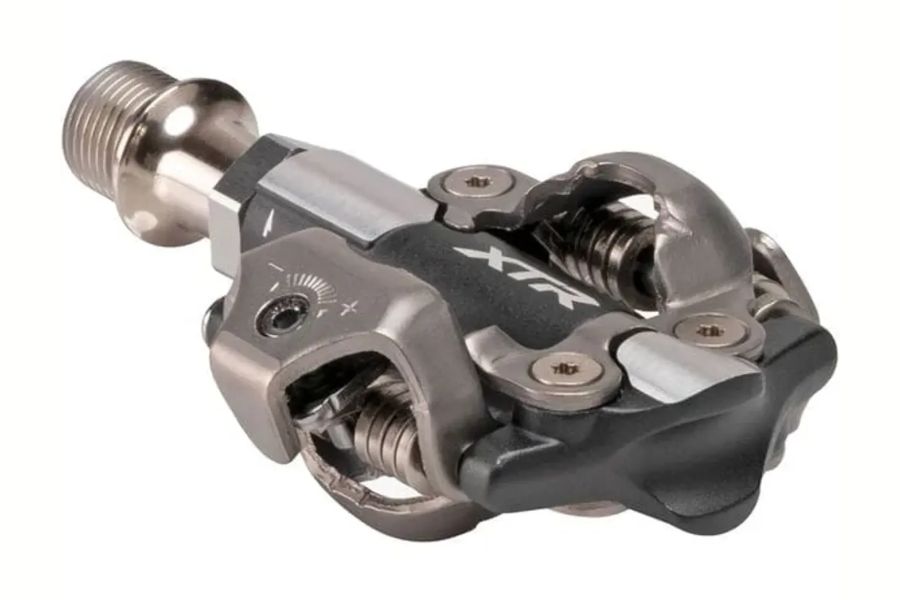
Shimano XTR M9100 SPD XC pedals
£132.00 (RRP £139.99)
Shimano’s XTR M9100 pedals sit at the “clean and efficient” end of MTB clipless pedals: lightweight XC focus, positive engagement, and a design that’s aimed at riders who care about repeatable foot placement and smooth pedalling more than platform feel.
For eMTB riders that might sound counterintuitive—why chase an XC pedal on a heavier bike?—but there are plenty of eMTB use cases where an XC-style SPD pedal makes sense: big distance rides, winter training blocks, and trail riding where you want consistent cadence and fewer foot adjustments on climbs.
The key is expectations. You’re not buying the M9100 for extra support when you’re unclipped or for maximum protection against rock hits; you’re buying it because clip-in/clip-out is clean, your foot position is consistent, and the overall feel stays “precise” over long rides. If you ride more like a trail rider who values efficiency and you’re already comfortable on SPD, the XTR option is a premium, performance-focused way to do MTB clipless pedals.
Pros
Efficient, consistent engagement for steady pedalling
Strong choice for long rides and training blocks
Predictable SPD feel with repeatable foot position
Suits XC-leaning trail and eMTB mileage
Cons
Less supportive underfoot than trail cage clipless pedals
Specifications
Type: Clipless (XC)
Cleat system: SPD-compatible
Platform: Minimal (XC-style)
Body material: Not stated
Axle: Not stated
Pins: None
Bearings: Not stated
Stated weight: Not stated
Serviceability: Not stated
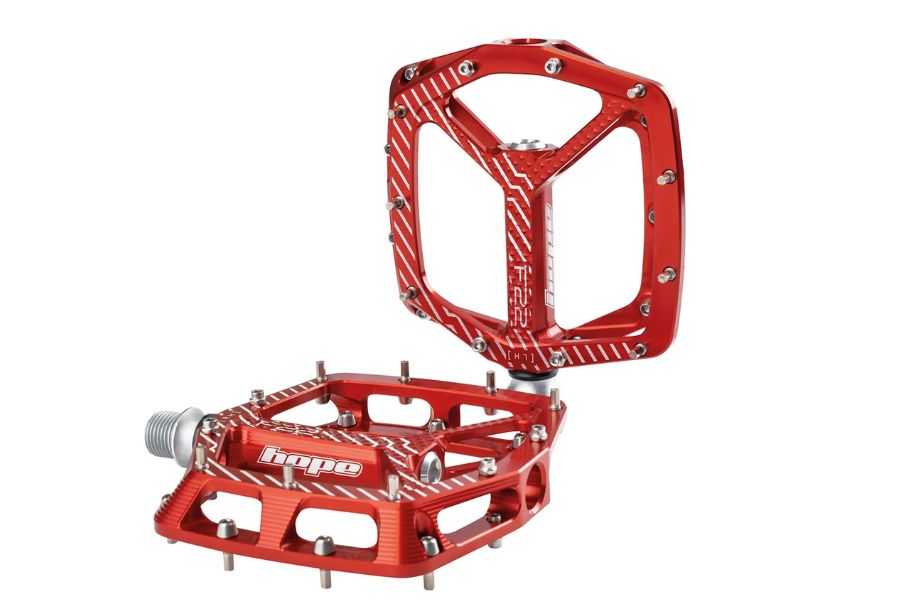
Hope F22 flat pedals
£132.00 (RRP £155.00)
If you want a premium set of MTB flat pedals that feel engineered rather than simply “made”, the Hope F22 is a strong contender. The brand’s reputation in the UK is built on robust, serviceable components, and the F22 approach reflects that mindset: a pedal designed to be ridden hard, maintained when needed, and kept in rotation rather than replaced.
On the trail, what matters is the platform feel—how quickly your shoe settles into a stable position and how predictable the grip remains when conditions change from wet roots to gritty rock. For eMTB riders, that consistency can be the difference between riding a technical climb cleanly and having your foot drift at the worst moment.
The F22 also makes sense if you ride a lot and you want something that can justify its place as “your main pedal” across multiple seasons. If you’re building an eMTB setup around reliable contact points—shoes, pedals, grips—this is the kind of high-end flat pedal that fits the brief without being pure downhill-only kit.
Pros
Premium flat pedal feel for serious trail riding
Built for long-term use rather than disposable seasons
Stable platform supports eMTB riding style and speed
Strong option for riders who value servicing and longevity
Cons
Aggressive grip can punish mistakes (and shins) in rough terrain
Specifications
Type: Flat/platform
Cleat system: N/A
Platform: Full-size flat pedal
Body material: Not stated
Axle: Not stated
Pins: Replaceable pins
Bearings: Not stated
Stated weight: Not stated
Serviceability: Not stated
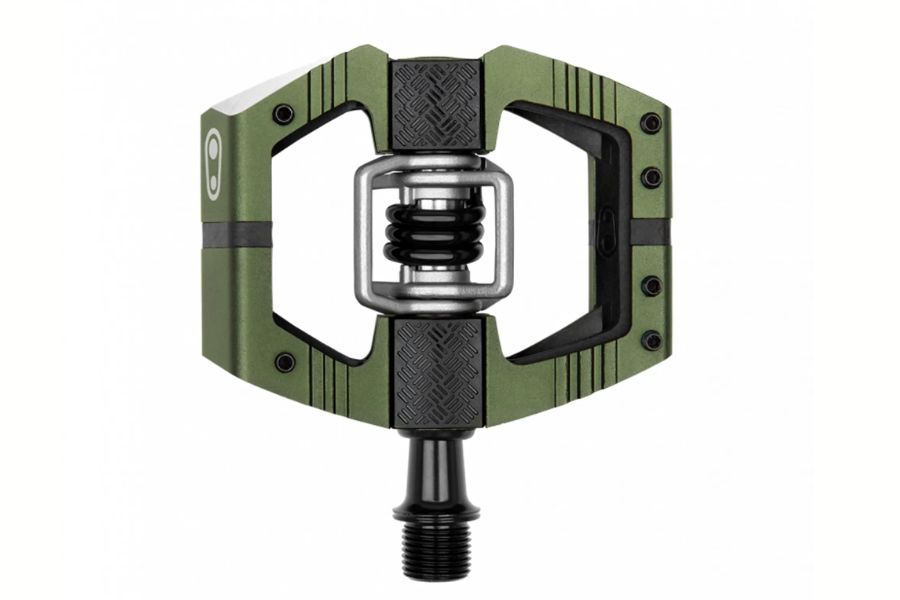
Crank Brothers Mallet E pedals
£133.00 (RRP £189.99)
The Crank Brothers Mallet E is built for riders who want clipless security but still value the supportive feel of a platform underfoot—an enduro-focused approach that fits a lot of modern eMTB riding.
Where a minimal XC clipless pedal can feel like you’re balancing on the mechanism, the Mallet E gives you a broader body and a shape intended to feel closer to a flat pedal when you’re descending, cornering hard, or dropping into rough lines. That’s useful in the UK because trail conditions change constantly, and you’re often clipping in and out on uneven ground rather than clean hardpack.
The Mallet E system is also known for offering generous float, which some riders find helps comfort and knee tracking over long rides—particularly on an eMTB where you might cover more distance per session. Setup matters here: cleat choice, release angle preference and shoe compatibility all influence how “tight” or “loose” the pedal feels. Dialled in, it’s one of the best MTB pedals for enduro-style clipless riding with a platform feel.
Pros
Platform feel adds confidence for enduro and eMTB descending
Open design can work well in messy conditions
Float and adjustment options suit riders who like movement
Strong option for aggressive clipless MTB riding
Cons
Requires careful setup to avoid a vague or inconsistent feel
Specifications
Type: Clipless (enduro/platform)
Cleat system: Crank Brothers (Mallet/Eggbeater-style)
Platform: Concave platform body
Body material: Not stated
Axle: Not stated
Pins: Not stated
Bearings: Not stated
Stated weight: Not stated
Serviceability: Rebuildable design (refresh kits available)
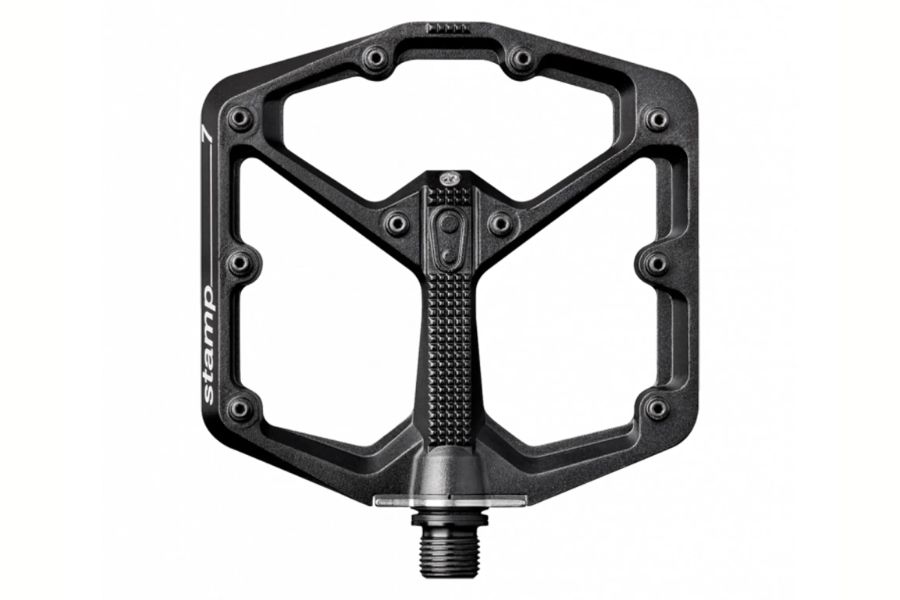
Crankbrothers Stamp 7 pedals
£136.00 (RRP £159.99)
The Crankbrothers Stamp 7 is a premium MTB flat pedal option that’s built around a simple idea: shoe-to-pedal fit matters, and one platform size won’t suit everyone. That’s why the Stamp range offers size-specific platforms, which can be a real benefit if you’ve ever felt like your feet are either hanging off the sides of a pedal or floating around on something too big.
For MTB flat pedals, that fit directly influences control—especially in rough terrain where your foot is constantly trying to migrate. The Stamp 7’s low-profile, concave body and pin layout aim to keep you planted without needing to overtighten your shoes or overthink stance.
For eMTB riders, the combination of platform stability and a thin-ish profile is attractive because it helps manage pedal strikes on technical climbs and awkward compressions.
The Stamp 7 isn’t the only way to get high-end flat pedal performance, but if you like the idea of choosing a pedal size that matches your shoes and riding style, it’s a compelling option.
Pros
Size-specific platforms can improve stability and control
Concave feel supports confident descending on flats
Good option for riders particular about foot placement
Suits trail to enduro riding styles
Cons
Choosing the wrong size undermines the main benefit
Specifications
Type: Flat/platform
Cleat system: N/A
Platform: Size-specific (Small or Large)
Body material: 6061-T6 alloy
Axle: Chromoly steel
Pins: Adjustable pins (10 per side)
Bearings: Igus LL-glide bearings
Stated weight: 345g (Small) / 375g (Large)
Serviceability: Not stated
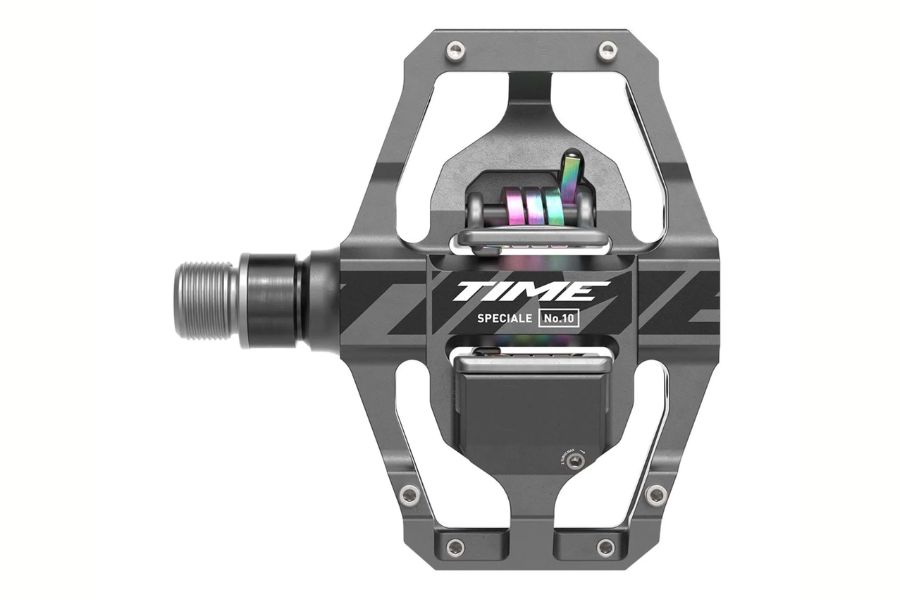
Time Speciale 8 enduro pedals
£144.00 (RRP £180.00)
The Time Speciale 8 is a more specialist choice in the “best MTB pedals” conversation because it uses Time’s ATAC system rather than the more common SPD standard—but that’s also why some riders swear by it in UK conditions.
ATAC-style engagement is often chosen for muddy riding because the mechanism and cleat interface are designed to cope when the trail is saturated and your shoes aren’t clean.
The Speciale 8 also targets enduro use, so it’s not just an XC clipless pedal with a different brand name; it’s aimed at riders who want clipless consistency but still need a pedal that makes sense when the riding gets rough, the bike is moving around underneath you, and you’re not always clipping in on perfect terms.
For eMTB riders, this style of pedal can be very effective on technical climbs where repeatable foot placement helps you manage torque and traction. The trade-off is ecosystem: ATAC cleats and the feel of engagement are different, so you’ll want to commit rather than bounce between systems.
Pros
Strong option for muddy UK conditions and winter riding
Enduro-oriented clipless design suits aggressive trail riding
Consistent engagement for technical eMTB climbing
Good choice if you prefer ATAC feel over SPD
Cons
Less universal than SPD (cleat system commitment required)
Specifications
Type: Clipless (enduro)
Cleat system: ATAC
Platform: Enduro-oriented body
Body material: Aluminium
Axle: Hollow steel axle
Pins: Grip screws (included)
Bearings: Steel
Stated weight: 196g per pedal
Serviceability: Not stated
Frequently Asked Questions
Are flat pedals better for beginners?
For most riders, yes. MTB flat pedals let you dab quickly, move your feet freely, and learn core skills—weighting the bike, dropping heels, and cornering—without the commitment of being clipped in. Pair good MTB flat pedals with proper flat shoes and you’ll get far more control than beginners often expect.
Do clipless pedals make you faster on an eMTB?
They can make your pedalling more consistent, especially on longer rides and technical climbs, because your foot returns to the same position every time. On an eMTB, that can help when you’re managing traction and cadence. But “faster” depends on confidence; if you’re worrying about unclipping, you won’t ride better.
What shoes should I use with MTB flat pedals?
Use proper flat-pedal shoes with a sticky rubber outsole and a supportive midsole. That combination works with the pins to keep your foot stable and reduces fatigue on longer rides. Soft trainers can feel sketchy because they squirm on the platform and don’t support your foot.
How often should I service MTB pedals?
If you ride year-round in the UK, check pins, bearings and play regularly, and plan on at least an annual service for pedals that are designed to be rebuilt. Wet grit and frequent washing are hard on seals, so preventative servicing is usually cheaper than waiting for rough bearings.
Do all MTB pedals fit all cranks?
Most modern mountain bike pedals use the standard 9/16in thread and fit the vast majority of MTB and eMTB crank arms. The important part is installing them correctly: the left pedal is reverse-threaded, and both should be tightened to the manufacturer’s torque guidance with a dab of grease on the threads to prevent seizure.