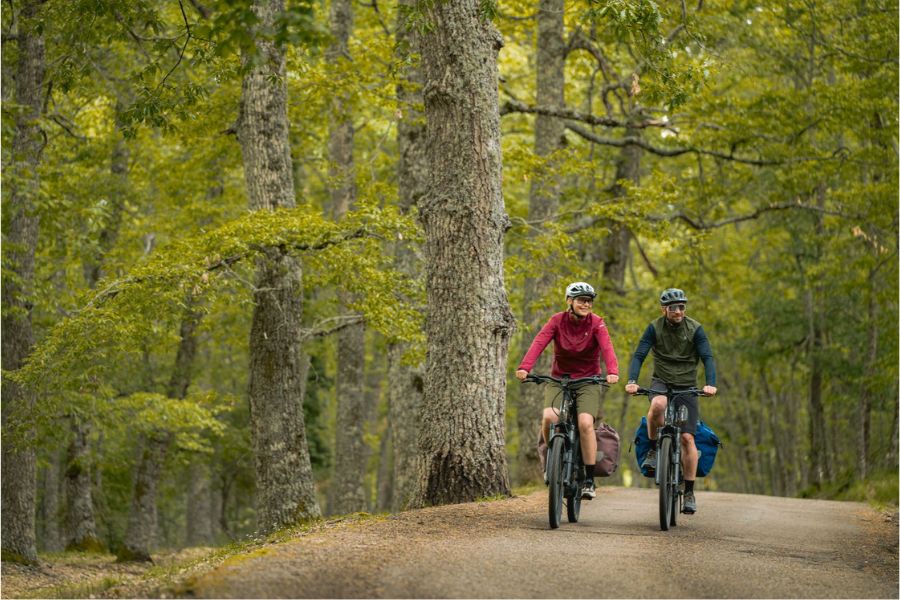
“Trekking” and “SUV” e-bikes sit in the space between mountain bikes and everyday transport. They’re built for bridleways, forest roads, towpaths and rough-stuff shortcuts, but with the practical kit (lights, guards, racks, kickstands) that makes the best electric trekking bikes 2026 realistic for UK life. If your riding is more about linking surfaces than hunting steep, technical singletrack, this is often the category that makes the most sense: stable handling, comfortable geometry, and enough motor support to turn big mixed routes into something you’ll actually do regularly.
The other reason these bikes deserve their own guide is that they’re not all the same. Some are closer to “upright tourer with chunky tyres”, others are basically hardtail e-MTBs with commuter equipment bolted on, and a few go full premium with suspension front and rear. The trick is matching the bike to your typical riding: how rough your off-road really is, how much carrying capacity you need, and whether you’d rather prioritise comfort and practicality or a more trail-bike-ish feel.
The best trekking / SUV e-MTBs shortlisted
Canyon Pathlite:ON 7 SUV — from £2,799
Cube Kathmandu Hybrid Pro 800 — £3,299
Trek Powerfly+ 4 Equipped 800 Wh Gen 5 — £3,400
Haibike Trekking 7 — £3,899
Merida eBIG.TOUR 675 EQ – £3,950 (RRP £4,250)
FOCUS AVENTURA² 6.9 — £5,299
Riese & Müller Delite4 — £6,399
We’ve prioritised bikes that make sense for UK ownership: mainstream availability, sensible dealer support (where relevant), and practical equipment that actually gets used. In this category, things like lighting quality, rack stiffness, tyre choice and brake power can matter as much as “MTB” credentials.
Quick sizing & fit: trekking/SUV bikes usually feel better when they’re slightly on the larger side for stability and comfort, but if you’re regularly riding tight woodland bridleways, sizing down can make the bike easier to manage at low speeds. If you’re between sizes, think about where you want the bike to feel confident: slow/tight (often size down) or faster/more loaded (often size up).
The best trekking / SUV e-MTBs 2026
Canyon Pathlite:ON 7 SUV
from £2,799
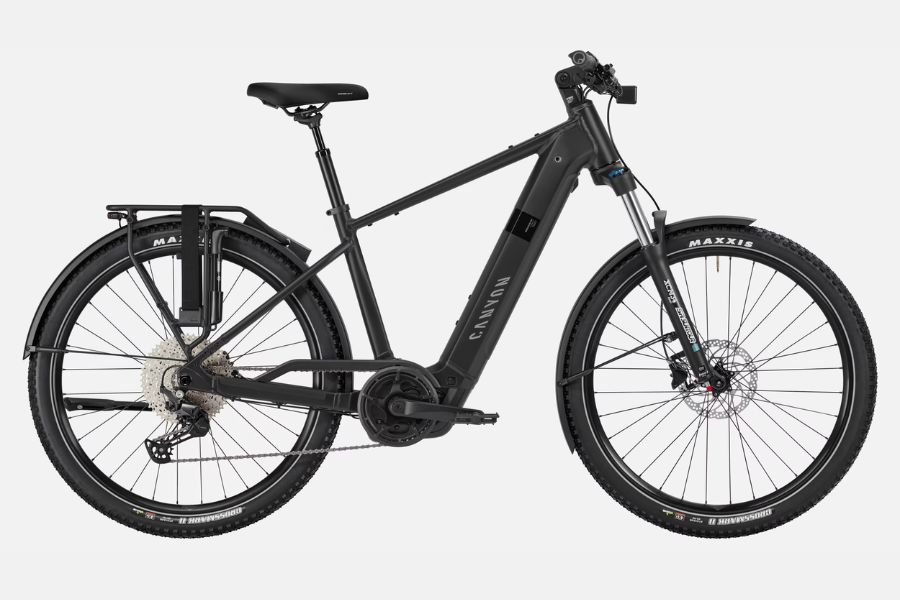
If you want a more “bike-first” trekking/SUV option that still has proper off-road manners, the Pathlite:ON 7 SUV is aimed squarely at mixed terrain riding where you’ll hit everything from tarmac to gravel to bridleway mud in a single loop. The feel is closer to a sporty trekking hardtail than a laid-back tourer: stable, predictable, and designed to be ridden regularly rather than saved for special occasions. It makes particular sense if you like the idea of going exploring after work — not just rolling along easy paths, but taking the rougher cut-throughs too.
The other key point here is how configurable this category has become. In practice, battery size can be a deciding factor: smaller for a slightly lighter, nimbler feel, or bigger if your rides include lots of climbing, winter drag, or you simply don’t want to think about range. That’s why bikes like this work well in a UK context: you can choose a setup that matches your actual riding rather than buying “too much bike” and carrying it around.
Pros
Sporty trekking geometry that suits mixed UK surfaces
Choice of battery sizes to suit range vs handling priorities
Genuinely usable off-road without pretending to be a trail bike
Cons
Coil fork and component choices prioritise value over outright trail performance
Specifications
Frame:
Motor: Bosch Performance Line CX GEN.5 (Smart System)
Battery: Bosch PowerTube 600Wh (800Wh option)
Fork: SR Suntour XCM34 Coil, 120mm
Shock: N/A
Tyres: Maxxis Crossmark II Reflexstrip, 29×2.25
Drivetrain: Shimano Deore M6100 12-speed (SunRace 11–51T cassette)
Brakes: Shimano MT200 hydraulic disc, 180/180mm
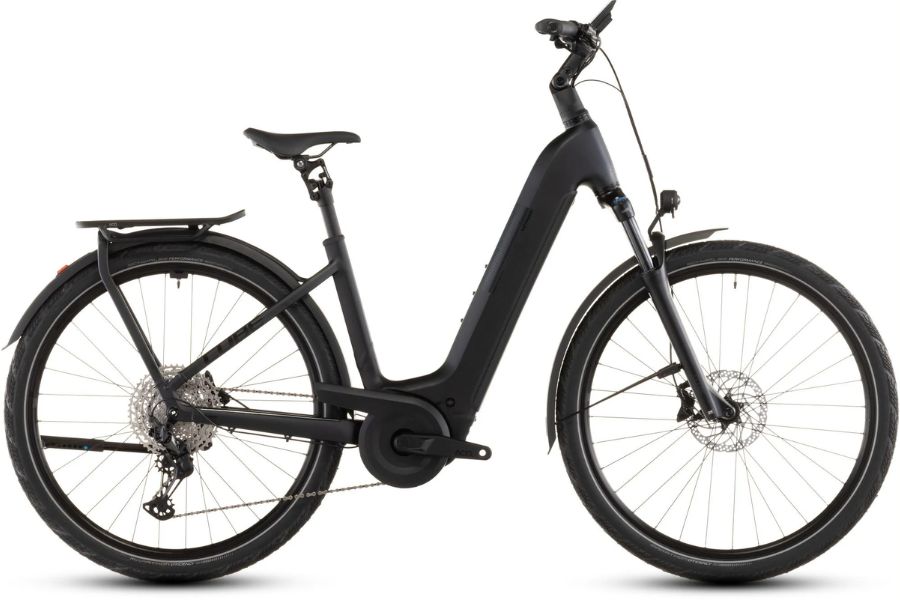
Cube Kathmandu Hybrid Pro 800
£3,299
If you want a comfort-led trekking e-bike for long mixed routes — bridleways, forest roads, towpaths and country lanes — the Kathmandu Hybrid Pro 800 is the classic template. The riding position is designed for hours in the saddle rather than aggressive descending, and the whole point is “do the distance” practicality: steady handling, predictable support on climbs, and the sort of real-world equipment that makes the bike useful in winter as well as summer. It’s a strong choice if your off-road is more about surfaces than features, and you’d rather arrive less battered than you would on a more stretched-out, sporty chassis.
Where it also makes sense for UK riders is ownership. Trekking bikes tend to live hard lives: wet roads, gritty towpaths, commuting mileage, and the occasional loaded-up weekend ride. A Kathmandu-style build leans into that reality with durable parts and a setup that’s happy being used frequently. It’s not trying to be a trail bike — but if your definition of “adventure” is linking routes and riding further, it’s exactly the right sort of tool.
Pros
Comfort-first trekking fit for long mixed-surface days
Practical, year-round ownership setup for UK riding
Big-battery confidence without needing trail geometry
Cons
Not the right choice if your off-road riding is steep, technical and descent-focused
Specifications
Frame:
Motor: Bosch Performance Line CX
Battery: Bosch PowerTube 800Wh
Fork: SR Suntour NX1-32 LO Air, 100mm
Shock: N/A
Tyres: Schwalbe Marathon Efficiency, 55-622
Drivetrain: Shimano XT/Deore 12-speed (10–51T)
Brakes: Shimano BR-MT420 hydraulic disc, 180/180mm
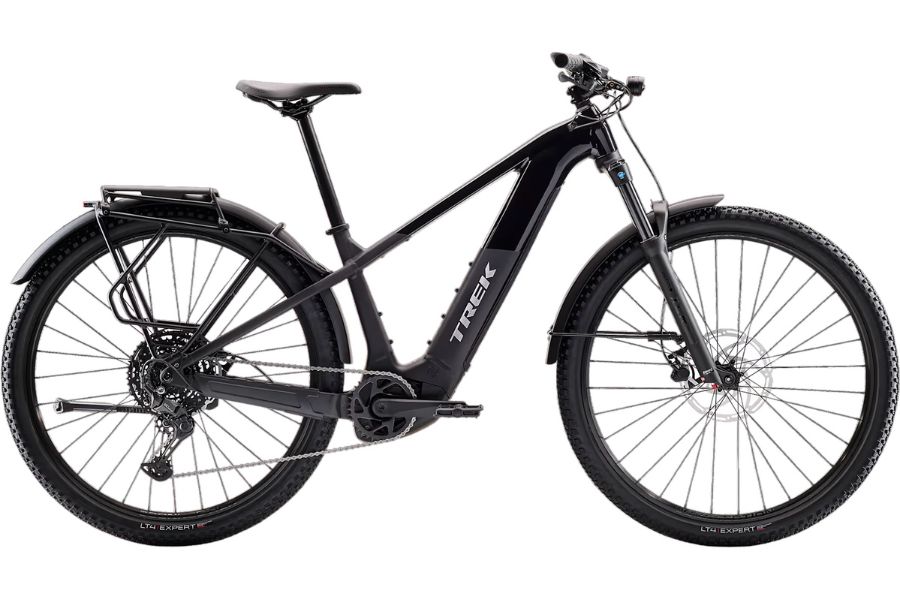
Trek Powerfly+ 4 Equipped 800 Wh Gen 5
£3,400
If your rides look like “e-MTB routes” but your bike needs to function as transport too, the Powerfly+ Equipped idea is simple: take a hardtail e-MTB foundation and add the practical kit that makes it usable day-to-day. That’s why it suits UK bridleway riders so well. You get the confident stance and off-road robustness that works on rutted tracks and winter surfaces, but you also get the everyday stuff that stops you needing a second bike for commuting, errands, or riding in the dark.
It’s also a sensible choice if you’re the kind of rider who wants one bike to do most things. A trekking tourer can feel slightly out of its depth once the bridleway gets properly churned, while a trail hardtail without equipment can be a pain to live with in real weather. This middle ground is where “SUV e-bikes” earn the name — and for UK riders who ride in all seasons, that’s often the sweet spot.
Pros
Hardtail e-MTB base with genuinely useful everyday kit
Big battery option for longer mixed-surface days
Good “one bike” logic for UK ownership
Cons
Heavier, less lively feel than a non-equipped hardtail setup
Specifications
Frame:
Motor: Bosch Performance Line CX (85Nm stock; upgrade-ready higher output via Bosch Flow app depending on configuration)
Battery: Bosch 800Wh (600Wh swap option noted by Trek)
Fork: SR Suntour XCR 34, air, 100mm
Shock: N/A
Tyres: Bontrager Gunnison Pro XR
Drivetrain: Shimano CUES U6000 10-speed
Brakes: Tektro hydraulic disc (CentreLock; up to 203mm rotors)
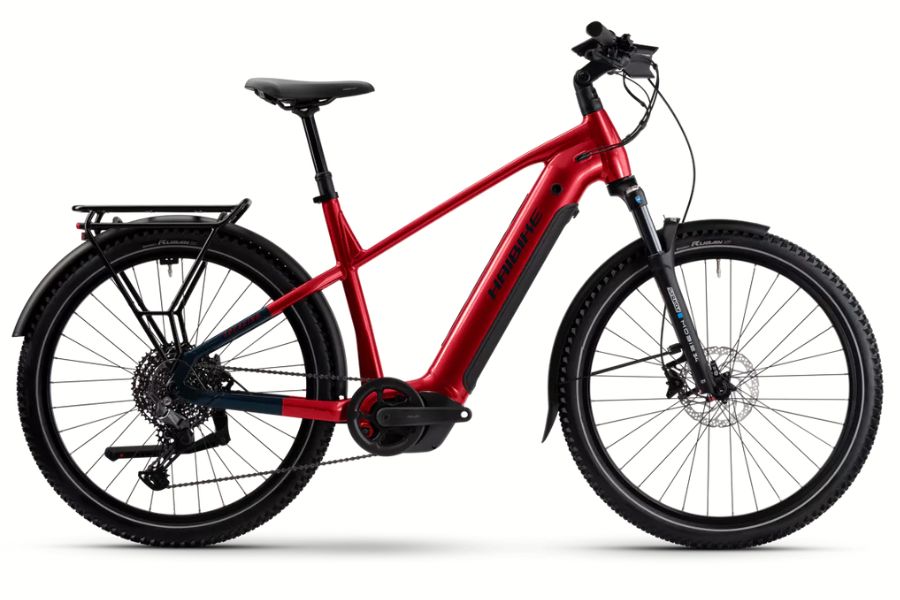
Haibike Trekking 7
£3,899
If you want a trekking e-bike that leans “properly sporty” without losing day-to-day practicality, the Trekking 7 sits in that modern SUV space: capable enough for rough bridleways and forest tracks, but built to be used as transport too. This is the kind of bike that suits UK riders who rack up steady mileage in mixed conditions — commuting in the week, exploring at the weekend, and not wanting to swap bikes depending on the route. It’s also a strong match for riders who value a higher-capacity battery for longer rides or for winter range confidence.
The key with bikes like this is honest expectations. They’re designed to be versatile, not extreme. That usually means stable steering, comfort-first decisions, and parts chosen for durability. If your “off-road” includes proper technical trail riding, you’ll want a dedicated e-MTB. But if your routes are 80% surfaces and 20% rough-stuff, a Trekking 7 style setup can be exactly the right balance.
Pros
Practical SUV brief with strong range potential
Four-piston braking power for loaded or wet-weather riding
Designed for mixed UK riding rather than niche trail use
Cons
Trekking tyres and geometry prioritise versatility over aggressive trail handling
Specifications
Frame:
Motor: Bosch Performance Line CX Gen 5 (Smart System; performance update can enable higher torque depending on bike/setup)
Battery: Bosch PowerTube 800Wh
Fork: SR Suntour Mobie 34
Shock: N/A
Tyres: Continental e-bike tyres (model varies by build)
Drivetrain: Shimano CUES 11-speed
Brakes: Shimano MT410 hydraulic disc, 4-piston
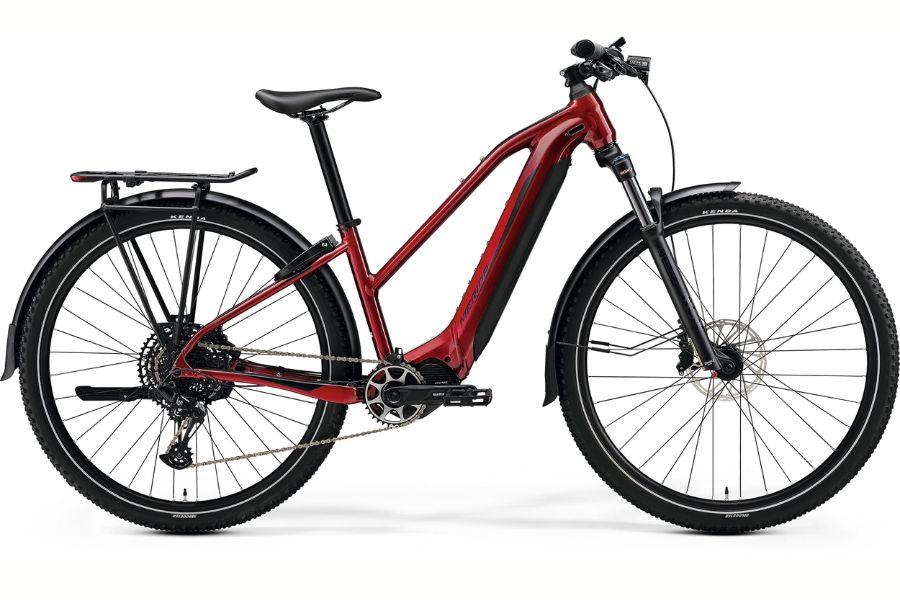
Merida eBIG.TOUR 675 EQ
£3,950 (RRP £4,250)
Best for riders who want a fully-equipped, low step-through “SUV e-bike” that can handle bridleway links, towpaths and rough lanes as confidently as day-to-day riding. The eBIG.TOUR 675 EQ takes a hardtail e-bike platform and turns it into a proper UK all-rounder: mudguards and lights for winter mileage, a rear rack for commuting or longer day rides, and a frame shape that makes frequent stops and starts (or loading up) far less of a faff than a traditional high top tube.
The headline spec is the combination of Shimano’s EP6 drive unit with a large 750Wh internal battery, which is exactly what this category is about: making longer mixed routes feel normal, especially when it’s cold, muddy, or you’re carrying extra kit. A 100mm SR Suntour air fork and 29in wheels with 2.2in tyres add comfort and stability on broken surfaces, while the SRAM NX Eagle 12-speed drivetrain gives a wide gear range for steep, stop-start UK climbs. The key trade-off is intent: this is an exploration and practicality bike first, not a trail-centre hardtail, so it’s happiest on routes rather than repeated technical descents.
Pros
Fully-equipped EQ build (rack, mudguards, lights, frame lock, kickstand) for year-round UK use
Big 750Wh battery plus Shimano EP6 support suits longer mixed-terrain rides
Wide-range SRAM 12-speed gearing and 4-piston brakes for hilly, loaded riding
Cons
More “routes and distance” than “technical singletrack and descending” in its off-road character
Specifications
Frame:
Motor: Shimano Steps EP6, 85Nm
Battery: Simplo/Trendpower internal battery, 750Wh
Fork: SR Suntour XCR34 LOR DS (air), 100mm travel
Shock: N/A
Tyres: Kenda Booster, 29 x 2.2″
Drivetrain: SRAM NX Eagle, 12-speed (10–50T cassette)
Brakes: SRAM DB8 4-piston hydraulic disc, SRAM CenterLine 180mm rotors
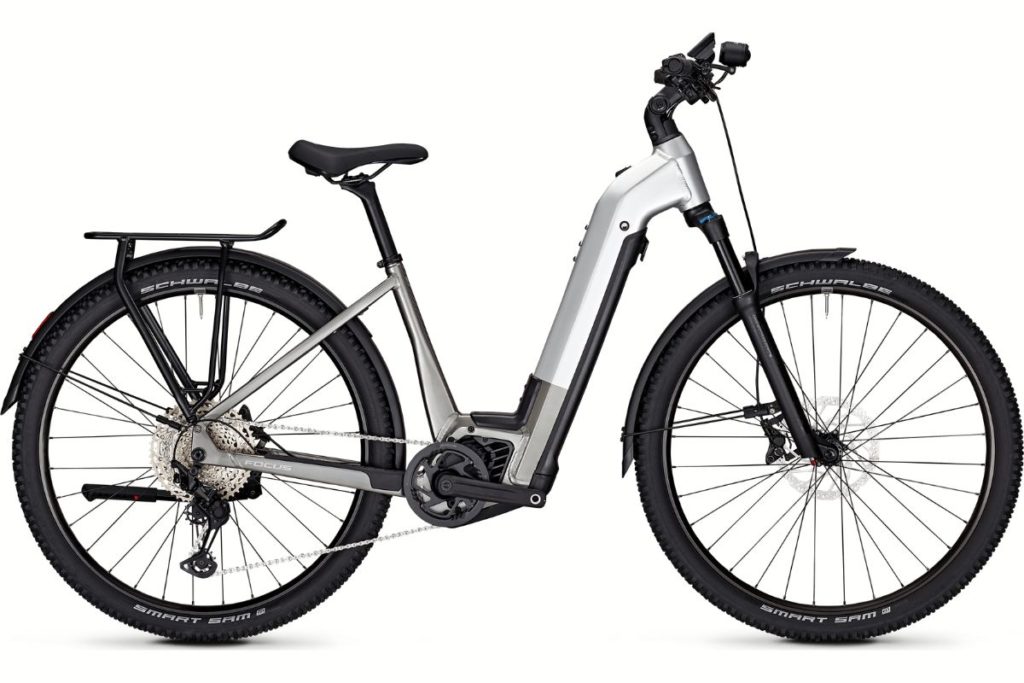
FOCUS AVENTURA² 6.9
£5,299
If your riding is more “big, mixed days” than short blasts, the AVENTURA² 6.9 is the sort of trekking/SUV bike that makes bridleway linking feel straightforward. It’s built around a high-capacity battery and a motor that’s happy grinding up long climbs, and it’s aimed at riders who want to go further without treating every rough section as an obstacle course. In UK terms, it suits the rider who wants to cover distance across lanes, tracks, towpaths and forest roads — and who values a comfortable cockpit and a calm, stable ride.
This is also one of the better fits if you want an adventure e-bike that can do proper utility work. That matters because trekking/SUV bikes tend to become the “default bike” in a household: commuting, shopping runs, winter riding, day rides, and occasional touring. If you’re investing at this level, you’re generally buying into that idea — one bike that gets used constantly, rather than a specialist machine that only comes out for trail-centre days.
Pros
High-capacity battery for longer mixed-surface rides
Sporty trekking setup that still prioritises comfort
Strong drivetrain intent for varied terrain
Cons
Premium trekking/SUV pricing compared with simpler hardtail-based options
Specifications
Frame:
Motor: Bosch Performance CX Smart, 85Nm
Battery: 750Wh (size S: 625Wh)
Fork: SR Suntour Raidon 34 LOR AIR, 100mm
Shock: N/A
Tyres: Mixed-terrain trekking tyres (exact model varies by build)
Drivetrain: Shimano XT/Deore 12-speed (Shimano Deore CS-M6100 cassette)
Brakes: 4-piston hydraulic disc (model varies by build)
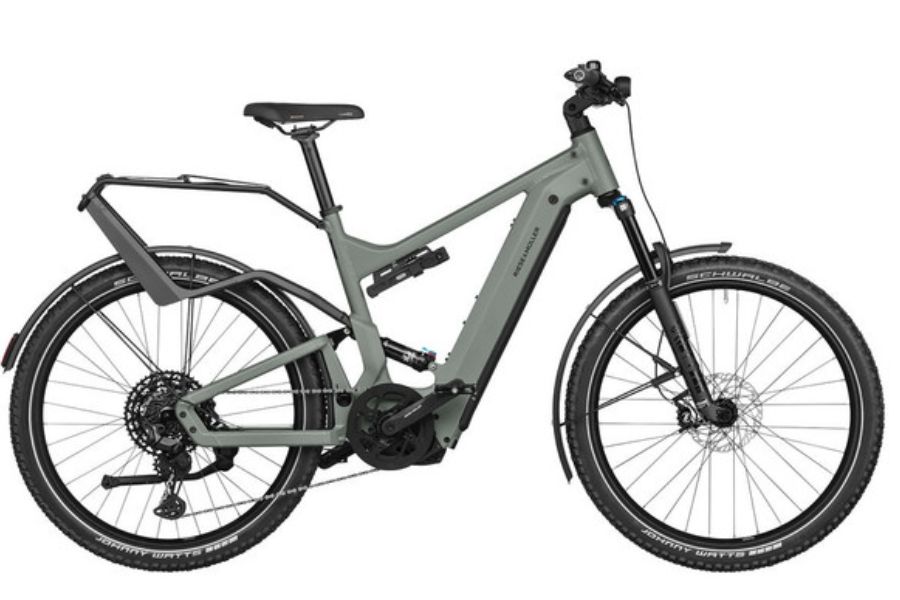
Riese & Müller Delite4
£6,399
If you want a premium “ride anything, ride all year” adventure e-bike rather than a trail e-MTB, the Delite4 sits right at the top of this category. The big difference here is refinement: comfort over distance, stability when surfaces get sketchy, and the sort of high-end finish that’s designed to stand up to heavy use. For UK riders who ride in all seasons — wet lanes, gritty towpaths, bridleway links and winter commuting — that matters, because the bike is expected to do a lot of work and do it reliably.
It’s also the kind of bike you buy when you want one machine to replace several. A Delite-style build makes sense if your riding isn’t about technical descending, but it is about covering ground: longer routes, more carrying, and less compromise. You’re paying for a complete ownership experience as much as the ride itself — and in this segment, that’s often exactly what buyers want.
Pros
Premium comfort and control for year-round mixed riding
High-end ownership focus (integration, refinement, stability)
Strong long-distance “one bike does everything” logic
Cons
Specs and price can vary significantly depending on chosen configuration
Specifications (typical GT Touring-style build shown)
Frame:
Motor: Bosch Performance Line CX
Battery: 750Wh
Fork: Full-suspension setup (component spec varies by configuration)
Shock: Full-suspension rear (component spec varies by configuration)
Tyres: Mixed-surface touring tyres (varies by configuration)
Drivetrain: Configuration dependent (multiple options offered)
Brakes: Configuration dependent
Frequently Asked Questions – best electric trekking bikes UK 2026
What’s the difference between a trekking e-bike and an SUV e-bike?
In practice, “SUV e-bike” usually means a trekking bike with chunkier tyres, more off-road intent, and often a more rugged, hardtail-like feel — sometimes even based on an e-MTB platform. Trekking bikes lean more towards comfort, distance and practicality first, with off-road capability as a bonus.
Are trekking/SUV e-bikes good for bridleways?
Yes — if your bridleway riding is mainly forest roads, gravel, towpaths and typical UK mixed surfaces. If you’re regularly riding steep, rooty, technical singletrack, a dedicated e-MTB (especially full-suspension) will make more sense.
How much battery do I need for UK adventure riding?
As a rough guide, bigger batteries suit winter riding, heavier riders, hilly routes and higher assist modes. Many trekking/SUV bikes now offer 600–800Wh options; if you want to stop thinking about range, aim higher.
Hardtail-style SUV e-bike or full-suspension SUV e-bike?
Hardtail-style bikes are simpler and often better value, and they’re ideal if your routes are mostly surfaces with occasional rough sections. Full-suspension SUV bikes make sense if comfort is a priority, you ride broken terrain frequently, or you want less fatigue over long mixed rides.
Do I need an e-MTB to ride “off-road” in the UK?
Not necessarily. Many UK “off-road” routes are bridleways and forest tracks where a trekking/SUV e-bike is perfectly suited — and often easier to live with day-to-day thanks to built-in lights, racks and guards.