

The best tubeless sealant for eMTB 2026 is not the one with the loudest marketing claims. It is the one that stays liquid for long enough to be worth the money, seals quickly when the puncture happens at speed, and does not turn valve maintenance into a weekly chore. eMTBs simply punish tyres harder. You carry more weight, you hit things faster, and you are far more likely to do repeated descents in one ride. That is why the “it was fine on my normal MTB” sealant often feels like it is disappearing faster, sealing slower, or drying out before you have even remembered to check it.
A good tubeless sealant for eMTB also needs to match UK reality. Wet rides, grit, temperature swings and long winter spells can change how sealant behaves. Some sealants prioritise rapid sealing and big particle content for larger punctures. Others prioritise longevity so you are topping up less often. Some play nicely with CO₂ inflators, others can clump or become less effective if you blast a tyre with a cartridge. In this guide, the focus is on sealants that are widely available, easy to live with, and genuinely useful for trail and enduro style eMTB riding in the UK.
Electric MTB UK is reader-supported. If you buy through links on this page, we may earn an affiliate commission. This helps fund independent journalism and testing and does not affect what we write or how products are ranked.
The best tubeless sealant for eMTB shortlisted
milKit Tyre Sealant — £4.95 (RRP £12)
Muc-Off No Puncture Hassle Tubeless Sealant — £6
Finish Line FiberLink Tubeless Sealant (240ml) — £12 (RRP £15)
Peaty’s Holeshot BioFibre Tubeless Sealant (1L) — £19 (RRP £30)
Effetto Mariposa Caffélatex Tubeless Sealant (1L) — £27 (RRP £28)
Stan’s NoTubes The Solution Tyre Sealant (946ml) — £32 (RRP £36)
Orange Seal Tubeless Sealant Regular (946ml) — £35 (RRP £44.99)
Orange Seal Endurance Tubeless Sealant (946ml) — £35 (RRP £46.99)
Stan’s NoTubes Race Sealant (946ml) — £46
We’ve prioritised sealants that cover the most common eMTB needs: fast sealing for trail centre riding, longevity for riders who hate topping up, and formulas that stay usable in colder UK months.
Quick sizing and setup: most eMTB riders run higher tyre volumes and heavier casings, so don’t underfill. As a rule of thumb, 100–120ml per tyre is a sensible starting point for modern 29in trail and enduro tyres, then add more if you are riding rocky trail centres, running inserts, or you are regularly finding pinhole leaks. Set a reminder to check sealant every 6–10 weeks in summer and more often in winter if the bike is stored somewhere warm and dry, because warm storage accelerates drying. If you top up through the valve, use a sealant injector and a removable valve core, and expect to clean the valve core occasionally if you choose a fibre-heavy sealant.
The best tubeless sealant for eMTB
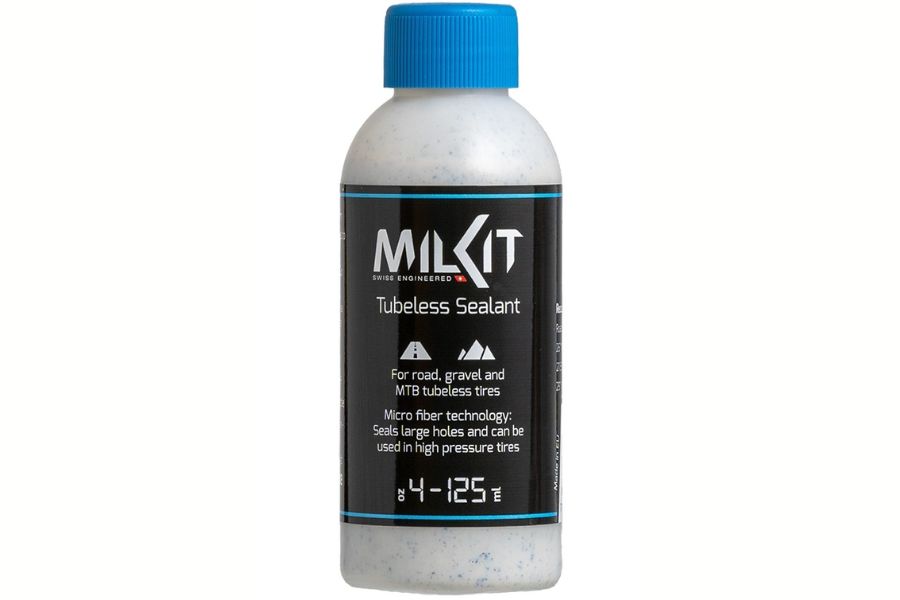
milKit Tyre Sealant
£4.95 (RRP £12)
milKit’s sealant is a strong option if you care about two things: temperature range and predictable top-up volumes. The brand is unusually clear about recommended quantities per tyre size, which is handy for eMTB riders because underfilling is one of the most common causes of “tubeless does not work for me” frustration. For modern 29in eMTB tyres, the typical recommendations sit in the 120ml zone, which is a sensible baseline for trail and enduro casings.
It also has a wide stated temperature range, which suits UK year-round riding. If you store the bike in a cold shed then ride in milder conditions, or if you regularly ride through winter, that matters. milKit also plays nicely with the brand’s own valve ecosystem, which is not essential, but it can simplify maintenance if you already use milKit valves or you like their top-up approach. If you want a sealant that supports a “measured, repeatable” tubeless routine, milKit is a good pick.
Pros
Clear guidance on recommended sealant volumes, useful for eMTB tyre sizes
Wide stated temperature range for UK year-round riding
Works neatly within the milKit valve and maintenance ecosystem
Cons
Less common on shop shelves than the biggest mainstream sealants
Specifications
Sizes: 250ml, 500ml, 1L
Stated temperature range: -20°C to +50°C
Tyre Pressure Range: Not stated on the retailer listing used
Recommended volumes: 120ml for 29in MTB (brand guidance)
CO₂ compatibility: Not clearly stated on the retailer listing used
Notes: Designed to be fully compatible with milKit valves
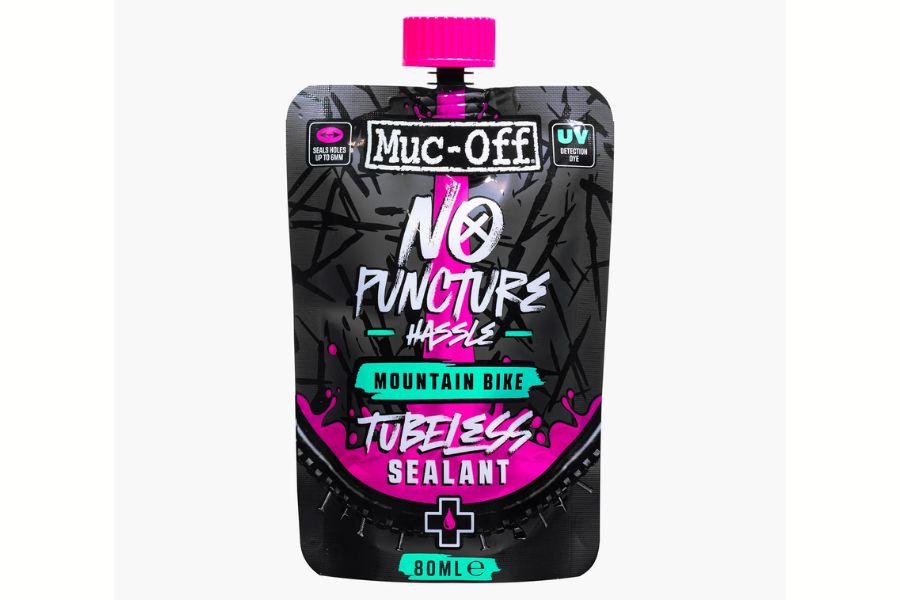
Muc-Off No Puncture Hassle Tubeless Sealant
£6
Muc-Off’s No Puncture Hassle remains one of the most popular choices for UK riders because it is designed around a simple promise: seal quickly, keep working for months, and be easy to live with. For eMTB riding, the big win is that it is built to handle higher loads and repeated impacts without feeling like it is constantly on the edge of failure. It is also positioned as CO₂ compatible, which matters if you carry cartridges and want a repair that gets you moving rather than a repair that becomes a workshop job.
It is also one of the more clearly stated formulas in terms of operating range, with a wide temperature range that suits UK winter riding and shoulder seasons. If you do a lot of wet riding, the real benefit of a mainstream sealant like this is repeatability. You can buy it easily, top up regularly, and not have to overthink whether you are running a niche formula that is hard to replace at short notice. As a general-purpose eMTB sealant for trail centres and natural loops, it is a dependable choice.
Pros
Well-rounded, widely available option for regular eMTB use
CO₂ compatible and designed to seal larger holes quickly
Good temperature range for UK riding
Cons
Some riders still prefer longevity-focused sealants if they hate topping up
Specifications
Sizes: Commonly 140ml pouch, 500ml, 1L, 5L (varies by retailer)
Stated temperature range: -20°C to +50°C
Tyre Pressure Range: 15–120psi
Recommended volumes: Not stated on the retailer listing used (typical eMTB practice is 100–120ml per 29in tyre)
CO₂ compatibility: Yes
Notes: Latex-based sealant with additional sealing particles and UV dye in some versions
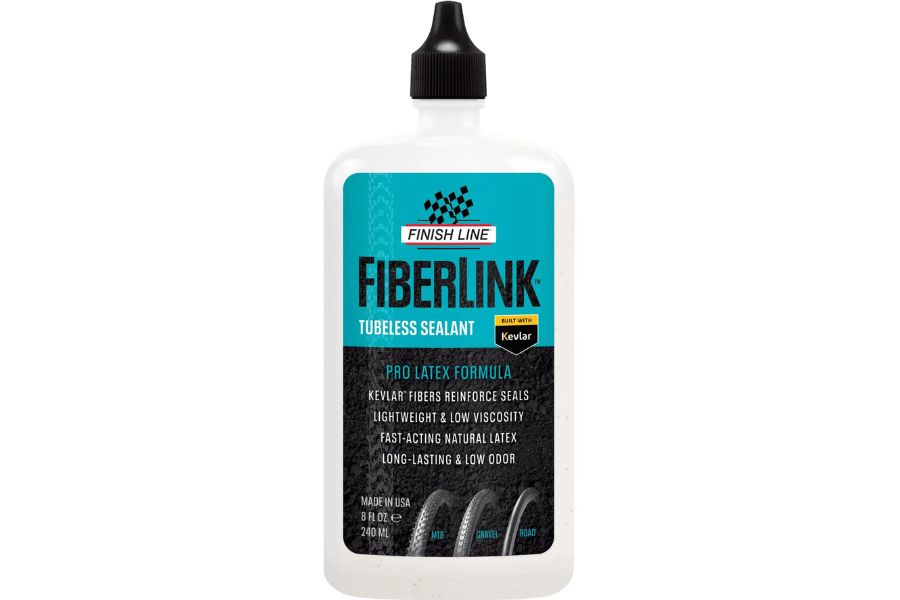
Finish Line FiberLink Tubeless Sealant (240ml)
£12 (RRP £15)
Finish Line FiberLink is a good choice if you want a sealant that prioritises reinforcement of the puncture seal rather than just “latex plugs”. The fibre approach can be useful for eMTB riding where punctures can be awkward shapes, especially if you ride rocky trail centres or hit sharp flint and slate. The 240ml size is also practical if you want a top-up bottle that lives in your workshop or van without committing to a full litre straight away.
The trade-off with fibre-heavy formulas is usually maintenance. They can be slightly messier when injecting through a valve, and they can encourage valve core build-up if you don’t clean things occasionally. If you value low-maintenance longevity more than outright sealing aggression, the endurance-focused options further down will suit you better. But if you want a sealant that is designed to grab, bridge and reinforce punctures, FiberLink is a credible choice.
Pros
Fibre approach can help with awkward punctures and larger pinholes
Handy size for top-ups and experimenting without buying a full workshop bottle
Practical choice for riders who prioritise sealing behaviour over maximum longevity
Cons
Fibre content can increase valve core clogging and injector mess
Pressure and temperature ranges are not consistently stated on listings
Specifications
Sizes: 240ml
Stated temperature range: Not stated on the retailer listing
Tyre Pressure Range: Not stated on the retailer listing
Recommended volumes: Not stated on the retailer listing (typical eMTB practice is 100–120ml per 29in tyre)
CO₂ compatibility: Not clearly stated on the retailer listing
Notes: Fibre-based formula may require occasional valve core cleaning; best topped up with valve core removed and an injector
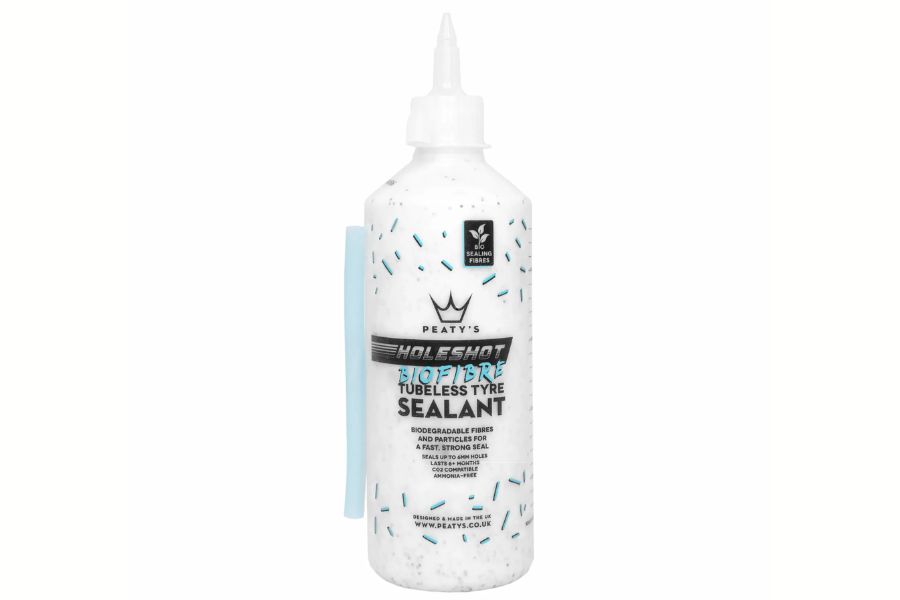
Peaty’s Holeshot BioFibre Tubeless Sealant (1L)
£19 (RRP £30)
Peaty’s Holeshot is one of the strongest all-round recommendations for UK eMTB riders because it targets both setup reliability and puncture sealing. It’s formulated to help with porous tyres and small bead leaks, which is often the frustrating part of tubeless for riders who swap tyres often or run tougher casings. It also has a clear claimed puncture sealing capability and a wide operating range, which makes it feel like a product built for real-world riding rather than perfect-lab conditions.
Holeshot also stands out because CO₂ compatibility is clearly positioned, which is useful if you carry cartridges. For eMTB riders, that matters because getting moving again quickly is often the priority, and CO₂ can be the fastest way to re-inflate after a plug or bead burp. If you want a single sealant that covers most UK riding and is easy to recommend to most riders, Holeshot is a safe bet.
Pros
Strong all-round sealant for eMTB riding and UK conditions
Wide stated temperature and pressure range
CO₂ compatible, which helps with quick repairs on the trail
Cons
Biofibre formulas can be a bit messier to inject than thin sealants
Specifications
Sizes: 120ml, 500ml, 1L, 5L
Stated temperature range: -20°C to +50°C
Tyre Pressure Range: 15–120psi
Recommended volumes: Not stated on the retailer listing (typical eMTB practice is 100–120ml per 29in tyre)
CO₂ compatibility: Yes
Notes: Claimed sealing up to 6mm; designed to help with porous tyres and bead sealing; use a valve-core injector for clean top-ups
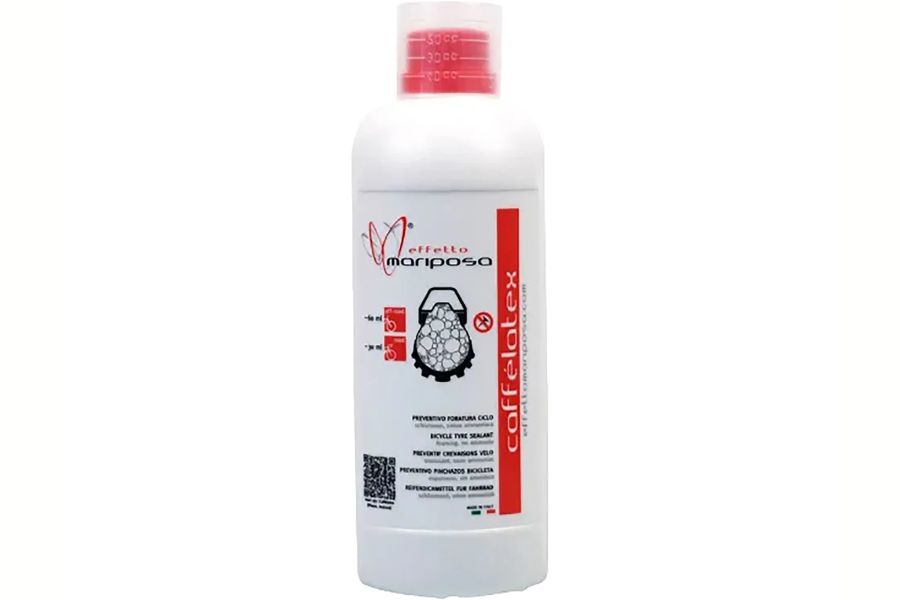
Effetto Mariposa Caffélatex Tubeless Sealant (1L)
£27 (RRP £28)
Caffélatex is the sealant that often appeals to riders who value ease of use and a cleaner setup experience. It is commonly chosen because it spreads quickly and works well across different tyre types and wheelsets, which can be useful if you run multiple bikes or you’re constantly swapping tyres. In an eMTB context, it’s less about “seal the biggest hole possible” and more about maintaining a reliable tubeless setup that behaves consistently.
If you’re the kind of rider who stays on top of maintenance and doesn’t mind checking sealant levels periodically, Caffélatex can be a very satisfying choice. It’s also a good option if you dislike thick, gritty sealants that can be unpleasant to inject. The trade-off is that it isn’t positioned as an ultra-aggressive, high-particle “race” sealant, so if you routinely ride sharp rocks and slash tyres, you’ll still want plugs as backup.
Pros
Often feels cleaner and easier to work with than thick fibre-heavy sealants
Good for riders with multiple wheelsets and frequent tyre swaps
Strong reputation for consistent tubeless performance
Cons
Not positioned as the most aggressive “seal big cuts fast” formula
Specifications
Sizes: 1L (other sizes may exist depending on retailer)
Stated temperature range: Not stated on the retailer listing
Tyre Pressure Range: Not stated on the retailer listing
Recommended volumes: Not stated on the retailer listing
CO₂ compatibility: Not stated on the retailer listing
Notes: Often chosen for fast distribution and ease of use; best for riders who keep up with top-ups
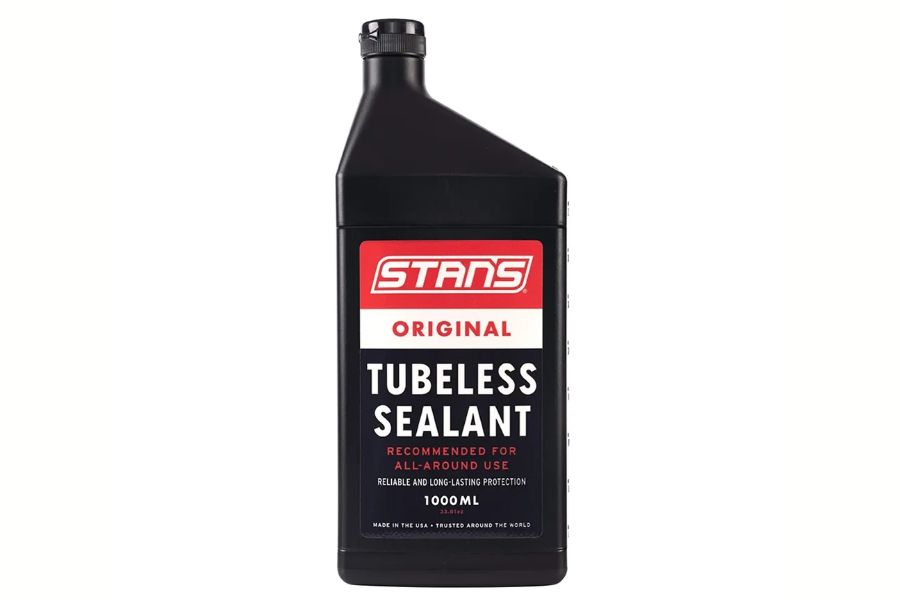
Stan’s NoTubes The Solution Tyre Sealant (946ml)
£32 (RRP £36)
Stan’s The Solution remains the reference point because it’s widely stocked, broadly compatible, and easy to live with. For eMTB riders, the main benefit is practicality. It’s straightforward to inject through a valve with a removable core, and it generally offers a good balance of sealing and longevity if you keep up with routine checks. It’s also the kind of sealant you can find quickly if you’re traveling or doing a last-minute top-up before a ride, which matters more than it sounds.
This is a good choice for riders who want a “normal” sealant that performs consistently rather than a niche formula. If you ride aggressively and regularly overwhelm standard sealants, Stan’s Race further down this list is the upgrade path. If you mainly want fewer top-ups, Orange Seal Endurance may suit you better. But as a baseline tubeless sealant for eMTB use, Stan’s remains one of the easiest to recommend.
Pros
Easy to live with and widely stocked in the UK
Good balance of sealing performance and maintenance routine
Straightforward to inject and top up through removable valve cores
Cons
CO₂ compatibility and exact operating ranges vary by listing and aren’t always clearly stated
Aggressive riders may prefer a higher-particle race or e-bike compound sealant
Specifications
Sizes: 946ml (other sizes widely available)
Stated temperature range: Not stated on the retailer listing
Tyre Pressure Range: Not stated on the retailer listing
Recommended volumes: Not stated on the retailer listing
CO₂ compatibility: Not stated on the retailer listing
Notes: Low-viscosity style latex sealant; best performance comes from routine checks and clean valve cores
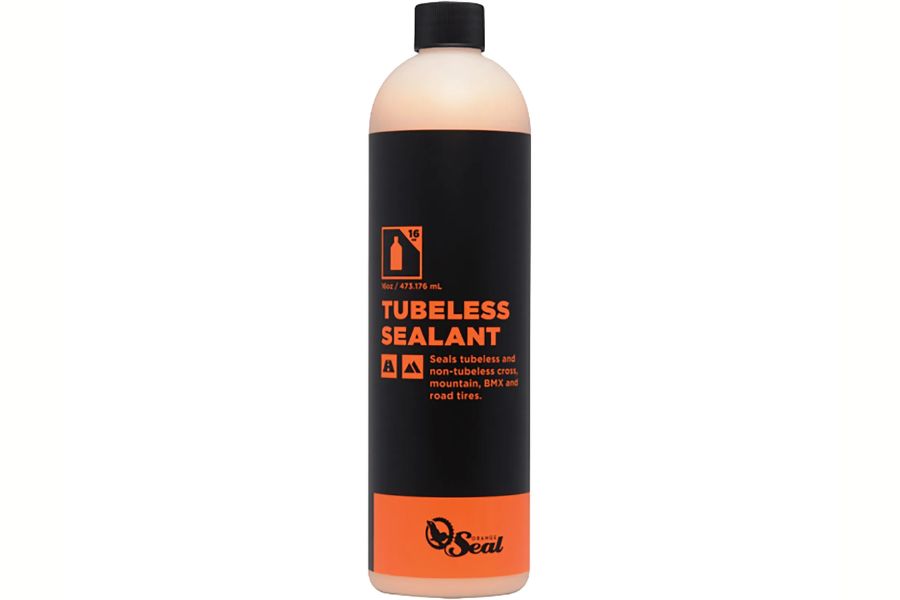
Orange Seal Tubeless Sealant Regular (946ml)
£35 (RRP £44.99)
Orange Seal Regular is aimed at riders who want faster sealing and broader puncture coverage than longevity-first formulas. For eMTB riders, that can be a smart trade because eMTBs tend to generate more punctures that are not neat pinholes, especially on rocky trail centres and sharper natural trails. The Regular formula is usually the one riders pick if they accept that topping up is part of tubeless life and they want the sealant to prioritise “save the ride” behaviour.
It’s also positioned as working in low temperatures, which suits UK winter riding. Compared with Endurance, Regular is typically less about going months without checking and more about sealing larger punctures and slices. If you ride harder terrain and want a more aggressive sealing approach, Regular is the Orange Seal to start with.
Pros
Fast sealing focus, useful for trail-centre punctures and sharper terrain
Strong cold-weather positioning compared with some sealants
Good choice if you prioritise “seal bigger holes” over maximum longevity
Cons
Typically needs more frequent top-ups than Endurance-focused formulas
CO₂ compatibility not always clearly stated on listings
Specifications
Sizes: 946ml (other sizes exist)
Stated temperature range: Down to -11°C
Tyre Pressure Range: Not stated on the retailer listing
Recommended volumes: Not stated on the retailer listing
CO₂ compatibility: Not stated on the retailer listing
Notes: Claimed sealing up to 6mm punctures and up to 19mm slices (brand positioning); check and top up more frequently than endurance formulas
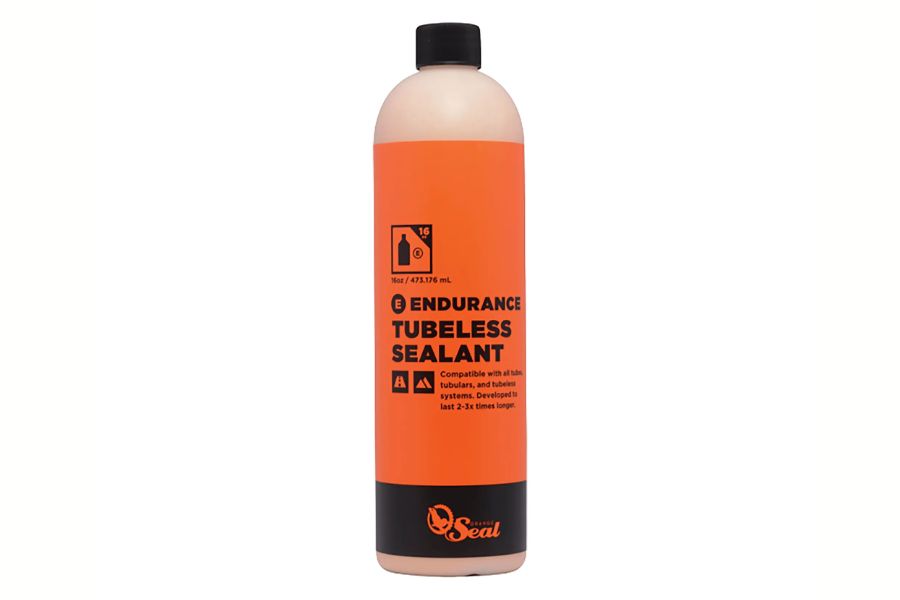
Orange Seal Endurance Tubeless Sealant (946ml)
£35 (RRP £46.99)
Orange Seal Endurance is for riders who want fewer top-ups above everything else. That makes it a strong match for eMTB riders because eMTBs encourage more riding, which means sealant maintenance becomes more noticeable. Endurance is positioned around longer service intervals and strong cold-weather performance, which fits UK riding well, particularly for winter and shoulder-season use.
The trade-off is that Endurance is usually positioned as sealing smaller punctures than the Regular formula, prioritising longevity rather than maximum sealing aggression. If you ride extremely rocky terrain and routinely cut tyres, you’ll still want plugs. But for riders who want a sealant that stays usable for longer and reduces the frequency of maintenance checks, Endurance is one of the most practical choices available.
Pros
Longevity focus means fewer top-ups for regular eMTB riders
Strong cold-weather positioning for UK winter riding
Great choice for riders who want a lower-maintenance tubeless routine
Cons
Not positioned as the most aggressive option for sealing very large holes quickly
CO₂ compatibility not always clearly stated on listings
Specifications
Sizes: 946ml (other sizes exist)
Stated temperature range: Down to -23°C
Tyre Pressure Range: Not stated on the retailer listing
Recommended volumes: Not stated on the retailer listing
CO₂ compatibility: Not stated on the retailer listing
Notes: Claimed up to 120 days between top-ups (conditions dependent); positioned for punctures up to 3mm and slices up to 12mm
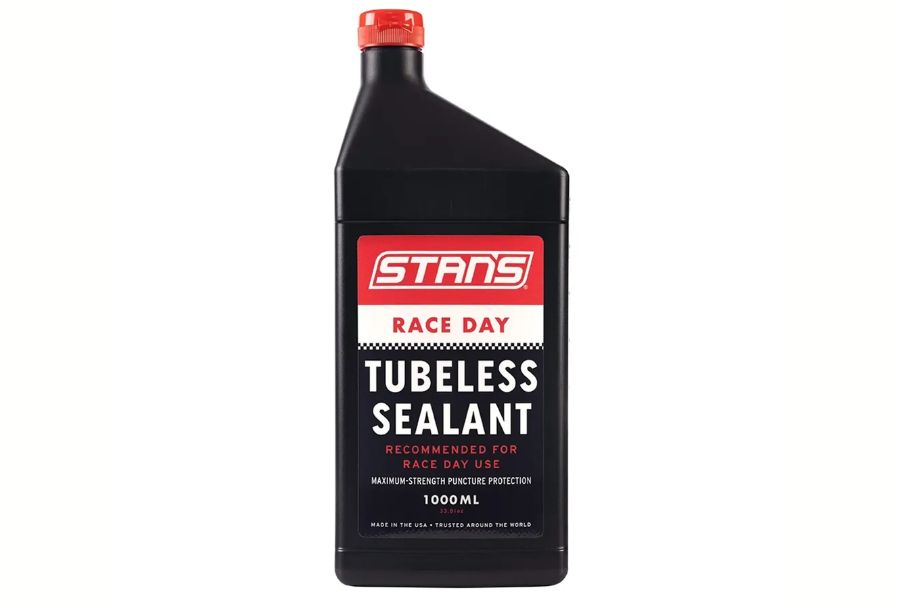
Stan’s NoTubes Race Sealant (946ml)
£46
Stan’s Race is the “more sealing crystals, faster sealing” upgrade for riders who overwhelm standard sealant. For eMTB riding, it’s a logical step if you ride harder trail centres, push into enduro style terrain, or you’re simply tired of losing rides to punctures that standard sealant struggles to close. The aim is aggressive sealing, especially when the puncture is larger or the tyre is losing air quickly.
The trade-off is maintenance. Race-style, high-particle sealants are more likely to clog valve cores and can be messier to inject. If you top up through the valve often, you should expect more cleaning. If you’re happy to accept that, Stan’s Race can be one of the most effective options for riders who want to prioritise puncture sealing above convenience.
Pros
Designed for faster sealing and more aggressive puncture protection
Strong option for heavier bikes and harder riding styles
A clear upgrade path if standard sealant is not keeping up
Cons
Higher risk of valve clogging and injector mess
CO₂ compatibility and operating ranges aren’t consistently stated on listings
Specifications
Sizes: 946ml (other sizes exist)
Stated temperature range: Not stated on the retailer listing
Tyre Pressure Range: Not stated on the retailer listing
Recommended volumes: Not stated on the retailer listing
CO₂ compatibility: Not stated on the retailer listing
Notes: High particle content; best results with careful bedding and periodic valve core cleaning; many riders top up via bead for cleaner installs
Frequently Asked Questions
How much tubeless sealant should I use in an eMTB tyre?
For most 29in eMTB trail and enduro tyres, 100–120ml per tyre is a solid baseline. Add more if you run inserts, ride rocky trail centres, or you regularly see pinhole leaks.
How often should I top up tubeless sealant on an eMTB?
Check every 6–10 weeks as a sensible routine. If the bike is stored somewhere warm and dry, you may need to top up more often. Longevity-focused sealants can extend the interval, but you should still check regularly.
Is tubeless sealant CO₂ compatible?
Some sealants are clearly marketed as CO₂ compatible, others are not. If you rely on CO₂ cartridges for trailside repairs, choose a sealant that states CO₂ compatibility, or be prepared for more frequent cleaning and top-ups.
Why do my tubeless valves keep clogging?
Fibre-heavy sealants and high-particle formulas can build up in valve cores, especially if you top up through the valve. Clean the valve core periodically, keep the valve at 4 or 8 o’clock when injecting, and use an injector with a removable core.
What else should I buy with sealant for a reliable eMTB tubeless setup?
Sealant is only one part of it. The most useful add-ons are tubeless plugs, a small tyre boot, spare valve cores, good rim tape, and a proper sealant injector. These are easy basket-building items for affiliate revenue too.