
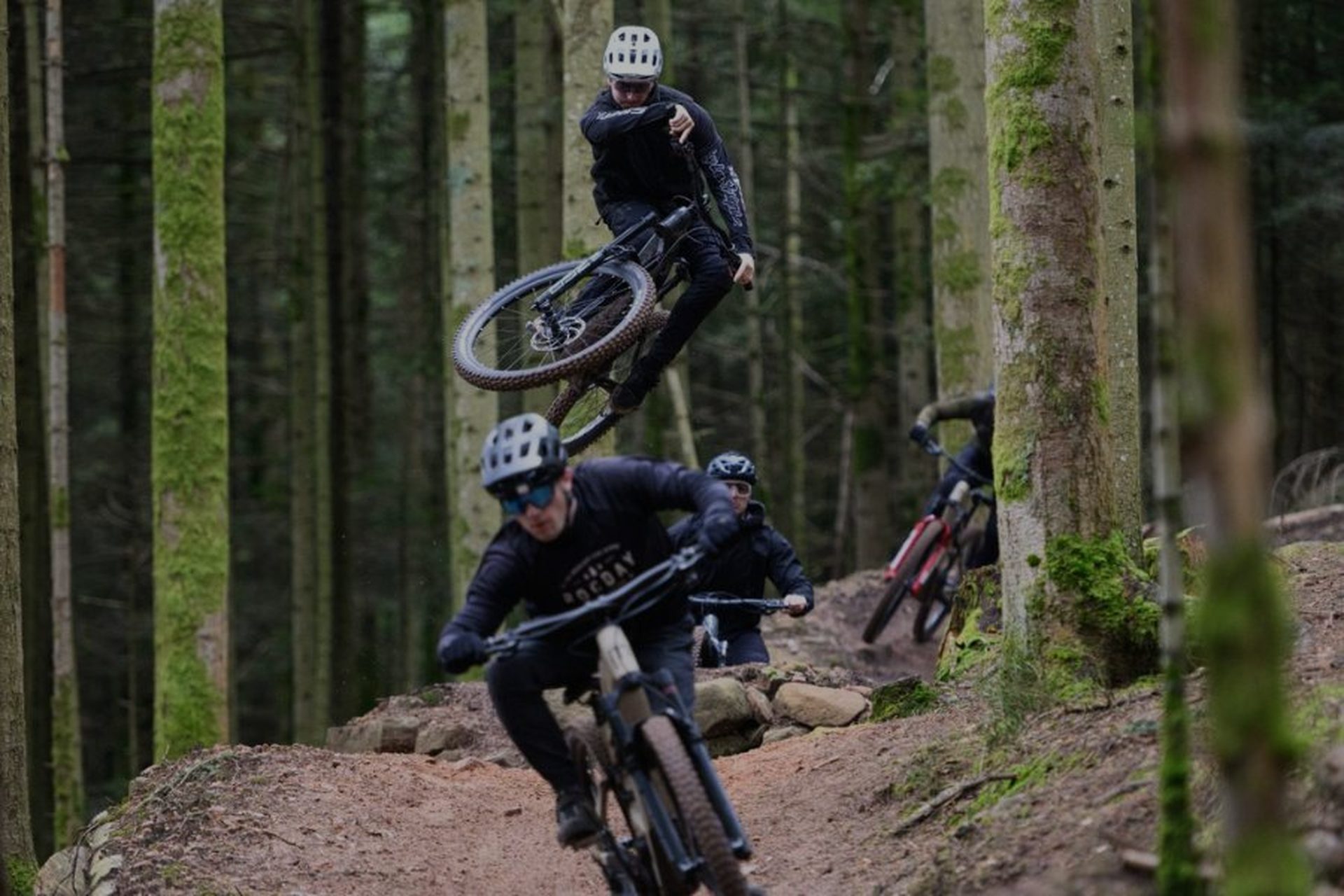
Winter in the UK is rarely one single condition. One week it’s wet roots and axle-deep slop; the next it’s frozen ruts, black ice on linking lanes, and a skim of snow that hides the trail shape. That matters because “winter eMTB tyres” can mean two very different things: a soft-compound, open-tread tyre that keeps an electric mountain bike tracking in mud and cold loam, or a studded winter tyre built specifically to claw into ice. If you buy the wrong kind, you can end up with a tyre that feels brilliant for two rides, then completely out of its depth when the weather flips.
For most riders, the best approach is to treat winter eMTB tyres as a toolkit rather than a single magic option. If you only see occasional ice, a proper mud front tyre (and a slightly faster rear) is often the most useful “winter/snow eMTB tyres” upgrade you can make. But if your local loop includes shaded lanes, frozen fire roads, or persistent hardpack ice, studded eMTB tyres can be the difference between riding and walking — especially on a heavier eMTB where braking distances and momentum are less forgiving. This guide covers both: cold-weather mud specialists and the best studded eMTB tyres for proper ice and compacted snow.
The best winter eMTB tyres shortlisted
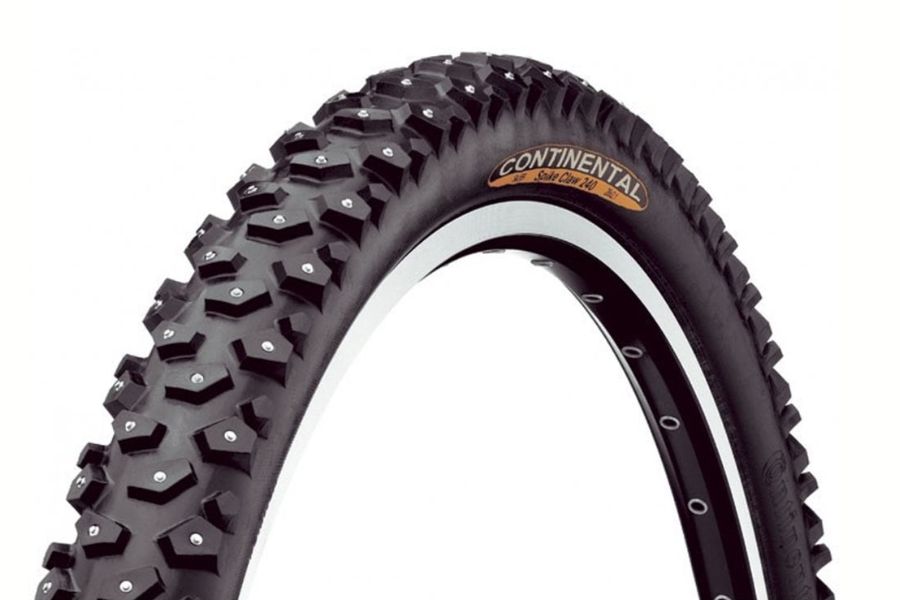
Continental Spike Claw (studded) — £35.95
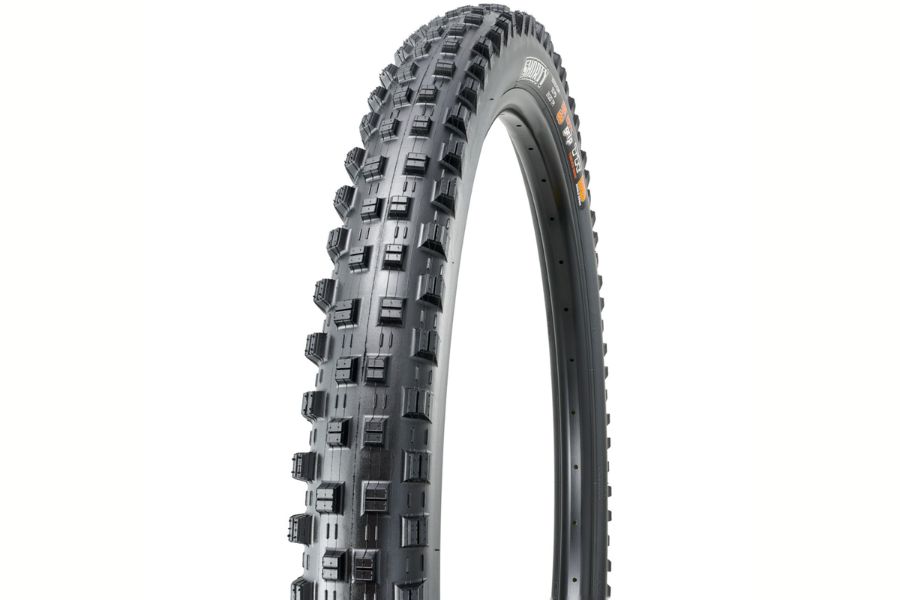
Maxxis Shorty Gen 2 (MaxxGrip) — £45.59 (RRP £64.99)
Schwalbe Magic Mary (Addix Soft/Ultra Soft) — from £55 (RRP £68.99)
Continental Argotal (Soft/SuperSoft) — £55.99 (RRP £70)
Continental Kryptotal FR Enduro (Soft) — £57.50 (RRP £74.99)
Schwalbe Ice Spiker Pro (studded) — £89.99 (RRP £99.99)
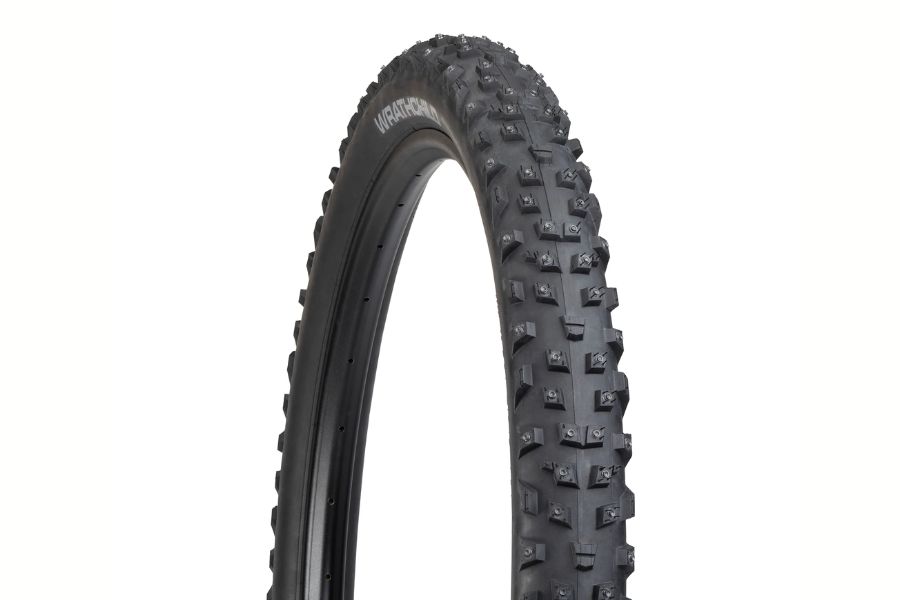
45NRTH Wrathchild (studded) — from £195
We’ve prioritised…
We’ve prioritised winter eMTB tyres that solve the UK’s most common cold-weather problems: unpredictable grip on wet roots, braking traction in greasy clay, and genuine security on ice. Studded eMTB tyres are included because they’re the only reliable answer for frozen lanes and hard, shiny ice — but we’ve also included non-studded options because, in many UK winters, mud is the dominant challenge and a good open-tread front tyre is the biggest performance gain.
Quick sizing & fit
Most modern eMTBs run 29in wheels (often with a 2.4–2.6in front tyre) and either 29in or 27.5in at the rear. Before buying winter eMTB tyres, confirm your frame and fork clearance for both width and tread height: aggressive winter knobs can run “tall”, and studded tyres can be broader at the casing than you expect. If you’re committing to studded eMTB tyres, consider a dedicated winter wheelset so you can swap quickly when the freeze arrives, and to avoid prematurely wearing studs on long, dry tarmac transitions.
The best winter eMTB tyres
Continental Spike Claw (studded)
£35.95
The Spike Claw is one of the simplest ways into studded eMTB tyres if you want occasional ice security without the cost (or weight) of the top-end spike options. It’s best thought of as a “winter utility” MTB tyre: a tread that clears snow reasonably well, with studs that give you extra bite on frozen ground and icy patches. On an eMTB, that extra security matters most under braking and on cambered, shiny surfaces where the bike’s weight and speed amplify small slides.
Where the Spike Claw makes the most sense is as a second wheelset tyre for the weeks when frost is frequent but conditions aren’t permanently iced. If you’re regularly on long road links, it’s also less painful to live with than some ultra-aggressive studded tyres, because you’re not paying for maximum stud count you might not need. The trade-off is clear: fewer studs means less confidence on true sheet ice, and limited sizing can make it harder to match modern eMTB widths. If it fits your rims and clearances, it’s a practical “just in case” studded winter tyre.
Pros
Affordable route into studded winter eMTB tyres
Useful braking and cornering security on icy patches
Open tread helps in slushy conditions
Cons
Limited sizing can be a constraint for modern wide eMTB setups
Specifications
Wheel size: 26
Width options: 2.1
Compound: winter-focused rubber
Casing: multi-ply construction
Studs: typically 120
Tubeless: usually tube-type
E-bike rating: not consistently stated (check tyre marking)
Maxxis Shorty Gen 2 (MaxxGrip)
£45.59 (RRP £64.99)
The Shorty is the “winter front tyre” many UK riders end up on once conditions turn properly sloppy. In the context of winter eMTB tyres, it’s a cold-weather control tool: tall enough knobs to bite through soft top layers, a pattern that sheds mud rather than packing up, and a compound that keeps grip when temperatures drop. On an eMTB, that matters because the front tyre is doing a lot of work — especially when the bike is heavier, you’re braking later, and you need the tyre to keep holding a line through wet cambers.
For snow, the Shorty’s strengths depend on what kind of snow you’re riding. In soft, loose snow over dirt, it can dig and steer better than faster “all-round” tyres. In compacted snow over ice, it behaves like any non-studded tyre: it can be manageable at the right pressure, but it’s not a substitute for studded eMTB tyres. If you want a winter/snow eMTB tyres setup that covers 90% of UK winter trail riding, Shorty front plus a slightly faster rear is a very common, very workable pairing.
Pros
Excellent front-end bite in UK mud and loose winter surfaces
Strong braking and cornering support for eMTB speeds and weight
Works well as part of a “mud front / faster rear” winter setup
Cons
Not designed for sheet ice; studs are still the safer answer
Specifications
Wheel size: 27.5in / 29in (varies by version)
Width options: commonly around 2.40in (varies by version)
Compound: 3C MaxxGrip (model dependent)
Casing: Multiple options (trail/enduro/downhill variants)
Studs: none
Tubeless: TR versions available
E-bike rating: not consistently stated (check tyre marking)
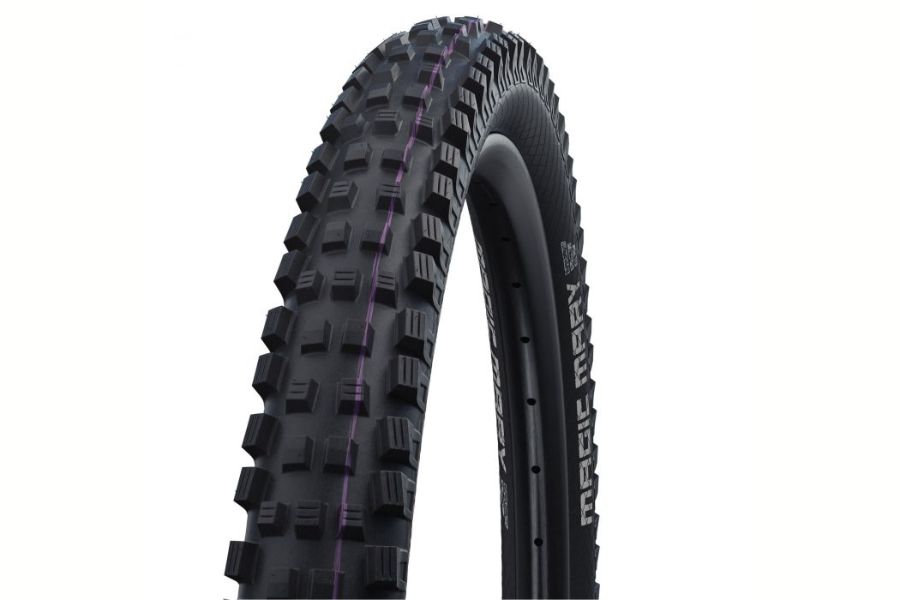
Schwalbe Magic Mary
from £55 (RRP £68.99)
If you want a single, realistic upgrade for UK winter eMTB tyres, a Magic Mary on the front is hard to argue with. It’s not a “snow-only” tyre, but it is a cold-weather traction specialist: open enough to clear thick mud, supportive enough to hold a line when the front wheel is being pushed by eMTB weight, and predictable on wet roots compared with many faster-rolling trail patterns. In the context of winter/snow eMTB tyres, this is the tyre you choose when the trails are saturated, rutted and constantly changing — because it gives you feedback rather than surprise losses of grip.
For eMTB riding, casing choice matters as much as tread. A sturdier casing reduces squirm at lower winter pressures and helps the tyre track through chopped-up braking bumps and frozen footprints. Pair it with a slightly faster rear if you want easier climbing on slop-covered fire roads, or run a matching rear if your local climbs are steep and messy and you want both wheels digging. It will not replace studded eMTB tyres on sheet ice, but for the kind of winter most UK riders actually get, it’s the most useful “fit and forget” option.
Pros
Reliable front-end grip in cold, wet UK mud
Predictable cornering feel at lower winter pressures
Easy to pair with faster or grippier rears depending on your riding
Cons
Not an ice solution without studs
Specifications
Wheel size: 27.5in / 29in
Width options: typically 2.35–2.60in
Compound: Addix Soft / Ultra Soft
Casing: multiple options (trail/enduro/downhill variants)
Studs: none
Tubeless: TL/TLE variants available
E-bike rating: varies by version (check sidewall marking)
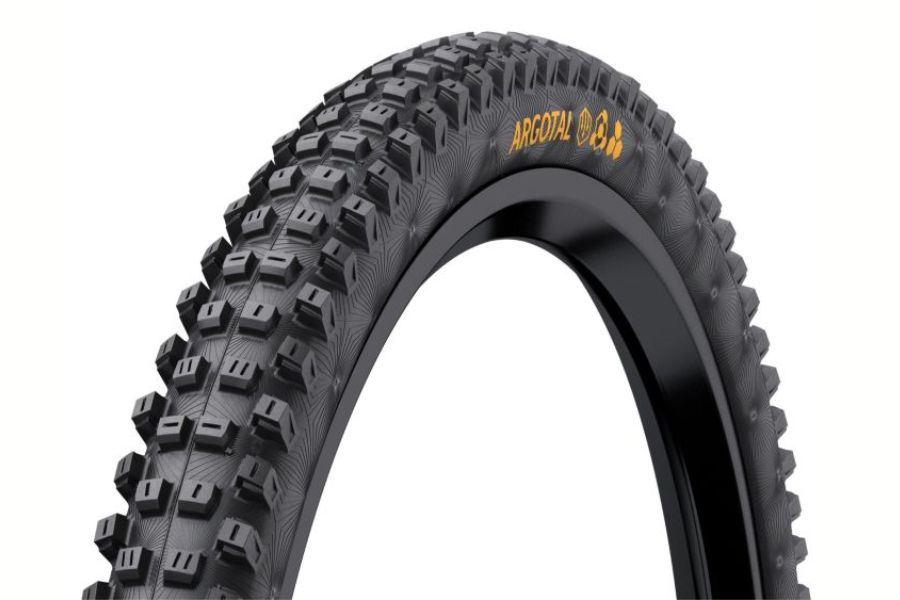
Continental Argotal
£55.99 (RRP £70)
Argotal is a winter eMTB tyres pick for riders who want more outright bite than an “all-season” trail tyre, without going to a dedicated spike setup. Think of it as a loose-conditions specialist: it digs into soft ground, handles messy transitions well, and gives you a more planted feel when the surface changes every few metres. On a UK eMTB loop in winter, that can mean the difference between riding a greasy line confidently and tip-toeing because the front tyre feels vague.
In snow, Argotal’s effectiveness is again about the snow type. In loose snow over dirt, it can provide usable steering and braking traction because the knobs can reach through to something firmer underneath. In compacted snow that has glazed over, it’s still limited by physics — rubber alone can’t match studded eMTB tyres on real ice. Where Argotal shines is as a “winter tyre that still rides like a mountain bike tyre”: it doesn’t force you into a spiked-only mindset, and it’s a logical choice if most of your winter is wet, loose and unpredictable rather than permanently frozen.
Pros
Excellent bite in loose, sloppy winter trail surfaces
Confident cornering support at eMTB speeds
A strong choice when winter is more mud/loam than ice
Cons
Ice performance is still limited without studs
Specifications
Wheel size: 27.5in / 29in
Width options: 2.4–2.6in
Compound: Soft / SuperSoft
Casing: trail/enduro/downhill variants available
Studs: none
Tubeless: TR versions available
E-bike rating: not consistently stated (check tyre marking)
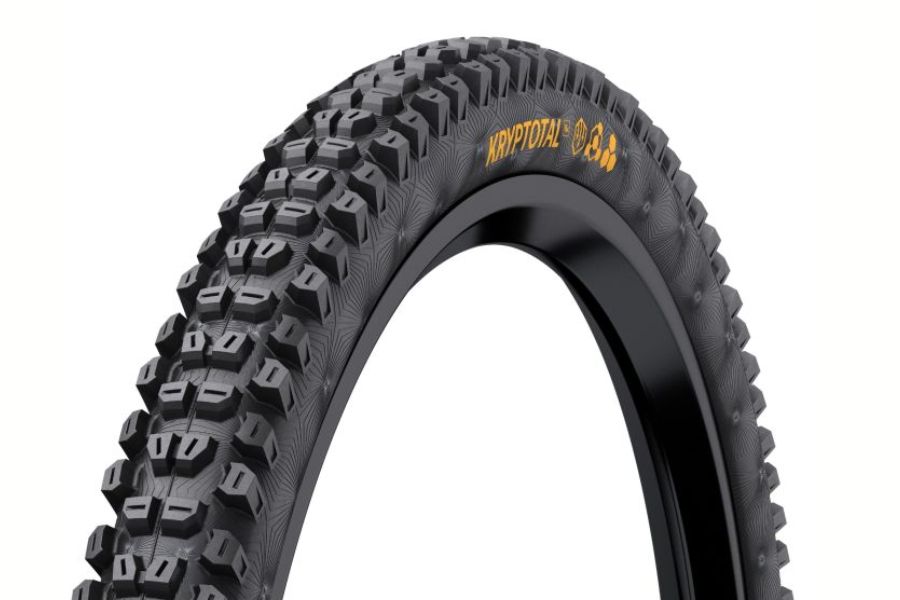
Continental Kryptotal FR Enduro
£57.50 (RRP £74.99)
Kryptotal FR is an all-round winter eMTB tyres choice for riders who want predictable grip without going full mud spike. It sits in the “reliable front tyre” category: enough open space to deal with wet conditions, supportive shoulder blocks for cornering on slick hardpack, and a compound option that stays usable when the temperature drops. For UK winter riding, where you can go from clay to rock to leaf-covered hardpack in one descent, that balanced approach can be more valuable than maximum mud-clearing aggression.
On an eMTB, Kryptotal FR’s strengths show up in braking stability and steering accuracy. If you find pure mud tyres a bit vague on firm surfaces, Kryptotal can feel calmer and more consistent. It is not, however, a studded tyre — so if your winter includes regular ice, this is the tyre you pair with cautious riding and pressure management, not the one you rely on for frozen lanes. As part of a winter/snow eMTB tyres setup for mixed UK conditions, it’s a sensible “one tyre that does most things” front option.
Pros
Balanced winter grip across mixed UK trail surfaces
Strong braking and cornering stability for eMTB riding
Works well when winter is changeable rather than consistently muddy
Cons
Won’t match studded tyres for confidence on ice
Specifications
Wheel size: 27.5in / 29in
Width options: typically 2.4–2.6in
Compound: Soft
Casing: Enduro (as listed) and other variants exist
Studs: none
Tubeless: TR versions available
E-bike rating: not consistently stated (check tyre marking)
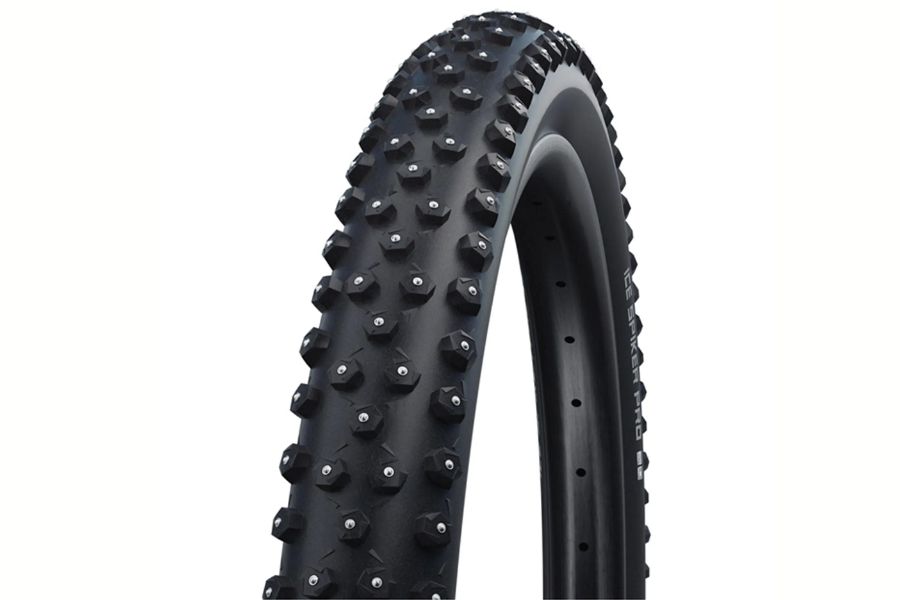
Schwalbe Ice Spiker Pro (studded)
Ice Spiker Pro is the benchmark name most riders think of when they search for studded eMTB tyres. The reason is straightforward: it’s designed to deliver high, consistent stud contact, while still riding like a mountain bike tyre rather than a slow winter commuter tyre. For UK winter use, it’s at its best when the surface is genuinely icy — frozen lanes, hardpack ice in shaded woodland, and those deceptive shiny patches that appear on fireroads after a thaw-freeze cycle.
For eMTB riders, the headline is that Ice Spiker Pro is rated for E-25 use (pedal-assist e-bikes up to the legal limit), which makes it a natural fit for a UK-legal electric mountain bike. The stud design is aimed at maximising bite while keeping weight sensible, and the tread is still MTB-focused enough that it won’t feel completely out of place when the ground is merely cold and wet rather than fully frozen. You do need to respect the basics with studded winter eMTB tyres: bed the studs in before you ride aggressively, avoid super-low pressures on hard surfaces, and accept that it’s a specialist tyre. But if your winter includes real ice, this is one of the clearest “buy once, buy properly” options.
Pros
Class-leading security on ice for winter eMTB riding
E-25 rating makes it suitable for UK-legal eMTBs
Still rides like an MTB tyre, not just a winter novelty
Cons
Overkill if your winter is mostly mud with only rare ice
Specifications
Wheel size: 27.5in / 29in
Width options: typically ~2.25–2.60in
Compound: winter compound
Casing: puncture-protection variants available
Studs: up to ~120
Tubeless: TLE / tubeless-ready versions available
E-bike rating: E-25 (as stated by manufacturer)
45NRTH Wrathchild (studded)
from £195
Wrathchild sits at the “maximum bite” end of studded winter tyres, with an aggressively lugged tread designed to dig into snow and a high stud count aimed at brutal grip on slick surfaces. In pure performance terms, it’s one of the most serious winter/snow tyres you can fit to a mountain bike. For a rider dealing with persistent ice and compacted snow — and who wants the most security possible when turning and braking — the concept is compelling.
However, for an eMTB buyer’s guide, Wrathchild needs a reality check: some retailer/manufacturer guidance cautions against using certain 45NRTH studded tyres on power-assist bikes because the extra torque and system weight can accelerate casing wear and increase the risk of losing studs. That does not automatically mean “don’t buy it”, but it does mean you should treat it as a niche option, check current guidance before purchase, and be honest about how (and how hard) you ride your eMTB in winter. If you’re running a lighter eMTB, riding smoothly, and want a specialist winter wheelset for true ice days, Wrathchild can still be a high-grip answer — just not the default recommendation for every rider.
Pros
Very aggressive tread and stud layout for ice and compacted snow
High confidence under braking and in hard, slick corners
Built as a purpose-made extreme winter MTB tyre
Cons
May not be recommended for some e-assist use cases; check guidance before buying
Specifications
Wheel size: 29in and other options
Width options: commonly around 2.6in
Compound: winter-specific rubber
Casing: high-TPI variants exist
Studs: typically ~252
Tubeless: tubeless-ready
E-bike rating: not consistently stated; verify before purchase
Frequently Asked Questions
Do I need studded eMTB tyres for UK winter riding?
Not always. If your riding is mostly muddy singletrack with only occasional frost, non-studded winter eMTB tyres (mud-focused fronts like a Shorty or Magic Mary) are usually the best value and the most versatile. Studded eMTB tyres become worthwhile when you regularly ride on ice: frozen lanes, shaded fireroads, persistent hardpack ice, or anywhere a thaw-freeze cycle leaves shiny surfaces.
Should I run studs front only or front and rear?
Front-only is a common compromise for winter/snow eMTB tyres because it improves steering and braking confidence where it matters most, while keeping rolling resistance and noise lower than a full set. If you expect long icy climbs, frequent rear-wheel spin on frozen ground, or you want maximum braking control on steep descents, a matched rear studded tyre can be worth it.
How do I bed in studded tyres properly?
Most studded eMTB tyres need a short “run-in” on hard surfaces to seat studs firmly. Ride on tarmac at steady speed, avoid hard cornering and emergency braking, and do the bedding-in before your first icy ride. This reduces stud loss and improves consistency.
What pressures work best for winter eMTB tyres?
Lower pressures generally improve grip in mud and loose snow, but too low can make the tyre squirm and increase rim strikes — especially on an eMTB. For studded eMTB tyres on hard, icy surfaces, avoid ultra-low pressures because it can destabilise the casing and increase the chance of losing studs. Use your normal baseline as a starting point, then adjust gradually for conditions.
Can I run winter eMTB tyres tubeless in freezing weather?
Yes, but performance depends on your tyre and sealant choice. Many winter and studded eMTB tyres are tubeless-ready, but some winter conditions can make sealant thicker and slower to plug small leaks. If you ride in consistently sub-zero temperatures, check the sealant’s cold-weather behaviour and be prepared for slightly higher maintenance (and slower pressure loss detection) than in summer.