
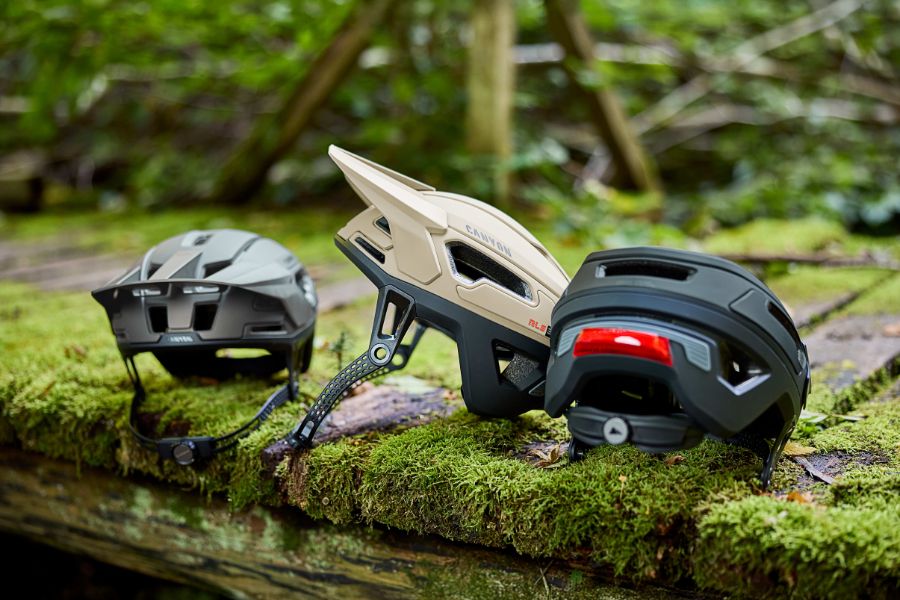
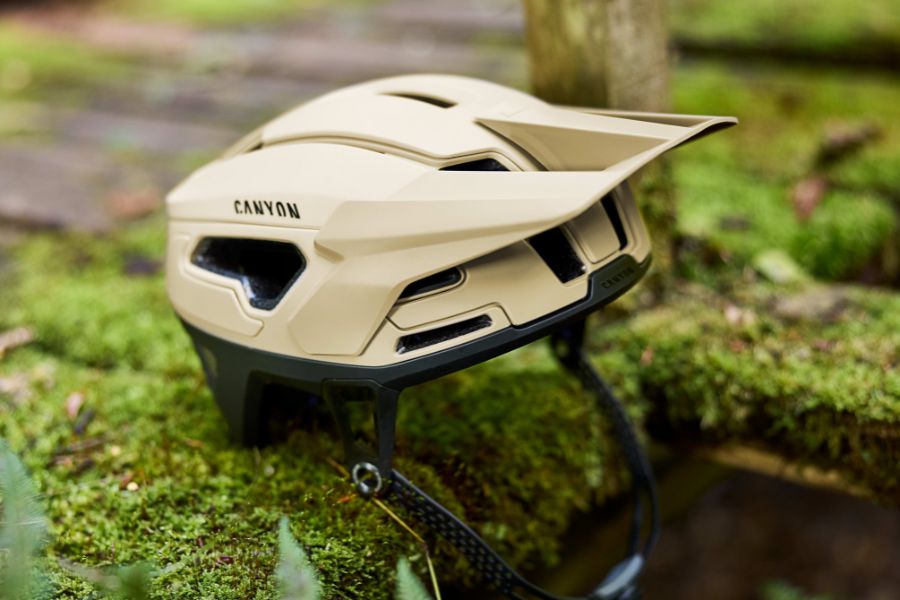
Canyon has launched its first mountain bike helmet, the Canyon Deflectr MTB helmet, aiming it squarely at trail riders who want a modern half-shell lid with a clear focus on impact protection, comfort and ventilation. The headline claim is a strong one: Canyon says the Deflectr arrives with Virginia Tech’s five-star safety rating and is currently sitting top of the institute’s helmet safety rankings—a notable achievement for a first-generation MTB helmet from a brand better known for complete bikes.
For electric mountain bike riders in particular, helmet releases like this are worth paying attention to. e-MTB riding often means longer days on mixed terrain, repeated climbs at lower speeds (where ventilation matters), and faster transitions or descents where stability and rotational-impact management become more relevant. Canyon is positioning the Deflectr as an “all-round trail” option rather than a niche lid for enduro or downhill, with features that target day-to-day usability: a three-position visor, sunglass integration, and compatibility with a clip-on rear light system for the ride to and from the trails.
If you’re looking for eMTB helmets, we have a complete buyer’s guide to the best eMTB helmets 2026.
As ever, it’s important to keep expectations realistic. No helmet can prevent every injury or eliminate concussion risk entirely. What matters is how well a design manages impact energy—and, increasingly, how it addresses rotational forces. Canyon’s new Release Layer System is the technology story here, and it’s central to why the Deflectr is arriving with such strong third-party test credentials.
Release Layer System: what Canyon’s RLS is designed to do
The key tech in the Canyon Deflectr MTB helmet is a patented design called RLS (Release Layer System). Canyon describes it as a dual-shell construction separated by a release-layer membrane that incorporates polycarbonate “bearings”. In an impact, when energy exceeds a defined threshold, those bearings are intended to detach at the point of impact, allowing the shells to move more independently. The idea is to make it easier for the helmet structure to shift in a controlled way, helping to reduce the amount of rotational force transferred to the rider’s head—the type of loading often discussed in relation to concussion risk.
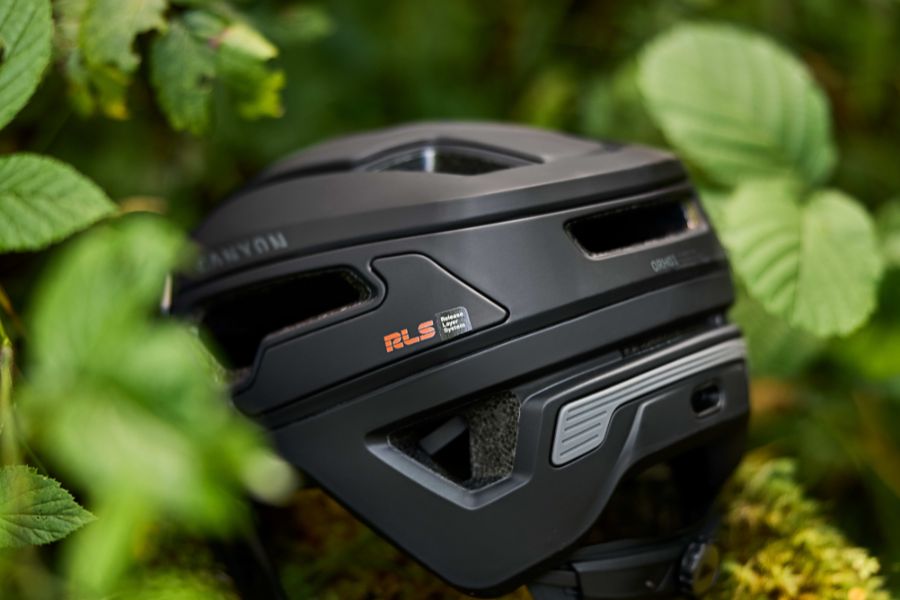
This sits within a broader industry trend: brands are increasingly focusing on systems that manage both linear and rotational forces, rather than treating safety as purely about foam density and coverage. Canyon’s angle is that RLS provides a measurable benefit in independent testing, which it links directly to the helmet’s Virginia Tech rating and ranking position.
It will be interesting to see how this approach translates into real-world fit, feel and durability over time—particularly for UK winter riding where grit, repeated wet/dry cycles, and frequent use can expose any weaknesses in moving-layer designs. On paper, though, Canyon has clearly prioritised a contemporary safety concept rather than a “me too” launch.
Fit, ventilation and everyday trail practicality
Canyon is also leaning hard into comfort and airflow—two areas that can make or break a helmet for e-MTB use. The Deflectr uses extra-large vents on the top to improve evaporative cooling on slow climbs, with shaped intake and exhaust ports intended to move air effectively once speed rises. That combination—climb comfort plus descent airflow—is exactly what many riders look for in a do-it-all trail lid, especially if your rides include long forestry slogs before you reach the fun sections.
Fit adjustments are handled by an on-the-fly retention system with adjustment dials, paired with Canyon’s HighBar chin strap. Canyon says the Deflectr uses the latest HighBar “1.5” version, which adds a ventilated strap, improved sunglass compatibility, and a lighter-action dial for easier micro-adjustments mid-ride. If that delivers in practice, it should help riders fine-tune fit without stopping—useful if you swap between a thin skull cap, winter buff, or different eyewear across the seasons.
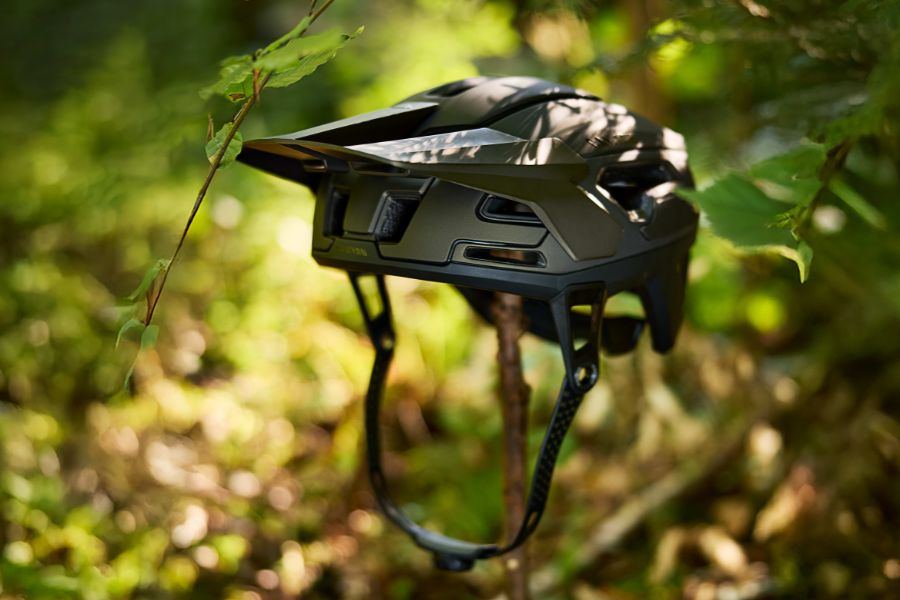
Canyon has also included a three-position visor, plus a dedicated approach to eyewear: the helmet is designed so you can stash sunglasses at the front when they’re not in use. That’s a small detail, but on UK trail networks—where light levels and weather can change quickly—it’s the sort of feature that can genuinely improve day-to-day usability.
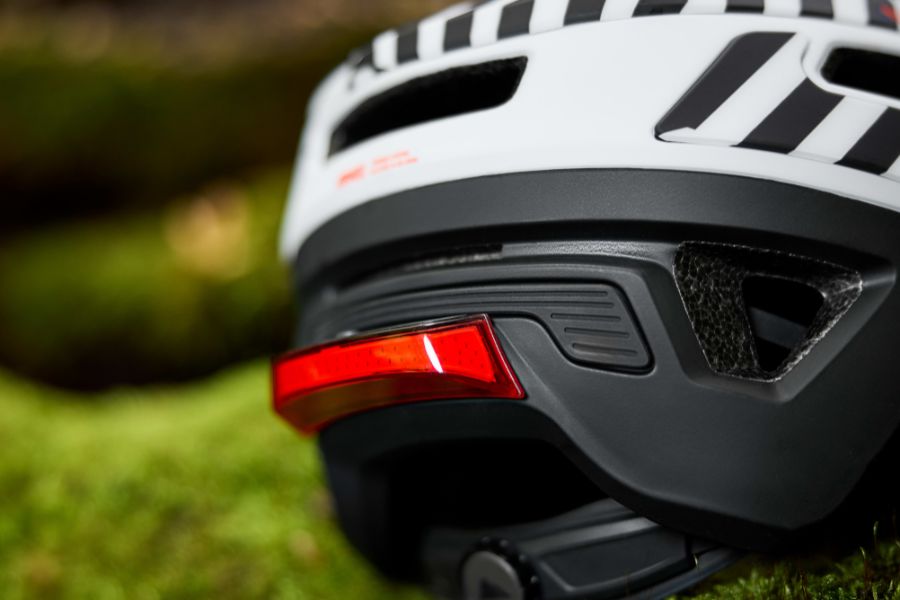
Finally, the Deflectr is compatible with Canyon’s magnetically attached rear light system, which Canyon frames as a better option than seatpost lights that can be obscured by jackets or complicated by dropper posts. For riders who pedal to the trailhead or ride after work, that compatibility may be a practical bonus rather than a gimmick.
Price, weight, colours and availability
Canyon lists the Deflectr’s weight as approximately 396g in size M. Pricing is set at £159.95 in the UK (also €159.95 / $159.95). At launch, the Canyon Deflectr MTB helmet is available in Black and Metallic Olive, sold exclusively via Canyon’s website and the Canyon App. A third Desert colourway is scheduled to follow in February 2026.
From a positioning standpoint, that price point drops it into the competitive middle ground where riders expect credible safety credentials, good ventilation and a polished retention system—without necessarily paying top-tier “flagship” money. The five-star Virginia Tech rating will likely be the deciding factor for many buyers comparing it against established trail helmets from the usual big-name protection brands.