Getting the right size electric mountain bike matters more than most people expect, and not just for comfort. A well-sized e-MTB is easier to control on steep descents, more predictable on slippery climbs, less tiring over long rides, and generally feels like it’s working with you rather than against you. Get sizing wrong and even an otherwise excellent bike can feel awkward: front wheel wandering on climbs, cramped cockpit, sore hands, vague steering, or a bike that feels too long and hard to manoeuvre in tight woodland singletrack.
Sizing can also feel extra confusing on an e-MTB because the bikes are heavier and often encourage a steadier, “centre of the bike” riding style. Many modern e-MTBs are designed around stability at speed, so the same nominal size can feel longer than an older trail bike. On top of that, brands don’t size consistently. A “Medium” in one brand can feel like a “Large” in another, and it’s completely normal to sit between sizes depending on your height, inseam and how you like a bike to feel.
This guide explains how to choose the right e-MTB size for UK riding using the measurements that actually matter, what to do if you’re between sizes, and how to set up the cockpit once you’ve picked the frame.
(Internal links to add: What is an e-MTB?, Basic e-MTB suspension setup, and a future Hardtail vs full-suspension comparison.)
Start with the brand’s size chart — but don’t stop there
The size chart is the entry point, not the final answer. Use it to find your likely size range, then look one layer deeper at geometry numbers. The most useful are reach, stack, and standover. These tell you far more about fit and feel than seat tube length.
If you’re buying online and can’t test ride, the goal is to find a size that matches your body and matches the handling you want. That’s especially true with e-MTBs, where the wrong size can make the extra weight feel more noticeable.
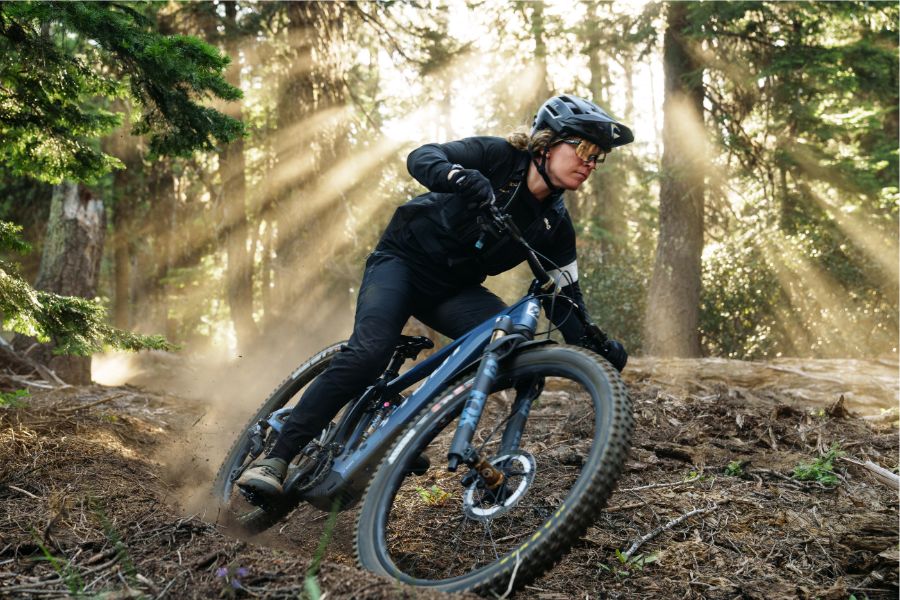
The three measurements that really matter
Reach (how “long” the bike feels when standing)
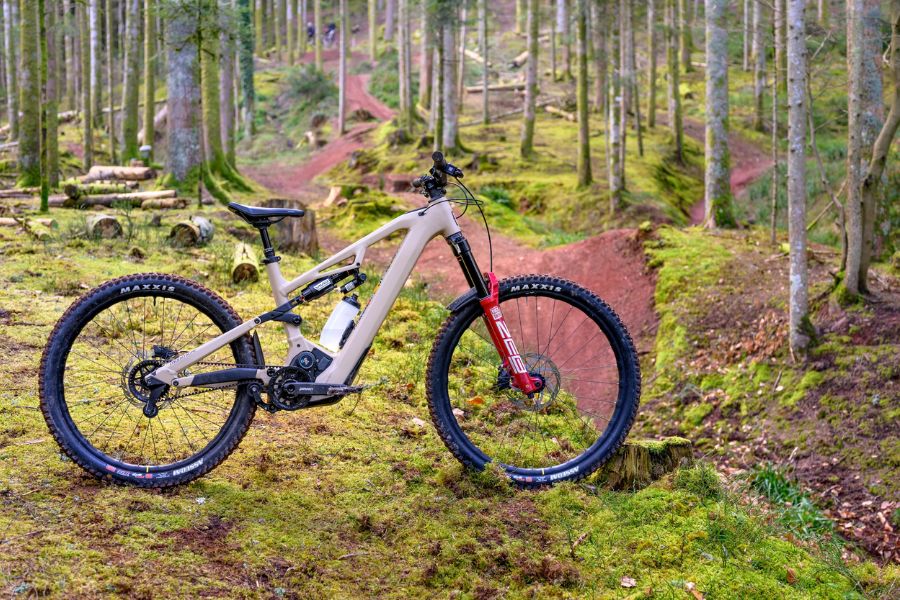
Reach is the horizontal distance from the bottom bracket to the top of the head tube. In real terms, it’s a strong indicator of how roomy the cockpit will feel when you’re standing in an attack position — which is where you spend a lot of time off-road.
- Too short: you can feel cramped, twitchy, and over the front wheel.
- Too long: the bike can feel hard to manoeuvre and tiring in tight corners.
Modern e-MTBs often have generous reach figures for stability, so if you’re used to an older MTB, don’t be surprised if the “right” number looks longer than you expect.
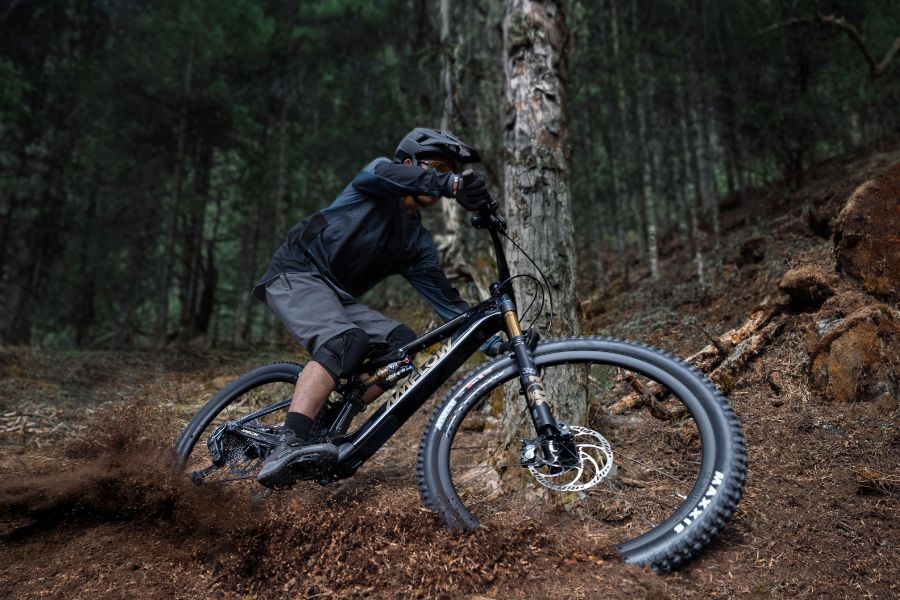
Stack (how high the front end is)
Stack is the vertical distance from the bottom bracket to the top of the head tube. It shapes how upright you feel and how much weight ends up on your hands.
- Too low: more pressure on hands/wrists, more aggressive position.
- Too high: can feel over-upright and reduce confidence in steep descents if you can’t get weight forward when needed.
Stack is also one reason two bikes with similar reach can feel totally different. A high-stack bike can feel calm and comfortable; a lower-stack bike can feel racier and more front-wheel focused.
Standover (confidence and clearance)
Standover is the clearance between you and the top tube when you’re standing over the bike. For trail riding, clearance matters for confidence — getting on/off, moving around the bike, and not feeling like the frame is “in the way” on technical terrain.
It’s not the only factor, but if standover is tight, you’ll feel it quickly. If you’re a newer rider or you ride a lot of steep, stop-start terrain, it’s worth prioritising a bit more clearance.
Hardtail vs full-suspension sizing: is it different?
The principles are the same, but the feel can differ.
On a hardtail e-MTB, the rear end is rigid, so weight shifts are more direct. A hardtail that’s too long can feel harder work in tight corners and on awkward climbs, because you can’t rely on rear suspension to “calm” the bike. Many riders prefer a hardtail that feels slightly more manageable and easy to place precisely.
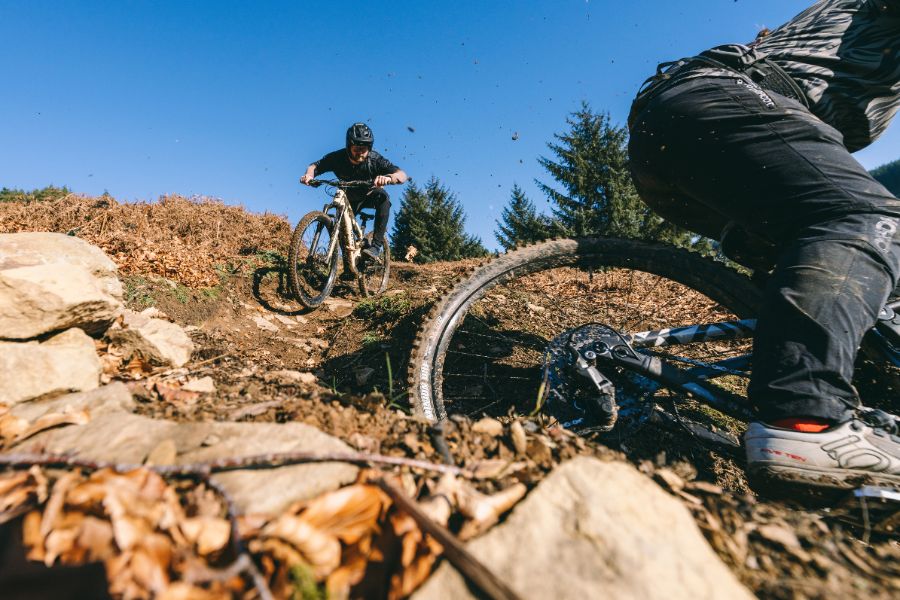
On a full-suspension e-MTB, you’re often riding faster over rough ground and spending more time standing. A slightly longer, more stable fit can work well, because the suspension and overall geometry are designed around composure at speed.
None of that means you should size differently automatically — it just explains why the same rider might like a Medium hardtail and a Medium/Large borderline full-suspension bike depending on brand geometry and riding style.
If you’re between sizes: sizing up vs sizing down
This is the question most buyers actually face, and there’s no single correct rule. Instead, think about your riding and what you value.
Size down if you want:
- More agility in tight UK woodland trails
- Easier slow-speed manoeuvring
- A bike that feels playful and easier to push around
- Better confidence if you’re newer to technical riding
Size up if you want:
- More stability at speed
- A calmer, more planted feel on rough descents
- More room in the cockpit when standing
- Better comfort if you have a long torso/arms for your height
A very practical tip: if you tend to ride steeper, rougher trails or fast trail centres, sizing up sometimes makes sense. If your riding is more mixed, more natural bridleways, or you value “easy handling”, sizing down can be the happier choice.
How to sanity-check sizing without a test ride
If you already own a bike that fits you well, compare geometry.
Look up the reach and stack of your current bike (or a bike you’ve ridden and liked). Then compare that to the e-MTB you’re considering in the size you think you need. You don’t need perfect matches — modern bikes vary — but if the reach is wildly different, you know you’re stepping into a different handling feel.
If you don’t have a reference bike, use your height as a starting point, then look for brand guidance about rider position. Some bikes are designed to feel long and planted; others are more upright and comfortable. Reviews can help here (link internally to your Reviews hub once you have a few).
Dialling in fit after you’ve chosen a frame
Even with the “right” size, small cockpit adjustments make a huge difference:
- Saddle height: a few millimetres can change knee comfort and power.
- Saddle fore-aft: affects climbing comfort and front wheel control.
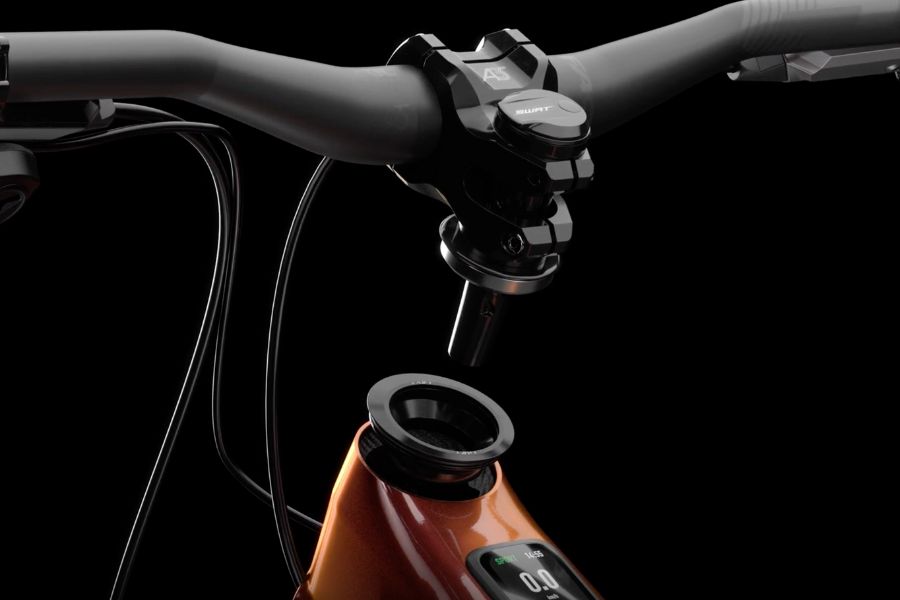
- Handlebar height: spacers and bar rise can reduce hand pressure and improve confidence on steep descents.
- Stem length: many modern e-MTBs use short stems; don’t automatically “fix” reach with a long stem unless you fully understand the handling change.
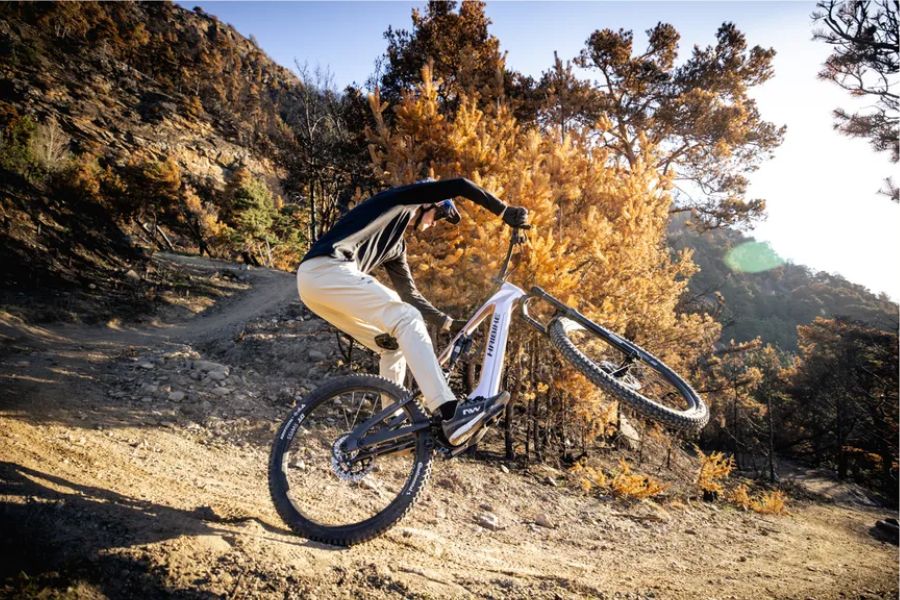
If a bike feels slightly long, a small change in bar position and brake lever angle can transform it without changing the core handling. Likewise, if it feels slightly cramped, a tiny increase in saddle setback or a bar with different sweep can open things up.
Bottom line
To choose the right e-MTB size, start with the size chart, then confirm with reach/stack/standover. If you’re between sizes, decide whether you value agility (size down) or stability (size up), and use your current bike’s geometry as a sanity check if you can. Finally, remember that the “right” size is only half the story — cockpit setup finishes the job.