
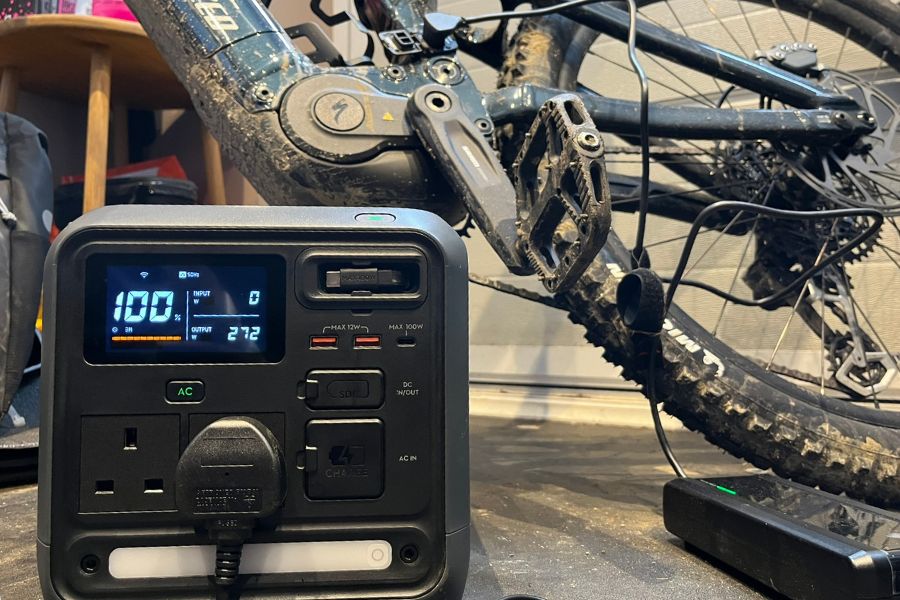
The DJI Power 1000 Mini is not an eMTB product in the traditional sense, but it makes a lot of sense for electric mountain bikers. If you ride from campsites, sleep in a van, spend weekends away, film rides with cameras and drones, or simply want a way to top up an eMTB battery away from the house, a compact 1kWh power station becomes more than a gadget. It becomes part of the riding setup.
This review of the DJI Power 1000 Mini comes from using it as a portable power pack for bike weekends, camping and eMTB charging. The standout feature is obvious: there is enough capacity to put a useful charge back into an electric mountain bike, while the compact size makes it much easier to carry than larger power stations. It is also very useful around camp for lights, phones, cameras, laptops, drone batteries and general weekend kit.
The wall charging speed is a major strength. Plugged into the mains, the DJI Power 1000 Mini can recharge quickly enough that you do not need to plan your life around it. With solar panels, it becomes even more useful for a weekend of riding and camping, although expectations need to be realistic. A 200W solar panel will not refill a 1kWh battery quickly in typical UK conditions, and if you are charging an eMTB at the same time, the output can easily exceed the solar input. Still, as a portable energy hub for eMTB weekends, it is a very strong bit of kit.
DJI Power 1000 Mini
£449
Pros
1008Wh capacity is useful for eMTB top-ups and camping
Fast wall charging makes it easy to prepare before a trip
Compact and manageable for a 1kWh power station
Built-in solar MPPT support is useful for off-grid weekends
Works well for phones, cameras, lights, laptops and riding kit
LFP battery chemistry should suit long-term use
Cons
Solar charging is much slower than mains charging, especially with a 200W panel
Lower AC output than larger 1kWh power stations
Specifications
Type: Portable power station
Battery capacity: 1008Wh
Battery chemistry: LFP / lithium iron phosphate
AC output: 1000W max, 800W continuous
Weight: Approx. 11.5kg
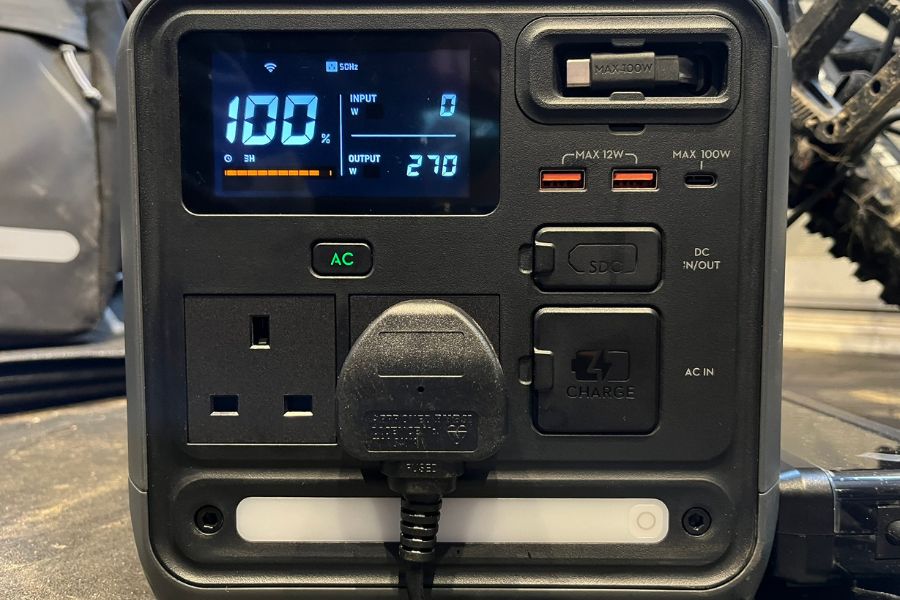
Ports: Two AC sockets, one USB-C port, one retractable USB-C cable, two USB-A ports, one SDC port, one AC input
Claimed cycle life: Over 80% capacity after 4000 cycles
DJI Power 1000 Mini: Review
A portable power station that makes sense for eMTB riders
The DJI Power 1000 Mini works because it solves a real problem for electric mountain bikers. An eMTB opens up bigger rides, steeper climbs and longer days, but battery management becomes part of the trip. If you are camping, staying somewhere without easy charging, driving between trail centres or riding two days back-to-back, having a portable power station can be genuinely useful.
With 1008Wh of capacity, the DJI Power 1000 Mini has enough energy to charge or significantly top up most eMTB batteries. It will not give you unlimited riding, and inverter losses mean you should not expect every watt-hour to end up inside the bike battery, but it is enough to make a real difference. A 625Wh battery can receive a very useful charge, while a larger 750Wh or 800Wh battery can still be topped up meaningfully after a ride.
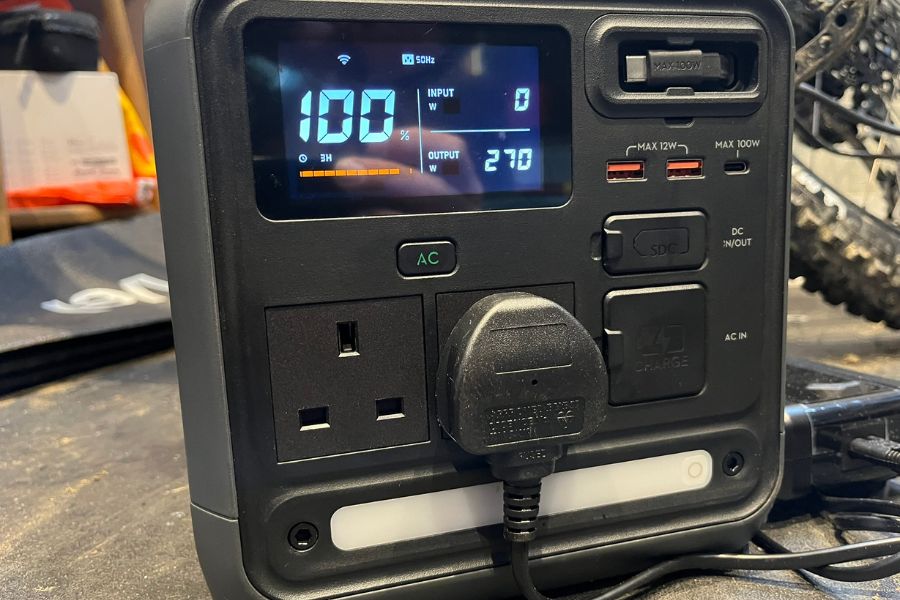
That makes it especially useful for a weekend camping and riding. You can charge the bike, then use the same unit for phones, GPS devices, lights, cameras, laptops and general camp kit. If you are already thinking carefully about ride range, our guide to getting more range from your e-MTB battery is a useful companion piece.
Charging an eMTB
The big appeal here is eMTB charging. The DJI Power 1000 Mini has enough capacity to make it useful rather than decorative. For riders with a mid-sized eMTB battery, it can put back a serious amount of charge. For riders with a larger full-power eMTB battery, it is best viewed as a strong top-up or one practical recharge rather than a full weekend of riding from empty.
The important detail is efficiency. A power station stores DC energy, sends it through an AC inverter, then your eMTB charger converts it again for the bike battery. That conversion process wastes some energy. In real use, you should think of the 1008Wh capacity as a practical reserve rather than a guaranteed 1008Wh delivered directly into the bike.
Even with that caveat, it is extremely useful. If you finish a ride with a half-empty battery, the DJI can get you back into a sensible range for the next day. If you are using it for a child-friendly family ride, trail-centre session or mixed weekend of riding and camping, it gives you options you would not otherwise have.
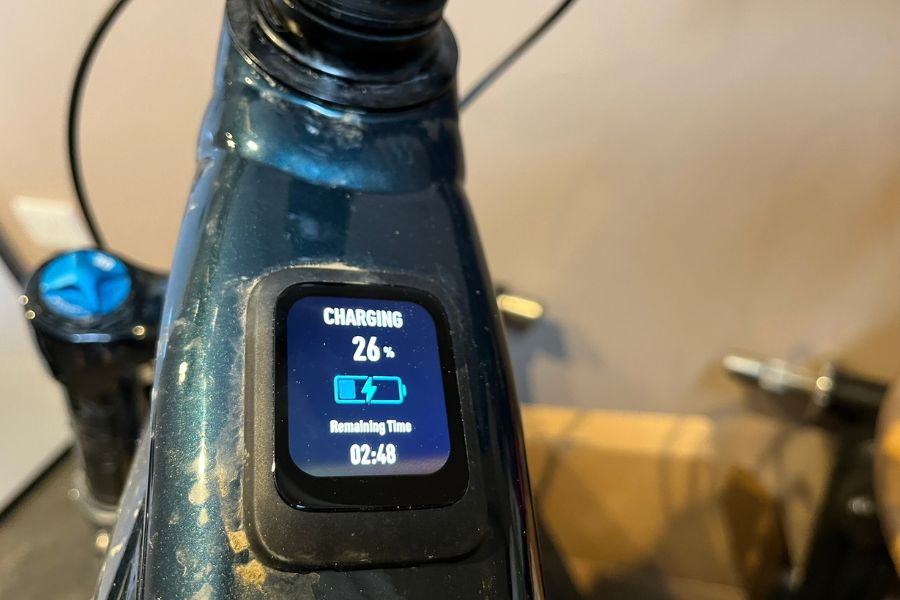
For riders using full-power eMTBs, that extra charging buffer can be the difference between cutting a second ride short and heading back out with confidence.
Wall charging and solar charging
Mains charging is one of the DJI Power 1000 Mini’s biggest strengths. Plug it into the wall and it can take up to 1000W of input, so it recharges quickly enough to be practical. That matters because power stations can become annoying if they take half a day to prepare before a trip. This one is much easier to live with.
Solar charging is useful, but it needs realistic expectations. The unit itself can accept up to 400W through its SDC input, but if you are using a 200W solar panel, that panel becomes the limit. In UK conditions, you will often see less than the panel’s headline output because of cloud, sun angle, temperature and shade.
That means if you are charging an eMTB from the power station while also taking in solar, the bike charger may draw more power than the panel is putting back in. You can still extend your available energy, but you are unlikely to keep the power station fully topped up while charging a bike unless conditions and input are very favourable.
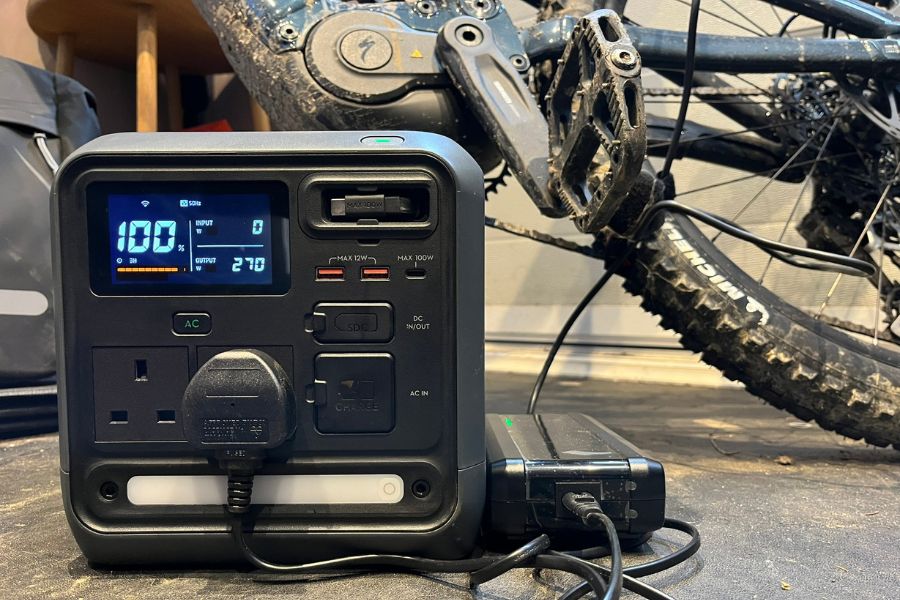
For a weekend camp, though, solar still makes sense. It can slow the rate at which the pack drains, keep smaller devices topped up and add useful energy back during the day while you are riding. It is not a replacement for mains charging, but it is a valuable asset.
Camping and weekend use
This is where the DJI Power 1000 Mini feels strongest. It is not just an eMTB charger. It is a compact campsite power hub. Phones, lights, speakers, cameras, drone batteries, laptops, GPS units and USB-powered kit are all easy jobs for it. If you ride, film, camp and travel, it quickly becomes one of those items you keep finding uses for.
The size matters. At around 11.5kg, it is not something you would carry in a riding pack, but it is manageable for the car, van, tent or camper setup. Larger power stations give more output and more capacity, but they also become bulkier and easier to leave at home. The DJI Power 1000 Mini feels much closer to grab-and-go.
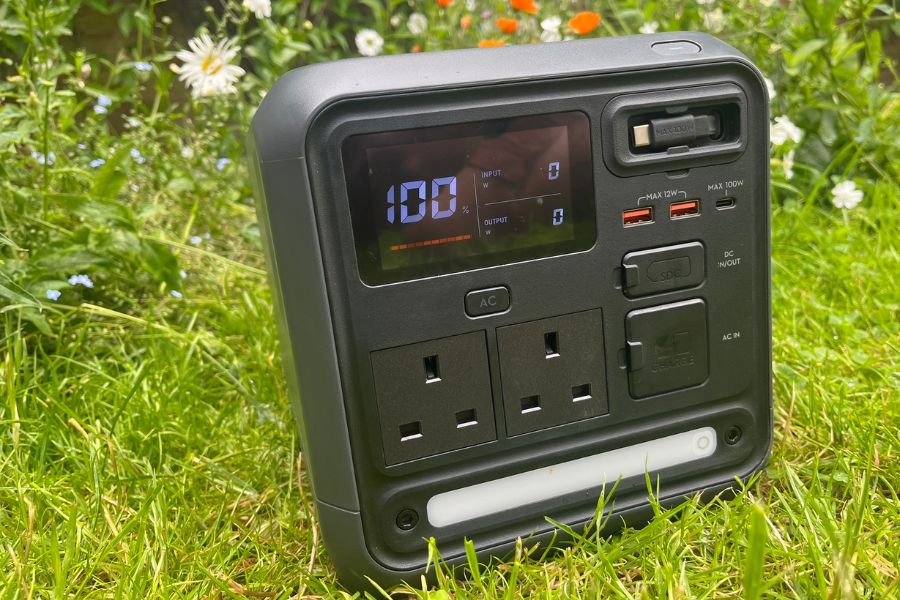
The built-in USB-C cable is a neat touch, especially when charging phones, laptops or camera kit around camp. The AC sockets cover normal chargers, while the USB ports reduce the need to carry multiple plugs. The built-in light is also useful in a tent or van, although it is more of a convenience feature than a reason to buy it.
Output and limitations
The main limitation is output. The DJI Power 1000 Mini is not designed to run every high-draw appliance. Its AC output is rated at 1000W max with 800W continuous output, so it is better suited to charging and moderate loads than running multiple power-hungry devices at once.
For eMTB use, that is not a major problem because most bike chargers sit well below that. The limitation matters more if you also want the power station for kettles, heaters, power tools or bigger campsite appliances. If that is the plan, a larger power station may make more sense.
The other limitation is that DJI uses its SDC ecosystem for some functions. That can be useful if you already own DJI drones, but it does mean some charging setups need the right DJI cable or adapter. For eMTB riders, the main practical point is simple: check the accessories you need before buying, especially if solar charging is part of your plan.
What is not so good?
The biggest drawback is solar speed. With a 200W panel, the DJI Power 1000 Mini becomes much more self-sufficient, but not independent from the grid. In typical UK conditions, solar input will often be much lower than the headline number, and it can easily fall behind the output needed to charge an eMTB.
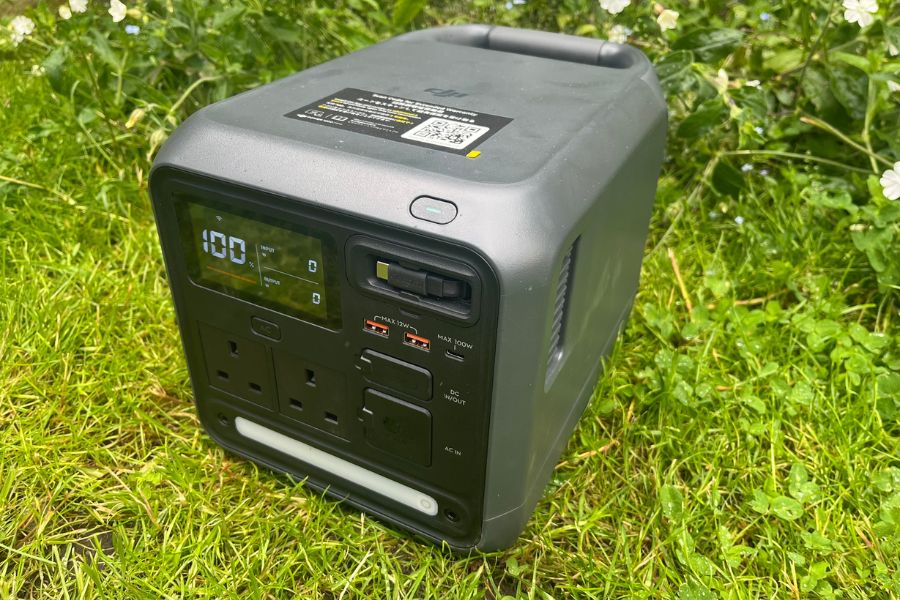
The second issue is capacity expectation. This is a 1kWh power station, not a huge van-life battery system. It can charge an eMTB, and it is very useful for topping up, but riders should not expect to run multiple big eMTB batteries from empty all weekend without a mains, car or solar top-up.
The final limitation is output compared with larger models. The compact size is a strength, but it also means the Power 1000 Mini has lower continuous AC output than bigger power stations. For bike and camping use that is mostly fine. For heavy appliances, it is not the best tool.
Final verdict
The DJI Power 1000 Mini is a brilliant portable power station for eMTB riders who camp, travel or ride away from easy charging. The 1008Wh battery gives enough capacity to put a meaningful charge back into an electric mountain bike, while the fast wall charging makes it easy to prepare before a weekend away.
Its real strength is versatility. It can charge your eMTB, then power the rest of your riding and camping kit. Add solar panels and it becomes even more useful, as long as you understand that a 200W panel will not refill it quickly or fully keep up with an eMTB charger in all conditions.
It is not the right choice if you want to power heavy appliances or multiple eMTB batteries from empty across a whole weekend. But as a compact, high-quality 1kWh power station for bike trips, camping, filming and off-grid top-ups, it is a very useful piece of kit.
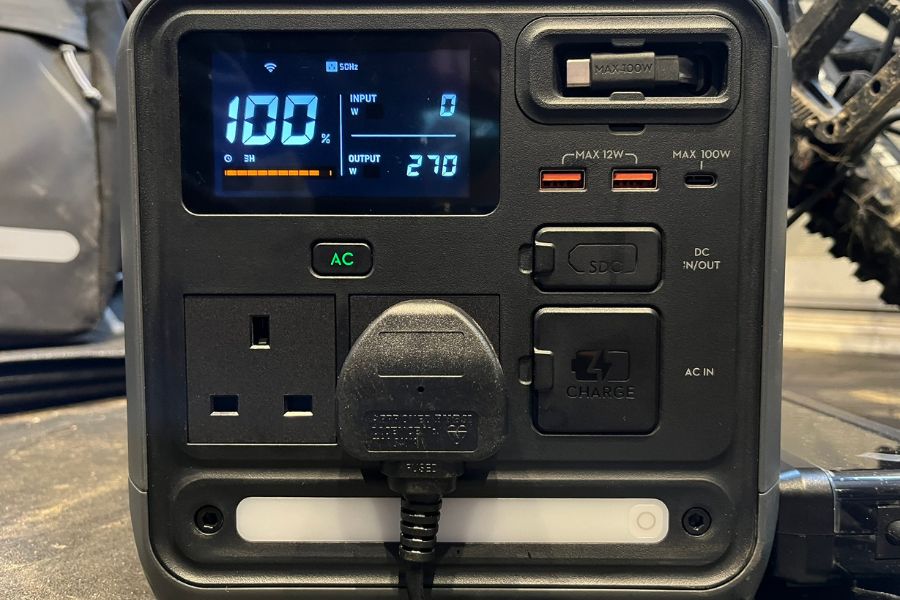
DJI Power 1000 Mini
£449
DJI Power 1000 Mini alternatives
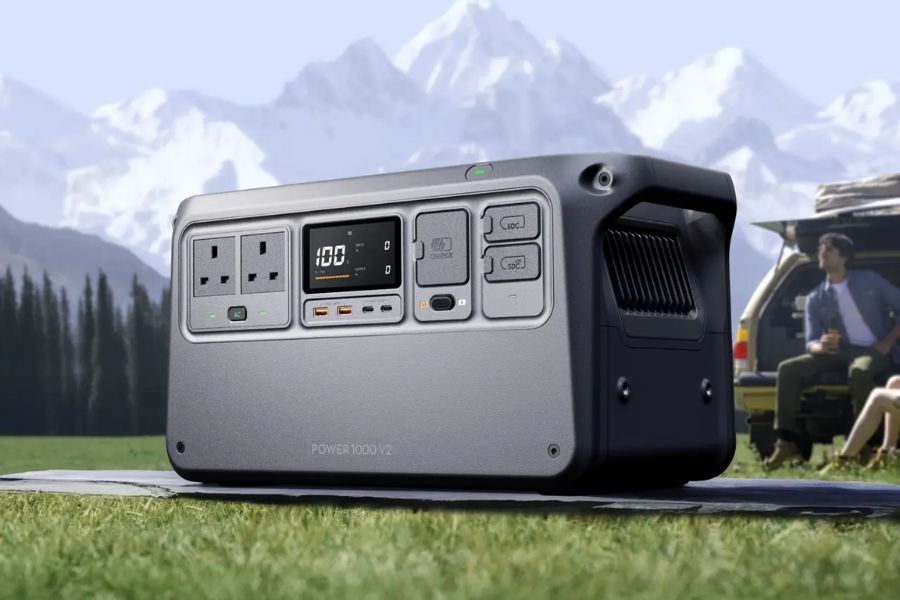
DJI Power 1000 V2
£579
The DJI Power 1000 V2 is the better choice if you want more output power and do not mind carrying a larger unit. It keeps the 1kWh-class capacity but gives a much stronger inverter, making it more suitable for higher-draw appliances. For eMTB charging alone, the Mini is easier to live with. For broader campsite or van use, the larger unit may be more versatile.
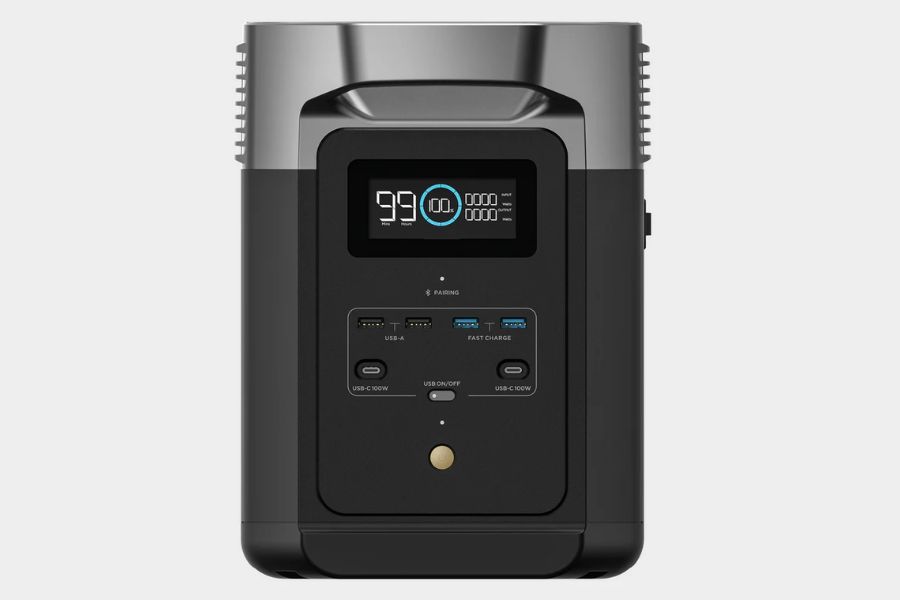
EcoFlow Delta 2
£649 (RRP £899)
The EcoFlow Delta 2 is one of the obvious rivals in the 1kWh power station category. It has a strong reputation, high output and a broader accessory ecosystem. It may suit riders who want more traditional power-station flexibility rather than DJI’s compact design and SDC-based system.
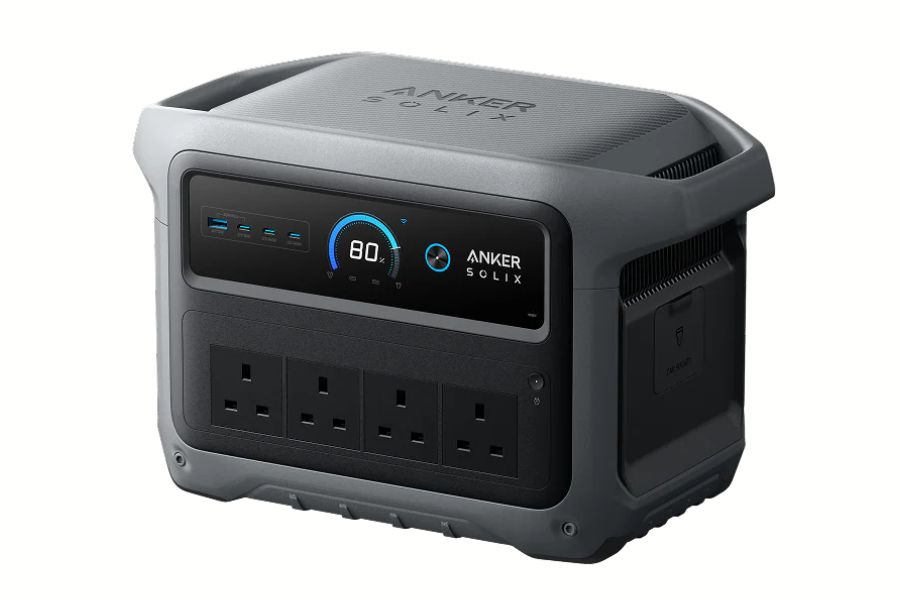
Anker Solix C1000
£999
The Anker Solix C1000 is another strong alternative if output power matters. It is a capable 1kWh-class power station with more emphasis on high-output home backup and campsite appliance use. The DJI Power 1000 Mini is the more compact, bike-trip-friendly option, while the Anker makes sense if you want more general-purpose power.
DJI Power 1000 Mini FAQs
Can the DJI Power 1000 Mini charge an eMTB?
Yes. The DJI Power 1000 Mini has a 1008Wh battery, so it can charge or significantly top up most eMTB batteries. Real-world charge will depend on your bike battery size, charger efficiency and how empty the bike battery is.
Will the DJI Power 1000 Mini fully charge an eMTB battery?
It can fully charge many smaller and mid-sized eMTB batteries, but larger 750Wh or 800Wh batteries may use most of the power station’s usable capacity once charging losses are included. It is best seen as a strong top-up or one useful recharge rather than unlimited off-grid riding.
How fast does the DJI Power 1000 Mini recharge from the wall?
The DJI Power 1000 Mini supports up to 1000W AC input, so it can recharge quickly from a mains socket. DJI quotes 0–80% in 58 minutes under suitable conditions.
Is solar charging useful with the DJI Power 1000 Mini?
Yes, but it depends on expectations. The unit can accept up to 400W through its SDC input, but a 200W solar panel will charge much more slowly than mains power, especially in UK conditions. Solar is best for extending weekend use rather than replacing wall charging completely.
Is the DJI Power 1000 Mini good for camping?
Yes. It is very useful for camping because it can power phones, lights, laptops, cameras, drones, GPS units and eMTB chargers. Its compact size and 11.5kg weight make it easier to transport than many larger power stations.