
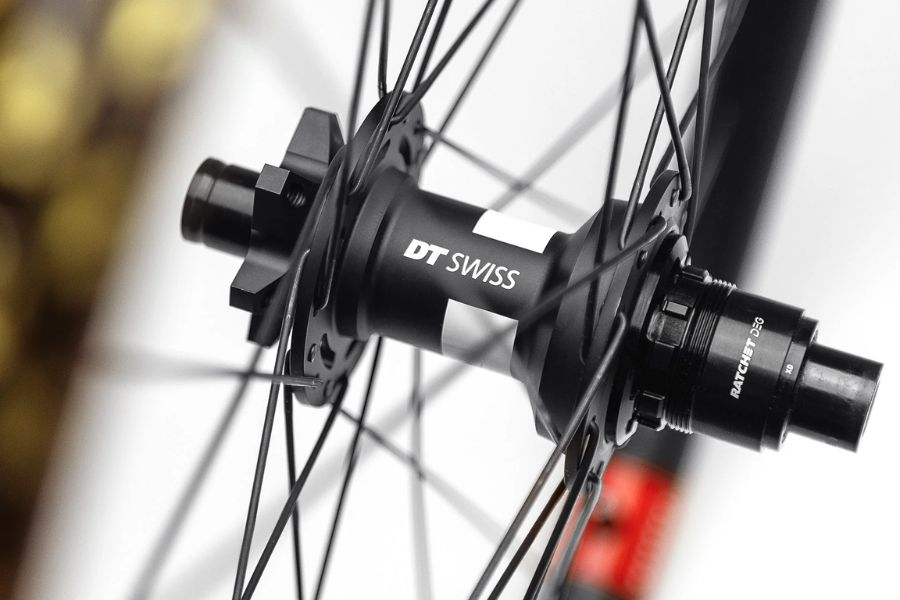
Pedal kickback is one of those MTB topics that sounds abstract until you feel it. On rough trails, big compressions and square-edge hits can tug the chain, rotate the cranks, and make the drivetrain feel like it is fighting the suspension. On an eMTB—where mass, grip and speed all go up—that sensation can be more noticeable. That is the context for DT Swiss Degrees of Freedom (DF), a hub-internal adjustment designed to reduce chain influence on rear suspension movement.
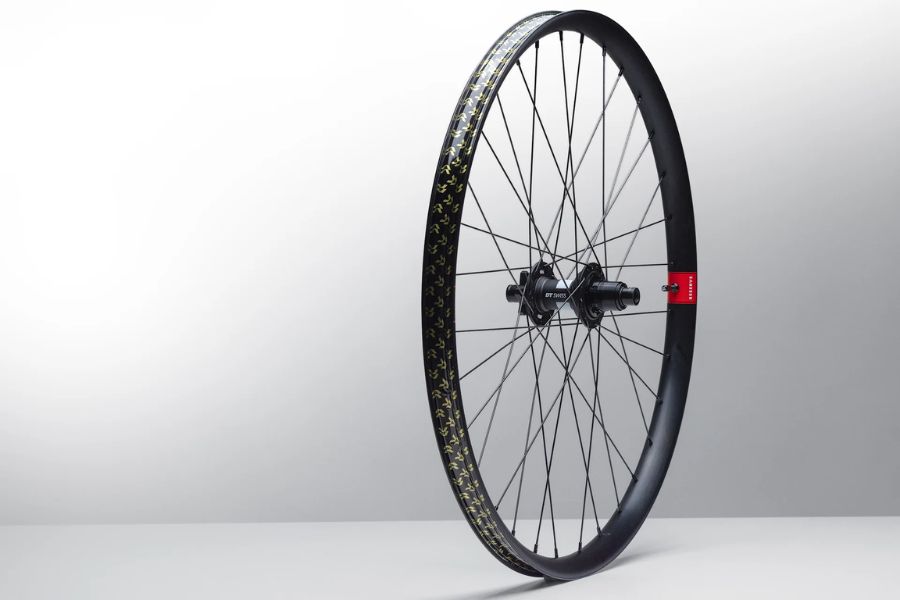
Reserve has now leaned into DF as a headline feature, becoming the exclusive aftermarket source for wheelsets built around DT Swiss’s Degree of Freedom concept. The key point is not “more engagement” or a bigger number. It is controlled “give” before engagement, with adjustable settings intended to let the suspension move more freely on rough descents. If you are currently weighing up a new build, it is worth cross-checking which bikes you are aiming at in our guides to the best full-suspension eMTB 2026 and the best hardtail eMTB 2026, because hubs and wheels are increasingly part of how a bike rides, not just what it weighs.
What DT Swiss Degrees of Freedom actually changes
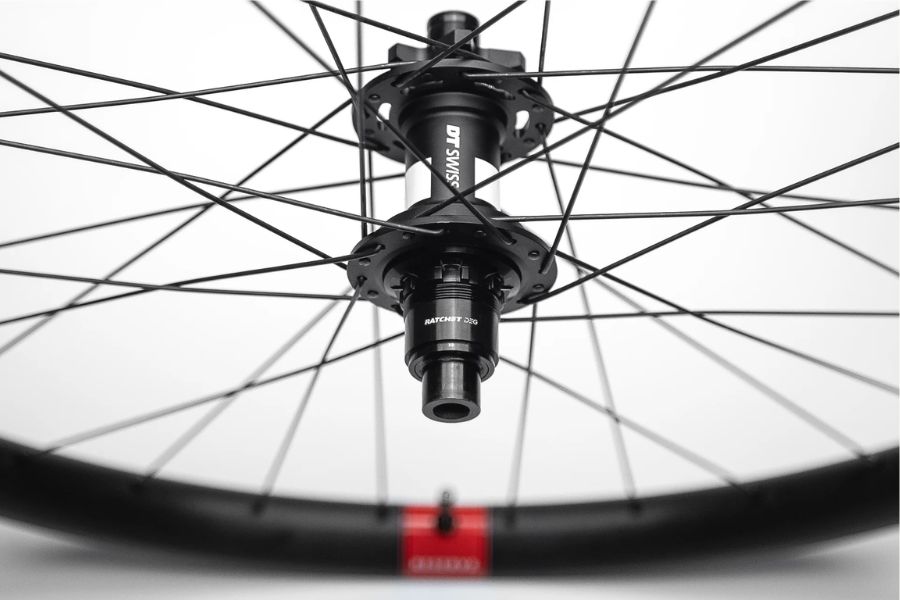
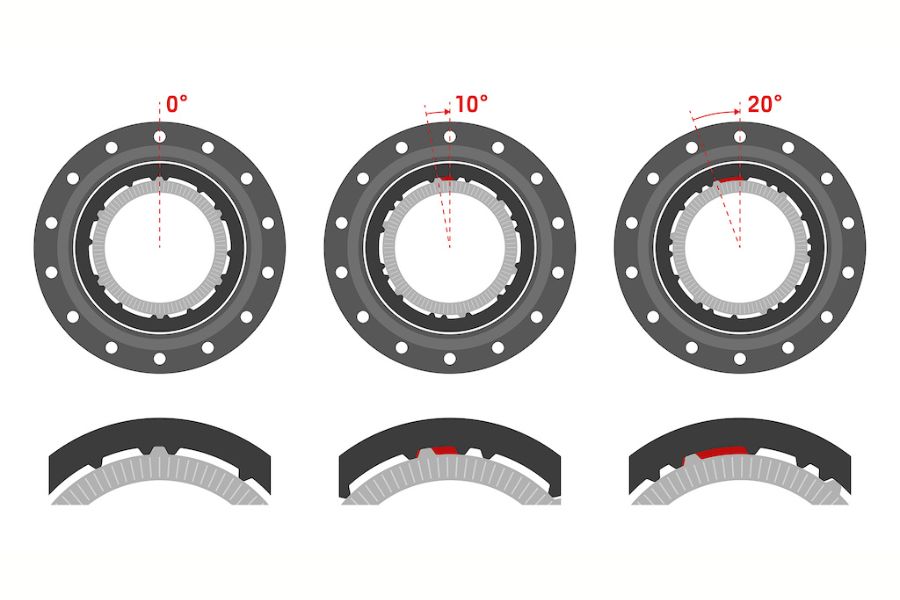
DT Swiss describes Degrees of Freedom as an anti-pedal kickback device that’s simplified: you replace specific ratchet-related parts in the Ratchet DEG system to introduce three different degrees of freehub movement—0°, 10° and 20°—before full engagement. In plain terms: you choose how much rotational deadband you want. At 0° it behaves like a conventional setup; at 10° and 20° it’s aiming to reduce the crank-tug sensation when the suspension is getting hammered.
DT Swiss’s own explanation is the most useful reference for understanding the mechanism, while Reserve’s announcement frames it as a performance gain “with no weight penalty”, focused on improved suspension behaviour and composure on rough trails.
Why DF can matter more on eMTBs in the UK
UK riding is often a worst-case test: slick roots, square-edge hits, braking bumps, and awkward compressions where traction is everything. If the rear end feels bound up under load, you lose grip and confidence. DF is trying to reduce one specific contributor to that harshness: drivetrain feedback into the pedals when the suspension is deep in its travel.
This is not a universal must-have. Some riders prefer the most direct feel possible and will happily leave DF at 0°. Others rarely notice kickback. The riders most likely to appreciate DF are those who have felt crank rotation in big compressions, those riding aggressively on rough terrain, and anyone who is already sensitive to how anti-squat and chain growth affect ride feel.
If you want a related internal explainer to link from DF stories in future, eMTB motors and batteries explained is a useful “system” piece for readers who are trying to understand how modern eMTBs behave under load—even if hubs are the focus here.
Buying guidance: how to decide if DF is worth it
If you are considering Reserve wheels with Degrees of Freedom, the sensible way to approach it is as tunable ride feel rather than a spec-sheet flex. If you regularly ride rough tracks and want a calmer platform through repeated impacts, the 10° and 20° settings are where you are most likely to notice the effect. If you prioritise instant punch out of corners and the crispest possible engagement, DF may end up living at 0°—which is fine, but you are then buying optionality, not a guaranteed transformation.
Most importantly, do not treat DF as a substitute for fundamentals. Tyre casing choice, pressures, inserts, rebound and compression settings will still dominate how planted your eMTB feels. DF is the fine-tuning tool you consider once the basics are already in the right place.