
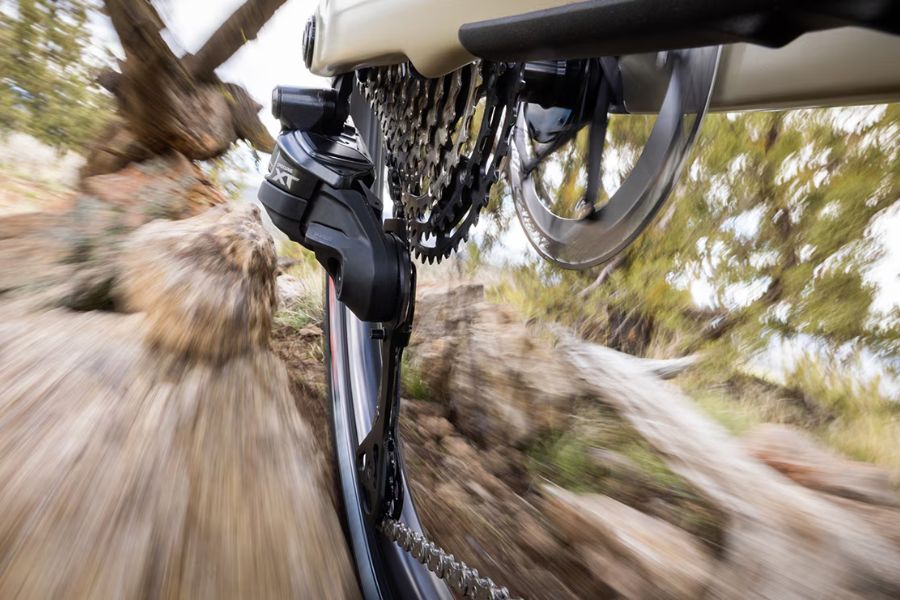
If there’s one area of eMTB ownership that catches riders out, it’s drivetrain wear. People expect tyres and brake pads to disappear faster on an electric mountain bike, but it’s the chain and cassette bill that often stings, especially after a wet UK winter. The reason is simple. An eMTB drivetrain spends more time under load, more time climbing, and more time grinding through wet grit. You cover more distance in the same ride window, you do more repeated efforts, and the motor amplifies torque through the chain whenever you’re pedalling. That combination is brilliant for riding and brutal on consumables.
The other factor is the UK itself. A lot of our riding is damp, muddy, and abrasive, and we often link trails with salted roads. That fine slurry works its way into chain rollers, cassette teeth and derailleur pulleys. Once it’s there, it acts like a grinding paste. You can feel it as a rougher, noisier drivetrain, but the real damage is occurring at the pin-and-roller interface. Chain elongation creeps in, the chain no longer matches the tooth profile properly, and your cassette starts wearing to match the now-worn chain. Leave it too long, and you end up replacing the chain, cassette, and often the chainring as well.
This guide is about eMTB drivetrain wear in UK conditions, how to spot it early, what “good enough” maintenance looks like, and where it’s worth spending money on e-bike-rated parts. If you want the broader ownership routine first, read eMTB maintenance schedule: what to service, when to do it and keep Tech & Advice bookmarked. If your concern is range, it’s worth noting that drivetrain drag can reduce efficiency, so this pairs well with How to get more range from your eMTB battery on UK trails.
Why eMTB drivetrain wear happens faster than on a normal MTB
eMTB drivetrain wear is not just “more power equals more wear”. It’s the pattern of use. On an acoustic bike, you tend to vary effort more, you might freewheel more on climbs, and you often back off when traction is poor. On an eMTB, it’s easy to stay in the torque band and keep pushing up climbs at a lower cadence, especially in slippery conditions. That is exactly the scenario that loads the chain hardest.
Add the weight of the bike, a heavier rider kit in winter, and soft trail surfaces, and you increase the force the drivetrain sees at a given speed. Even if you are a smooth rider, the system is still doing more total work per ride. That is why many UK riders notice they go through chains more quickly on an eMTB than on their normal trail bike, even if the components are similar.
Mud and grit accelerate everything. Dirty chains not only run noisier; they wear faster and cause wear elsewhere. A worn chain on a fresh cassette can skip under load. A fresh chain on a worn cassette can also skip because the teeth have worn to match the elongated chain. That is why eMTB drivetrain wear is best handled proactively, not when shifting becomes a mess.
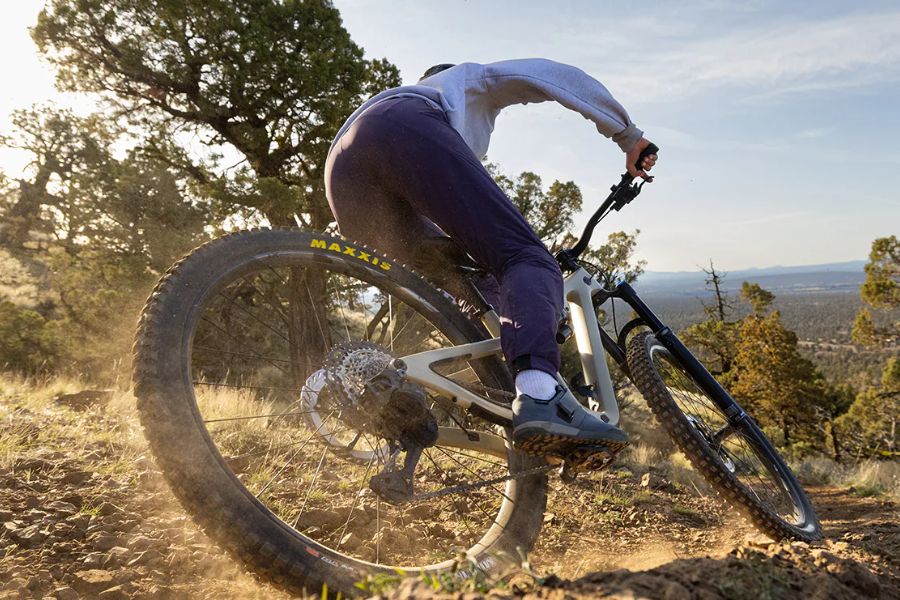
If you are still deciding what type of bike suits your riding, it’s worth understanding that your choice can change how hard your drivetrain works. A lightweight eMTB ridden at higher cadence can be kinder to components than a full-power eMTB ridden in maximum-assistance mode everywhere. Start with Best eMTB 2026 and then narrow it down via Best full-suspension eMTB 2026 or Best hardtail eMTB 2026.
Chain wear: when to replace, and how to measure it properly
Most riders discover chain wear too late, because a chain can feel “fine” right up until it starts damaging the cassette. Chain wear is often called “stretch”, but what’s actually happening is wear at the pins and rollers that increases the effective pitch of the chain. As that pitch changes, the chain no longer engages cleanly with the cassette teeth.
The simplest way to stay ahead of eMTB drivetrain wear is to measure the chain regularly. A chain checker makes it fast. Tools like the Park Tool CC-3.2 Chain Wear Indicator are designed to indicate common replacement points, including 0.5% and 0.75% wear, which are widely used industry thresholds. The exact “right” moment depends on your drivetrain and how fussy you are, but the strategy is consistent. Replace chains early enough that the cassette does not start wearing to match a worn chain.
For UK eMTB riders who ride through winter mud, checking every couple of weeks is not excessive. If you ride once a week in sloppy conditions, check monthly at a minimum. It’s the highest-value, lowest-effort habit you can build because a chain is relatively cheap compared to a cassette. This is also where your maintenance routine pays off. A quick wipe-down and correct lubrication after wet rides, as covered in eMTB maintenance schedule (UK), can slow wear dramatically.
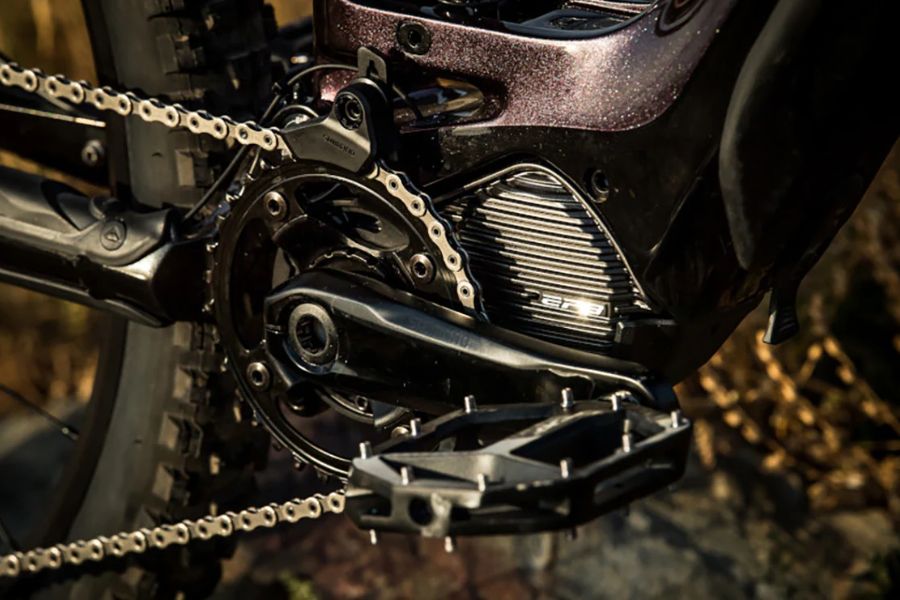
It’s also worth choosing the right chain for the job. Many brands offer reinforced chains intended for e-bike use. Shimano, for example, describes the Shimano CN-HG701-11 chain as compatible with e-bikes and reinforced for that use. SRAM lists e-bike approval on models such as the SRAM EX1 chain. KMC has an entire e-bike chain range on its official site, including its eBike series. You do not need to obsess over brand choice, but you do want a chain that matches your drivetrain speed, has a good surface treatment for wet conditions, and is genuinely intended for higher loads.
Cassettes and chainrings: what actually wears, and what usually causes skipping
Once a chain is worn, it becomes a cassette-wear accelerator. The cassette teeth start to develop a hooked profile, and engagement gets sloppier. On an eMTB, that can show up first as skipping on steep climbs where torque is highest, even if shifting seems acceptable on flatter ground.
The typical eMTB wear cycle looks like this. You ride through wet grit, the chain wears, you keep riding, and the cassette wears to match. Then you fit a new chain, and it skips because the cassette is already worn. That is why eMTB drivetrain wear management is mostly chain management. The chain is your sacrificial part. Treat it as a consumable, and your cassette lasts longer.
Chainrings also wear, particularly if you ride with a gritty chain. Many eMTBs use narrow-wide chainrings and specific tooth profiles. A worn chainring can cause chain retention issues and poor engagement, but it often lasts longer than a cassette if you keep on top of chain replacement. If you notice consistent skipping only in one or two sprockets, it’s often the cassette. If engagement feels vague across the range, or the chain drops more easily, the chainring can be part of the story.
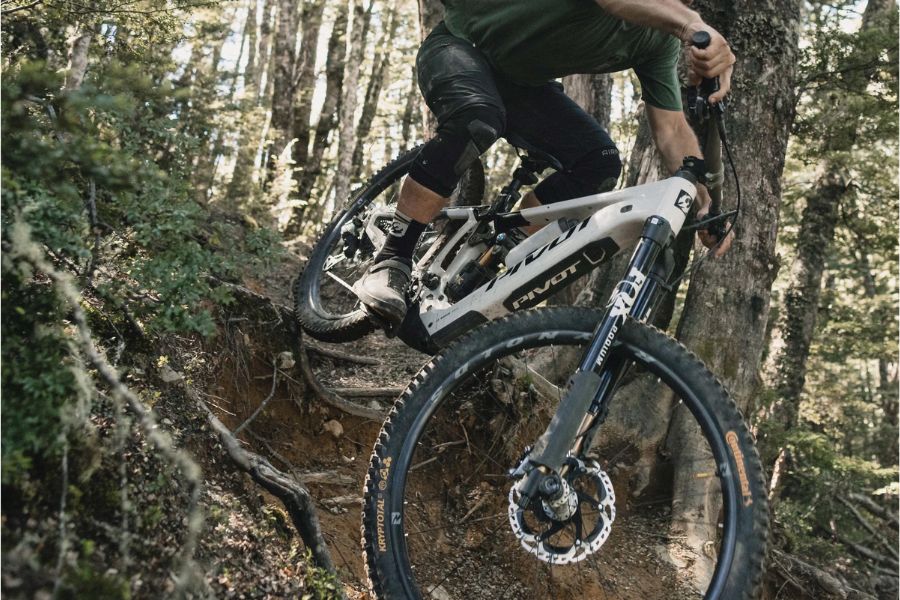
If you are fed up with eating drivetrains, it may be worth considering durability-focused systems, especially if your riding is high-torque and high-mileage rather than race-paced shifting performance. Shimano’s LINKGLIDE technology is positioned specifically around durability and smoother shifting under load. Shimano also makes durability claims on LINKGLIDE cassette pages, such as the CS-LG300 range, including that it can offer up to three times the durability of HYPERGLIDE under high chain-tension conditions, as seen on product listings like CS-LG300-9. That kind of system can make sense for UK winter riding and everyday mileage, especially if you prioritise longevity over the sharpest possible shifts.
How to make an eMTB drivetrain last longer in UK mud
You do not need a complicated ritual. You need consistency, especially in winter.
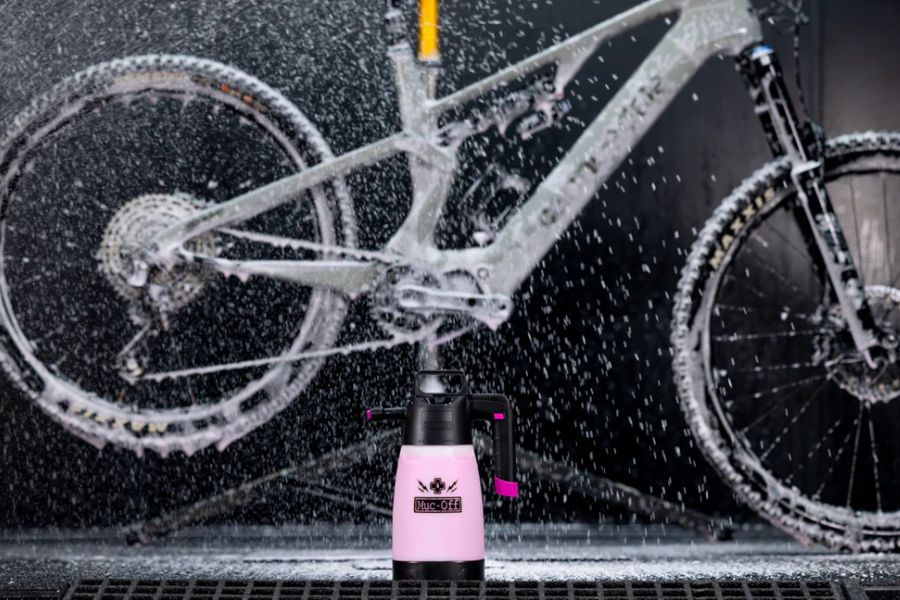
The biggest win is cleaning strategy. Avoid blasting the drivetrain with high-pressure water, because it can push contaminated water past seals and into bearings, and it does not actually remove grit from inside chain rollers. A low-pressure rinse, then a proper wipe-down, then re-lube after wet rides is the baseline. If your chain is filthy, a proper degrease and re-lube is better than adding more lubricant on top of grit. The key is to remove contamination, not mask it.
The second win is lubrication discipline. In UK winter conditions, a wet lube tends to last longer, but it also attracts grime if you over-apply. The practical method is apply sparingly, let it penetrate, then wipe the outside of the chain so it doesn’t carry a thick layer of oily paste into your cassette. If you want the bigger ownership routine around this, again, eMTB maintenance schedule (UK) covers the cadence that works for most riders.
The third win is how you ride. If you can avoid grinding at very low cadence in maximum assistance, you reduce peak chain loads. Shift earlier, keep cadence a little higher where traction allows, and ease off pedal pressure briefly during shifts so the chain can move cleanly across the cassette. That is not just “nice shifting”, it reduces the shock loads that chip away at drivetrain life.
The fourth win is replacing chains early enough. Many UK riders wait until the chain is clearly noisy or skipping. By that point, the cassette is often already compromised. Use a chain checker such as the Park Tool CC-3.2, keep an eye on wear, and treat chain swaps as normal winter maintenance. It’s also worth keeping a spare quick link and knowing how to fit it, because winter grit can cause stiff links and chain issues at the worst possible time.
Finally, remember that drivetrain health links back into the whole eMTB experience. A dragging, gritty drivetrain can make the bike feel underpowered and reduce efficiency, which is why riders sometimes think their battery is worse in winter than it really is. If you want the winter-specific battery side, read eMTB battery care in winter (UK) alongside the range guide: How to get more range from your eMTB battery on UK trails.