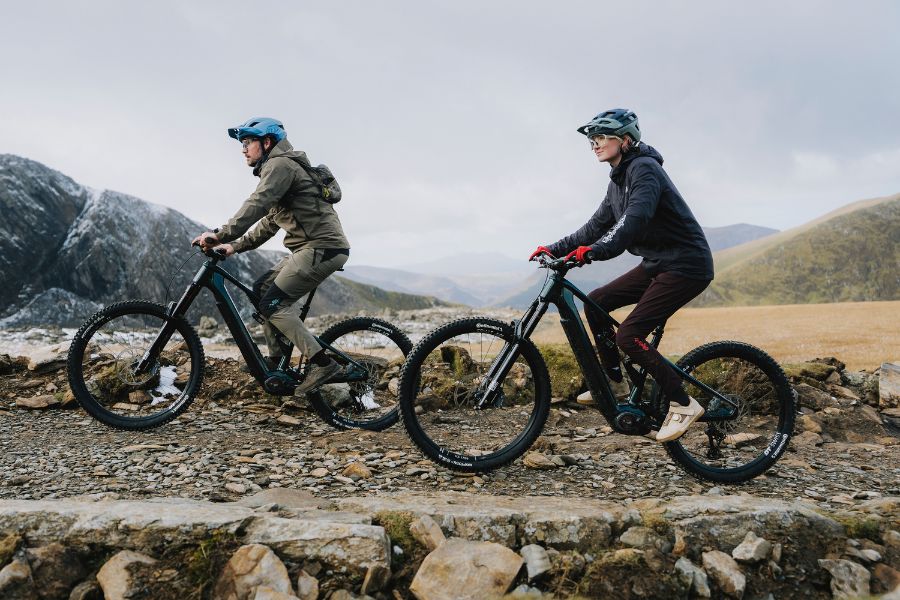
Choosing between a hardtail vs full-suspension eMTB is one of the most important decisions you will make when buying an electric mountain bike. It affects price, comfort, maintenance, control, battery range, climbing grip and how confident the bike feels when the trail gets rough.
A hardtail eMTB has front suspension but no rear shock. It is simpler, usually cheaper, often lighter, and can be a very good choice for bridleways, forest tracks, smoother trail centres, commuting crossover and riders who want a direct feel from the trail. A full-suspension eMTB has suspension at both the front and rear, giving more comfort, grip and control when the ground gets rough, steep, rooty or fast.
The mistake is assuming one is automatically better than the other. A full-suspension eMTB is usually the stronger choice for proper mountain biking, but it is not always the best choice for every rider. A hardtail eMTB can be better value, easier to maintain and more than capable if your riding is mainly moderate UK off-road terrain rather than hard enduro-style trails.
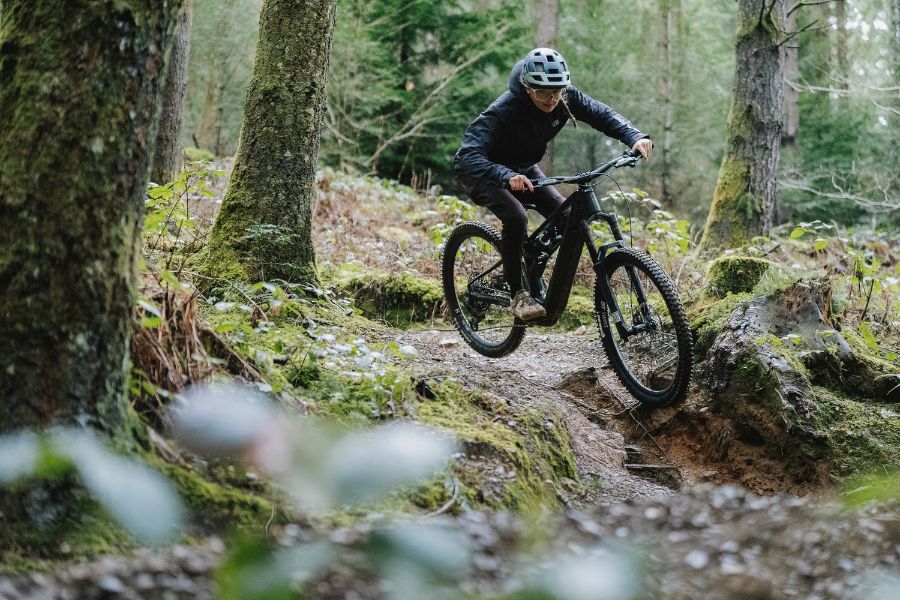
This guide explains the real difference between hardtail vs full-suspension eMTB, where each type works best, and which one makes most sense for UK riders.
What is a hardtail eMTB?
A hardtail eMTB is an electric mountain bike with front suspension and a rigid rear end. The fork absorbs impacts from the front wheel, but the rear wheel is connected directly to the frame without a rear shock or suspension linkage.
That simpler design is the main reason hardtail eMTBs remain popular. There are fewer moving parts, fewer bearings, no rear shock to service and less complexity around suspension setup. For many riders, especially those new to eMTBs, that simplicity is a major advantage. You still get motor support for climbs, but ownership is usually more straightforward than with a full-suspension bike.
Hardtail eMTBs also tend to offer better value at lower prices. Because the frame is simpler and there is no rear shock, brands can often spend more of the budget on the motor, battery, brakes, drivetrain or fork. This is why many of the strongest budget electric mountain bikes are hardtails. If you are shopping at the value end of the market, our guide to the best electric mountain bikes under £2,500 2026 is a useful place to start.
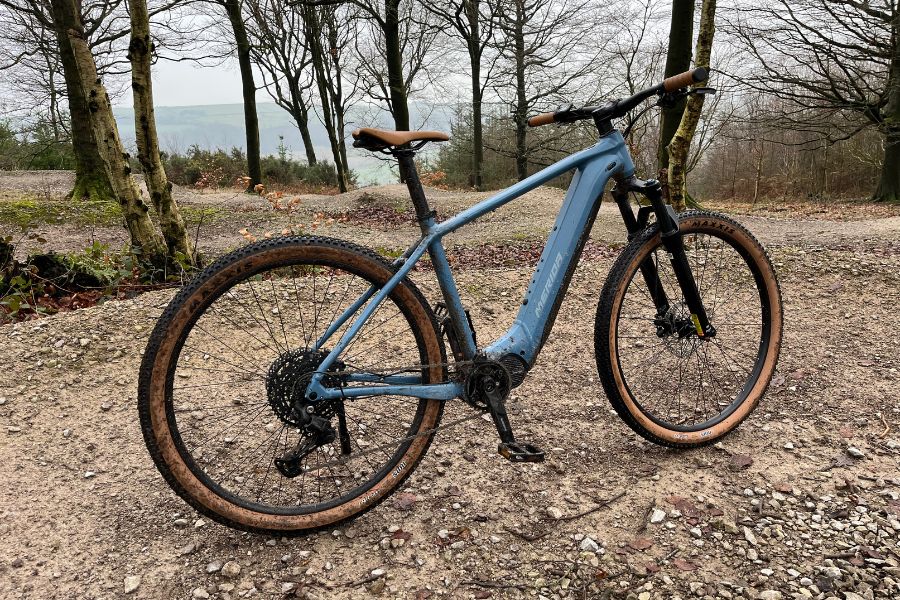
On the trail, a hardtail gives a more direct ride feel. You can feel what the rear tyre is doing, which can help with technique and line choice. On smoother surfaces, that directness can make the bike feel efficient and responsive. On rough ground, though, the rear end can bounce, skip or feel harsher than a full-suspension bike.
A hardtail eMTB makes most sense if you ride bridleways, forest tracks, gravel lanes, towpaths, smoother trail-centre routes and mixed off-road loops. It can also work well for riders who want one bike for light trail use, fitness, commuting and general adventure riding. If that sounds like your riding, our best hardtail eMTB 2026 guide covers the strongest current options.
What is a full-suspension eMTB?
A full-suspension eMTB has both a suspension fork and a rear shock. The rear wheel can move independently through the suspension travel, helping the tyre stay in contact with the ground over rocks, roots, braking bumps and rough descents.
That extra suspension changes the way an electric mountain bike behaves. On rough terrain, a full-suspension eMTB usually gives more grip, more comfort and more control. The rear tyre can track the ground instead of bouncing across it, which helps with both descending and technical climbing. On wet UK roots, loose trail-centre surfaces and rocky descents, that extra traction can make a big difference.
When understanding hardtail vs full-suspension eMTB, full-suspension eMTBs are usually the better choice for riders who want to ride proper mountain bike trails regularly. If your riding includes red and black trail-centre routes, rocky descents, natural woodland trails, steep off-piste sections or repeated bike-park-style laps, rear suspension is not just a comfort feature. It helps the bike stay composed when the ground gets rough.
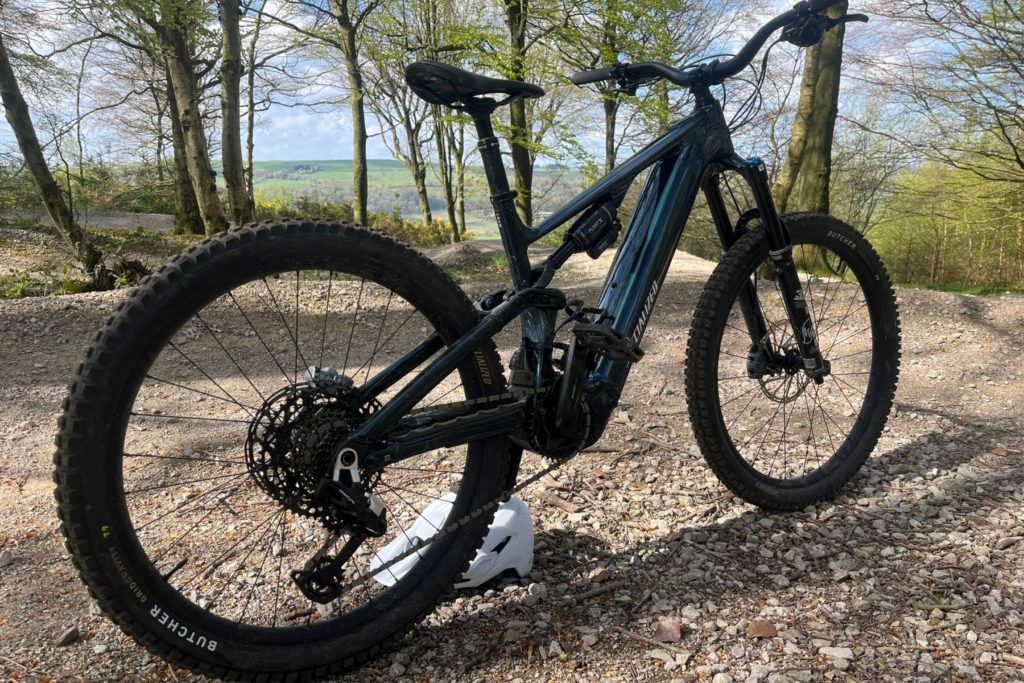
The trade-off is cost and complexity. A full-suspension eMTB has more bearings, pivots and shock hardware. The rear shock needs setup and servicing, and the bike may cost more to buy and maintain. It can also be heavier than a comparable hardtail, although modern full-suspension eMTBs can hide that weight well if the geometry and battery placement are good.
For many UK riders, full suspension is the better long-term choice if mountain biking is the main purpose of the bike. If you are comparing full-power, lightweight and longer-range options, our best eMTB 2026 guide gives a wider view of the current market.
Which is better for UK trail centres – hardtail vs full-suspension eMTB?
For UK trail centres, a full-suspension eMTB is usually the better choice if you want to ride red routes confidently, progress onto rougher descents or do repeated laps without feeling battered. Trail centres often combine long climbs, braking bumps, rock gardens, roots, berms and fast descents. Rear suspension helps the bike stay calmer and gives the rear tyre more grip under braking, cornering and climbing.
That does not mean hardtails are wrong for trail centres. A hardtail eMTB can be brilliant on blue routes, smoother red routes and less aggressive trail centres where the surface is flowing rather than brutal. It can also be a good learning tool because it forces better line choice and body position. You cannot simply rely on rear suspension to rescue every mistake.
The issue is fatigue. A hardtail can feel fine for the first descent, but rough trail-centre surfaces can become tiring over a long ride. Because an eMTB lets you climb more easily and do more laps, the harsher rear end of a hardtail can catch up with you. More laps mean more impacts, more braking and more time being bounced around.
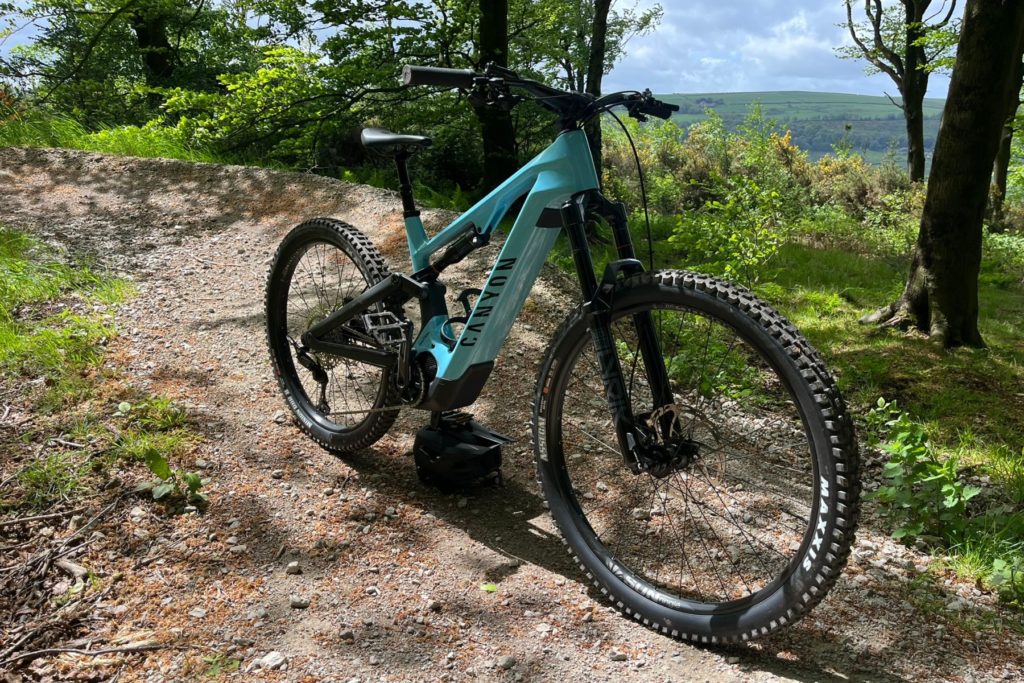
Full-suspension bikes also have an advantage when climbing rough trail-centre sections. On a hardtail, the rear wheel can lose traction if it skips over wet stones or roots. On a full-suspension eMTB, the rear wheel is more likely to stay planted, which lets the motor’s power turn into forward movement rather than wheelspin.
Tyre pressure matters for both types, but it is especially important on a hardtail because the rear tyre is doing more of the comfort work. If you choose a hardtail, spend time getting the rear tyre setup right. Our eMTB tyre pressure guide explains how to balance grip, support and rim protection for UK trails.
Which is better for bridleways, forest tracks and mixed riding?
This is where hardtail eMTBs in the hardtail vs full-suspension eMTB battle make a very strong case. If your riding is mostly bridleways, forest tracks, gravel lanes, farm tracks, canal paths and moderate woodland trails, a hardtail can be the smarter choice. You still get electric assistance for climbs and distance, but without paying for rear suspension you may not fully use.
A hardtail eMTB can also be more practical as an all-rounder. It is usually easier to maintain, often easier to fit accessories to, and can feel more efficient on smoother surfaces. If you want one bike for weekday fitness rides, family rides, light commuting and weekend off-road loops, a hardtail can make more sense than a long-travel full-suspension eMTB.
This is especially true if you are buying your first electric mountain bike. A hardtail gives you a simpler introduction to eMTB ownership. There is less suspension setup to learn, fewer service points and often a lower purchase price. For riders who are not planning to ride steep, rough trails every weekend, that can be a sensible way into the sport.
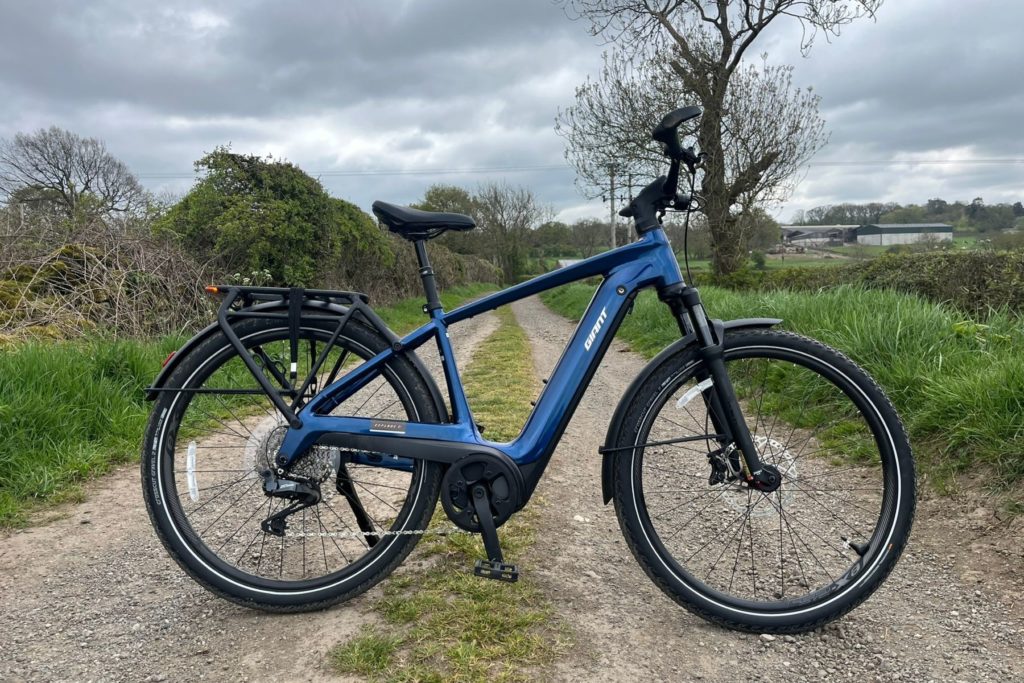
The limitation comes when the terrain gets rougher. Wet roots, rocky descents, ruts and repeated impacts expose a hardtail’s lack of rear suspension. The bike may still be capable, but it asks more from the rider. You need to use your legs as suspension, choose smoother lines and manage rear wheel grip more carefully.
If your riding is split between smooth tracks and proper trail riding, think carefully. A hardtail may be enough if rough trails are occasional. A full-suspension eMTB may be better if you expect your riding to progress quickly.
Which is better for beginners?
A beginner can choose either in the hardtail vs full-suspension eMTB battle, but the right answer depends on where they ride and what they want to become confident doing.
A hardtail eMTB can be a very good beginner bike because it is simpler and gives clearer trail feedback. It teaches line choice, body position and smooth riding. It can also be less intimidating because the bike is usually cheaper, less complex and sometimes lighter than a full-suspension equivalent.
For a rider who is mostly using bridleways, forest roads and smoother trail-centre routes, a hardtail is often enough. It gives the confidence of motor assistance without the cost and maintenance of full suspension. It is also a good choice if budget matters and you would rather buy a better hardtail than a poor full-suspension bike.
However, a full-suspension eMTB can give beginners more comfort and confidence on rougher terrain. The rear suspension helps the bike stay stable when the rider makes mistakes, brakes late or chooses a rough line. It can also make longer rides less tiring, which matters because eMTBs encourage riders to spend more time on the trails.
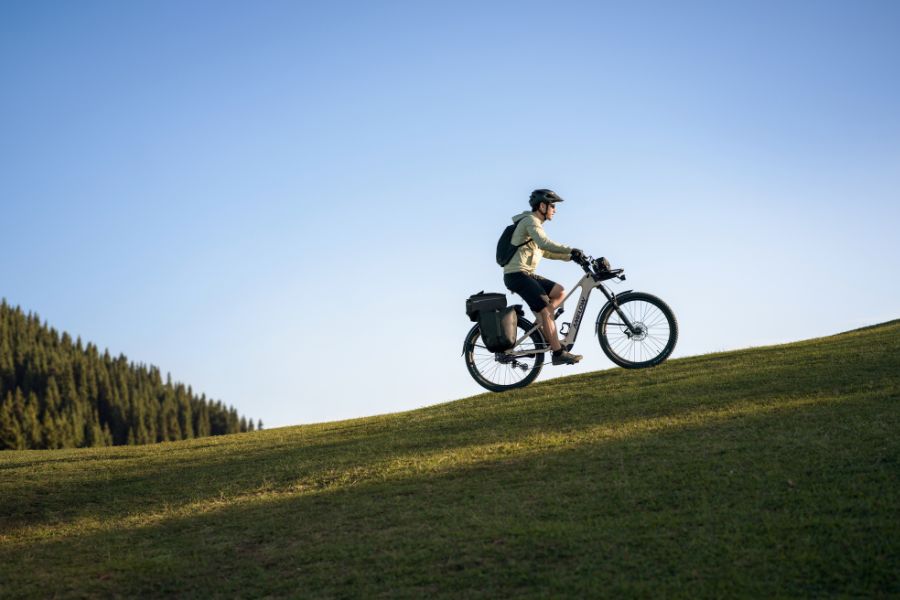
The danger is buying too much bike too soon. A long-travel full-power eMTB can be heavy, fast and expensive. For some beginners, that is not the easiest way to learn. A well-specced hardtail or moderate full-suspension trail eMTB may be a better fit than an aggressive enduro bike.
If you are deciding between overall bike types as well as suspension layout, read our guide to lightweight eMTB vs full-power eMTB. The amount of motor support and battery size can matter just as much as whether the bike has rear suspension.
Which is better for climbing – hardtail vs full-suspension eMTB?
On smooth climbs, a hardtail can feel efficient and direct. There is no rear suspension movement, so the bike can respond crisply when you pedal. On fire roads, gravel climbs and smooth bridleways, a hardtail eMTB can climb very well.
On rough climbs, full suspension usually has the advantage. The rear wheel can move over rocks, roots and steps while staying in better contact with the ground. That helps traction, especially when the motor is pushing through the drivetrain. Instead of the rear wheel bouncing and spinning, the bike has a better chance of finding grip.
This matters a lot on electric mountain bikes because the motor adds torque. A powerful full-power eMTB can overwhelm the rear tyre if the surface is slippery and the rider is in a high assistance mode. Rear suspension helps manage that power, but only if the bike is set up properly and the tyre pressure is right.
Hardtail riders need to be more active on rough climbs. Staying seated can help rear-wheel grip, but you also need to unweight the bike over obstacles, keep cadence smooth and choose gears well. A hardtail eMTB will climb impressively in the right hands, but it is less forgiving than a full-suspension bike.
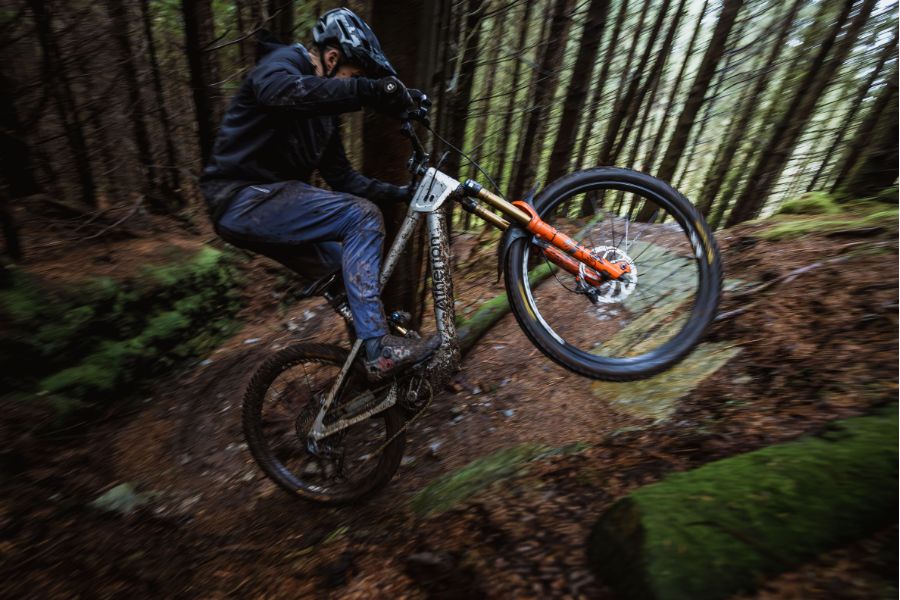
Motor choice also matters. A smooth, controlled motor can be easier to manage on slippery climbs than a very aggressive system. If you are comparing motors as well as frame types, our guide to the best eMTB motor for UK riding explains how systems such as Bosch, Shimano, Specialized, DJI, TQ, Fazua and Yamaha differ.
Which is better for descending?
For descending, full suspension is usually better. The rear shock helps absorb impacts, keeps the rear tyre tracking the ground and improves control under braking. On rough descents, that can mean more confidence, more speed and less fatigue.
A full-suspension eMTB is particularly useful on rocky trail centres, rooty woodland descents and steep natural trails. The bike can carry speed more smoothly because the rear wheel is not bouncing as harshly through impacts. It also helps the rider stay fresher over a long ride, which matters when an eMTB lets you do more climbing and descending than a normal bike.
Hardtails can still be fun on descents, but they require more rider input. You need to use your legs to absorb impacts, stay light over rough sections and choose cleaner lines. That can be rewarding, but it can also be punishing if the trail is rough or you are doing repeated laps.
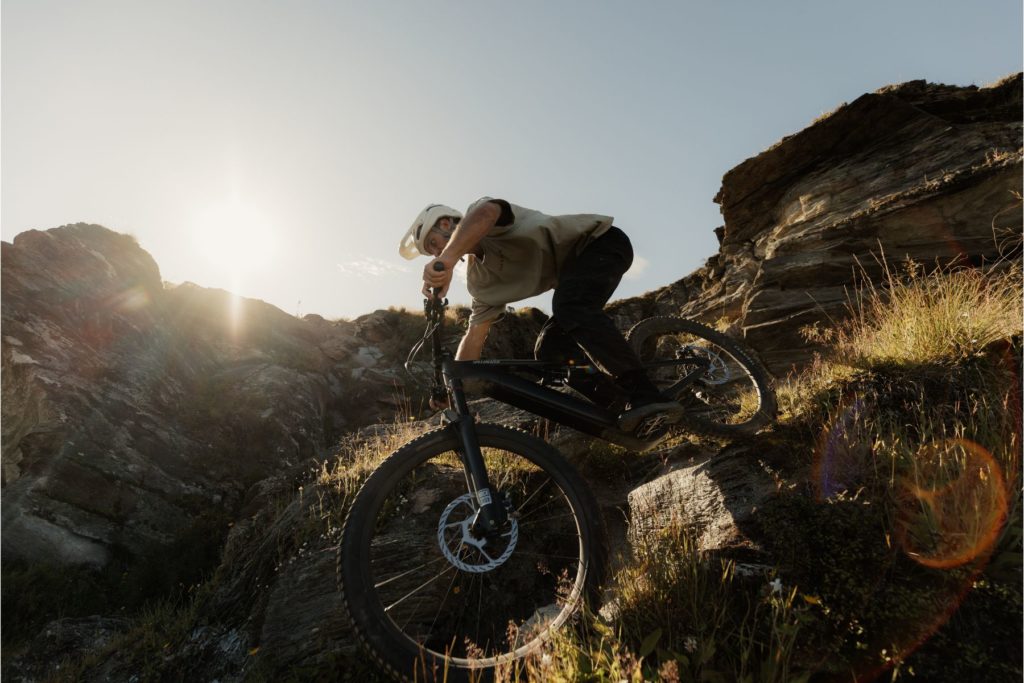
A hardtail can actually feel more lively on smoother descents. It may pump well through mellow trails and feel direct through corners. But when the terrain becomes rough, fast or unpredictable, the lack of rear suspension becomes more obvious.
For riders who mainly descend on smoother blue and red trails, a hardtail may be enough. For riders who want to progress on rougher red routes, black trails or natural descents, full suspension is the better choice.
Maintenance and ownership costs
Hardtail eMTBs are usually cheaper and simpler to maintain. There is no rear shock to service, no suspension linkage to inspect and fewer bearings to wear. That makes them appealing for riders who want reliable year-round use without adding extra workshop costs.
A hardtail also gives you fewer places for UK winter mud to hide. Cleaning is simpler, and there are fewer moving frame parts exposed to grit and water. If you ride in bad conditions regularly, that simplicity is genuinely valuable. Our guide to how to clean an eMTB properly explains how to wash the bike without damaging the motor, battery or charging port.
Full-suspension eMTBs need more care. Pivot bearings, shock hardware and rear suspension setup all matter. The rear shock will need servicing, and the linkage should be checked for play or rough movement. None of this should put you off if you ride proper trails, but it is part of the ownership cost.
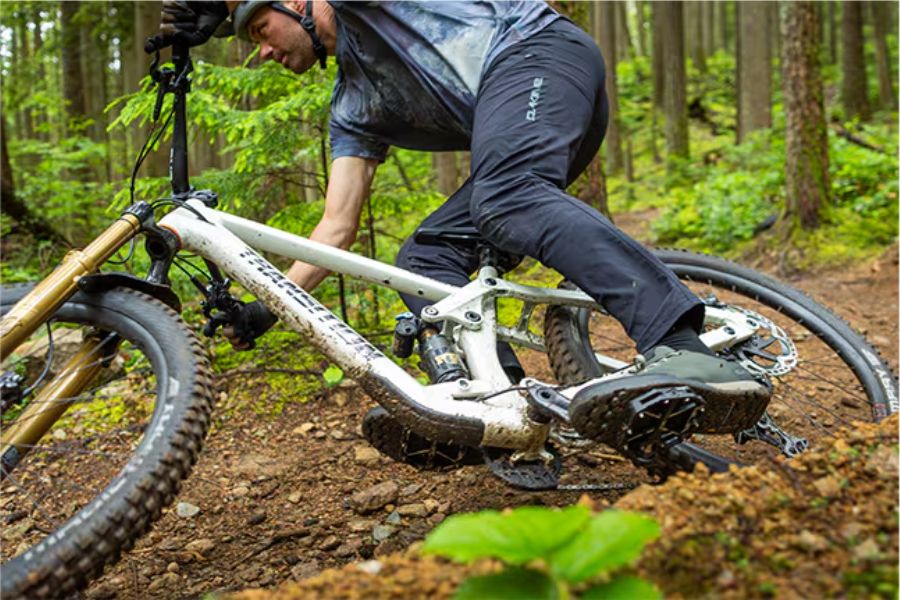
Drivetrain wear applies to both hardtail and full-suspension eMTBs, but full-power trail bikes can be especially hard on chains and cassettes if ridden aggressively. More grip and more climbing can mean more load through the drivetrain. If you are riding muddy trails regularly, our guide to eMTB drivetrain wear explained is worth reading before your first chain starts skipping.
A hardtail will usually be cheaper to buy and maintain. A full-suspension bike will usually be more capable and more comfortable. The right choice depends on whether you value simplicity or performance more.
Battery range and efficiency
A hardtail eMTB can be efficient on smoother terrain because there is no rear suspension movement and the bike is often lighter than a full-suspension equivalent. On bridleways, forest tracks and rolling routes, that can help range.
However, range is not just about frame type. Tyres, pressure, rider weight, assistance mode, cadence, elevation gain, motor system and drivetrain condition all play a major role. A hardtail with draggy tyres and poor pressure can use more battery than a well-set-up full-suspension bike on the same route.
Full-suspension bikes can sometimes be more efficient on rough terrain because the rear wheel stays in contact with the ground. Instead of bouncing and losing traction, the bike can maintain momentum. That can help on technical climbs and rough descents, although the extra weight and suspension movement still matter.
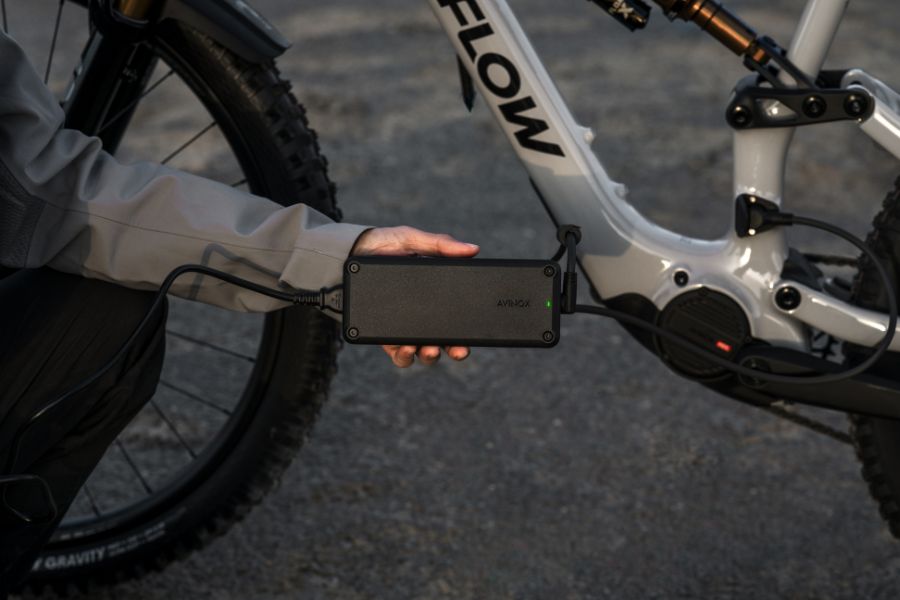
Battery size often differs too. Many full-power full-suspension eMTBs now use large batteries, while some hardtails use more moderate capacities to keep cost down. Bigger is not always better, but if range is a major concern, it needs to be part of the buying decision. Our article on whether you need an 800Wh eMTB battery explains when a large battery is useful and when it simply adds unnecessary weight.
For most riders, the best range gains come from setup and riding habits. Clean the drivetrain, check brake rub, use sensible tyre pressures, choose the right assistance mode and keep cadence smooth. We cover this in more detail in our guide to getting more range from your e-MTB battery on UK trails.
Hardtail or full-suspension for heavier riders?
Heavier riders often benefit from full suspension because the rear shock helps manage impacts, improve comfort and keep the rear tyre planted. The extra support can make the bike feel calmer and more controlled, especially on rough descents and long trail-centre rides.
That does not mean heavier riders cannot use a hardtail eMTB. A well-built hardtail with strong wheels, suitable tyres, powerful brakes and a supportive fork can work well on moderate terrain. But on rough trails, the rider’s body and rear tyre have to do more of the work.
Tyres and wheels become especially important. Heavier riders may need stronger casings, higher pressures or tyre inserts to avoid rim strikes and sidewall damage. This applies to both hardtails and full-suspension bikes, but the rear tyre on a hardtail has a harder life because there is no rear shock helping to absorb impacts.
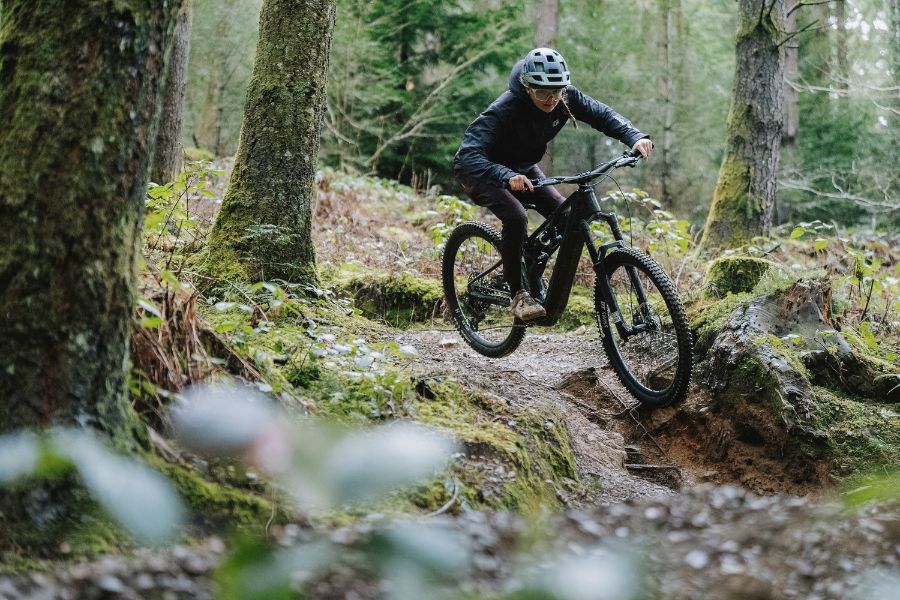
Brakes also matter. Electric mountain bikes are heavier than normal mountain bikes, and heavier riders add more load on descents. A full-suspension eMTB used for proper trails should have strong hydraulic disc brakes, suitable rotors and pads that can cope with repeated braking.
For heavier riders who want to ride proper UK trail centres, full suspension is usually the safer and more comfortable recommendation. For smoother mixed riding, a tough hardtail can still make sense.
Which should you buy?
Buy a hardtail eMTB if your riding is mostly bridleways, forest tracks, gravel paths, smoother trail centres, commuting crossover or moderate off-road loops. It is the better choice if you want value, simplicity, lower maintenance and a more direct ride feel. A hardtail also makes sense if you are buying your first eMTB and want to keep ownership straightforward.
Buy a full-suspension eMTB if your riding includes rough trail centres, wet roots, rocky descents, natural woodland trails, steep climbs or repeated laps. It is the better choice if you want comfort, traction, control and confidence when the ground gets rough. It will usually cost more, but it opens up more demanding mountain biking.
For many UK riders, the answer comes down to ambition. If you want an electric mountain bike for exploring, fitness and light trail riding, a hardtail may be all you need. If you want to progress as a mountain biker and ride rougher trails more often, full suspension is the better long-term buy.
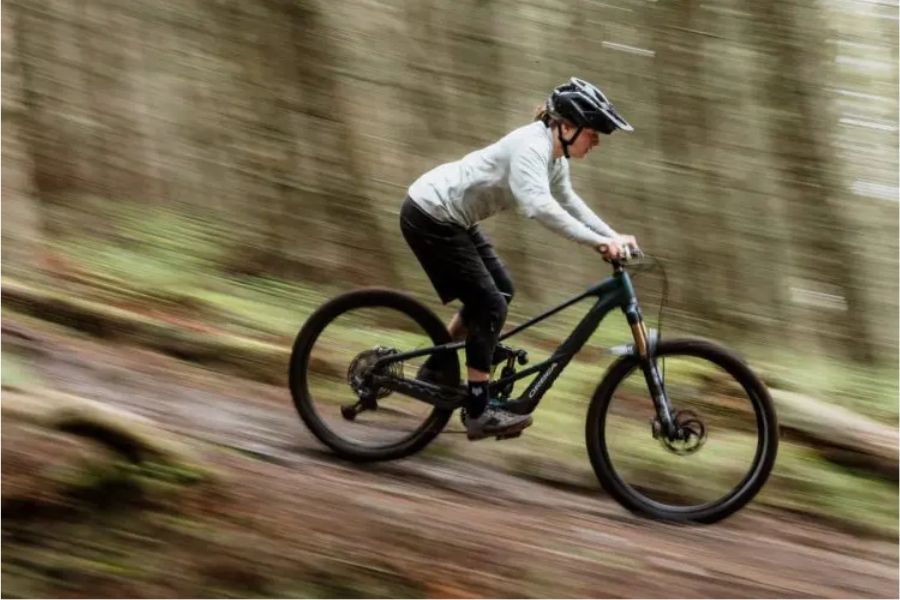
The important thing is not to buy the wrong type of bike for the riding you imagine rather than the riding you actually do. A full-suspension enduro eMTB can be too much bike for gentle bridleway loops. A hardtail can feel out of its depth if you start riding rough red and black routes every weekend.
The simple answer is this: choose a hardtail eMTB for value, simplicity and smoother UK off-road riding. Choose a full-suspension eMTB for grip, comfort and proper trail performance.
Hardtail vs full-suspension eMTB FAQs
Is a hardtail eMTB good enough for trail centres?
A hardtail eMTB can be good enough for smoother trail centres, blue routes and some red routes, especially if the rider has good technique. For rougher red routes, black trails and repeated descents, a full-suspension eMTB is usually more comfortable and controlled.
Is a full-suspension eMTB worth the extra money?
A full-suspension eMTB is worth the extra money if you ride rough trails, wet roots, rocks, steep descents or regular trail-centre laps. It gives more grip, comfort and confidence. If your riding is mostly smooth tracks and bridleways, a hardtail may be better value.
Are hardtail eMTBs easier to maintain?
Yes, hardtail eMTBs are usually easier to maintain because they do not have a rear shock, suspension linkage or pivot bearings. That makes them simpler and often cheaper to own, especially for year-round UK riding.
Are full-suspension eMTBs better for climbing?
Full-suspension eMTBs are usually better on rough, technical climbs because the rear wheel can stay in contact with the ground more easily. On smooth climbs, a hardtail can feel efficient and direct.
Is a hardtail eMTB better for beginners?
A hardtail eMTB can be a good choice for beginners because it is simpler, cheaper and teaches good line choice. A full-suspension eMTB may be better for beginners who want more comfort and confidence on rougher trails.
Which is better for UK bridleways?
For UK bridleways, forest tracks and mixed off-road routes, a hardtail eMTB is often the better choice. It is simpler, efficient and usually better value. Full suspension becomes more useful when the terrain gets rough, steep or technical.