

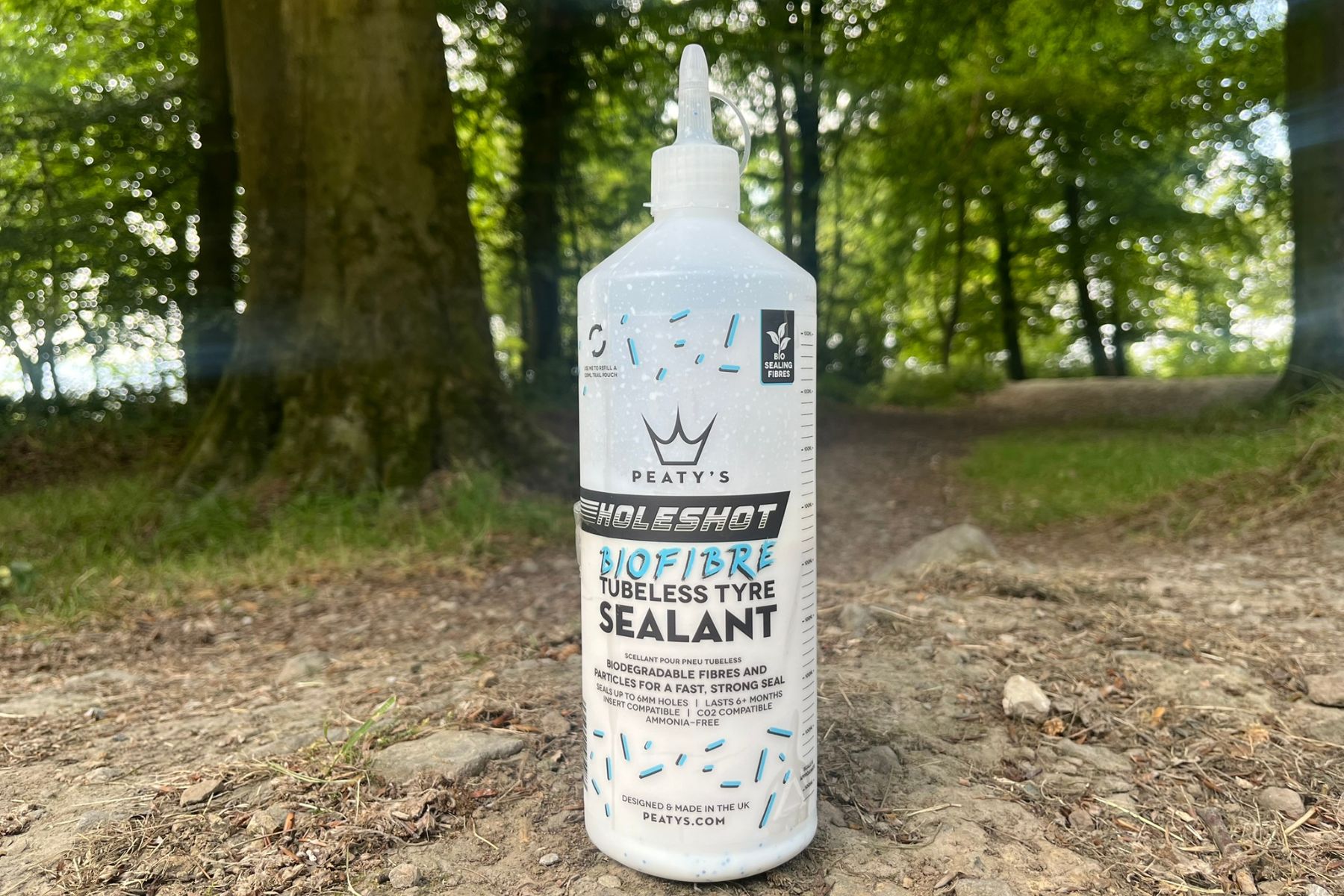
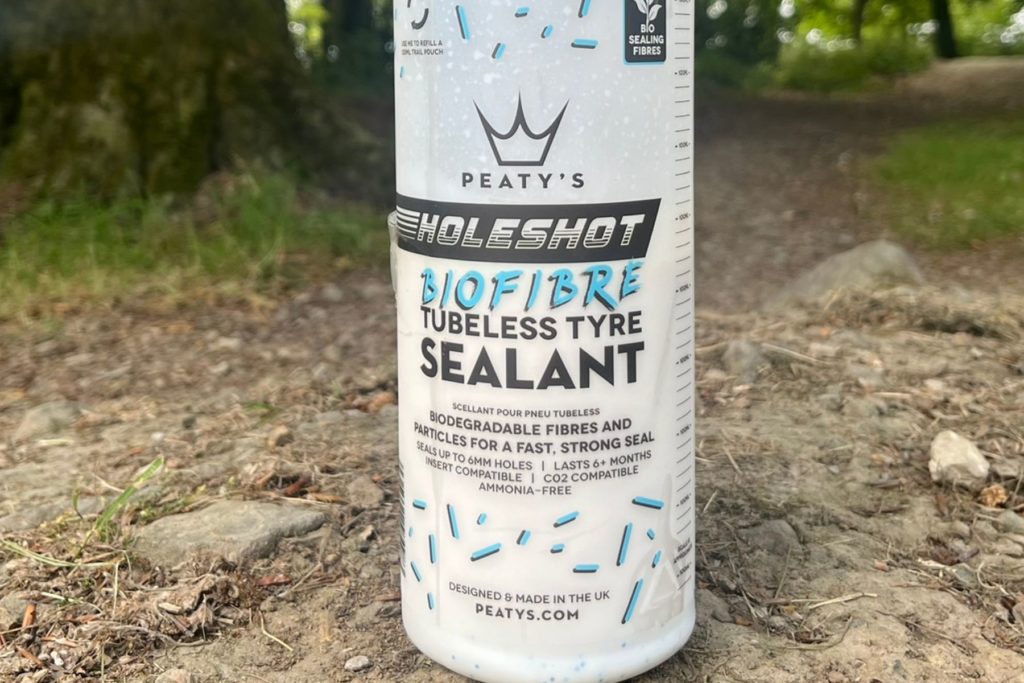
Peaty’s Holeshot BioFibre Tubeless Tyre Sealant is designed to repair punctures without relying on the microplastic fibres used in some sealant formulas. Instead, it combines water-based latex with biodegradable fibres and sealing particles intended to gather around a puncture and create a fast, durable seal.
That environmental angle is welcome, but tubeless sealant ultimately has one job: it needs to keep air inside the tyre. In testing, Holeshot BioFibre proved easy to use and worked without creating unnecessary fuss around the valve. It did not produce a noticeable change in how the bike rolled, and there was no obvious build-up or clogging around the valve system during the test period.
It is suitable for road, gravel, MTB and eMTB tyres, but the formula makes particular sense for electric mountain bikes. Heavier bikes, lower pressures and aggressive trail riding all place significant demands on tyres, while a puncture on a heavy eMTB can be more awkward to deal with at the trailside.
Riders completing a fresh tubeless setup should also read our Topeak JoeBlow Tubi 2Stage review, while our guide to the best eMTB trail tyres for UK riding covers suitable tyres for wet roots, rocks and mixed British conditions.
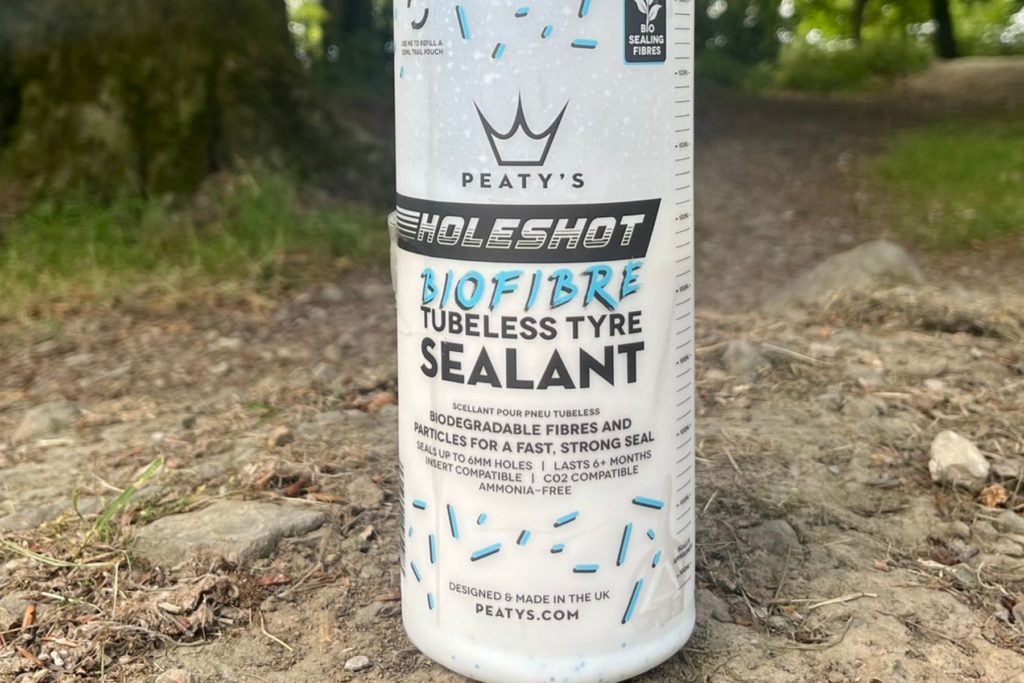
Peaty’s Holeshot BioFibre Tubeless Tyre Sealant
£18.99 (RRP £29.99)
Pros
Easy to pour or inject into a tubeless tyre
Effective sealing performance for normal trail punctures
Biodegradable fibres and sealing particles
No noticeable drag or effect on ride feel
Did not clog around the valve during testing
Works across MTB, eMTB, gravel and road pressures
Cons
Fibre-rich formula can pass slowly through some narrow valve systems
Larger cuts may still reopen under repeated impacts and require a tubeless plug
Specifications
Type: Tubeless tyre sealant
Best for: Road, cyclocross, gravel, MTB and eMTB
Formula: Water-based latex with biodegradable fibres and platelets
Claimed puncture size: Up to 6mm
Operating pressure: 15–120psi
Operating temperature: -20°C to 50°C
Claimed lifespan: Up to six months in temperate conditions
CO₂ compatibility: Yes
Peaty’s Holeshot BioFibre Tubeless Tyre Sealant: Review
Easy setup without unnecessary mess
Holeshot BioFibre is straightforward to work with. The formula is thin enough to move around the tyre and coat the casing, but it still contains visible fibres and sealing particles designed to gather around punctures.
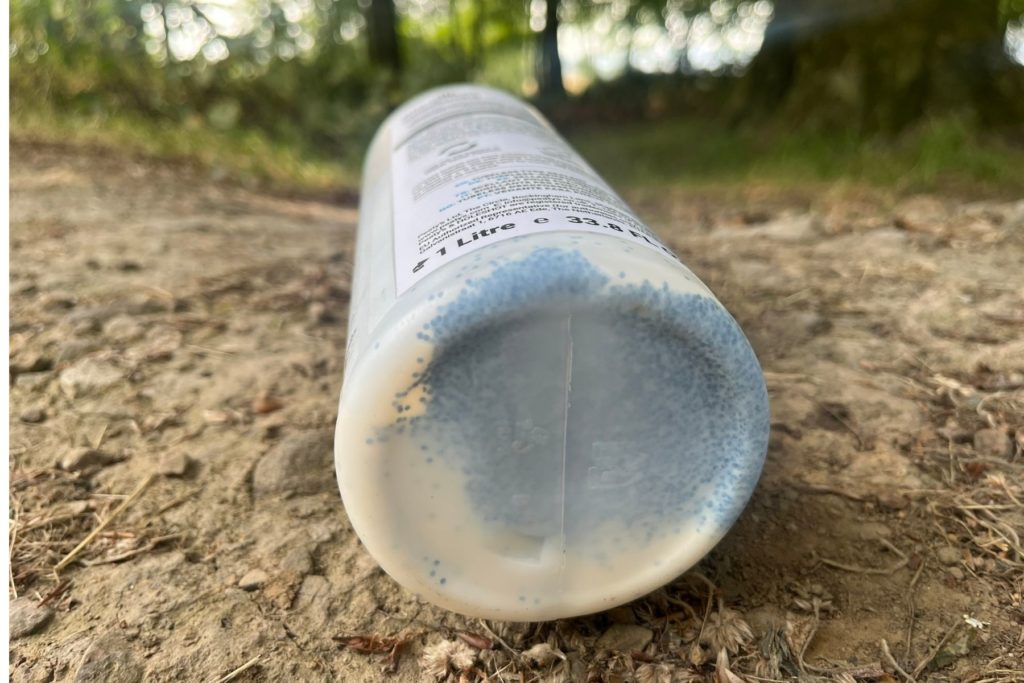
As with any fibre-heavy sealant, the bottle needs to be shaken thoroughly before use. This redistributes the solid material rather than leaving the most useful sealing particles at the bottom of the container. Once mixed, it can be poured directly into an open tyre or injected through a removable valve core.
During testing, it passed through the valve without creating a blockage. There was no noticeable dried build-up around the core, and normal inflation remained straightforward after the sealant had been added.
That experience may depend partly on the valve design. Other testing has found the mixture can move slowly through particularly narrow valves, while the nozzle on the small trail pouch may not fit every valve stem perfectly. Removing the core and using a suitable hose or injector remains the cleanest method.
The Holeshot BioFibre formula is also compatible with the valve-core system used by the Topeak JoeBlow Tubi 2Stage, although any wet sealant should be wiped from the pump head before it dries.
Performance on the trail
The best sealant is usually the one you do not notice. Holeshot BioFibre worked quietly in the tyre, maintained the tubeless setup and did not create any perceptible change in the bike’s rolling performance.
Adding sealant inevitably adds a small amount of rotating weight, particularly when using 100–120ml in a large 29in eMTB tyre. On the trail, however, there was no noticeable drag or sluggishness attributable to the Peaty’s formula.
Peaty’s claims the sealant can repair holes up to 6mm. Independent testing has shown very strong performance on small and medium punctures, with fibres and particles combining to form a dense plug inside the tyre. Some larger cuts can briefly reopen after another hard impact, but may then reseal with relatively little pressure loss.
That is important context. No liquid sealant can repair every cut, particularly if the casing is badly damaged or the hole is too large to retain a liquid plug. Riders should still carry a tubeless repair tool, pump and emergency inner tube on longer rides.
For everyday thorns, small cuts and minor casing leaks, Holeshot BioFibre offers convincing protection. It also coats porous tyre casings and helps seal small imperfections around the bead, which can improve pressure retention on a new tubeless setup.
Biodegradable fibres and maintenance
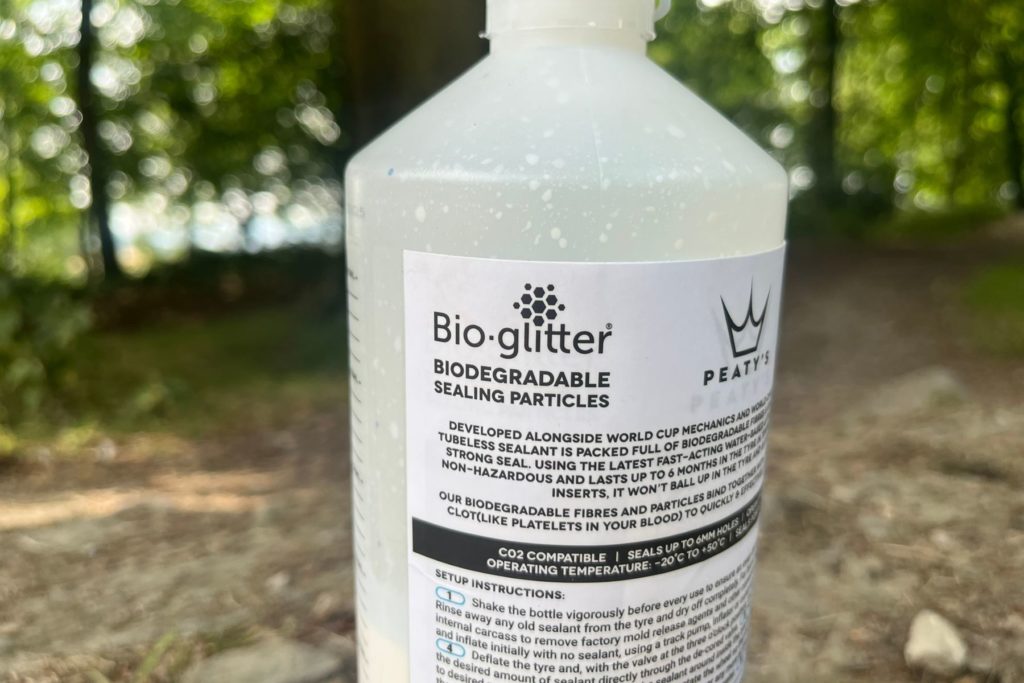
The environmental story is one of the main reasons to choose the Peaty’s sealant. Its sealing fibres and platelets are biodegradable rather than being made from microplastics, while the carrier is a water-based, ammonia-free latex formula.
That does not mean riders should deliberately pour used sealant onto the ground. It remains sensible to collect old liquid when changing tyres and dispose of it responsibly. However, biodegradable fibres are preferable to plastic strands when sealant is inevitably sprayed onto a trail during a puncture.
The water-based formula is also relatively easy to clean before it dries. Peaty’s says it should not form large rubber balls inside the tyre, and longer-term independent testing has found useful amounts of liquid remaining after several months.
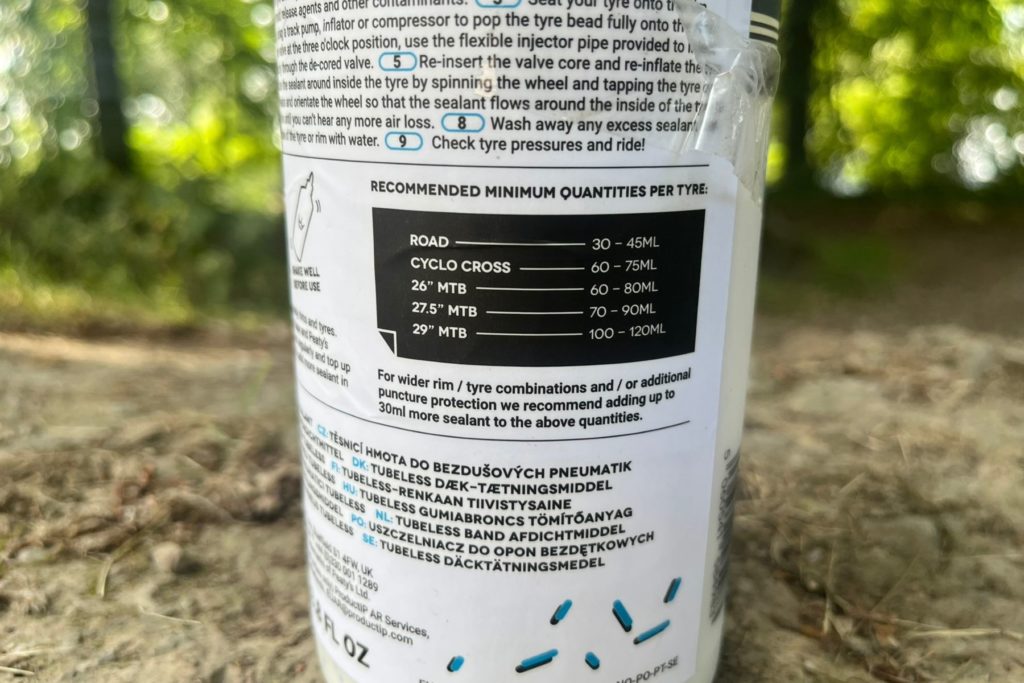
Peaty’s claims a lifespan of up to six months in temperate climates, but actual longevity will depend on temperature, tyre porosity and how often the bike is used. Wide eMTB tyres may also require a larger initial quantity than lightweight road or gravel tyres.
Sealant levels should still be checked periodically. A tyre can continue holding air after most of the liquid has dried, leaving little available to repair the next puncture.
What is not so good?
The main limitation is compatibility with narrow valves and applicators. Although the sealant did not clog the valve during this test, the fibres and particles can move more slowly through restrictive valve systems. The nozzle on the 120ml trail pouch may also feel too wide for some stems.
The second limitation applies to every sealant: larger holes remain unpredictable. Holeshot BioFibre performs very well on normal punctures, but a bigger cut can reopen after another hard impact or fail to hold full pressure. A plug may still be needed to create a permanent trailside repair.
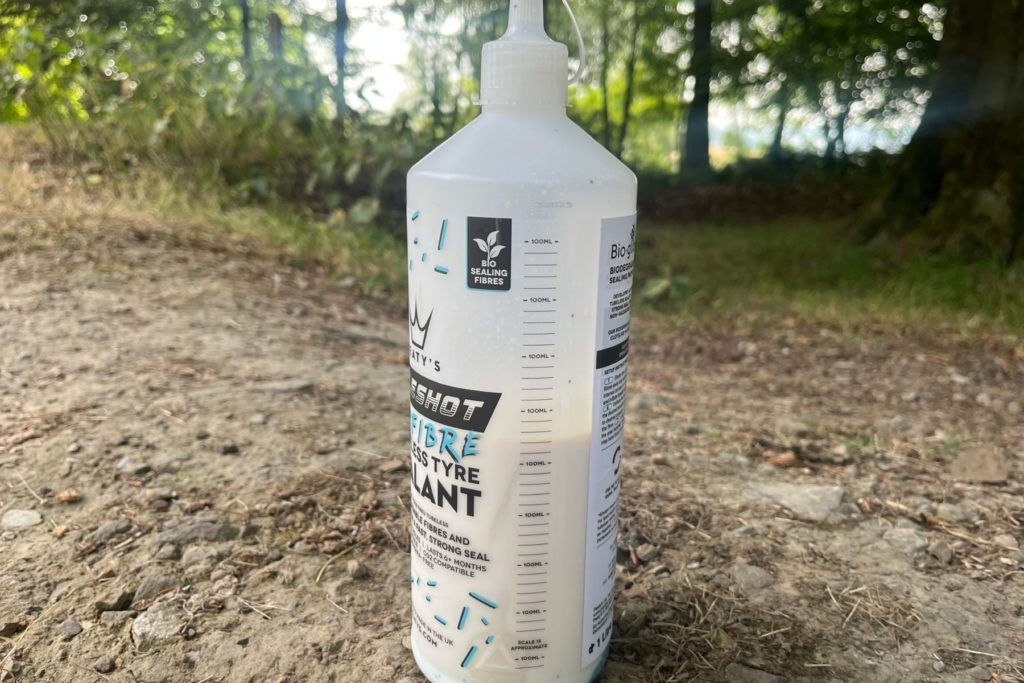
It also needs a proper shake before every application. That is not unusual for tubeless sealant, but it matters here because much of the claimed performance comes from fibres and particles that can settle in the bottle.
These are minor reservations rather than fundamental weaknesses. In normal use, the sealant is clean enough to handle, easy to install and effective at maintaining a tubeless tyre.
Final verdict
Peaty’s Holeshot BioFibre is an easy-to-use and effective tubeless sealant with a more environmentally considered fibre package than formulas relying on microplastics.
It worked well in an eMTB tyre, created no noticeable drag and did not clog the valve system during testing. The thinner water-based formula was easy to distribute, while the fibres and particles provide strong protection against the types of small and medium puncture commonly encountered on UK trails.
Peaty’s Holeshot BioFibre Tubeless Tyre Sealant
£18.99 (RRP £29.99)
Some narrow valves may slow the formula down, and larger cuts can still require a plug. Those caveats apply to many particle-rich sealants and do not undermine the overall performance.
For MTB and eMTB riders who want reliable sealing, sensible longevity and biodegradable puncture-sealing fibres, Peaty’s Holeshot BioFibre is a strong choice.
Peaty’s Holeshot BioFibre alternatives
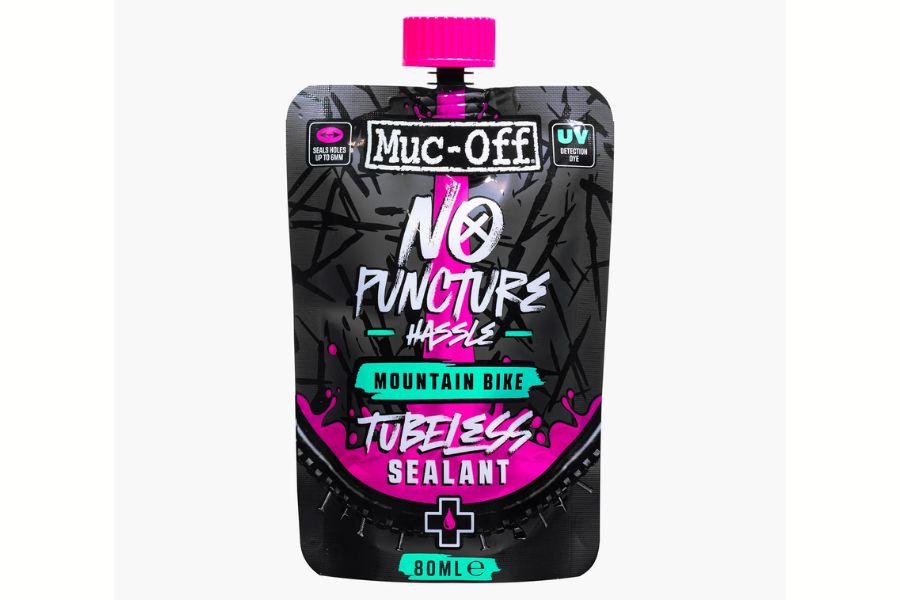
Muc-Off No Puncture Hassle
£15 (RRP £20)
Muc-Off No Puncture Hassle is another widely available sealant claiming to repair holes up to 6mm. Its distinctive feature is a UV-detection system that helps reveal dried sealant around punctures and slow leaks.
Both formulas cover similar temperatures and pressures. The Peaty’s sealant uses biodegradable fibres and was particularly clean around the valve during testing, while the Muc-Off option is attractive for riders who value UV puncture detection.
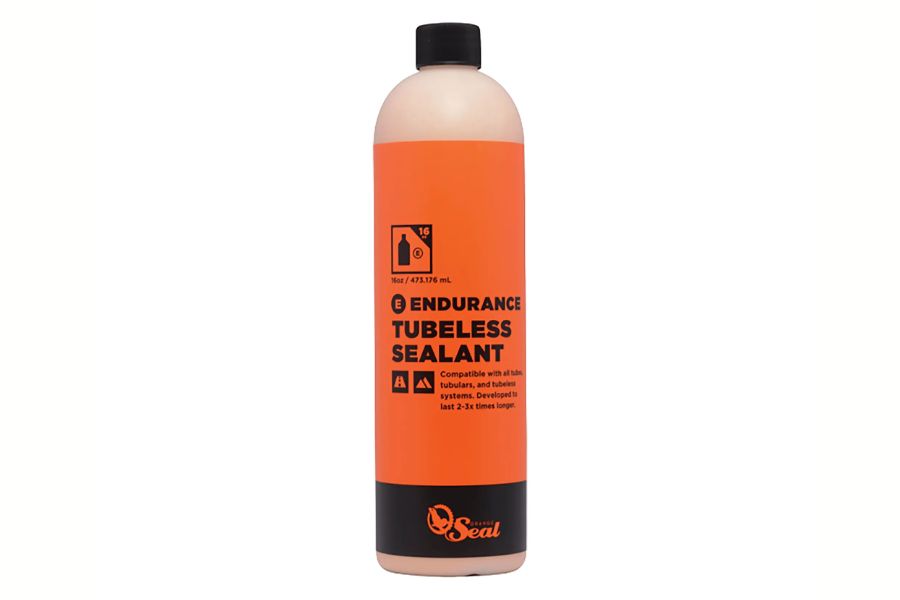
Orange Seal Endurance
£15.99 (RRP £21.99)
Orange Seal Endurance prioritises longer service intervals and is a useful option for riders who do not want to inspect or replenish sealant as frequently. It is commonly used across gravel, road and mountain bike tubeless systems.
The Peaty’s formula places greater emphasis on rapid fibre-assisted sealing and biodegradable particles. Orange Seal Endurance may suit riders prioritising lifespan, while Holeshot BioFibre is the stronger match for riders focused on eMTB puncture performance and environmental considerations.
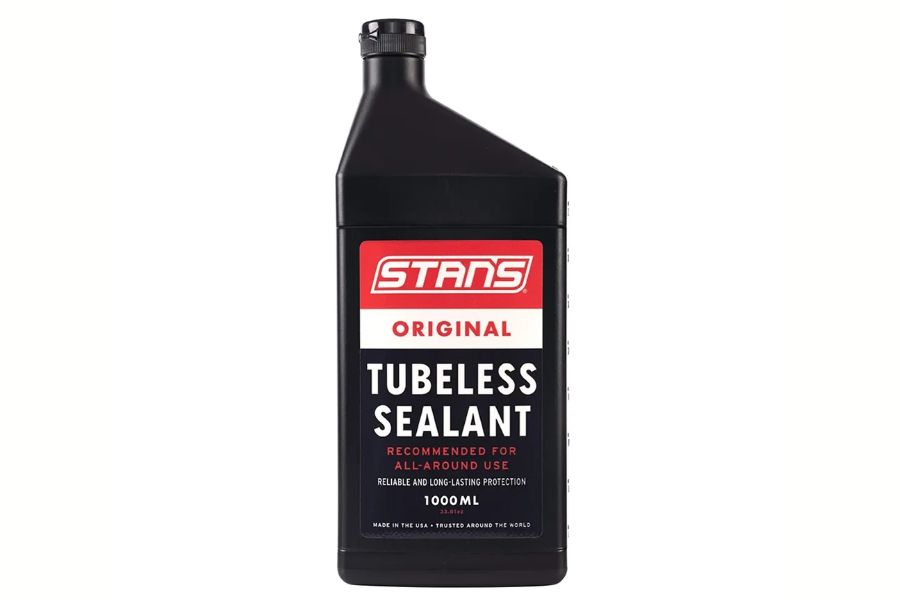
Stan’s Original Tyre Sealant
£22
Stan’s Original remains one of the benchmark general-purpose tubeless sealants. It has a long history across MTB, gravel and road riding and is supported by a broad range of valves, tapes and repair products.
The Stan’s formula is familiar and widely proven, while Peaty’s offers the stronger environmental message through its biodegradable fibres and particles. Holeshot BioFibre also feels particularly well suited to riders wanting a modern fibre-assisted formula for larger MTB and eMTB tyres.
Peaty’s Holeshot BioFibre FAQs
Is Peaty’s Holeshot BioFibre suitable for eMTB tyres?
Yes. It works at pressures from 15–120psi and Peaty’s recommends 100–120ml for a typical 29in MTB tyre. That makes it suitable for wide, low-pressure eMTB tyres.
How large a puncture can Peaty’s Holeshot BioFibre Sealant seal?
Peaty’s claims Holeshot BioFibre can seal holes up to 6mm. Actual performance depends on the shape of the cut, tyre casing, remaining pressure and whether the tyre receives another impact.
Is Peaty’s Holeshot BioFibre biodegradable?
The sealing fibres and platelets are biodegradable. The sealant uses an ammonia-free, water-based latex formula, but used liquid should still be collected and disposed of responsibly where possible.
Does Peaty’s Holeshot BioFibre Sealant clog tubeless valves?
It did not clog the valve during testing. However, the fibres and particles can pass slowly through some narrow valve systems, so removing the valve core and using a suitable injector or hose is recommended.
How often should Peaty’s Holeshot BioFibre Sealant tubeless sealant be replaced?
Peaty’s claims the sealant can last up to six months in temperate conditions. Riders should still inspect the level periodically because heat, porous tyres and frequent riding can cause it to dry more quickly.