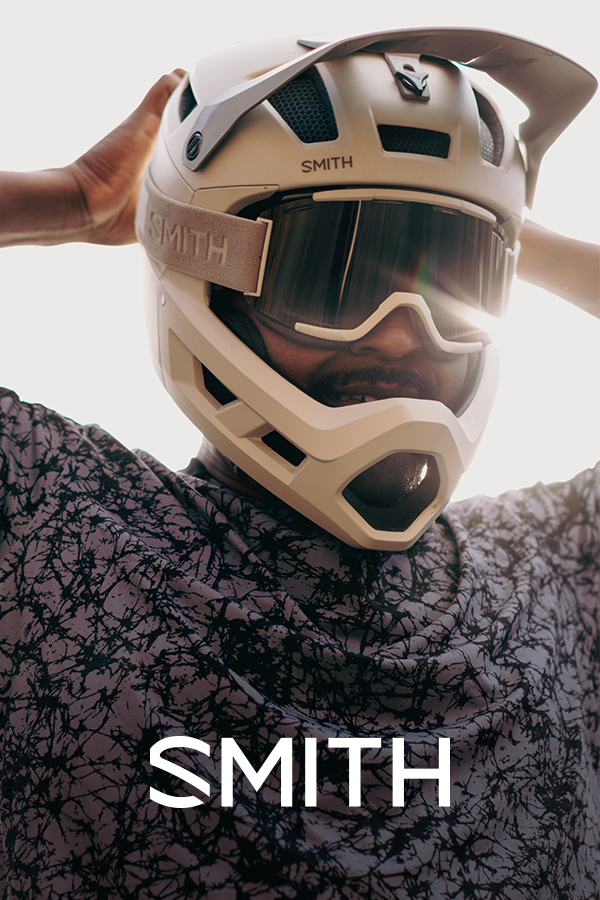
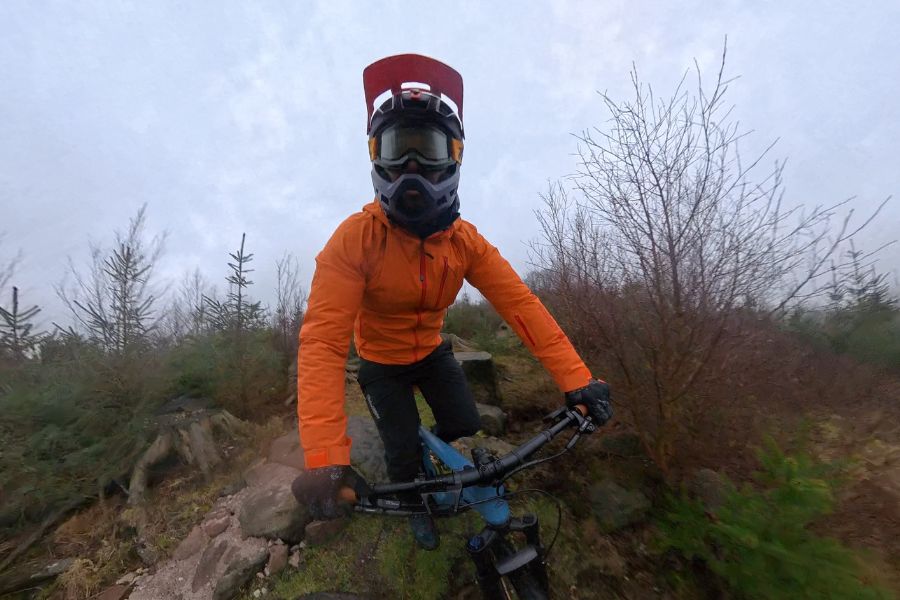
Full-face helmets used to be a very specific tool: downhill days, uplift laps, and the kind of riding where you knew you’d be hitting higher speeds and taking bigger risks. For eMTB riders in the UK, that line has blurred. Modern electric mountain bikes make it easier to pack more descending into a ride, repeat steep trails, and link bigger loops without the climbs dictating the day. The result is that more riders are choosing full-face helmets for day-to-day trail riding, not just for bike park visits. Here we have the Smith Mainline review to help make your decision a little easier.
The obvious downside is comfort. A full-face helmet can feel hotter, heavier, and more “sealed” than an open-face lid, especially when you are grinding up slow, technical climbs or winching up fire roads in the wet. If a full-face helmet is going to be your regular choice for eMTB riding, it has to ventilate properly, sit comfortably for long stints, and offer clear vision so you can ride accurately and confidently, particularly when the trail gets steep and messy.
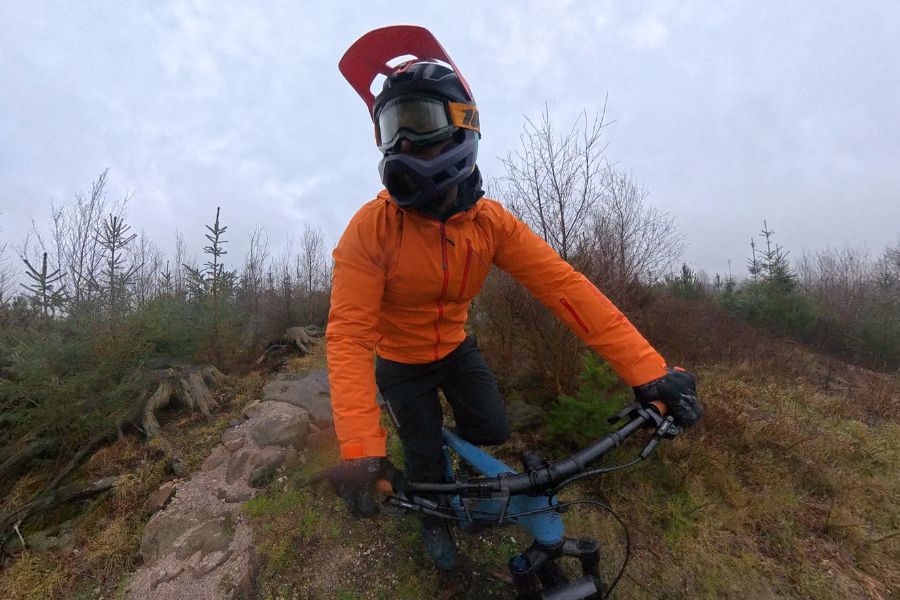
That is the pitch the Smith Mainline delivers on. It is a downhill-certified enduro full-face that is light enough for all-day riding, with genuinely effective airflow and a wide field of view that makes it easy to look through corners and read the trail properly. Full-face helmets used to be a very specific tool: downhill days, uplift laps, and the kind of riding where you knew you’d be hitting higher speeds and taking bigger risks. For eMTB riders in the UK, that line has blurred. Modern electric mountain bikes make it easier to pack more descending into a ride, repeat steep trails, and link bigger loops without the climbs dictating the day. The result is that more riders are choosing full-face helmets for day-to-day trail riding, not just for bike park visits.
The obvious downside is comfort. A full-face helmet can feel hotter, heavier, and more “sealed” than an open-face lid, especially when you are grinding up slow, technical climbs or winching up fire roads in the wet. If a full-face helmet is going to be your regular choice for eMTB riding, it has to ventilate properly, sit comfortably for long stints, and offer clear vision so you can ride accurately and confidently, particularly when the trail gets steep and messy.
That is the pitch the Smith Mainline delivers on. It is a downhill-certified enduro full-face that is light enough for all-day riding, with genuinely effective airflow and a wide field of view that makes it easy to look through corners and read the trail properly.
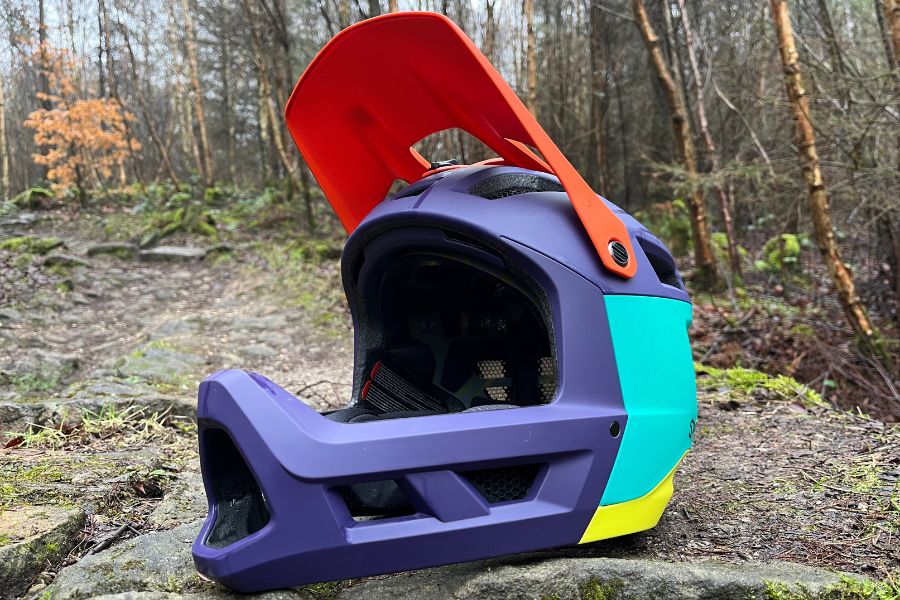
Smith Mainline Mips®
From £279.99
Pros
Excellent ventilation for a non-convertible full-face, including strong airflow through the chin bar
Comfortable fit for long rides, with a pad system that lets you tune cheek and crown feel
Big eye port and strong peripheral vision, which helps with line choice and confidence
Solid goggle integration and a visor that works well with most trail goggles
E-bike and downhill safety certifications add reassurance for eMTB use
Cons
D-ring strap is secure and proven, but less convenient than a magnetic buckle for frequent stops
Specifications
Construction: Full KOROYD coverage with Mips rotational impact system
Lining: Anti-bacterial performance lining (washable pads)
Retention: D-ring chin strap
Ventilation: 21 fixed vents
Visor: Adjustable
Claimed weight: 770 g (size M)
Safety standards: CPSC, CE EN 1078, NTA 8776 (e-bike), ASTM F1952 (downhill)
Fit, comfort and that “forget it’s a full-face” feeling
The Mainline’s biggest strength is that it does not feel like a compromise helmet. It has the coverage and security you want from a proper full-face, but it avoids the common fatigue factors that make some full-face helmets feel like overkill on pedal days.
A lot of that comes down to the fit package. Smith offers multiple pad options, so you can fine-tune the crown, cheek pads, and neck roll to suit your head shape and the snugness you want the helmet to fit. That matters on an eMTB because you are often mixing hard efforts, slower technical climbing, and faster descending in the same ride. A helmet that feels perfect on the way down can become annoying on the way up if the pressure points are not right.
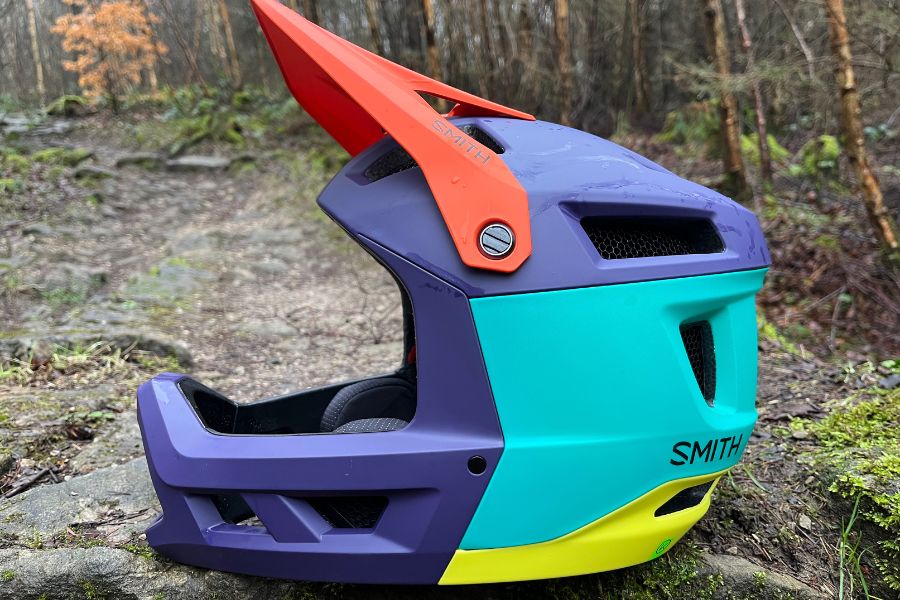
Dialled in, the Mainline sits securely without feeling clampy, and it avoids the “hot spots” that can develop around the forehead and temples. The cheek pad options are particularly useful because you can choose a fit that feels stable at speed without making the helmet feel overly tight when you are working hard. Once it is set up properly, it is easy to just get on and crack on without constantly thinking about the helmet.
Ventilation that works on climbs, not just in marketing copy
Ventilation is where many full-face helmets fall apart for UK trail riding. It is not enough to have vents on paper. You need airflow that actually moves through the helmet at the speeds you ride on real climbs, where you are not always travelling quickly.
The Mainline performs well here. Air moves through the helmet in a way you can feel, and the chin bar venting does much of the heavy lifting when you are breathing hard. On long, steady climbs, it stays noticeably less stuffy than many traditional downhill-style full-face helmets, and it is one of the reasons it makes sense as an eMTB trail helmet rather than a park-only option.
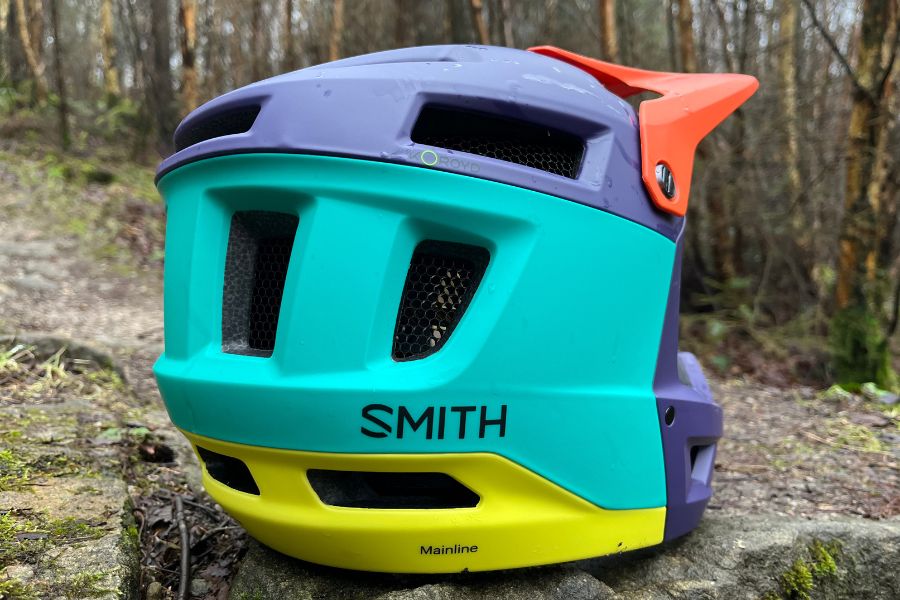
In typical UK conditions, where you might be climbing in damp air and then descending into colder wind, the balance is good. It does not feel sealed in, but it also does not feel draughty in a way that becomes uncomfortable. The result is a helmet you can leave on for the whole ride, instead of constantly wanting to lift it, loosen it, or mentally count down to the next stop.
Vision and goggles: confidence comes from what you can see
A full-face helmet can be technically safe and still feel wrong if the eye port is restrictive. On eMTB rides, you are often scanning further ahead because speeds can be higher, and you are making faster decisions when trails turn greasy or rutted.
The Mainline offers excellent vision. The eye port is large, peripheral vision feels open, and it is easy to look through corners without the helmet “framing” your view. This is exactly the kind of detail that makes a helmet feel confidence-boosting. When you can see properly, you ride more accurately, you choose better lines, and you are less likely to get caught out by a hidden root, a hole, or a sudden change in grip.
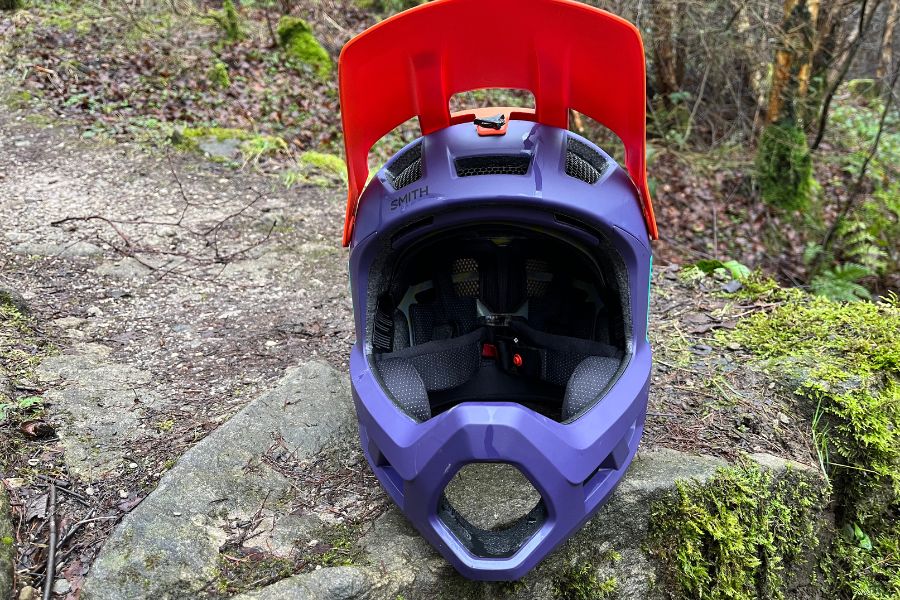
Goggle integration is also strong. The Mainline is designed to pair neatly with goggles, and in practice, it feels like a cohesive setup rather than two separate bits of kit fighting each other. The visor adjustment gives enough room to fine-tune goggle position, and storage is straightforward when you are climbing or transitioning between trails.
Protection and why the certifications matter for eMTB riders
You cannot “review” impact protection from real crashes in any responsible way, but you can look at design, coverage, and the safety standards the helmet meets.
The Mainline combines full KOROYD coverage with a Mips system for rotational impact management, and it is certified to downhill standard ASTM F1952 as well as NTA 8776 for e-bike use. For eMTB riders, that combination makes sense. You are often carrying more speed and more bike weight into the same trails you used to ride on an analogue bike, and it is common to ride steeper terrain more frequently because the climbs are simply easier to repeat.
In plain terms, it is reassuring to know this is a full-face helmet, built and certified for higher-speed riding, while still being light and breathable enough for everyday rides.
Niggles, and who the Smith Mainline is really for
The one “old school” element is the D-ring strap. It is secure, proven, and widely trusted, but it is less convenient than a magnetic buckle if you are the kind of rider who stops frequently, layers up and down a lot, or takes the helmet on and off between climbs and descents. Some riders prefer D-rings because they feel more locked in, while others just want the convenience of a quicker buckle. It is not a deal-breaker, but it is the main point where personal preference will dictate how much you care.
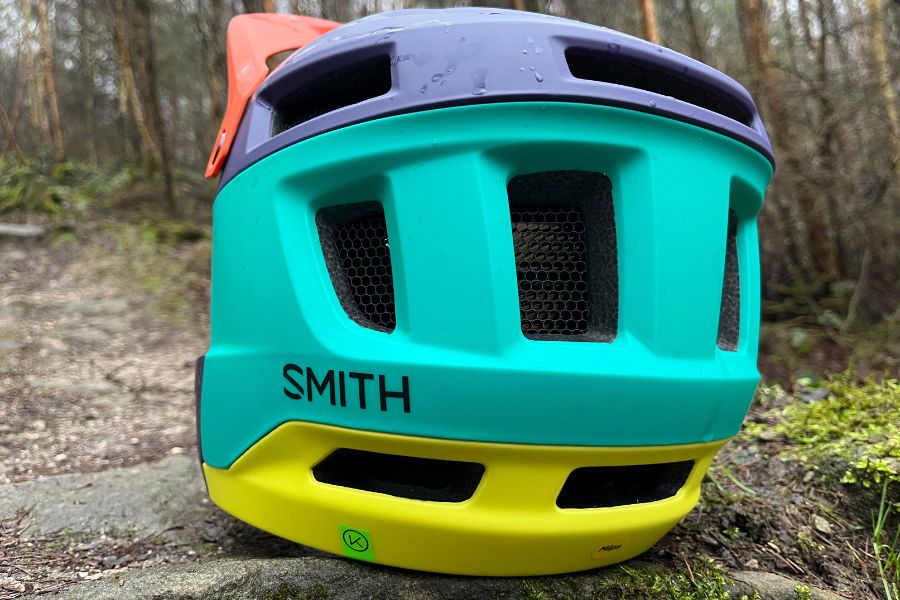
Who is it for? If you want a full-face helmet you can realistically wear for normal eMTB riding, not just uplift days, the Mainline fits the bill. It suits riders who value ventilation and comfort as much as protection, and it is particularly good for those who dislike the “tunnel vision” feeling some full-face helmets create. If you ride steeper natural trails, enduro-style tracks, or you simply want more coverage for UK trail centres when conditions are fast and loose, it makes a lot of sense.
Final thoughts
The Smith Mainline is a full-face helmet that behaves like a trail helmet. It stays breathable on climbs, is comfortable for long rides, and gives you an open field of view that helps you ride with accuracy and confidence. Add in serious safety certifications, including downhill and e-bike standards, and it becomes an easy helmet to justify for UK eMTB riders who want full-face coverage without the usual downsides.