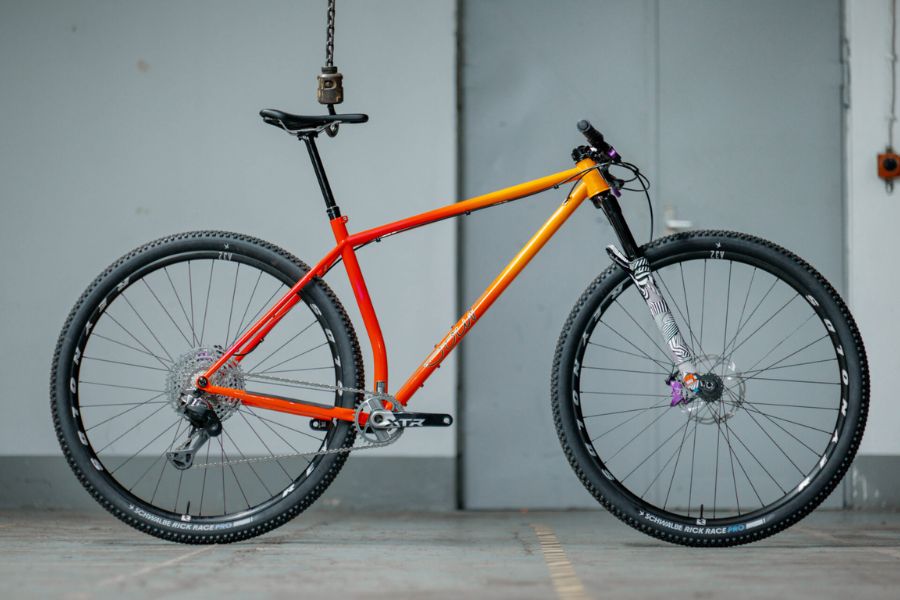
This is not an eMTB. The Sour Pasta Party 32 is a steel hardtail built for XC pace and fast trail riding. But it is still eMTB-relevant because wheel-size trends rarely stay in one lane. If 32-inch MTB wheels become a real standard, the parts ecosystem will grow first, then the eMTB market will start asking the obvious question: Does a 32er make even more sense on heavier, faster electric mountain bikes that smash square edges all day?
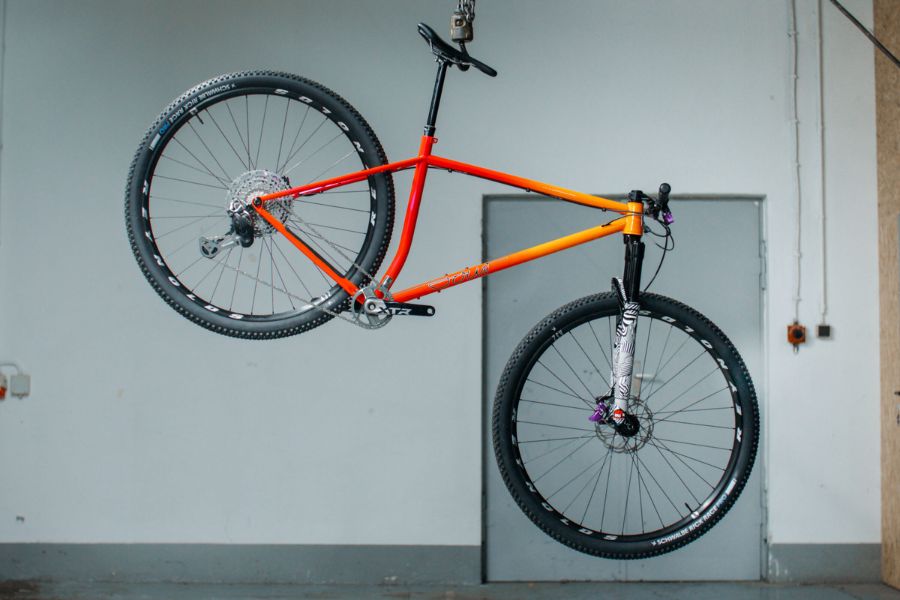
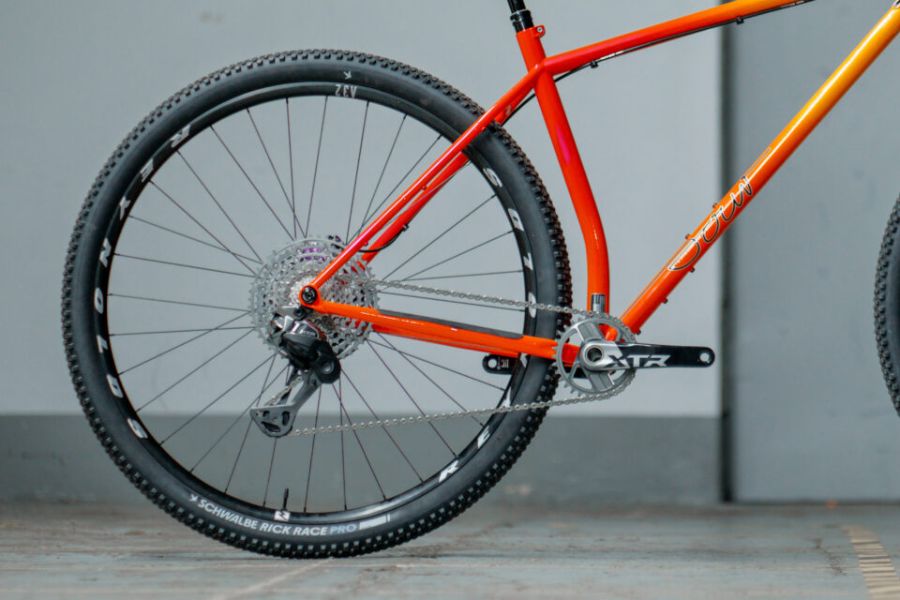
Sour is leaning into the 32er idea with a clear, production-ready spec. The Pasta Party 32 runs 32-inch wheels, takes a 100-120mm fork, and has clearance for up to 32 x 2.4in tyres. It keeps the modern MTB essentials, including Boost rear spacing and dropper routing, so it doesn’t feel like a weird science project.
What you can actually buy
Sour is selling the Pasta Party 32 as a frame option at €1,299, available in M, L and XL, with lead times shown on the product listing. If you want the cleanest “buy it now” link, the Pasta Party 32 frame page is the one to use.
Why 32-inch wheels matter on real trails
The simple pitch for 32-inch MTB wheels is rollover and momentum. Bigger wheels hit roots and rock edges with a shallower attack angle, so the bike tracks straighter and carries speed better. Sour is explicitly selling the Pasta Party 32 as a “fast trail hardtail” that keeps a familiar handling feel, just with more stability and traction baked in.
How this could trickle into the eMTB market
eMTBs are already momentum machines. Add motor assistance, extra mass, and higher average speed, and you amplify everything the wheels feel. If 32-inch wheels prove they deliver calmer tracking and better rollover without ruining handling, eMTB designers will pay attention.
The barriers are packaging and geometry. Bigger wheels can demand longer stays, more clearance, and tighter design compromises around motors and batteries. That is why analogue MTB usually pushes the standard first. Once tyres, rims and forks exist in volume, the eMTB market can follow without betting on a dead-end wheel size.
If you are tracking how new drivetrain and frame standards ripple through MTB and eMTB design, it sits alongside other “ecosystem” shifts, like SRAM’s UDH standard and the move towards integrated drivetrains and gearboxes, which we have covered in our Pinion MGU eMTB gearbox fit and integration story.
For the electric angle, keep an eye on how wheel and tyre standards evolve around new motor platforms too, including the broader Avinox conversation in our Avinox M2 motor rumours 2026 coverage.