
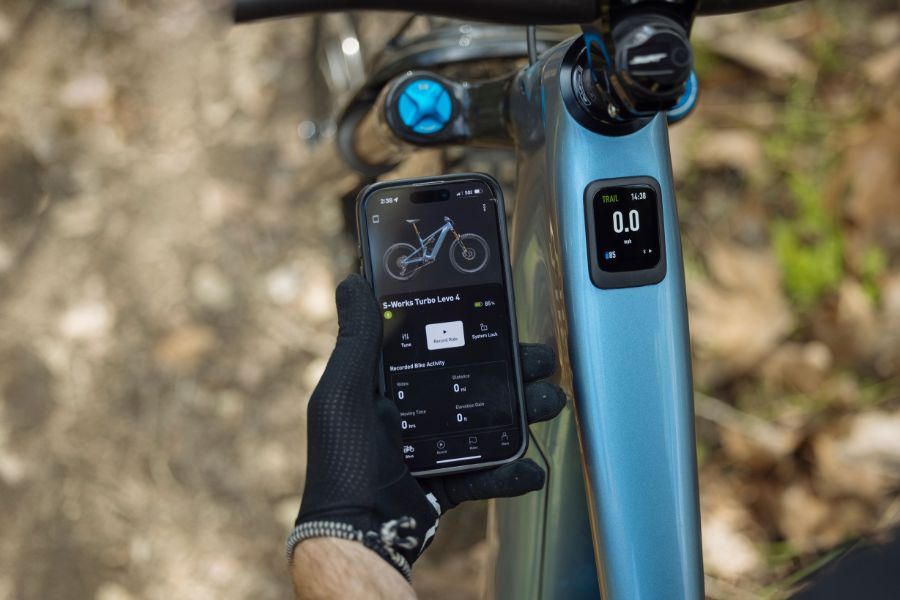
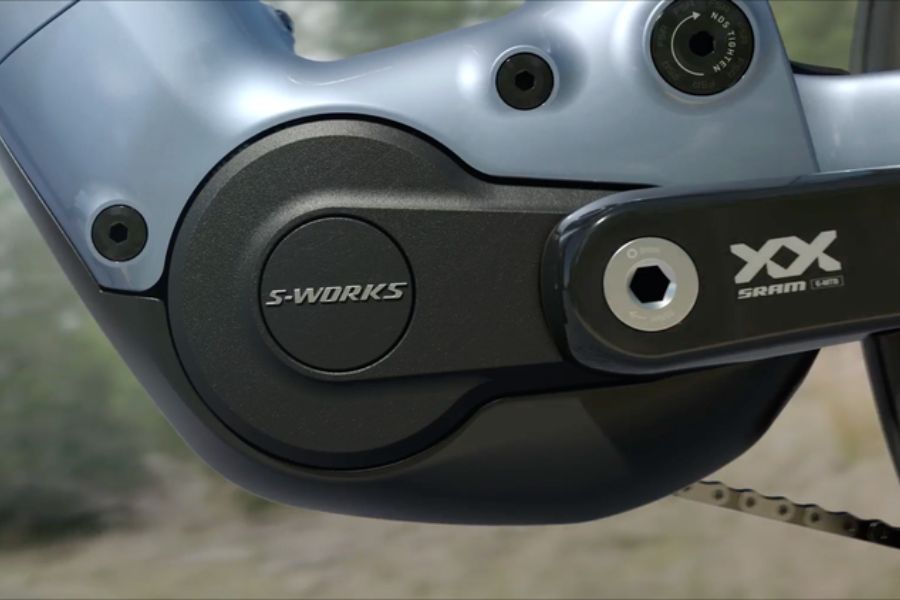
Specialized is leaning hard into software as a performance lever, and the Turbo Levo 4 is now the clearest example of how that can play out in the real world. A Specialized Turbo Levo 4 firmware update positioned as a genuine performance boost, not a minor bug fix. In practical terms, the published Levo 4 figures now show two distinct output tiers: S-Works models listed at 850W and 111Nm, and non-S-Works models listed at 810W and 105Nm, all paired to the same 840Wh battery size.
That matters because eMTB riders are increasingly shopping by motor ecosystem, not just by frame and suspension. When a brand can deliver meaningful changes via firmware, it affects how you think about longevity and future-proofing. If you already own a Levo 4, this is a reminder to treat your bike more like a connected device: updates can change its feel, efficiency, and how it behaves on the trail. If you are considering buying, it shifts the value conversation from “what it is today” to “what it might become over the next 12 to 24 months”.
For UK riders the Specialized Turbo Levo 4 firmware update is also a practical legal backdrop. A road-legal e-bike in Great Britain must meet EAPC rules, including a motor with a maximum continuous rated power of 250W and assistance that cuts out at 15.5mph (25km/h). Brands often quote higher peak figures, but the continuous rating and assisted speed limit remain the legal line on public roads and public rights of way where e-bikes are permitted. If you want the plain-English version, it is worth bookmarking our explainer on UK e-MTB law: when is an e-bike not an e-bike?
What Specialized is actually changing on paper
The simplest way to understand this update is that Specialized is now openly presenting higher peak outputs in its Levo 4 model listings. On the UK Specialized site, the Levo 4 range shows S-Works variants listed at 850W peak power with 111Nm torque, and the standard Levo 4 models listed at 810W peak power with 105Nm torque, all built around an 840Wh battery option. That is the headline because it is measurable and easy to compare.
In riding terms, higher peak power tends to show up most clearly in steep, sustained climbs where you are asking for maximum support for longer periods, and in punchy accelerations where you want the bike to surge forward without a delay. Higher torque, meanwhile, is typically most relevant at lower cadence on technical gradients, where traction and line choice matter more than outright speed.

If you are still getting your head around what these numbers mean, and why they do not translate directly into range or real-world speed, our guide to e-MTB motors and batteries explained: what matters (and what doesn’t) gives the useful context without the marketing fog.
Why “more power” is not automatically “better” on UK trails
UK riding is often low-speed and high-friction: wet roots, sharp steps, churned-up climbs, and awkward, stop-start trail centres. More peak power can absolutely help, but it is not a universal win. If you simply turn everything up and mash through muddy climbs, you can quickly drain the battery and worsen traction. On slick ground, a smoother delivery in a slightly lower mode can actually climb better than a high-power spike that breaks grip.
There is also a knock-on effect on wear. More peak output can increase load on drivetrain components, especially if you ride in a hard gear at low cadence. If you are the kind of rider who wants the extra shove but also wants consistent all-day range, the smarter approach is usually tuning and habit, not just maximum settings.
A good companion read, particularly in winter, is our practical guide on how to get more range from your e-MTB battery on UK trails. The largest gains still come from cadence, mode choice, tyre drag, and smooth riding.
How the Specialized Turbo Levo 4 firmware update fits with UK e-bike legality
It is worth being explicit about a point that often gets misunderstood in comment sections. UK EAPC rules focus on maximum continuous rated power (250W) and assistance cutting out at 15.5mph. They do not say “your motor can never exceed 250W in any circumstance”. That is why you will see many mainstream, road-legal e-bikes quoting higher peak outputs while still complying with the EAPC framework.
If you want to cross-check the wording for yourself, the official GOV.UK guidance is here: Riding an electric bike: the rules. The key takeaway is simple: firmware updates do not change the legal definition. If a bike remains within the EAPC limits for continuous rating and assisted speed, it stays in the “treated like a bicycle” category. If it steps outside those limits, it becomes a motor vehicle in law.
What to do if you ride a Levo 4 already
From a practical ownership standpoint, an over-the-air update is only useful if you treat it as you would any other important maintenance step. Use the Specialized app to manage updates when you have time and stable internet, not in the car park five minutes before a ride. Keep the bike powered, keep your phone close, and avoid anything that interrupts the connection mid-update.
After updating, pay attention to how the bike feels in the modes you actually use. The best way to judge a firmware change is not a single turbo climb in perfect conditions, but two or three normal rides where you compare battery consumption, traction on your regular technical climbs, and how easy it is to sit near the 15.5mph cut-off without the bike feeling awkward.
If you haven’t already, it’s worth revisiting your setup. Tyre pressures, drivetrain cleanliness, and suspension balance can mask or exaggerate a motoris performance. In other words, do not assume the firmware is the only variable.