
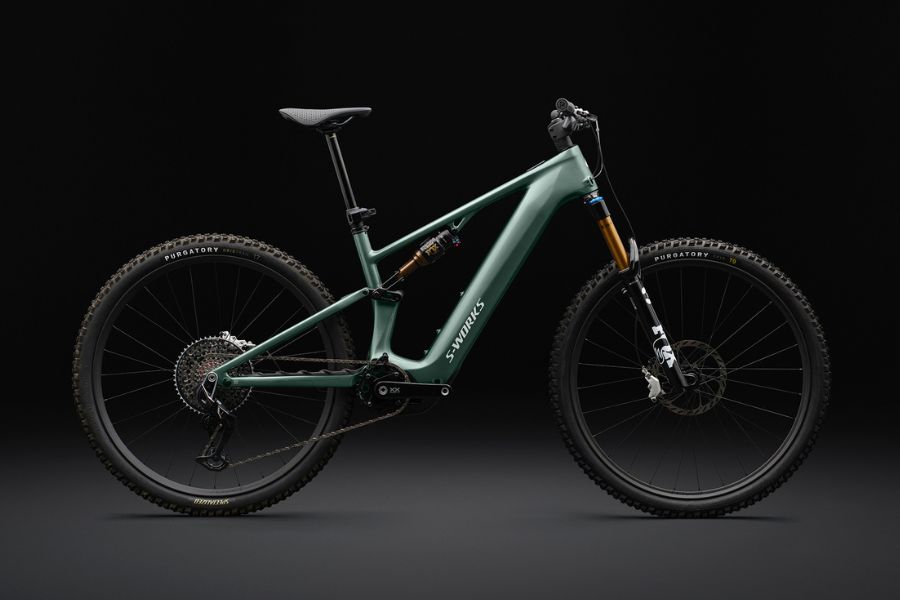
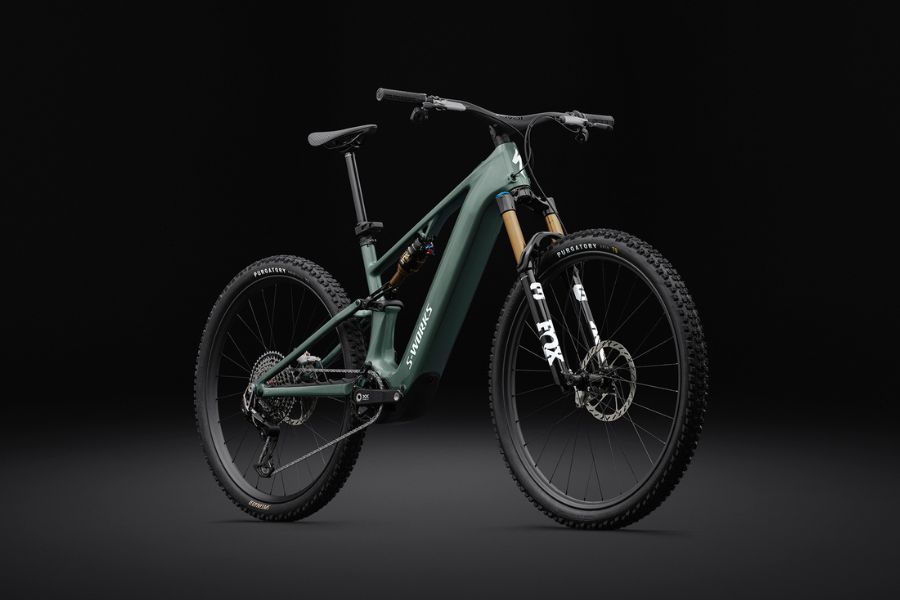
Specialized has expanded its Levo line-up with the new Specialized Turbo Levo R, a shorter-travel, 29er-only take on the brand’s full-power platform that’s clearly aimed at riders who want a quicker, more agile feel than a traditional big-travel e-MTB. On paper, the Specialized Turbo Levo R keeps the same Turbo 3.1 drive system as the latest Levo 4, but it pairs that motor with a 140mm fork, 130mm rear travel and a “Rally” chassis intended to prioritise speed, responsiveness and a lower, more forward riding position.
That puts the Specialized Turbo Levo R in the increasingly competitive space between downcountry and light enduro e-bikes. It is still a full-power machine in output terms, but it is being sold on handling and ride feel as much as outright range. Specialized is also leaning heavily on system integration, including its MasterMind T3 display, MicroTune adjustments on the fly and app-based features like Turbo System Lock and Apple Find My tracking. If you have been following the way brands are trying to make high-output e-MTBs feel calmer and more natural on technical climbs, the Specialized Turbo Levo R is very much part of that same trend, just with a sharper chassis brief.
For context, we have already seen other brands take different routes to improve real-world control and integration, from gearbox-driven concepts like the Pinion MGU eMTB gearbox integration to the current wave of focus on range extenders and accessory ecosystems, which we covered in our report on the DJI Avinox warning about third-party range extenders. The Levo R sits firmly on the “high integration, refined full-power” side of that spectrum.
Turbo 3.1 motor output, and why Specialized is focusing on control
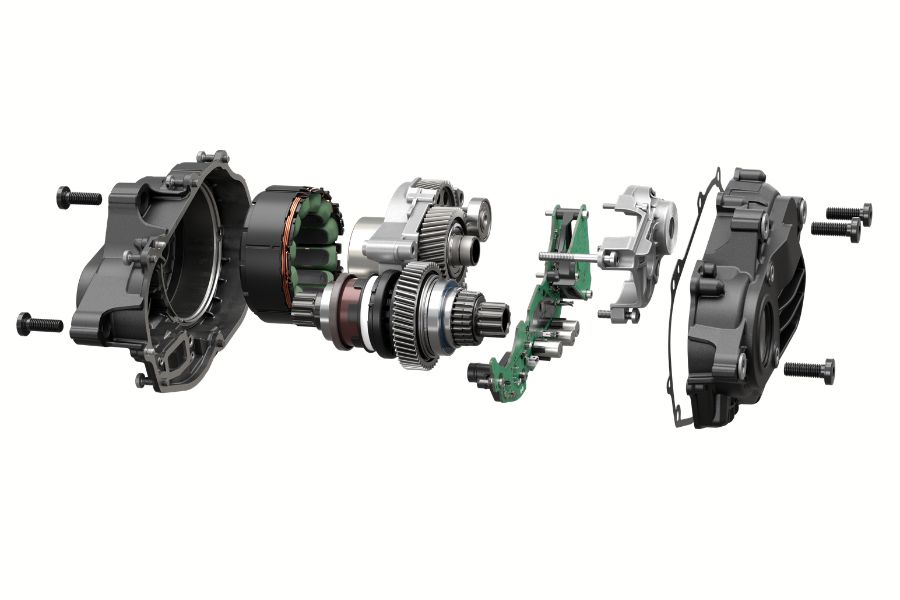
The headline numbers are straightforward. Specialized says the Turbo 3.1 system delivers up to 850W peak power and 111Nm on S-Works models, while the rest of the range is rated at up to 810W and 105Nm. That is comfortably in full-power territory, but the more interesting part is how Specialized is describing the delivery. Rather than chasing a bigger number, the company is positioning the Turbo 3.1 firmware and sensor suite as the reason the bike can stay composed when cadence drops, traction is limited or speeds rise.
Specialized claims the system adapts its behaviour at low cadence and low speed to keep support feeling controlled in technical terrain, and it also claims the motor smooths support at higher cadence and speed by filling in the rider’s “dead spot”. It is also making a specific performance claim about a controlled climbing test where a “nearest competitor” failed to complete a technical climb twice as often as the Levo R. As always with this type of claim, the key question will be how that translates in independent testing across different tyres, pressures, surfaces and rider technique.
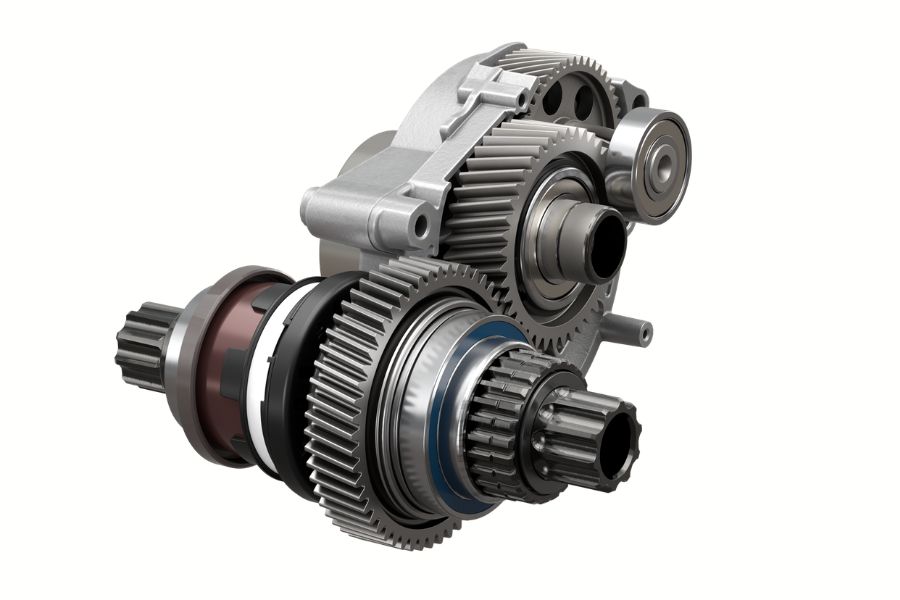
On the hardware side, Specialized is also talking about durability and noise reduction, with full-metal gears, surface treatments intended to keep the drivetrain smooth, plus housing and winding measures designed to reduce vibration and manage heat. The practical takeaway is that Specialized wants the Turbo 3.1 system to feel quieter and more consistent over long climbs, particularly when you are riding slowly in awkward terrain where harsh power pulses can break traction.
If you want a point of reference for where the wider market is going on motor performance and ecosystem messaging, it is worth comparing with how DJI is framing its own motor and battery platform in the Avinox M2 motor rumours story, even though these are very different approaches.
Rally geometry, 29-inch wheels, and a lighter Levo chassis
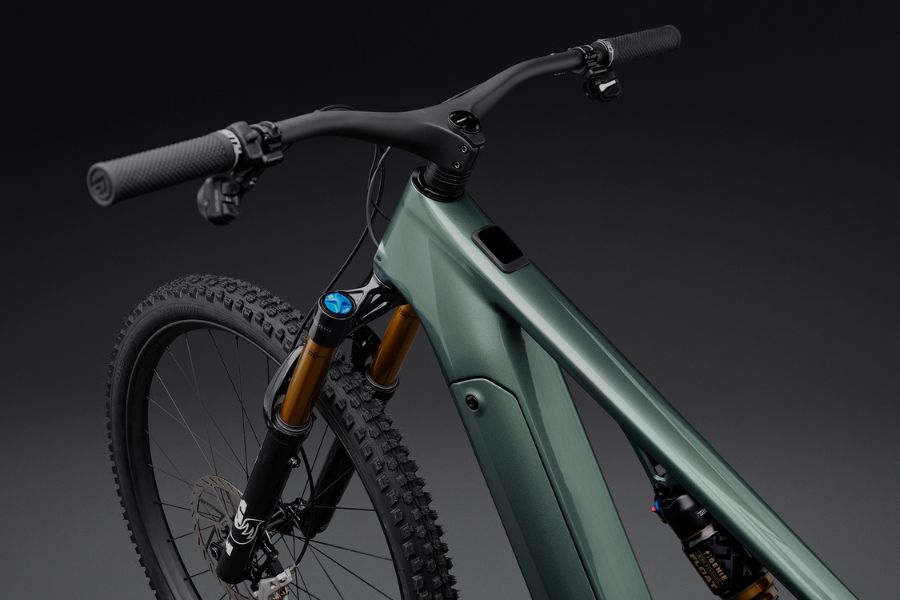
Specialized is describing the Levo R as the “rally car” counterpart to the Levo 4. The core change is the chassis brief. The bike runs 140mm front and 130mm rear travel on dedicated 29-inch wheels, and Specialized says complete builds can be as light as 18.8kg depending on specification. It also claims a 530g reduction in frame weight compared with the Levo 4, while keeping the same general frame concept with the side-access battery hatch and in-frame SWAT storage.
Geometry is set up to suit faster, more forward riding. Specialized highlights a 77-degree seat tube angle and a 65-degree head tube angle in the stock configuration, and it is also giving riders a lot of adjustment. There is a three-position headset angle adjustment (steeper, middle, slacker), a high and low bottom bracket setting (a 5mm change), plus flip chips to alter chainstay length (shorter or longer). The point is not that every rider will use every adjustment, but that the Specialized Turbo Levo R can be configured to feel more playful and responsive, or more planted and stable, depending on where and how you ride.
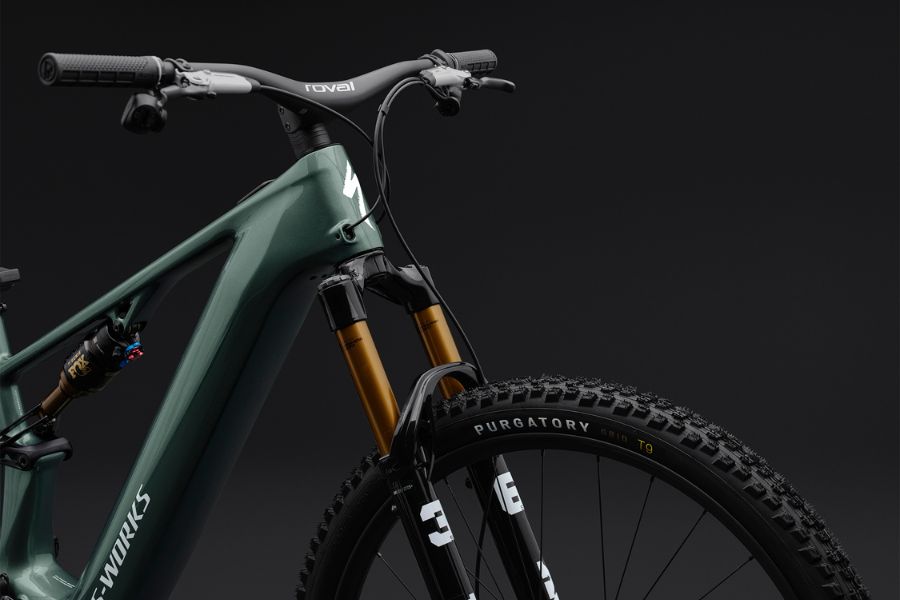
For riders coming from longer-travel e-MTBs, the more relevant question is whether the shorter-travel chassis still feels confident when the speed rises and the terrain gets rough. Specialized’s messaging is that the Levo R is built for fast lines, open ridgelines, flow trails and downcountry terrain, rather than the steepest, most technical descents where extra travel and a mixed wheel set-up can be an advantage.
GENIE suspension aims to make 130mm feel like more
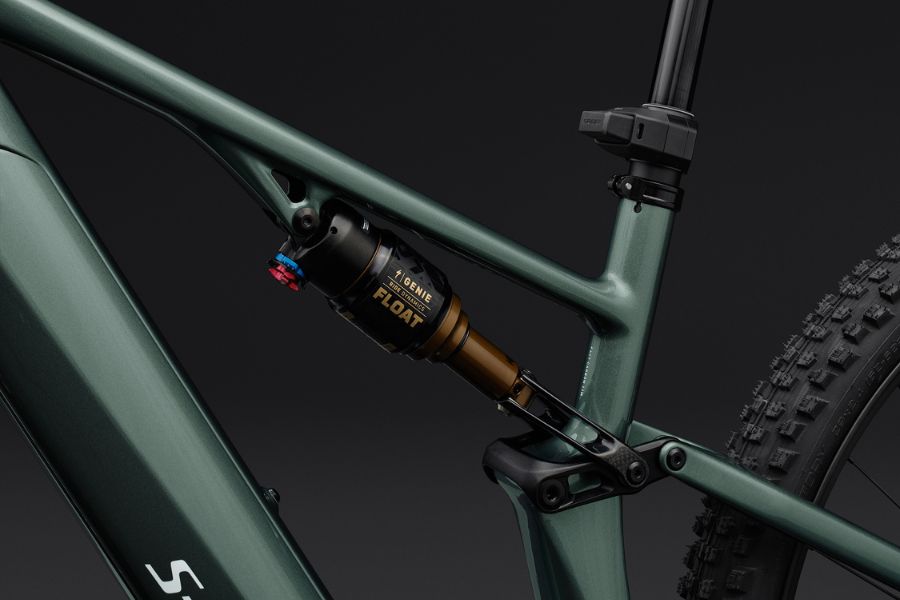
The rear travel number is 130mm, but Specialized is leaning on its GENIE shock concept to argue that the Levo R can ride with more composure than you would expect from a short-travel e-MTB. The company says the Rally-tuned GENIE system delivers a flatter, more coil-like spring curve through the first 70 per cent of travel, with a more progressive ramp-up in the final 30 per cent to resist harsh bottom-outs.
Specialized also includes a wheel rate comparison, stating that at a rear wheel force of 842N, the GENIE-equipped shock delivers 95mm of travel versus 81mm for a standard air shock, which it frames as 17.3 per cent more travel at the same force. In simple terms, the claim is that the bike stays more settled in the “bump zone” without giving up the support you need when you push harder into bigger compressions.
The front end is paired with a 140mm fork, and higher-end builds are shown with a Fox 36 SL. That makes sense given the intended direction of the bike, as it keeps weight down while still providing a stiff chassis for precise steering.
Battery options, range extender compatibility, and faster charging
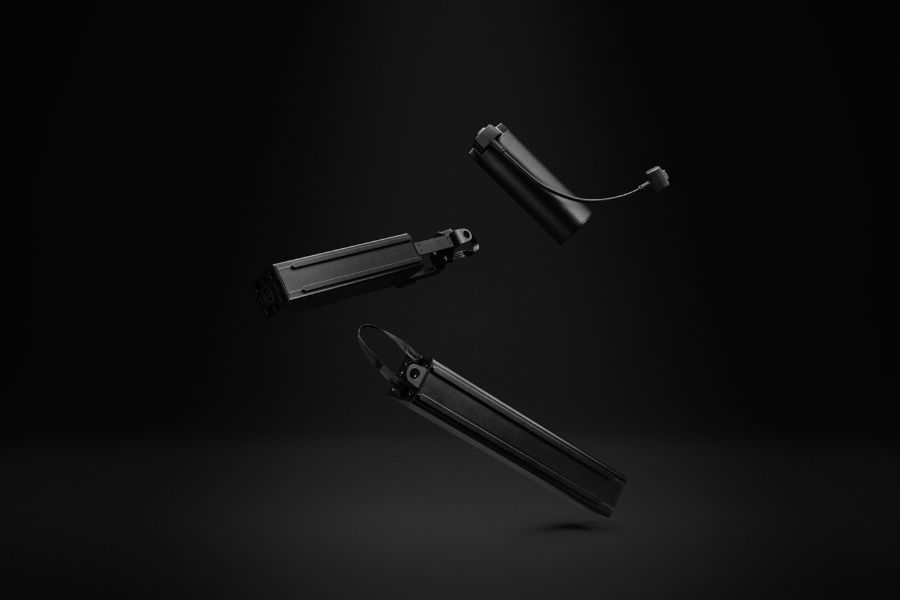
The Specialized Turbo Levo R uses a modular battery approach. Specialized says the stock internal battery is 840Wh, with an aftermarket 600Wh option for riders who want a lighter set-up and more storage space in the downtube area. There is also a 280Wh range extender option for longer rides, and Specialized states that all batteries meet IP67 water and dust resistance standards.
Specialized also claims the bike automatically recognises battery capacity and adjusts Smart Control and MicroTune parameters accordingly. That is the kind of detail that matters if you regularly swap between a lighter battery for local rides and a bigger battery for long days, as it reduces the setup friction.
Charging is another clear focus. Specialized says the standard 5A charger takes the battery from 0 to 80 per cent in 90 minutes, while the optional 12A Smart Charger (included with S-Works models) can do the same in under an hour. In real use, faster charging is often the difference between squeezing in an extra lap after work and calling it early, so it is good to see brands paying attention to the full experience rather than just the capacity number.
If you are already thinking about range extenders and compatibility, it is worth reading our earlier piece on the Avinox third-party range extender warning as a reminder that not all extender ecosystems are equal, and that official compatibility still matters.
MasterMind T3 display, MicroTune, and app-based features
Specialized continues with the MasterMind ecosystem here, using the 1.78-inch MasterMind T3 display with a 368 × 448 resolution. The company positions it as a “digital co-driver”, which is marketing language, but the practical benefit is clear, you get a clean display with customisable data fields that can help you manage output, battery and pacing.
MicroTune adjustment is a key part of that. Specialized says assist can be adjusted in 10 per cent increments, and it also highlights Dynamic MicroTune, which is intended to keep efficiency high while still allowing access to full power during hard accelerations. For riders who want to keep assistance controlled and predictable, but still want instant punch on short climbs or out of corners, that feature could be one of the most meaningful real-world changes.
The bike also ties into the Specialized app, which adds tuning, diagnostics and security features, plus integrations with Strava and Garmin. Specialized also states Apple Find My compatibility, which you can read more about via Apple’s Find My information. Over-the-air updates are also part of the package, which matters because motor behaviour and battery management can evolve over time through firmware.
What to look for next
The Specialized Turbo Levo R is, in effect, Specialized’s argument that a full-power e-MTB does not have to feel like a big-travel bruiser. If you ride flowing trails, undulating terrain and long days where climbing efficiency matters as much as descending confidence, the Levo R’s lighter chassis, 29er-only set-up and extensive geometry adjustment could make a lot of sense.
The remaining questions are the ones that always matter most, how it rides under independent testing, how it compares on real climbs with other high-output systems, and how the shorter-travel chassis holds up when you push harder than the “rally” brief implies. For full specifications, model line-up and availability, start with the Specialized UK website.