
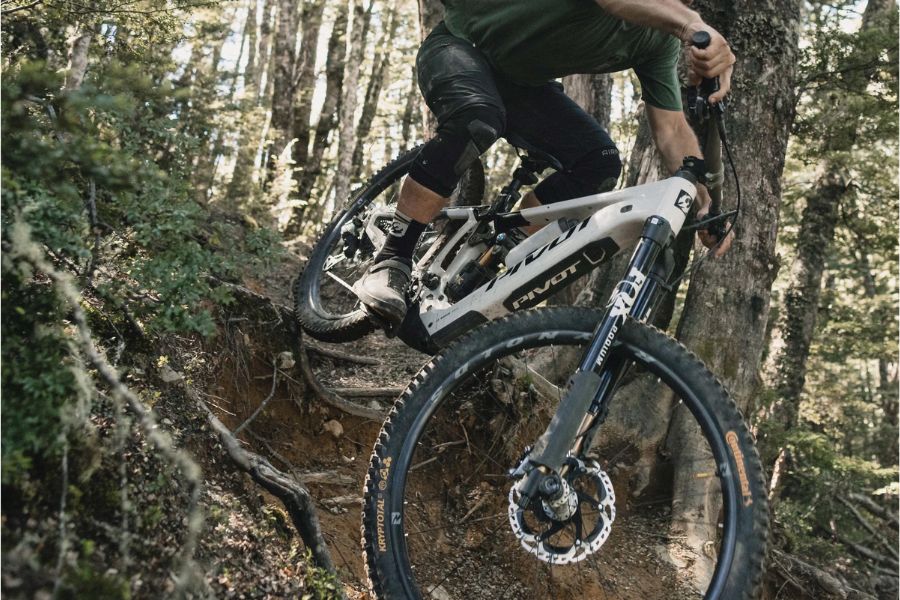
Pivot has refreshed the Shuttle LT for 2026, and this is not a minor paint-and-parts update. The new bike is designed for riders who want a full-power eMTB that can be ridden hard on steep UK terrain, bike-park laps, and big days linking natural descents with long climbs. In short, it remains in the “proper enduro eMTB” lane, but with significantly more tunability than before and a power system that reflects where the premium end of the market is heading.
At the centre of the update is Bosch’s latest high-output setup, paired with an 800Wh battery. That combination tells you what the bike is designed to do: deliver repeatable uplift-style riding without the uplift, while still offering the range buffer that makes full days realistic when conditions are cold, wet, and rolling resistance is high. For UK riders, that matters because range drops are real in winter, and because trail time often means a long approach, a steep climb, then a technical descent, repeated until the legs or the battery give up. Pivot is trying to make the battery the last thing that stops the ride.
What’s new on the 2026 Pivot Shuttle LT
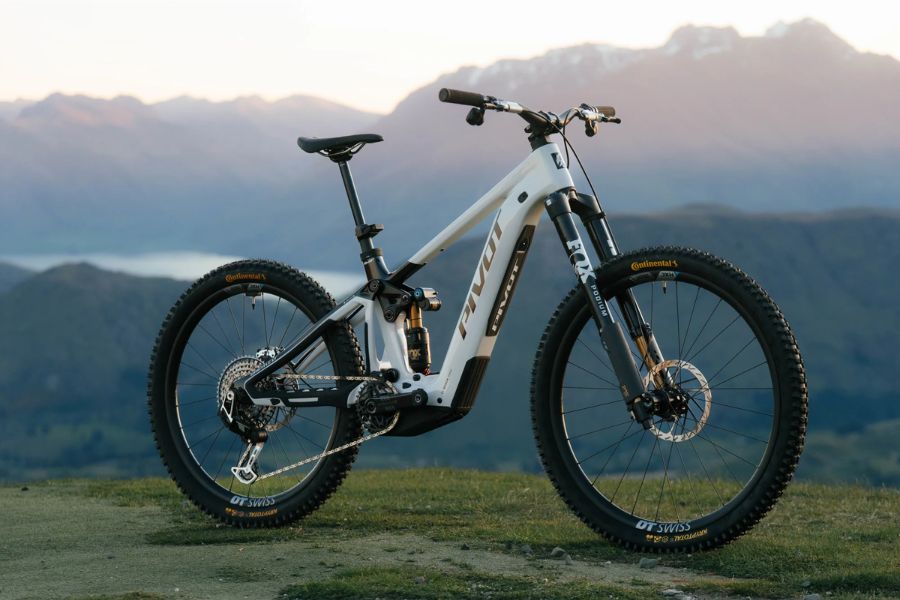
The 2026 Shuttle LT sits in the long-travel category, with a 170mm fork and a rear end that can be configured around 162mm or 165mm of travel, depending on setup. It remains a carbon-framed eMTB and can be run as a full 29er or in a mullet configuration, appealing to riders who want the stability of a big front wheel but prefer a more agile rear end for steep turns and quick line changes.
The headline power unit is Bosch’s Performance Line CX-R (commonly referred to as the “Race” flavour in conversation), quoted at up to 100Nm of torque and a 750W peak output. In practical terms, that is the sort of assistance profile that suits punchy UK climbs where traction is inconsistent, and cadence can be disrupted by roots, rocks and steps. The battery is a removable 800Wh PowerTube, and Pivot is also positioning the platform around flexibility, with compatibility for a smaller battery option and the wider Bosch ecosystem, so riders can tailor weight and range to the day rather than being locked into a single configuration.
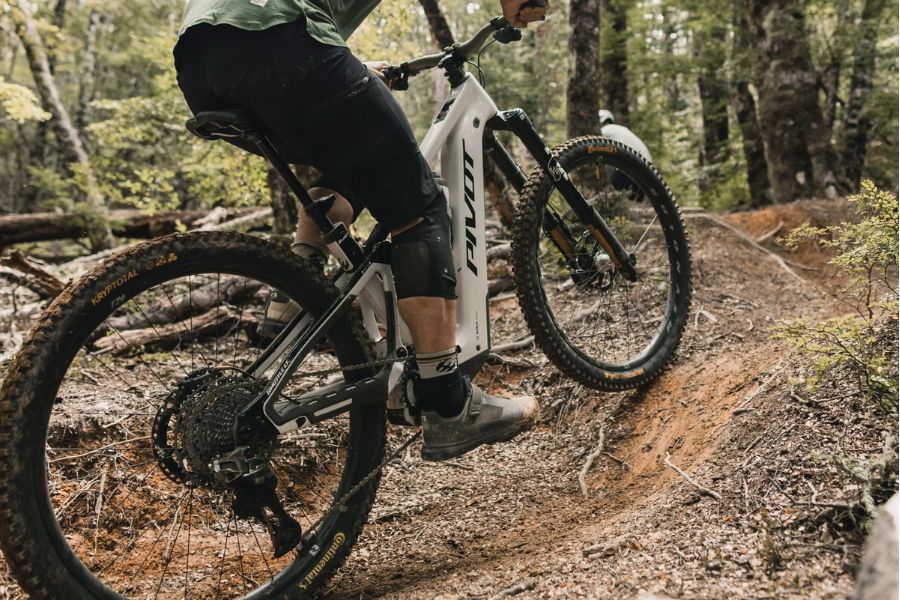
Weight is always part of real-world conversations about full-power eMTBs. The claimed figure for the Shuttle LT in size large is in the mid-23kg range, which is typical for this class when you combine a robust frame, long travel, and an 800Wh battery. The trade-off is straightforward: you gain stamina and repeatability, but you need the skill and fitness to manage a heavier bike when trails get slow, steep and awkward.
“Slacky McSteeptube” and why adjustability is the real story
One of the most talked-about changes is Pivot’s two-position adjustable seat tube angle system, which it has named deliberately hard to ignore. The adjustment range is 1.5 degrees, moving between approximately 76.5 degrees and 78 degrees depending on position. That sounds like a small number, but on the trail, it can noticeably change climbing posture, front wheel loading, and how centred you feel when the gradient kicks up.
The broader theme is that Pivot is doubling down on chassis adjustability. There is a high/low geometry chip, chainstay length adjustment via Pivot’s dropout system, and tuning options that let riders steer the bike toward stability or agility, depending on where they ride most. For UK riding, that matters because there is a meaningful difference between how you want an eMTB to behave at places like trail centres with repeated berms and compressions versus natural, slower-speed descents with awkward cambers, wet roots and tight turns. A bike that can be made more composed for high speed, or more manoeuvrable for technical woods riding, is simply easier to live with throughout the year.
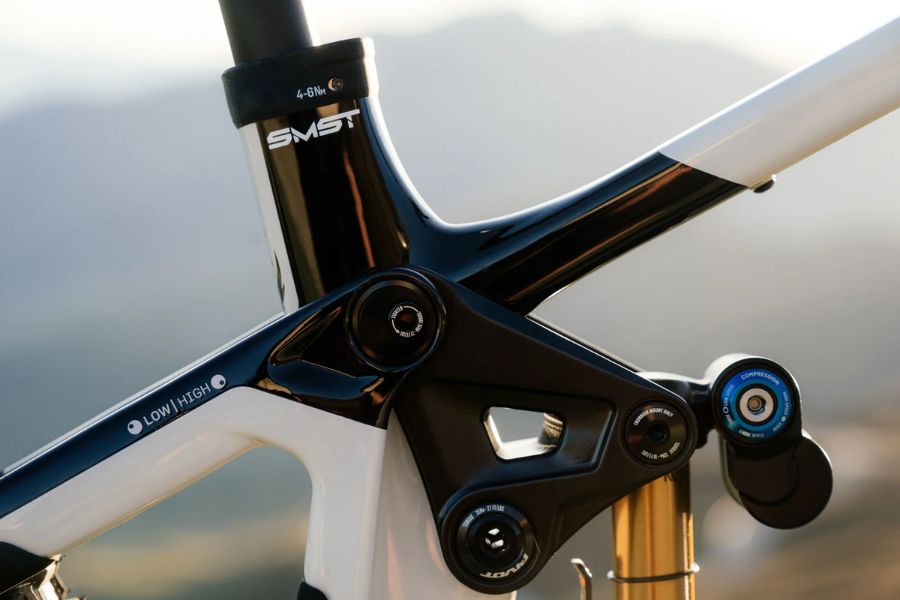
Pivot is also clearly thinking about practicality. Battery removal remains important for many UK owners, whether for charging convenience, secure storage, or simply making a heavy bike easier to lift into a vehicle. A removable 800Wh battery keeps the bike relevant to real ownership patterns rather than only test-ride impressions.
UK take: who the new Shuttle LT is for
The updated Shuttle LT looks best suited to riders who want one eMTB that can cover a lot of ground: big elevation days, aggressive descending, and the kind of riding where you are regularly using full travel rather than just carrying it “just in case”. It is not positioned as a lightweight “analogue-feeling” eMTB, and it is unlikely to win over riders who prioritise flickability above all else. Instead, it reads like a platform built for confidence at speed, stability when trails get rough, and the ability to do repeated hard efforts without the battery becoming a constant anxiety.
If you ride predominantly on natural terrain and want a full-power eMTB that can be tuned to match your local trails, the Shuttle LT’s update is significant because its adjustability is not just marketing. It is a way to make a modern, slack, long-travel eMTB work for more riders, more places, and more riding styles, without forcing everyone into one “factory ideal” geometry.
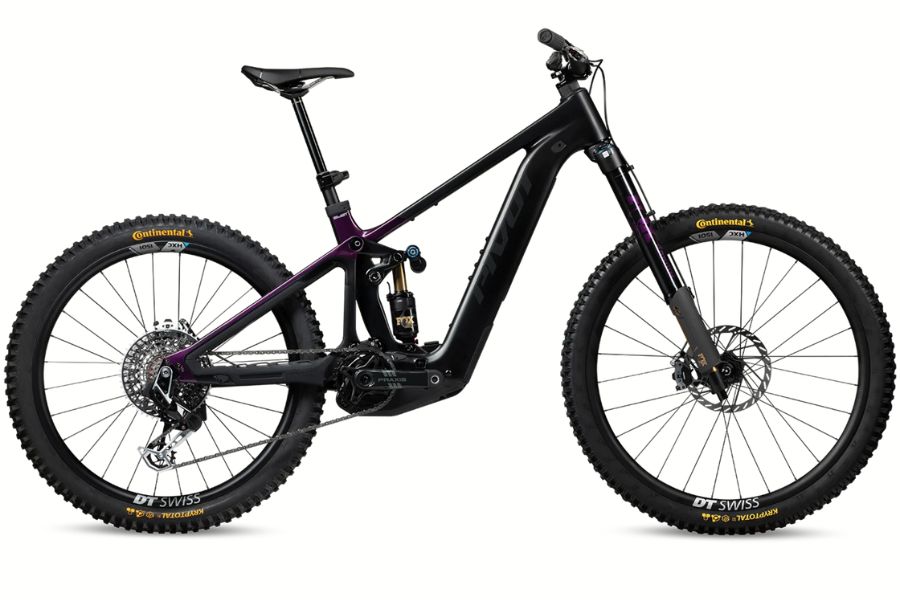
Pivot Shuttle LT
£ 11,900
For Electric MTB UK, the interesting angle is less about whether the Shuttle LT is fast, it almost certainly is, and more about what it says about the category in 2026. The top end is converging on high-output motors, big batteries, and frames designed to offer riders multiple geometry personalities. The Shuttle LT is a clear example of that direction, and it will be a bike worth watching on UK trails as availability increases throughout the year.