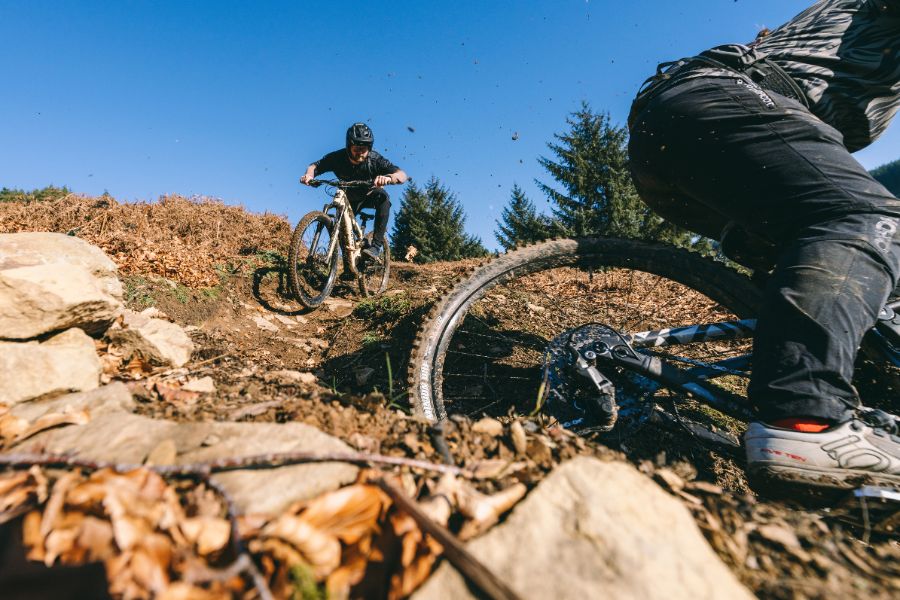
An e-MTB (electric mountain bike) is, at its core, a mountain bike with an electric motor that adds assistance when you pedal. That assistance doesn’t replace riding skill or magically erase steep climbs, but it can change what your ride looks like: longer loops, more laps, bigger days out, and the ability to keep a group together when fitness levels don’t quite match. For plenty of riders, it’s also a confidence and access thing — getting back into off-road riding after time away, keeping trail riding enjoyable through injury recovery, or simply making hilly terrain less of a barrier.

Where electric mountain bikes get confusing is that “e-MTB” covers a wide range of bikes that behave very differently. Some are essentially trail bikes with a motor that let you ride proper singletrack; others are built more for bridleways, farm tracks and mixed surfaces, with practical kit and stable handling at the top of the priority list. On top of that, motor systems vary hugely in power delivery and feel, battery sizes don’t translate neatly into real-world range, and the extra weight of an e-bike changes how suspension and tyres behave.
If you’re choosing your first electric mountain bike, the most useful starting point isn’t the motor brand or battery capacity. It’s choosing the type of e-MTB that matches how and where you’ll ride. In the UK, that usually comes down to three buckets: hardtail e-MTBs, full-suspension e-MTBs, and trekking/SUV-style e-MTBs. Each has strengths, compromises, and a “best case” use — and once you know which category you fit into, the rest of your shortlist becomes a lot easier.

(If you’re building a shortlist alongside reading this: link this post to your Best hardtail e-MTBs (UK) guide, Best full-suspension e-MTBs (UK) guide, and Best trekking/SUV e-MTBs (UK) guide.)
What makes an e-MTB different from a normal mountain bike?
The obvious difference is the motor and battery, but the riding differences run deeper than that. E-MTBs are typically heavier, which affects how they accelerate, how they grip, and how they respond to quick direction changes. The extra mass can be a benefit in rough terrain (more stability and composure), but it can also make a bike feel less playful if you’re used to a light analogue mountain bike. That’s why e-MTB tyres often skew towards tougher casings and why suspension setup matters so much — a good e-MTB feels calm and predictable; a poorly set-up one can feel harsh, vague or “busy” on the trail.

Assistance also changes pacing. You can climb seated more often, you can carry speed into fireroad climbs, and you can keep your heart rate steadier across rolling terrain. But it also asks different things of your technique. Traction becomes the limiting factor on steep climbs, not fitness. Line choice matters more. And because you’re doing more metres of ascent, brakes, tyres and suspension get stressed harder over the course of a ride.
It’s also worth being clear on terminology. In the UK, most off-the-shelf electric bikes that are intended for public roads and general use are designed to meet EAPC rules: pedal-assist (not just throttle), with assistance cutting off at 25km/h (15.5mph). That doesn’t mean the bike can’t go faster downhill; it just means the motor stops helping above that point. If you’re unsure what counts as road-legal vs something that falls into moped/motorcycle territory, it’s worth reading a dedicated explainer (link this to your UK e-MTB law explained page).

Finally, e-MTB geometry tends to prioritise stability. You’ll often see longer wheelbases, slacker head angles and more emphasis on keeping the rider centred. That’s partly because modern mountain bikes have gone that way anyway, and partly because speed comes more easily when you’ve got assistance on tap. A stable bike is simply easier to live with when you’re riding faster more often.
Hardtail vs full-suspension e-MTB: what’s the real difference?
A hardtail e-MTB has suspension at the front (a suspension fork) and a rigid rear end. A full-suspension e-MTB has suspension at both ends: a fork and a rear shock. That sounds like a simple distinction, but it shapes how the bike rides, where it’s happiest, and how much it asks from your body on longer rides.
A hardtail e-MTB can be a brilliant first e-MTB because it often feels direct and efficient. You get a clean, connected sense of traction at the rear wheel on smoother climbs, and there’s less going on in terms of maintenance. Hardtails also tend to represent better value at a given price point: if two bikes cost the same, the hardtail often has the stronger drivetrain or brakes because the budget isn’t split between rear suspension hardware. On bridleways, trail centres’ smoother routes, and mixed-surface rides that include road links, a hardtail can make a lot of sense.

The compromise is comfort and composure in rough terrain. On technical descents, rock gardens and rooty sections, the rear end of a hardtail will transmit more impact into the rider. Tyre choice and pressure can soften that, and a dropper post helps massively, but there’s a point where rear suspension simply makes riding easier. If your local riding is consistently rocky, steep, or rough — or if you want an e-MTB to open up harder trail-centre lines — the more capable choice is usually full suspension.
A full-suspension e-MTB focuses on traction, comfort and control. That matters because e-MTBs let you ride more: more distance, more climbing, more descending. Rear suspension reduces fatigue and helps the bike maintain grip when the trail gets choppy, which can make the whole experience feel more manageable — especially for less experienced riders. On climbs, rear suspension can also improve traction where a hardtail might spin up, particularly on wet roots and loose, stepped surfaces that are common on UK trails.

The compromises are cost, weight and complexity. There’s more to service, more bearings and pivots, and more setup to get right. It’s also easier to spend money in the wrong places if you’re not careful — a full-suspension e-MTB with weak brakes or poor tyres can feel out of its depth quickly. In practice, the “right” choice comes down to your terrain and priorities. If you’ll mostly ride bridleways and moderate trails and you value simplicity, hardtail still makes sense. If you’re aiming at technical trail riding and want comfort and grip over long rides, full suspension tends to justify itself.
(Internal links to add: Best hardtail electric mountain bikes (UK) and Best full-suspension electric mountain bikes (UK).)
Trekking / SUV e-MTB: what it is and who it’s for
Trekking and “SUV” e-bikes sit in the blurry space between mountain bikes and utility bikes. They’re often marketed as do-it-all machines: stable handling, comfort-focused geometry, practical kit (lights, mudguards, racks), and tyres that can cope with gravel, towpaths and light off-road riding. Some are genuinely capable on rougher terrain than you’d expect; others are essentially city bikes with chunkier tyres.

For Electric MTB UK, it’s useful to treat trekking/SUV e-MTBs as their own category because many UK riders don’t actually want a high-travel trail bike. They want a bike that can handle bridleways, forestry tracks, canal paths, road commuting, and weekend exploring without feeling fragile or overly aggressive. In that context, a trekking e-MTB can be the better buy than a hardtail “proper” mountain bike, because it’s more comfortable at steady speeds and more practical day to day.
The key is being honest about where these bikes fit. Trekking/SUV e-MTBs tend to prioritise comfort and stability over playful handling. They’re often heavier, sometimes come with suspension forks that are tuned for bumps rather than proper trail impacts, and their tyre choice can be more about puncture resistance and longevity than outright grip. That doesn’t make them “worse” — it just makes them a different tool.

If your riding is mostly mixed-surface and you value accessories, a trekking/SUV option is worth considering. If you want to progress into trail-centre riding, hit proper singletrack regularly, or ride steep and technical descents, you’ll usually be happier on a hardtail or full-suspension e-MTB built for that job.
(Internal link to add: Best trekking / SUV electric mountain bikes (UK).)
Key buying factors that matter (and the ones that don’t)
Once you’ve chosen the right category, there are a few themes that tend to matter more than brand hype.
Motor feel matters more than headline numbers.
Torque figures and power ratings get talked about constantly, but what you notice on the trail is how the motor delivers assistance: how smoothly it ramps up, how predictable it feels on slippery climbs, how much noise it makes under load, and how naturally it cuts out around the assistance limit. If you can test ride two different systems back to back, the differences become obvious quickly. (Internal link: Motors & batteries explained.)
Battery size isn’t “range”, but it sets the ceiling
A bigger battery gives you more margin for long rides, cold weather and higher assistance modes. But real-world range depends on terrain, rider weight, tyre choice, assist mode, and how much climbing you do. In the UK, winter riding can also reduce usable range compared with summer. It’s better to think of battery capacity as flexibility: the bigger it is, the less you have to think about it.

Tyres and brakes are not the place to compromise
E-MTBs carry more speed more easily, and they ask more of your braking and traction over a long ride. If you’re choosing between two similarly priced bikes, the one with stronger brakes and better tyres is often the better real-world package, even if the drivetrain is a step down.
Geometry and fit are huge — especially for new riders
The best electric mountain bike on paper is pointless if it doesn’t fit you or feels awkward on the trail. Sizing charts vary by brand, and e-MTBs can feel quite different to non-assisted bikes because of weight distribution and riding speeds. If you’re between sizes, it’s worth slowing down and comparing reach, stack and standover, not just seat-tube numbers. (Internal link: How to choose the right e-MTB size.)
Don’t get too hung up on “hardtail vs full-suspension” as a status thing
It’s not a hierarchy. It’s a matching exercise. A well-chosen hardtail can be more enjoyable than a badly chosen full-suspension bike, and a trekking/SUV e-MTB can be the right answer if your real riding is mixed-surface exploration rather than trail-centre descents.

If you want a next step after this explainer, the most useful move is to pick the category that matches your riding and then read the guide that maps your budget to real options. From there, reviews and tech explainers will help you narrow it down based on motor behaviour, handling and ownership details.